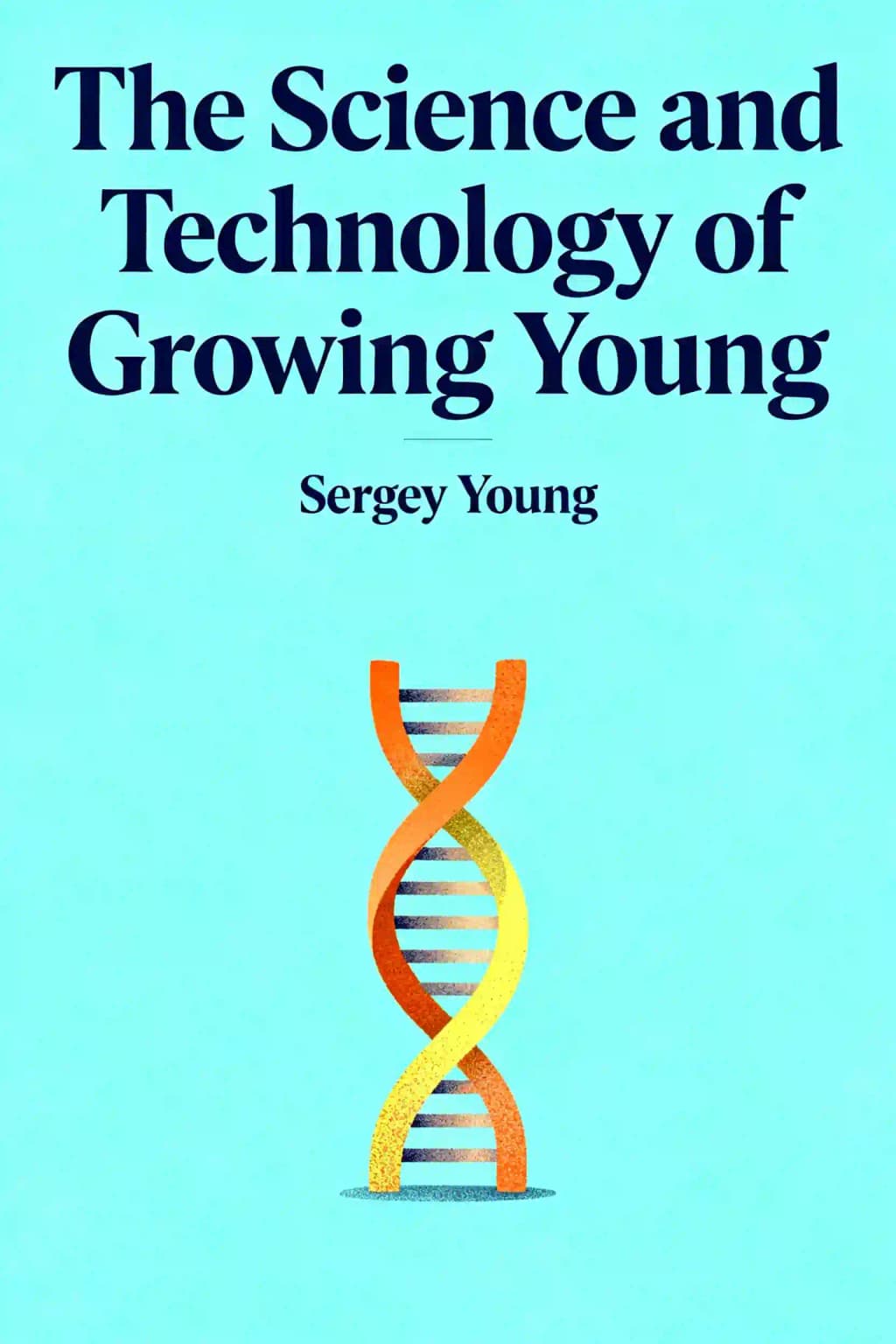
Science and Technology of Growing Young, Updated Edition
An Insider's Guide to the Breakthroughs That Will Dramatically Extend Our Lifespan ... and What You Can Do Right Now
Overview of Science and Technology of Growing Young, Updated Edition
Discover how to live to 150 years in this longevity roadmap endorsed by Ray Kurzweil and Tony Robbins. What if aging is a treatable condition? Sergey Young reveals near-future technologies and 10 practical choices you can implement today for a longer, healthier life.

Key Themes in Science and Technology of Growing Young, Updated Edition
- longevity escape velocity
- biological age reversal
- regenerative medicine
- technological immortality
- biomarker monitoring
Quotes from Science and Technology of Growing Young, Updated Edition
This isn't science fiction-it's the near future.
The goal isn't extending suffering but maintaining youth and vitality.
Longevity is simply another scientific problem to solve.
Living more means living less.
Longevity is dangerous and selfish.
Characters in Science and Technology of Growing Young, Updated Edition
- Sergey YoungAuthor and Longevity Vision Fund investor
- Peter DiamandisLongevity luminary and supporter of the book
About the Author
About the Author of Science and Technology of Growing Young, Updated Edition
Sergey Young, bestselling author of The Science and Technology of Growing Young, is a leading longevity investor and visionary dedicated to extending healthy human lifespans. A former McKinsey & Co. consultant and founder of the $100 million Longevity Vision Fund, Young combines decades of venture capital experience with groundbreaking work in health innovation. His book merges science and practical strategies, exploring themes like age reversal technologies, preventive healthcare, and societal adaptations for radical life extension—topics informed by his board roles at XPRIZE Foundation and the American Federation for Aging Research.
Young’s insights stem from managing multi-billion-dollar portfolios and spearheading global initiatives like the Healthspan XPRIZE, which unites researchers from 50 countries to combat aging biomarkers. He launched the free corporate program Longevity @ Work to democratize life-extending practices and frequently shares expertise through media engagements and thought leadership platforms.
The Science and Technology of Growing Young has become an international phenomenon, translated into Chinese, Japanese, and Korean, reflecting Young’s mission to make longevity accessible worldwide. His $100 million fund continues to accelerate disruptive health technologies targeting 200-year lifespans.
Download Summary of Science and Technology of Growing Young, Updated Edition
Get the Science and Technology of Growing Young, Updated Edition summary as a free PDF or EPUB. Print it or read offline anytime.
FAQs About This Book
The Science and Technology of Growing Young explores breakthroughs in longevity research, arguing that aging can be managed or reversed through innovations like genetic engineering, AI diagnostics, and organ regeneration. Sergey Young outlines a "Longevity Revolution" with near-term strategies (living to 150) and futuristic possibilities (age reversal to 200), blending actionable health habits with cutting-edge science.
This book is ideal for tech enthusiasts, health-focused individuals aged 40+, and anyone curious about anti-aging science. It caters to readers seeking practical longevity tips (e.g., wearable tech use) and those interested in futuristic concepts like digital avatars or AI-enhanced healthcare.
Yes—it combines actionable advice (e.g., 10 daily habits for longevity) with visionary insights into bioprinting and epigenetic therapies. Young’s dual focus on immediate steps and speculative tech makes it a comprehensive guide for optimizing health and understanding emerging anti-aging innovations.
The Longevity Revolution refers to four technological shifts transforming aging: genetic engineering (editing DNA errors), regenerative medicine (organ regeneration), health-care hardware (wearables), and health data intelligence (AI-driven diagnostics). Young argues these innovations will enable humans to live decades longer while staying healthier.
Young defines aging as a "loss of information" in the epigenome—the system controlling gene expression. He identifies 10 hallmarks of aging, including mitochondrial dysfunction and cellular senescence, emphasizing that biological age (not chronological) determines healthspan, and it can be modified through lifestyle and tech.
Key habits include walking 10,000+ steps daily, prioritizing 7–8 hours of sleep, avoiding smoking/sugar, and using wearables for health monitoring. Young also stresses proactive medical checkups and mindfulness practices to reduce stress.
AI is central to longevity through early disease detection (analyzing health data), personalized treatment plans, and accelerating drug discovery. Young predicts AI-integrated "Internet of Bodies" systems will continuously monitor and optimize health, preventing diseases before symptoms arise.
While not a focus, Young acknowledges affordability challenges and advocates democratizing access to longevity tech. His Longevity Vision Fund aims to make innovations like gene therapies available beyond wealthy elites, targeting 1 billion beneficiaries globally.
Near Horizon (150 years): Includes CRISPR gene editing, senolytics (clearing aging cells), and telehealth platforms.
Far Horizon (200+ years): Envisions lab-grown organs, brain-computer interfaces, and epigenetic reprogramming to reverse aging.
Young argues traditional medicine often treats aging symptoms (e.g., heart disease) instead of root causes. He champions a paradigm shift targeting aging itself—like repairing DNA damage or replenishing stem cells—to extend healthspan, not just lifespan.
Young predicts longer healthspans will redefine retirement, enabling people to work or pursue passions well into their 100s. He ties this to economic incentives for longevity research, as healthier aging populations reduce healthcare costs.
Unlike theoretical works, Young’s book merges venture capital insights with practical steps—e.g., dietary tweaks paired with CRISPR updates. It uniquely balances near-term advice (sleep optimization) with speculative tech (quantum computing in drug discovery).