A Thousand Brains: A New Theory of Intelligence by Jeff Hawkins Summary

Overview of A Thousand Brains
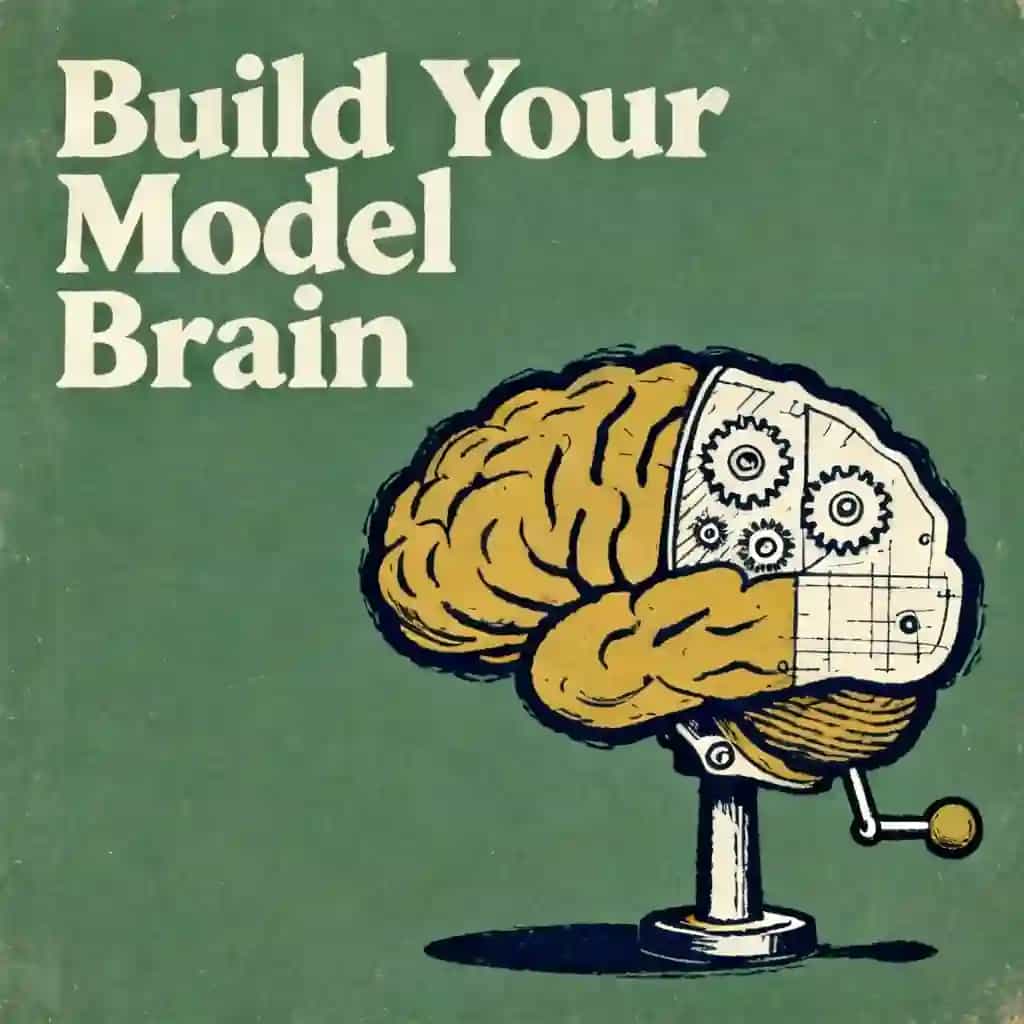
Jeff Hawkins, Palm Computing founder turned neuroscientist, revolutionizes our understanding of intelligence with his "Thousand Brains Theory." What if our brains build thousands of world models instead of one hierarchical system? This groundbreaking 2021 work could transform AI by mimicking our brain's true architecture.
- The Thousand Brains Theory redefines intelligence as thousands of cortical columns voting on sensory predictions.
- Intelligence emerges from reference frames structuring knowledge spatially within layered cortical maps.
- Human cognition uses movement-driven learning to build models of objects and abstract concepts.
- Current AI lacks embodied reference frames critical for human-like adaptability and understanding.
- Four attributes define intelligence: continuous learning, movement-based interaction, multi-model storage, and reference frames.
- Cortical columns act as independent prediction machines competing to interpret sensory input.
- Preserving humanity’s knowledge requires space-based repositories or machine-driven galactic dissemination.
- The neocortex’s structure reveals why AI without primal instincts avoids Terminator-like scenarios.
- Existential risks stem from ancient brain instincts clashing with modern neocortical reasoning.
- False beliefs pose greater survival threats than intelligent machines lacking human drives.
- Brain models resolve the binding problem through consensus voting among sensory predictions.
- True AGI requires replicating the neocortex’s grid-like reference frame architecture.
About the Author of A Thousand Brains
Jeffrey Hawkins is the bestselling author of A Thousand Brains: A New Theory of Intelligence and a pioneering computer scientist, neuroscientist, and entrepreneur. Best known for co-founding Palm Computing and creating groundbreaking devices like the PalmPilot and Treo smartphone, Hawkins shifted his focus to neuroscience, founding the Redwood Neuroscience Institute and Numenta to advance brain theory and machine intelligence. His work explores the intersection of neurobiology and artificial intelligence, culminating in this book’s revolutionary framework for understanding how the neocortex forms intelligence through thousands of predictive models.
Hawkins’ earlier book, On Intelligence (2004), introduced his memory-prediction theory of the brain, laying the foundation for Hierarchical Temporal Memory (HTM) systems. A member of the National Academy of Engineering, he combines decades of tech innovation with cutting-edge neuroscience research.
A Thousand Brains has been acclaimed as a transformative contribution to both fields, offering insights into perception, cognition, and the future of AI. The book has been widely cited in academic and tech circles, solidifying Hawkins’ reputation as a visionary bridging neuroscience and machine learning.
FAQs About A Thousand Brains
What is A Thousand Brains by Jeff Hawkins about?
A Thousand Brains proposes a groundbreaking theory of intelligence, arguing the brain uses thousands of parallel "map-like" models in the neocortex to understand the world. Jeff Hawkins, co-founder of Palm and Numenta, challenges traditional AI approaches by emphasizing biological principles like hierarchical object modeling, sensory-motor integration, and location-based reference frames. The book explores implications for consciousness, machine intelligence, and humanity’s future.
Who should read A Thousand Brains?
This book is ideal for neuroscience enthusiasts, AI researchers, and readers interested in theories of intelligence. Its blend of accessible explanations (e.g., cortical column functions) and speculative ideas (e.g., space-faring AI) appeals to both professionals and curious general audiences. Bill Gates praised it for reshaping his understanding of everyday objects like coffee cups.
Is A Thousand Brains worth reading?
Yes—it offers a paradigm-shifting perspective on intelligence backed by 15+ years of neuroscience research. Hawkins bridges academic rigor and practical insights, making complex topics like grid cells and reference frames engaging. Critics note its ambitious scope, but it remains a seminal work for understanding biological vs. artificial intelligence.
What are the main ideas in A Thousand Brains?
Key concepts include:
- Thousand Brains Theory: The neocortex uses countless cortical columns to create distributed, hierarchical models of objects and spaces.
- Reference Frames: Intelligence relies on spatial maps to organize knowledge.
- AI Limitations: Current AI lacks biological learning mechanisms, limiting true generality.
- Knowledge Preservation: Proposes using machines to eternally store human knowledge.
What are the key takeaways from A Thousand Brains?
- Intelligence emerges from prediction-driven sensory-motor systems, not computation.
- Brains use 3D reference frames to model relationships between objects.
- Machines mimicking cortical algorithms could surpass today’s narrow AI.
- Human-level AGI requires replicating neocortex-like structures, not just scaling data.
What is the most famous quote from A Thousand Brains?
While not overtly quote-focused, Hawkins’ assertion that “intelligent machines could preserve humanity’s knowledge long after we’re gone” captures the book’s visionary tone. This idea—explored in Gates’ review—positions AI as a cosmic archive rather than a existential threat.
How does A Thousand Brains compare to Jeff Hawkins’ earlier book On Intelligence?
On Intelligence (2004) introduced Hawkins’ initial cortical theory, while A Thousand Brains expands it with discoveries like reference frames and cortical column collaboration. The newer work also addresses AI ethics and interplanetary knowledge preservation, reflecting advances at Numenta.
What are the criticisms of A Thousand Brains?
Some argue Hawkins underestimates AI’s near-term risks, overly focusing on cortical mechanics while neglecting emotional or ethical dimensions. Critics on LessWrong question whether replicating biological intelligence is the sole path to AGI.
How does Jeff Hawkins’ background influence A Thousand Brains?
Hawkins’ dual expertise in tech (PalmPilot, Treo) and neuroscience (Numenta, Redwood Institute) grounds the book in both engineering pragmatism and theoretical innovation. His career shift from Silicon Valley to brain research lends credibility to its interdisciplinary insights.
What are cortical columns in A Thousand Brains?
Cortical columns are neural structures Hawkins identifies as the brain’s fundamental learning units. Each column acts as a mini-predictive model, using sensory input and movement to build 3D reference frames. Their parallel operation enables robust, adaptable intelligence.
How does A Thousand Brains explain human consciousness?
Hawkins posits consciousness arises from the brain’s constant prediction and comparison of multiple models. Self-awareness emerges when cortical columns integrate internal bodily signals with external object representations, creating a unified “world model”.
Can A Thousand Brains help understand real-world AI challenges?
Yes—it argues AI systems need biological-style reference frames and embodied learning to achieve generality. Developers might apply these principles to improve robotics, spatial reasoning algorithms, or adaptive neural networks.
Feel the book through the author's voice
Turn knowledge into engaging, example-rich insights
Capture key ideas in a flash for fast learning
Enjoy the book in a fun and engaging way
Key Themes in A Thousand Brains
Quotes from A Thousand Brains
Thinking itself is a form of movement.
The human brain remains one of science's greatest mysteries.
We actively explore the world through movement.
The book has gained cult status among tech leaders in Silicon Valley.
Characters in A Thousand Brains
Quick Summary Mode - Read or listen to A Thousand Brains Summary in 9 Minutes

Break down key ideas from A Thousand Brains into bite-sized takeaways to understand how innovative teams create, collaborate, and grow.

Flash Card Mode - Top 7 Insights from A Thousand Brains in a Nutshell

Distill A Thousand Brains into rapid-fire memory cues that highlight key principles of candor, teamwork, and creative resilience.

Fun Mode - A Thousand Brains Lessons Told Through 22-Min Stories

Experience A Thousand Brains through vivid storytelling that turns innovation lessons into moments you'll remember and apply.
Personalize Mode - Read or listen to A Thousand Brains Summary in 0 Minutes

Ask anything, pick the voice, and co-create insights that truly resonate with you.

From Columbia University alumni built in San Francisco
"Instead of endless scrolling, I just hit play on BeFreed. It saves me so much time."


"I never knew where to start with nonfiction—BeFreed’s book lists turned into podcasts gave me a clear path."


"Perfect balance between learning and entertainment. Finished ‘Thinking, Fast and Slow’ on my commute this week."
"Crazy how much I learned while walking the dog. BeFreed = small habits → big gains."
"Reading used to feel like a chore. Now it’s just part of my lifestyle."

"Feels effortless compared to reading. I’ve finished 6 books this month already."
"BeFreed turned my guilty doomscrolling into something that feels productive and inspiring."

"BeFreed turned my commute into learning time. 20-min podcasts are perfect for finishing books I never had time for."
"BeFreed replaced my podcast queue. Imagine Spotify for books — that’s it. 🙌"

"It is great for me to learn something from the book without reading it."
"The themed book list podcasts help me connect ideas across authors—like a guided audio journey."
"Makes me feel smarter every time before going to work"
From Columbia University alumni built in San Francisco
"Instead of endless scrolling, I just hit play on BeFreed. It saves me so much time."
"I never knew where to start with nonfiction—BeFreed’s book lists turned into podcasts gave me a clear path."
"Perfect balance between learning and entertainment. Finished ‘Thinking, Fast and Slow’ on my commute this week."
"Crazy how much I learned while walking the dog. BeFreed = small habits → big gains."
"Reading used to feel like a chore. Now it’s just part of my lifestyle."
"Feels effortless compared to reading. I’ve finished 6 books this month already."
"BeFreed turned my guilty doomscrolling into something that feels productive and inspiring."
"BeFreed turned my commute into learning time. 20-min podcasts are perfect for finishing books I never had time for."
"BeFreed replaced my podcast queue. Imagine Spotify for books — that’s it. 🙌"
"It is great for me to learn something from the book without reading it."
"The themed book list podcasts help me connect ideas across authors—like a guided audio journey."
"Makes me feel smarter every time before going to work"
"Instead of endless scrolling, I just hit play on BeFreed. It saves me so much time."
"I never knew where to start with nonfiction—BeFreed’s book lists turned into podcasts gave me a clear path."
"Perfect balance between learning and entertainment. Finished ‘Thinking, Fast and Slow’ on my commute this week."
"Crazy how much I learned while walking the dog. BeFreed = small habits → big gains."
"Reading used to feel like a chore. Now it’s just part of my lifestyle."
"Feels effortless compared to reading. I’ve finished 6 books this month already."
"BeFreed turned my guilty doomscrolling into something that feels productive and inspiring."
"BeFreed turned my commute into learning time. 20-min podcasts are perfect for finishing books I never had time for."
"BeFreed replaced my podcast queue. Imagine Spotify for books — that’s it. 🙌"
"It is great for me to learn something from the book without reading it."
"The themed book list podcasts help me connect ideas across authors—like a guided audio journey."
"Makes me feel smarter every time before going to work"
"Instead of endless scrolling, I just hit play on BeFreed. It saves me so much time."
"I never knew where to start with nonfiction—BeFreed’s book lists turned into podcasts gave me a clear path."
"Perfect balance between learning and entertainment. Finished ‘Thinking, Fast and Slow’ on my commute this week."
"Crazy how much I learned while walking the dog. BeFreed = small habits → big gains."
"Reading used to feel like a chore. Now it’s just part of my lifestyle."
"Feels effortless compared to reading. I’ve finished 6 books this month already."
"BeFreed turned my guilty doomscrolling into something that feels productive and inspiring."
"BeFreed turned my commute into learning time. 20-min podcasts are perfect for finishing books I never had time for."
"BeFreed replaced my podcast queue. Imagine Spotify for books — that’s it. 🙌"
"It is great for me to learn something from the book without reading it."
"The themed book list podcasts help me connect ideas across authors—like a guided audio journey."
"Makes me feel smarter every time before going to work"

Get the A Thousand Brains summary as a free PDF or EPUB. Print it or read offline anytime.