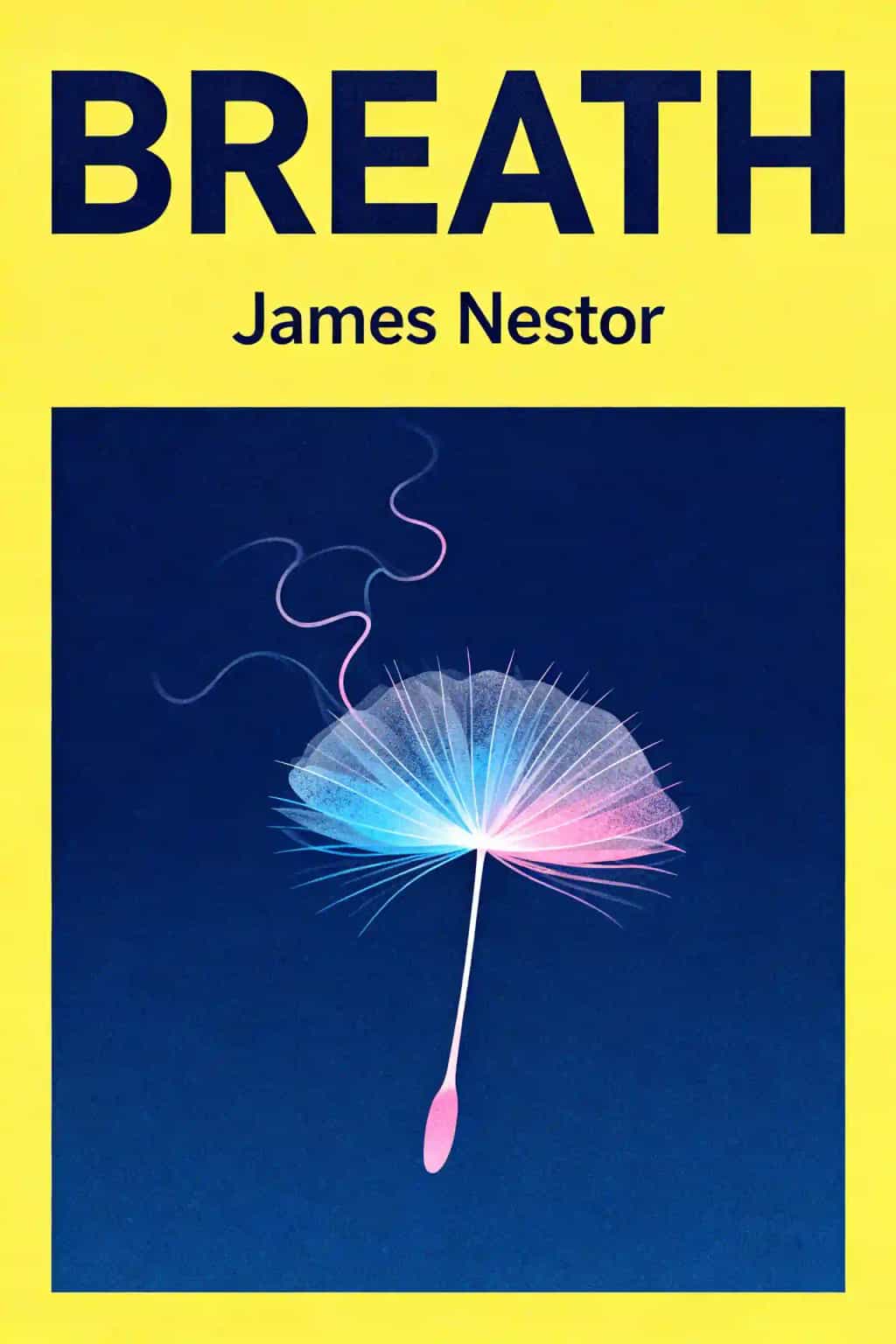

Overview of Breath
Discover why two million readers are transforming their health through "Breath," the NYT bestseller revealing how we've forgotten the most essential human function. Endorsed by Neil Pasricha, who credits mouth-taping for better sleep, this pandemic-era hit exposes how proper breathing can reverse chronic conditions.
- Nasal breathing boosts oxygen absorption by 18% through nitric oxide production.
- Chronic mouth breathing elevates stress hormones and risks sleep disorders.
- Carbon dioxide tolerance enhances oxygen efficiency via the Bohr effect.
- Ancient techniques like pranayama reduce anxiety by activating parasympathetic response.
- Slow exhales activate parasympathetic nervous system for instant stress relief.
- Optimal breathing rhythm: 5.5-second inhale and exhale balances nervous systems.
- Mouth breathing reshapes facial structure and narrows dental arches over time.
- Nasal breathing stimulates nitric oxide for immune defense and blood flow.
- Right nostril breathing sharpens focus; left nostril fosters creative calm.
- Conscious breath awareness reduces chronic inflammation and improves metabolic health.
About the Author of Breath
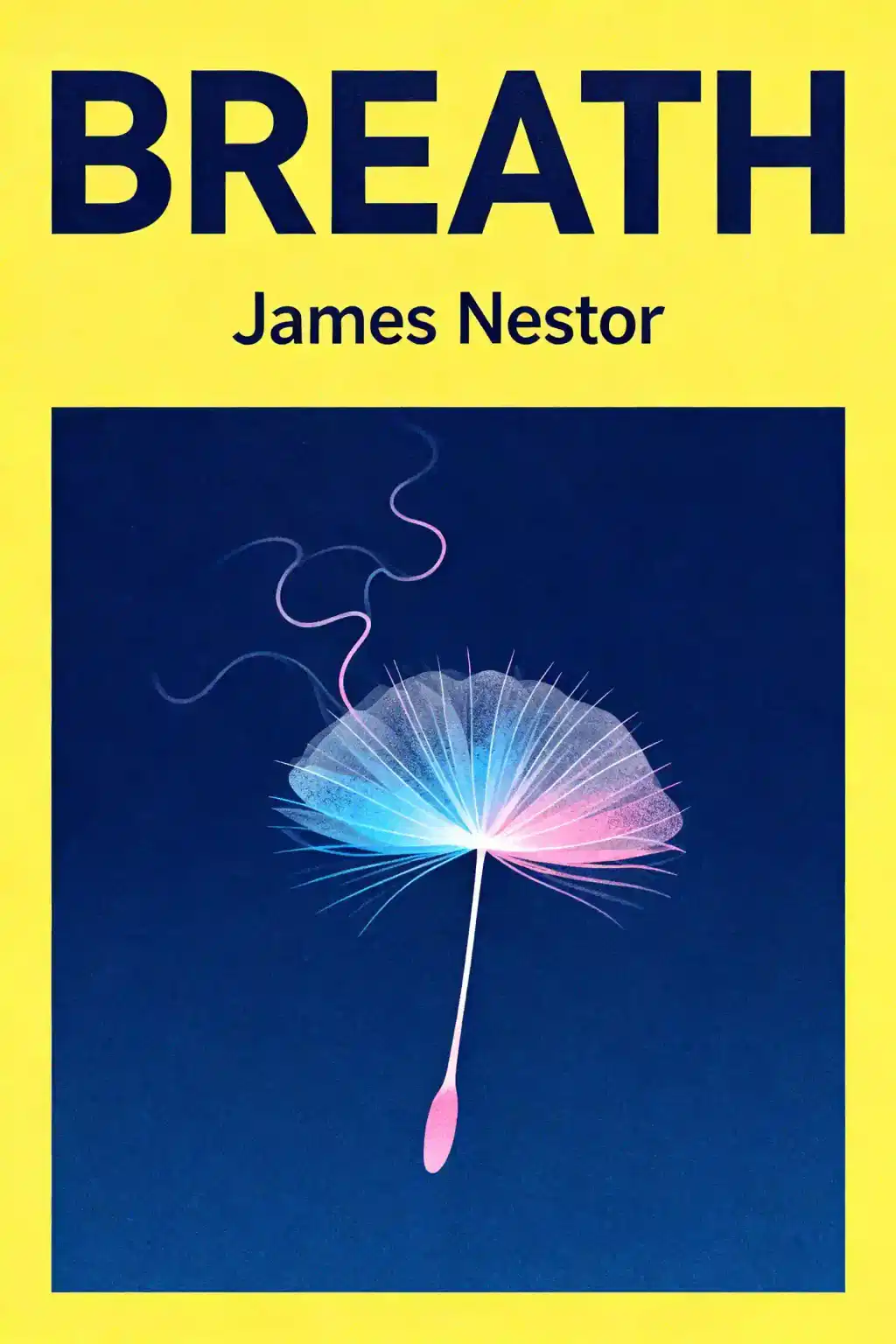
James Nestor, the bestselling author of Breath: The New Science of a Lost Art, is an award-winning science journalist whose work bridges ancient wisdom and modern research. A San Francisco-based writer, Nestor has contributed to Scientific American, The New York Times, and The Atlantic.
His exploration of breathing’s transformative power in Breath—a New York Times and London Sunday Times bestseller—delves into how improper respiration contributes to chronic health issues, weaving pulmonology, history, and global fieldwork.
Nestor’s earlier book, Deep: Freediving, Renegade Science, and What the Ocean Tells Us About Ourselves (a PEN Award finalist and Amazon Best Science Book), cemented his reputation for blending adventure narratives with scientific inquiry.
A sought-after speaker at institutions like Stanford Medical School and the United Nations, Nestor has appeared on Fresh Air with Terry Gross, The Joe Rogan Experience, and ABC’s Nightline. Breath, translated into 44 languages, won the 2020 Best General Nonfiction Book from the American Society of Journalists and Authors.
FAQs About Breath
What is Breath: The New Science of a Lost Art about?
Breath explores how modern habits like mouth breathing harm health, while rediscovering ancient techniques (e.g., nasal breathing, slow rhythms) can improve well-being. James Nestor combines research and global traditions to show how conscious breathing alleviates anxiety, enhances sleep, and boosts longevity. Key themes include CO₂’s role in respiration and practices like Tummo or coherent breathing.
Who should read Breath: The New Science of a Lost Art?
This book suits health enthusiasts, yoga practitioners, and anyone battling stress, sleep issues, or respiratory conditions. It’s also valuable for skeptics seeking science-backed methods to optimize mental/physical performance. Nestor’s blend of personal experiments and historical insights makes it accessible for casual readers and researchers alike.
Is Breath: The New Science of a Lost Art worth reading?
Yes. A New York Times bestseller, Breath offers actionable strategies backed by pulmonology research and centuries-old practices. Readers gain tools like nighttime mouth-taping, paced breathing, and jaw exercises—proven to address snoring, anxiety, and lung capacity. Its mix of storytelling and science appeals to both practical and academic audiences.
What are the main breathing techniques in Breath?
Nestor highlights:
- Nasal breathing for improved filtration and nitric oxide production.
- Coherent breathing (5.5-second inhales/exhales) to balance the nervous system.
- Tummo (controlled hyperventilation) for resilience.
- Buteyko method to reduce overbreathing.
These methods, rooted in yoga and free-diving traditions, aim to correct modern respiratory dysfunctions.
How does nose breathing improve health according to James Nestor?
Nasal breathing filters pathogens, increases oxygen uptake by 20%, and releases nitric oxide to boost circulation. Nestor cites studies showing it reduces snoring, enhances cognitive performance, and prevents dental issues. Conversely, chronic mouth breathing correlates with sleep apnea and hypertension.
What is coherent breathing in Breath?
Coherent breathing involves inhaling/exhaling for 5.5 seconds each, mirroring rhythms of prayers like the Ave Maria. This pace synchronizes heart rate and blood pressure, inducing calmness. Research links it to reduced anxiety and improved cardiovascular efficiency, making it a tool for stress management.
Does Breath discuss the role of carbon dioxide in breathing?
Yes. Nestor explains CO₂’s critical role in oxygen delivery to cells. Overbreathing expels too much CO₂, causing dizziness or panic. Techniques like slowed exhalations or breath-holding restore balance, aiding conditions like asthma. Carbon dioxide therapy is suggested as an alternative to anxiety medications.
What ancient practices does James Nestor reference in Breath?
The book ties modern science to yogic traditions like pranayama (alternate-nostril breathing), Tibetan Tummo (heat-generating breaths), and Buddhist mantras. These methods, validated by studies, emphasize nasal breathing, breath retention, and rhythmic patterns to enhance mental clarity and physical vitality.
How does Breath address modern breathing problems?
Nestor identifies industrialized diets and sedentary lifestyles as causes of narrowed airways and chronic mouth breathing. Solutions include chewing exercises to strengthen jaws, adopting “J-posture” alignment, and nighttime mouth-taping to enforce nasal breathing—all aiming to reverse evolutionary decline in respiratory health.
Are there critiques of Breath: The New Science of a Lost Art?
Some critics argue Nestor oversimplifies complex pulmonology or overstates anecdotal evidence. Others note limited discussion of medical interventions for severe conditions. However, most praise his compelling synthesis of forgotten wisdom and cutting-edge research.
How does Breath relate to yoga practices?
The book’s appendix details yogic techniques like nadi shodhana (alternate-nostril breathing) and three-part diaphragmatic breathing. Nestor credits these methods for improving lung capacity, reducing stress, and aligning modern science with ancient respiratory mindfulness.
What practical tips does Breath offer for daily breathing?
Key takeaways:
- Tape your mouth at night to enforce nasal breathing.
- Practice 5.5-second inhales/exhales for 5–10 minutes daily.
- Chew harder foods to widen airways.
- Prioritize extended exhalations to calm the nervous system.
These habits aim to correct chronic overbreathing and optimize oxygen-CO₂ balance.
Feel the book through the author's voice
Turn knowledge into engaging, example-rich insights
Capture key ideas in a flash for fast learning
Enjoy the book in a fun and engaging way
Key Themes in Breath
Quotes from Breath
Mouthbreathing is a major cause of crooked teeth, inflamed gums, and many other common health problems.
The perfect breath was this: Breathe in for about 5.5 seconds, then exhale for 5.5 seconds. That’s 5.5 breaths a minute for a total of about 5.5 liters of air.
Modern humans have become the worst breathers in the animal kingdom.
Breathe less.
The answer, it turns out, could revolutionize our understanding of human health.
Characters in Breath
Quick Summary Mode - Read or listen to Breath Summary in 8 Minutes

Break down key ideas from Breath into bite-sized takeaways to understand how innovative teams create, collaborate, and grow.

Flash Card Mode - Top 11 Insights from Breath in a Nutshell

Distill Breath into rapid-fire memory cues that highlight key principles of candor, teamwork, and creative resilience.

Fun Mode - Breath Lessons Told Through 25-Min Stories

Experience Breath through vivid storytelling that turns innovation lessons into moments you'll remember and apply.
Personalize Mode - Read or listen to Breath Summary in 0 Minutes

Ask anything, pick the voice, and co-create insights that truly resonate with you.

From Columbia University alumni built in San Francisco
"Instead of endless scrolling, I just hit play on BeFreed. It saves me so much time."


"I never knew where to start with nonfiction—BeFreed’s book lists turned into podcasts gave me a clear path."


"Perfect balance between learning and entertainment. Finished ‘Thinking, Fast and Slow’ on my commute this week."
"Crazy how much I learned while walking the dog. BeFreed = small habits → big gains."
"Reading used to feel like a chore. Now it’s just part of my lifestyle."

"Feels effortless compared to reading. I’ve finished 6 books this month already."
"BeFreed turned my guilty doomscrolling into something that feels productive and inspiring."

"BeFreed turned my commute into learning time. 20-min podcasts are perfect for finishing books I never had time for."
"BeFreed replaced my podcast queue. Imagine Spotify for books — that’s it. 🙌"

"It is great for me to learn something from the book without reading it."
"The themed book list podcasts help me connect ideas across authors—like a guided audio journey."
"Makes me feel smarter every time before going to work"
From Columbia University alumni built in San Francisco
"Instead of endless scrolling, I just hit play on BeFreed. It saves me so much time."
"I never knew where to start with nonfiction—BeFreed’s book lists turned into podcasts gave me a clear path."
"Perfect balance between learning and entertainment. Finished ‘Thinking, Fast and Slow’ on my commute this week."
"Crazy how much I learned while walking the dog. BeFreed = small habits → big gains."
"Reading used to feel like a chore. Now it’s just part of my lifestyle."
"Feels effortless compared to reading. I’ve finished 6 books this month already."
"BeFreed turned my guilty doomscrolling into something that feels productive and inspiring."
"BeFreed turned my commute into learning time. 20-min podcasts are perfect for finishing books I never had time for."
"BeFreed replaced my podcast queue. Imagine Spotify for books — that’s it. 🙌"
"It is great for me to learn something from the book without reading it."
"The themed book list podcasts help me connect ideas across authors—like a guided audio journey."
"Makes me feel smarter every time before going to work"
"Instead of endless scrolling, I just hit play on BeFreed. It saves me so much time."
"I never knew where to start with nonfiction—BeFreed’s book lists turned into podcasts gave me a clear path."
"Perfect balance between learning and entertainment. Finished ‘Thinking, Fast and Slow’ on my commute this week."
"Crazy how much I learned while walking the dog. BeFreed = small habits → big gains."
"Reading used to feel like a chore. Now it’s just part of my lifestyle."
"Feels effortless compared to reading. I’ve finished 6 books this month already."
"BeFreed turned my guilty doomscrolling into something that feels productive and inspiring."
"BeFreed turned my commute into learning time. 20-min podcasts are perfect for finishing books I never had time for."
"BeFreed replaced my podcast queue. Imagine Spotify for books — that’s it. 🙌"
"It is great for me to learn something from the book without reading it."
"The themed book list podcasts help me connect ideas across authors—like a guided audio journey."
"Makes me feel smarter every time before going to work"
"Instead of endless scrolling, I just hit play on BeFreed. It saves me so much time."
"I never knew where to start with nonfiction—BeFreed’s book lists turned into podcasts gave me a clear path."
"Perfect balance between learning and entertainment. Finished ‘Thinking, Fast and Slow’ on my commute this week."
"Crazy how much I learned while walking the dog. BeFreed = small habits → big gains."
"Reading used to feel like a chore. Now it’s just part of my lifestyle."
"Feels effortless compared to reading. I’ve finished 6 books this month already."
"BeFreed turned my guilty doomscrolling into something that feels productive and inspiring."
"BeFreed turned my commute into learning time. 20-min podcasts are perfect for finishing books I never had time for."
"BeFreed replaced my podcast queue. Imagine Spotify for books — that’s it. 🙌"
"It is great for me to learn something from the book without reading it."
"The themed book list podcasts help me connect ideas across authors—like a guided audio journey."
"Makes me feel smarter every time before going to work"

Get the Breath summary as a free PDF or EPUB. Print it or read offline anytime.