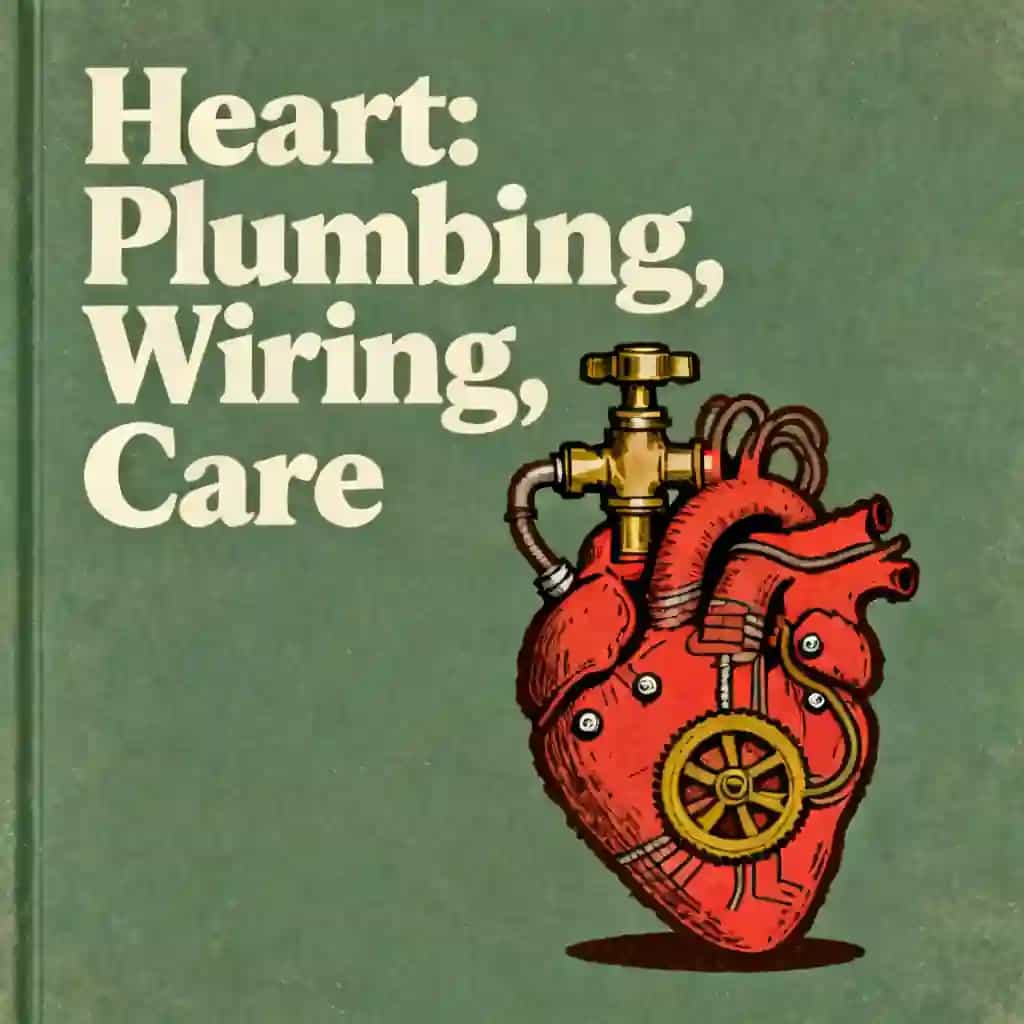
Overview of Heart
Cardiologist Sandeep Jauhar's "Heart: A History" weaves medical breakthroughs with personal stories, earning finalist status for the Wellcome Book Prize. What makes this PBS NewsHour book club pick revolutionary? Its profound argument that our lifestyle choices - not technology - hold the key to cardiac health.
- Heart: A History traces cardiac medicine from ancient cultural taboos to modern breakthroughs
- Sandeep Jauhar personalizes heart science through family history and patient stories
- The "dynamo pipes wires" framework demystifies heart anatomy for non-medical readers
- Self-experimenting pioneers like George Mines sacrificed lives to map heart rhythms
- Daniel Hale Williams performed first open-heart surgery against Gilded Age racial barriers
- Accidental pacemaker invention revolutionized cardiac care through Wilson Greatbatch's curiosity
- Heart-lung machine development enabled previously impossible life-saving surgeries
- Jauhar warns modern cardiology progress plateaus despite historical innovation speed
- Cultural reverence for the heart delayed scientific understanding for millennia
- Cardiac surgeons balance technical mastery with emotional resilience in critical cases
- Heart disease remains humanity's leading killer despite centuries of medical advances
- Jauhar frames the heart as both biological pump and cultural metaphor
About the Author of Heart
Sandeep Jauhar, cardiologist and bestselling author of Heart: A History, merges medical expertise with gripping storytelling in this exploration of cardiology’s evolution.
A practicing physician and director of Long Island Jewish Medical Center’s heart failure program, Jauhar draws from his family’s history of heart disease and his frontline experiences to illuminate the heart’s biological and metaphorical significance.
His work has been featured in The New York Times, where he is a contributing opinion writer, and on NPR, CNN, and MSNBC. Jauhar’s acclaimed memoirs include Intern: A Doctor’s Initiation and Doctored: The Disillusionment of an American Physician, both examining systemic challenges in modern healthcare.
Heart: A History was shortlisted for the 2019 Wellcome Book Prize and named an Amazon Best Book of the Month, praised for its blend of historical research and personal insight into medicine’s most vital organ.
FAQs About Heart
What is Heart: A History by Sandeep Jauhar about?
Heart: A History explores the medical, cultural, and emotional significance of the heart through a blend of scientific discoveries, philosophical reflections, and personal narratives. Cardiologist Sandeep Jauhar traces humanity’s evolving understanding of the heart—from ancient beliefs to modern breakthroughs—while weaving in stories of patients, pioneers, and his own family’s struggles with heart disease. The book underscores the interconnectedness of the physical organ and its symbolic role in human experience.
Who should read Heart: A History?
This book is ideal for readers interested in medical history, cardiology, or memoirs that blend science with personal storytelling. Healthcare professionals, students, and anyone curious about the heart’s dual role as a biological pump and a cultural metaphor will find it compelling. Fans of authors like Atul Gawande will appreciate Jauhar’s introspective yet accessible approach.
Is Heart: A History worth reading?
Yes—it was shortlisted for the 2019 Wellcome Book Prize and praised for its gripping storytelling and insightful analysis. Jauhar’s mix of historical anecdotes (e.g., self-experimentation by early cardiologists), cutting-edge science, and candid personal experiences (including his own heart health crisis) offers a unique lens to understand humanity’s relationship with this vital organ.
What are the key themes in Heart: A History?
Key themes include the tension between the heart’s biological function and its symbolic meaning, the ethical dilemmas in cardiac medicine, and the impact of emotional well-being on physical health. Jauhar argues that social connection and stress reduction are as critical to heart health as medical interventions—a idea supported by studies cited in the book.
What medical breakthroughs are discussed in Heart: A History?
The book highlights milestones like the discovery of heparin (derived from salamander brains), the first cardiac catheterization performed on oneself by Werner Forssmann, and the development of artificial hearts. Jauhar also examines contemporary advances, such as gene editing and wearable cardiac tech, while questioning their ethical implications.
What memorable quotes are in Heart: A History?
A standout quote is: “If the heart bestows life and death, it also instigates metaphor.” This reflects Jauhar’s thesis that the heart’s physical and symbolic roles are inseparable. Another poignant line—“from birth until death, it beats nearly three billion times”—emphasizes its relentless, life-sustaining labor.
How does Sandeep Jauhar’s personal story fit into the book?
Jauhar intertwines his family’s history of heart disease with his own diagnosis of arterial blockages in middle age. He candidly recounts his grandfather’s fatal heart attack, his father’s dementia, and his brother’s role in diagnosing his cardiac issues, adding emotional depth to the scientific narrative.
Are there criticisms of Heart: A History?
Some readers may find the technical details of cardiology dense, though Jauhar balances them with relatable anecdotes. The book’s hybrid structure—part memoir, part medical history—could feel disjointed to those seeking a purely clinical or narrative focus. However, most reviews praise its originality and accessibility.
How does Heart: A History compare to Sandeep Jauhar’s other works?
Like his earlier memoirs (Intern and Doctored), this book combines medical expertise with personal reflection. However, Heart: A History broader scope—spanning centuries of science and culture—distinguishes it as a more ambitious exploration of both the organ and its mythos.
What qualifies Sandeep Jauhar to write about the heart?
Jauhar is a practicing cardiologist, New York Times contributor, and PhD holder in experimental physics. His clinical experience, scientific background, and narrative skill enable him to dissect complex cardiac concepts while maintaining a compelling, human-centered perspective.
What philosophical questions does Heart: A History raise?
The book challenges the reductionist view of the heart as “just a pump,” exploring questions like: How do emotions physically affect the heart? Can we reconcile its mechanical repair with its spiritual symbolism? Jauhar argues that ignoring these connections undermines holistic patient care.
Why is Heart: A History relevant to modern readers?
With heart disease remaining a leading global cause of death, Jauhar’s insights into prevention, innovation, and the mind-heart connection are timelier than ever. The book urges readers to consider how lifestyle, technology, and empathy shape cardiovascular health in an increasingly stressful world.
Feel the book through the author's voice
Turn knowledge into engaging, example-rich insights
Capture key ideas in a flash for fast learning
Enjoy the book in a fun and engaging way
Key Themes in Heart
Quotes from Heart
What if the organ that keeps you alive is also plotting your demise?
Heart metaphors permeate our language.
The heart is extraordinarily sensitive to our emotional system.
The heart alone of all the viscera cannot withstand injury.
The feasibility of cardiac repair no longer remains in doubt.
Characters in Heart
Quick Summary Mode - Read or listen to Heart Summary in 9 Minutes

Break down key ideas from Heart into bite-sized takeaways to understand how innovative teams create, collaborate, and grow.

Flash Card Mode - Top 7 Insights from Heart in a Nutshell

Distill Heart into rapid-fire memory cues that highlight key principles of candor, teamwork, and creative resilience.

Fun Mode - Heart Lessons Told Through 24-Min Stories

Experience Heart through vivid storytelling that turns innovation lessons into moments you'll remember and apply.
Personalize Mode - Read or listen to Heart Summary in 0 Minutes

Ask anything, pick the voice, and co-create insights that truly resonate with you.

From Columbia University alumni built in San Francisco
"Instead of endless scrolling, I just hit play on BeFreed. It saves me so much time."


"I never knew where to start with nonfiction—BeFreed’s book lists turned into podcasts gave me a clear path."


"Perfect balance between learning and entertainment. Finished ‘Thinking, Fast and Slow’ on my commute this week."
"Crazy how much I learned while walking the dog. BeFreed = small habits → big gains."
"Reading used to feel like a chore. Now it’s just part of my lifestyle."

"Feels effortless compared to reading. I’ve finished 6 books this month already."
"BeFreed turned my guilty doomscrolling into something that feels productive and inspiring."

"BeFreed turned my commute into learning time. 20-min podcasts are perfect for finishing books I never had time for."
"BeFreed replaced my podcast queue. Imagine Spotify for books — that’s it. 🙌"

"It is great for me to learn something from the book without reading it."
"The themed book list podcasts help me connect ideas across authors—like a guided audio journey."
"Makes me feel smarter every time before going to work"
From Columbia University alumni built in San Francisco
"Instead of endless scrolling, I just hit play on BeFreed. It saves me so much time."
"I never knew where to start with nonfiction—BeFreed’s book lists turned into podcasts gave me a clear path."
"Perfect balance between learning and entertainment. Finished ‘Thinking, Fast and Slow’ on my commute this week."
"Crazy how much I learned while walking the dog. BeFreed = small habits → big gains."
"Reading used to feel like a chore. Now it’s just part of my lifestyle."
"Feels effortless compared to reading. I’ve finished 6 books this month already."
"BeFreed turned my guilty doomscrolling into something that feels productive and inspiring."
"BeFreed turned my commute into learning time. 20-min podcasts are perfect for finishing books I never had time for."
"BeFreed replaced my podcast queue. Imagine Spotify for books — that’s it. 🙌"
"It is great for me to learn something from the book without reading it."
"The themed book list podcasts help me connect ideas across authors—like a guided audio journey."
"Makes me feel smarter every time before going to work"
"Instead of endless scrolling, I just hit play on BeFreed. It saves me so much time."
"I never knew where to start with nonfiction—BeFreed’s book lists turned into podcasts gave me a clear path."
"Perfect balance between learning and entertainment. Finished ‘Thinking, Fast and Slow’ on my commute this week."
"Crazy how much I learned while walking the dog. BeFreed = small habits → big gains."
"Reading used to feel like a chore. Now it’s just part of my lifestyle."
"Feels effortless compared to reading. I’ve finished 6 books this month already."
"BeFreed turned my guilty doomscrolling into something that feels productive and inspiring."
"BeFreed turned my commute into learning time. 20-min podcasts are perfect for finishing books I never had time for."
"BeFreed replaced my podcast queue. Imagine Spotify for books — that’s it. 🙌"
"It is great for me to learn something from the book without reading it."
"The themed book list podcasts help me connect ideas across authors—like a guided audio journey."
"Makes me feel smarter every time before going to work"
"Instead of endless scrolling, I just hit play on BeFreed. It saves me so much time."
"I never knew where to start with nonfiction—BeFreed’s book lists turned into podcasts gave me a clear path."
"Perfect balance between learning and entertainment. Finished ‘Thinking, Fast and Slow’ on my commute this week."
"Crazy how much I learned while walking the dog. BeFreed = small habits → big gains."
"Reading used to feel like a chore. Now it’s just part of my lifestyle."
"Feels effortless compared to reading. I’ve finished 6 books this month already."
"BeFreed turned my guilty doomscrolling into something that feels productive and inspiring."
"BeFreed turned my commute into learning time. 20-min podcasts are perfect for finishing books I never had time for."
"BeFreed replaced my podcast queue. Imagine Spotify for books — that’s it. 🙌"
"It is great for me to learn something from the book without reading it."
"The themed book list podcasts help me connect ideas across authors—like a guided audio journey."
"Makes me feel smarter every time before going to work"

Get the Heart summary as a free PDF or EPUB. Print it or read offline anytime.