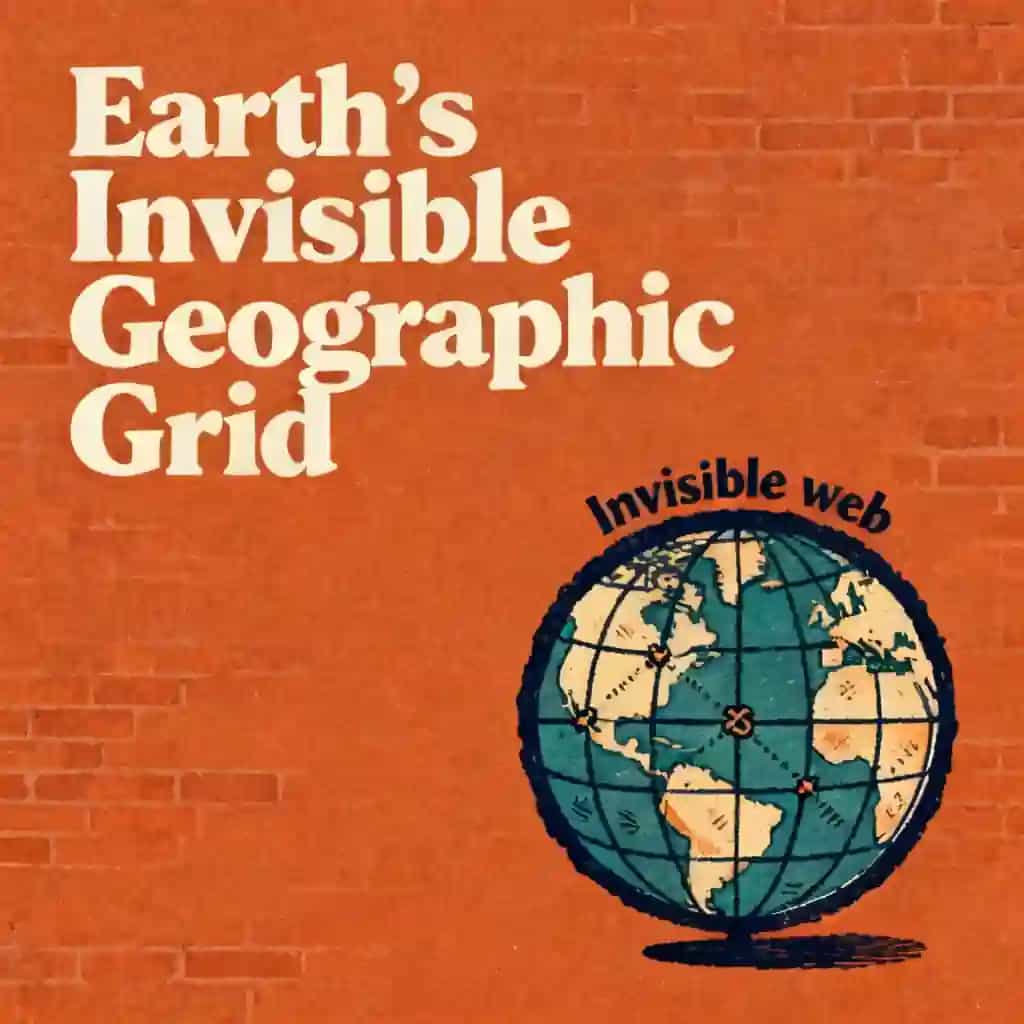
Overview of Longitude
Before GPS, sailors died by the thousands. "Longitude" chronicles John Harrison's 40-year quest to solve navigation's deadliest puzzle, winning a king's ransom and changing history. Shortlisted for the Pulitzer Prize, this slim bestseller inspired a BBC series that captivated millions.
- John Harrison’s four-decade obsession revolutionized naval navigation through precise timekeeping
- The £20,000 Longitude Prize prioritized practical solutions over theoretical academic approaches
- Harrison’s marine chronometer solved longitude by tracking time differences between home and sea
- Latitude’s simplicity contrasted sharply with longitude’s life-threatening calculation challenges
- Clockmakers beat astronomers in solving history’s greatest navigational problem
- Harrison’s H4 chronometer achieved accuracy within 33 seconds over 47 days
- British Parliament’s Board of Longitude initially doubted mechanical solutions to celestial problems
- Self-taught geniuses can out-innovate institutional scientific establishments through perseverance
- Longitude’s solution transformed global trade routes and naval warfare strategies
- Dava Sobel frames longitude’s solution as a triumph of craftsmanship over academia
- Harrison’s grasshopper escapement mechanism became horology’s foundational marine innovation
- The longitude crisis caused catastrophic shipwrecks until chronometers enabled precise positioning
About the Author of Longitude
Dava Sobel, bestselling author of Longitude: The True Story of a Lone Genius Who Solved the Greatest Scientific Problem of His Time, is a celebrated science writer renowned for making complex historical and scientific narratives accessible to general audiences. A former New York Times science reporter, Sobel combines meticulous research with storytelling flair, particularly in exploring the intersection of science, history, and human perseverance. Her debut work, Longitude—a landmark in popular science and historical non-fiction—delves into 18th-century navigational challenges and clockmaker John Harrison’s quest to solve them, reflecting Sobel’s knack for uncovering overlooked scientific pioneers.
Sobel’s authority in science communication is bolstered by accolades like the National Science Board’s Public Service Award and the Los Angeles Times Book Award.
Her other acclaimed works, including Galileo’s Daughter and The Glass Universe, further cement her reputation for illuminating women’s contributions to science. Longitude has sold over 300,000 copies, inspired a PBS documentary, and was adapted into a television series starring Jeremy Irons, underscoring its enduring cultural impact.
FAQs About Longitude
What is Longitude by Dava Sobel about?
Longitude chronicles John Harrison’s 40-year quest to solve the 18th-century “longitude problem”—determining a ship’s east-west position at sea. Through his invention of the marine chronometer, Harrison revolutionized navigation, saving countless lives. Dava Sobel blends science, history, and biography to highlight themes of perseverance, innovation, and the clash between individual genius and institutional resistance.
Who should read Longitude by Dava Sobel?
History enthusiasts, STEM readers, and fans of narrative nonfiction will appreciate this book. It appeals to those interested in maritime history, horology, or stories of underdog innovators. Educators and students exploring scientific discovery’s societal impact will also find it valuable.
Is Longitude by Dava Sobel worth reading?
Yes—it’s a concise, award-winning account praised for making complex science accessible. Sobel’s engaging storytelling and Harrison’s gripping struggle against bureaucratic opposition make it a compelling read. Ideal for readers seeking a blend of adventure, history, and innovation.
What was the longitude problem in the 18th century?
Sailors could measure latitude easily but struggled to calculate longitude (east-west position), leading to shipwrecks and lost cargo. The British Parliament’s 1714 Longitude Act offered £20,000 (millions today) for a solution. Harrison’s chronometer eventually solved it by tracking time differences between a ship’s location and a reference point like Greenwich.
How did John Harrison solve the longitude problem?
Harrison built precision marine chronometers (H-1 to H-4) that maintained accurate time at sea. By comparing local noon with the chronometer’s time (set to a home port), sailors calculated longitude. Despite decades of skepticism from astronomers favoring celestial methods, his H-4 won partial recognition and paved the way for modern navigation.
What obstacles did John Harrison face?
Harrison battled the scientific establishment, particularly the Board of Longitude, which favored astronomical solutions like lunar distance methods. Class bias and bureaucratic delays stalled his recognition, though King George III eventually intervened. His story underscores challenges faced by outsiders in innovation.
How does Longitude explore themes of innovation vs. tradition?
Sobel contrasts Harrison’s practical engineering with astronomers’ theoretical approaches, illustrating how entrenched institutions often resist disruptive ideas. The book underscores the tension between incremental progress and groundbreaking invention—a theme relevant to modern tech debates.
What is the significance of the marine chronometer today?
Harrison’s work laid the foundation for precise timekeeping, influencing modern GPS and global navigation systems. The chronometer’s principles remain embedded in technologies coordinating travel, telecommunications, and space exploration.
How does Longitude compare to Dava Sobel’s other books?
Like Galileo’s Daughter and The Glass Universe, Longitude combines meticulous research with vivid storytelling. It focuses on a singular scientific breakthrough, whereas her other works explore broader historical narratives or collective contributions (e.g., women astronomers).
What criticisms exist about Longitude?
Some historians argue Sobel oversimplifies technical details or dramatizes Harrison’s feud with the Board. Others wish for deeper analysis of broader 18th-century scientific rivalries. Despite this, the book remains a landmark in popular science writing.
How does Longitude relate to modern STEM education?
The book exemplifies interdisciplinary learning, merging physics, engineering, and history. Educators use it to teach problem-solving, resilience, and the societal impact of innovation—key themes in STEM curricula today.
Why is Longitude still relevant in 2025?
As AI and quantum computing redefine technology, Harrison’s story reminds us that progress hinges on visionary individuals challenging norms. The book also resonates in debates about funding innovation and recognizing underrepresented contributors in science.
Feel the book through the author's voice
Turn knowledge into engaging, example-rich insights
Capture key ideas in a flash for fast learning
Enjoy the book in a fun and engaging way
Key Themes in Longitude
Quotes from Longitude
These imaginary lines have had very real consequences.
Longitude has no natural starting point - it's a political choice.
Without accurate time, sailors were quite literally lost at sea.
The consequences of navigational uncertainty were written in blood and treasure.
Scurvy claimed the lives of over a million sailors between 1500 and 1800.
Characters in Longitude
Quick Summary Mode - Read or listen to Longitude Summary in 9 Minutes

Break down key ideas from Longitude into bite-sized takeaways to understand how innovative teams create, collaborate, and grow.

Flash Card Mode - Top 10 Insights from Longitude in a Nutshell

Distill Longitude into rapid-fire memory cues that highlight key principles of candor, teamwork, and creative resilience.

Fun Mode - Longitude Lessons Told Through 24-Min Stories

Experience Longitude through vivid storytelling that turns innovation lessons into moments you'll remember and apply.
Personalize Mode - Read or listen to Longitude Summary in 0 Minutes

Ask anything, pick the voice, and co-create insights that truly resonate with you.

From Columbia University alumni built in San Francisco
"Instead of endless scrolling, I just hit play on BeFreed. It saves me so much time."


"I never knew where to start with nonfiction—BeFreed’s book lists turned into podcasts gave me a clear path."


"Perfect balance between learning and entertainment. Finished ‘Thinking, Fast and Slow’ on my commute this week."
"Crazy how much I learned while walking the dog. BeFreed = small habits → big gains."
"Reading used to feel like a chore. Now it’s just part of my lifestyle."

"Feels effortless compared to reading. I’ve finished 6 books this month already."
"BeFreed turned my guilty doomscrolling into something that feels productive and inspiring."

"BeFreed turned my commute into learning time. 20-min podcasts are perfect for finishing books I never had time for."
"BeFreed replaced my podcast queue. Imagine Spotify for books — that’s it. 🙌"

"It is great for me to learn something from the book without reading it."
"The themed book list podcasts help me connect ideas across authors—like a guided audio journey."
"Makes me feel smarter every time before going to work"
From Columbia University alumni built in San Francisco
"Instead of endless scrolling, I just hit play on BeFreed. It saves me so much time."
"I never knew where to start with nonfiction—BeFreed’s book lists turned into podcasts gave me a clear path."
"Perfect balance between learning and entertainment. Finished ‘Thinking, Fast and Slow’ on my commute this week."
"Crazy how much I learned while walking the dog. BeFreed = small habits → big gains."
"Reading used to feel like a chore. Now it’s just part of my lifestyle."
"Feels effortless compared to reading. I’ve finished 6 books this month already."
"BeFreed turned my guilty doomscrolling into something that feels productive and inspiring."
"BeFreed turned my commute into learning time. 20-min podcasts are perfect for finishing books I never had time for."
"BeFreed replaced my podcast queue. Imagine Spotify for books — that’s it. 🙌"
"It is great for me to learn something from the book without reading it."
"The themed book list podcasts help me connect ideas across authors—like a guided audio journey."
"Makes me feel smarter every time before going to work"
"Instead of endless scrolling, I just hit play on BeFreed. It saves me so much time."
"I never knew where to start with nonfiction—BeFreed’s book lists turned into podcasts gave me a clear path."
"Perfect balance between learning and entertainment. Finished ‘Thinking, Fast and Slow’ on my commute this week."
"Crazy how much I learned while walking the dog. BeFreed = small habits → big gains."
"Reading used to feel like a chore. Now it’s just part of my lifestyle."
"Feels effortless compared to reading. I’ve finished 6 books this month already."
"BeFreed turned my guilty doomscrolling into something that feels productive and inspiring."
"BeFreed turned my commute into learning time. 20-min podcasts are perfect for finishing books I never had time for."
"BeFreed replaced my podcast queue. Imagine Spotify for books — that’s it. 🙌"
"It is great for me to learn something from the book without reading it."
"The themed book list podcasts help me connect ideas across authors—like a guided audio journey."
"Makes me feel smarter every time before going to work"
"Instead of endless scrolling, I just hit play on BeFreed. It saves me so much time."
"I never knew where to start with nonfiction—BeFreed’s book lists turned into podcasts gave me a clear path."
"Perfect balance between learning and entertainment. Finished ‘Thinking, Fast and Slow’ on my commute this week."
"Crazy how much I learned while walking the dog. BeFreed = small habits → big gains."
"Reading used to feel like a chore. Now it’s just part of my lifestyle."
"Feels effortless compared to reading. I’ve finished 6 books this month already."
"BeFreed turned my guilty doomscrolling into something that feels productive and inspiring."
"BeFreed turned my commute into learning time. 20-min podcasts are perfect for finishing books I never had time for."
"BeFreed replaced my podcast queue. Imagine Spotify for books — that’s it. 🙌"
"It is great for me to learn something from the book without reading it."
"The themed book list podcasts help me connect ideas across authors—like a guided audio journey."
"Makes me feel smarter every time before going to work"

Get the Longitude summary as a free PDF or EPUB. Print it or read offline anytime.