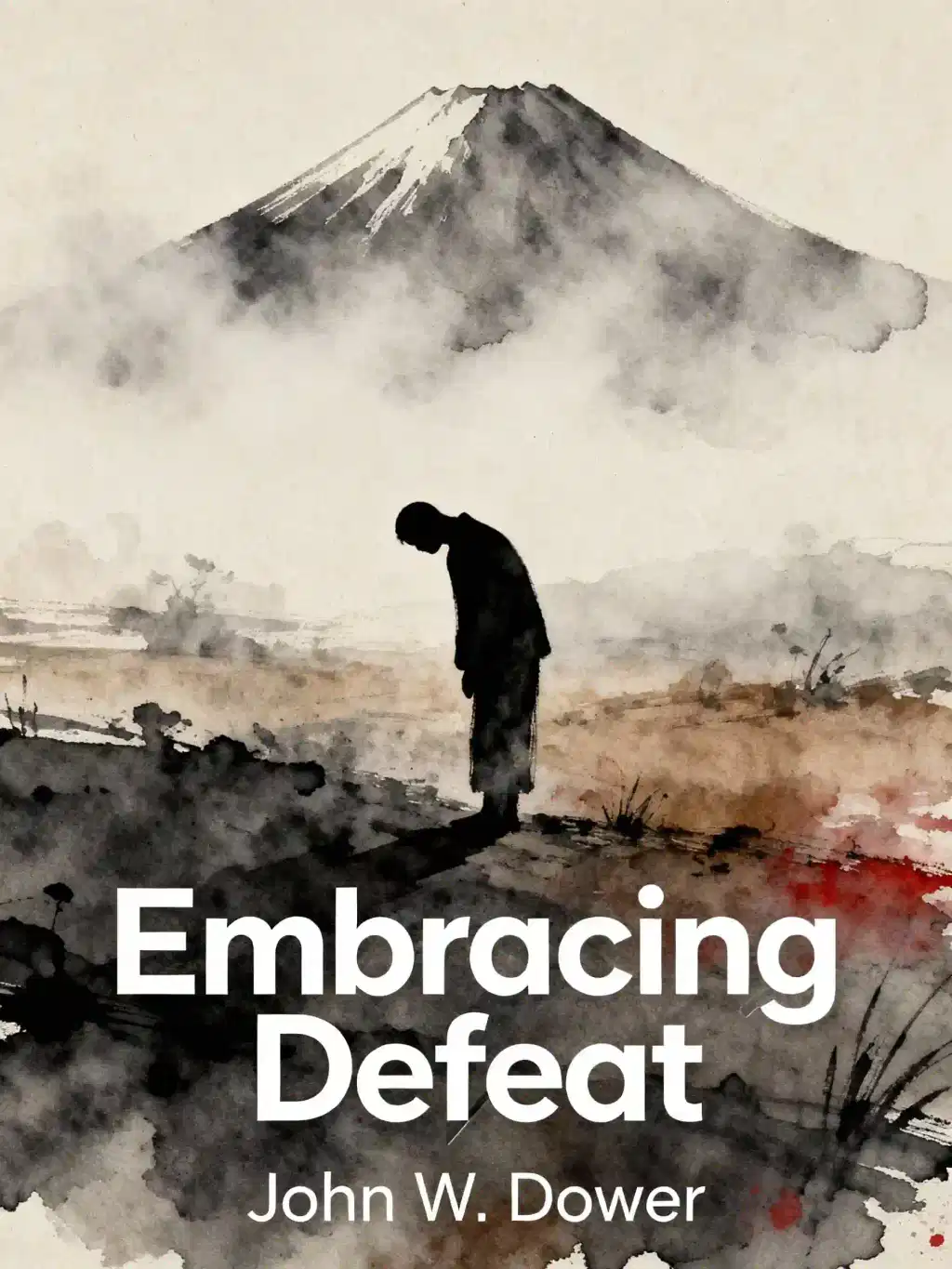
Overview of Embracing Defeat
Pulitzer-winning "Embracing Defeat" reveals Japan's raw post-WWII transformation through everyday citizens' eyes - not just politics. Dower's masterpiece sparked global debates on Emperor Hirohito's accountability while revolutionizing how we understand societies rebuilding from catastrophic loss.
- Japan's "shattered lives" encompassed mass starvation, homelessness, and psychological despair after WWII.
- Americans imposed democracy through autocratic military rule, creating profound irony.
- Three core issues reshaped Japan: the emperor's fate, constitution reform, and war tribunals.
- Ordinary Japanese experienced liberation amid guilt, selective forgetting, and new hopes.
- Returning soldiers faced societal stigma, often reduced to begging for survival.
- Democratization succeeded through US officials adapting to Japanese cultural strengths.
- Dower reveals the occupation's complexity using diaries, comics, and popular culture.
- Japan blended Western innovation with tradition to build peaceful prosperity.
- MacArthur's censorship barred discussion of nuclear bombs' human impact.
- Disabled veterans suffered doubly through physical wounds and social abandonment.
- Embracing Defeat won the Pulitzer Prize for its ordinary-people perspective.
- The occupation transformed Japan despite lingering scars of defeat.
About the Author of Embracing Defeat
John W. Dower is an American historian and author of the Pulitzer Prize-winning book Embracing Defeat: Japan in the Wake of World War II, renowned for his expertise in modern Japanese history and U.S.-Japan relations. As professor emeritus at MIT, his scholarship examines cultural transformation during periods of conflict and occupation, particularly Japan's postwar reconstruction.
Dower's acclaimed works include War Without Mercy, which won the National Book Critics Circle Award for its analysis of racial dynamics in the Pacific War, and Cultures of War, which explores parallels between Pearl Harbor, Hiroshima, 9/11, and the Iraq War. He co-founded MIT's "Visualizing Cultures" project, a pioneering digital resource for image-driven historical scholarship on East Asia. His documentary Hellfire: A Journey from Hiroshima earned an Academy Award nomination.
Embracing Defeat swept major literary honors, including the Pulitzer Prize, National Book Award, and Bancroft Prize, establishing it as the definitive English-language account of occupied Japan.
FAQs About Embracing Defeat
What is "Embracing Defeat: Japan in the Wake of World War II" about?
Embracing Defeat by John W. Dower explores Japan's transformation after WWII, detailing the social, economic, and political upheavals during the Allied occupation (1945–1952). It examines how Japanese society rebuilt amidst starvation, cultural dislocation, and democratic reforms, using personal accounts, media, and art to reveal the human experience of defeat.
Who is John W. Dower, the author of "Embracing Defeat"?
John W. Dower is a Pulitzer Prize-winning historian and MIT professor specializing in U.S.-Japan relations. His works, including War Without Mercy and Embracing Defeat, analyze war, imperialism, and cross-cultural dynamics. He blends rigorous scholarship with accessible narratives, earning acclaim for nuanced historical insights.
Who should read "Embracing Defeat"?
This book suits historians, students of post-conflict societies, and readers interested in Japan’s modern history. Its depth appeals to those examining occupation policies, cultural resilience, or democratic transitions. Casual readers seeking immersive historical narratives will also value its vivid storytelling.
Is "Embracing Defeat" worth reading?
Yes, Embracing Defeat is essential for understanding post-WWII Japan. Awarded the Pulitzer Prize and National Book Award, it offers unparalleled depth through diverse sources—from diaries to comics—capturing both suffering and rebirth. Its balance of scholarly rigor and human stories makes it compelling.
What are the main themes in "Embracing Defeat"?
Key themes include:
- Survival amid devastation: Mass starvation, homelessness, and societal collapse.
- Cultural reinvention: Language shifts, subcultures (e.g., prostitution), and evolving gender roles.
- Occupation paradox: U.S. imposition of democracy through autocratic rule, later adapting to Japanese pragmatism.
How does "Embracing Defeat" portray the American occupation?
The book critiques the occupation’s contradictions: idealistic democratization clashed with U.S. authoritarian control. Reforms like women’s rights and labor protections emerged alongside censorship and Cold War-era reversals. Dower credits American flexibility for Japan’s eventual success but highlights lingering trauma.
What sources does John W. Dower use in "Embracing Defeat"?
Dower employs:
- Personal writings: Diaries, letters, and poetry from ordinary Japanese.
- Popular culture: Manga, art, and pulp literature to trace societal shifts.
- Official records: U.S. occupation policies and Japanese government documents.
What awards did "Embracing Defeat" win?
The book received:
- Pulitzer Prize for General Nonfiction (2000).
- National Book Award (1999).
- Bancroft Prize and Los Angeles Times Book Prize.
How does "Embracing Defeat" describe daily life in post-war Japan?
Dower depicts extreme hardship: citizens ate sawdust or acorns to survive, while veterans faced stigma and poverty. Orphaned children roamed streets, and newspapers published recipes for inedible substitutes. This "food-wretchedness" coexisted with emergent subcultures challenging traditions.
What is the significance of the title "Embracing Defeat"?
The title reflects Japan’s paradoxical response: surrender enabled reinvention. "Embracing" signifies not just acceptance but active engagement—transforming shame into democratic renewal, linguistic innovation, and cultural resilience amid ruin.
Feel the book through the author's voice
Turn knowledge into engaging, example-rich insights
Capture key ideas in a flash for fast learning
Enjoy the book in a fun and engaging way
Key Themes in Embracing Defeat
Quotes from Embracing Defeat
The Americans, for their part, were determined to democratize and demilitarize Japan.
The emperor became a symbol.
the war situation has developed not necessarily to Japan's advantage.
his vital organs are torn asunder when contemplating his subjects' suffering
the only people not living illegally are those in jail
Characters in Embracing Defeat
Quick Summary Mode - Read or listen to Embracing Defeat Summary in 9 Minutes

Break down key ideas from Embracing Defeat into bite-sized takeaways to understand how innovative teams create, collaborate, and grow.

Flash Card Mode - Top 10 Insights from Embracing Defeat in a Nutshell

Distill Embracing Defeat into rapid-fire memory cues that highlight key principles of candor, teamwork, and creative resilience.

Fun Mode - Embracing Defeat Lessons Told Through 21-Min Stories

Experience Embracing Defeat through vivid storytelling that turns innovation lessons into moments you'll remember and apply.
Personalize Mode - Read or listen to Embracing Defeat Summary in 0 Minutes

Ask anything, pick the voice, and co-create insights that truly resonate with you.

From Columbia University alumni built in San Francisco
"Instead of endless scrolling, I just hit play on BeFreed. It saves me so much time."


"I never knew where to start with nonfiction—BeFreed’s book lists turned into podcasts gave me a clear path."


"Perfect balance between learning and entertainment. Finished ‘Thinking, Fast and Slow’ on my commute this week."
"Crazy how much I learned while walking the dog. BeFreed = small habits → big gains."
"Reading used to feel like a chore. Now it’s just part of my lifestyle."

"Feels effortless compared to reading. I’ve finished 6 books this month already."
"BeFreed turned my guilty doomscrolling into something that feels productive and inspiring."

"BeFreed turned my commute into learning time. 20-min podcasts are perfect for finishing books I never had time for."
"BeFreed replaced my podcast queue. Imagine Spotify for books — that’s it. 🙌"

"It is great for me to learn something from the book without reading it."
"The themed book list podcasts help me connect ideas across authors—like a guided audio journey."
"Makes me feel smarter every time before going to work"
From Columbia University alumni built in San Francisco
"Instead of endless scrolling, I just hit play on BeFreed. It saves me so much time."
"I never knew where to start with nonfiction—BeFreed’s book lists turned into podcasts gave me a clear path."
"Perfect balance between learning and entertainment. Finished ‘Thinking, Fast and Slow’ on my commute this week."
"Crazy how much I learned while walking the dog. BeFreed = small habits → big gains."
"Reading used to feel like a chore. Now it’s just part of my lifestyle."
"Feels effortless compared to reading. I’ve finished 6 books this month already."
"BeFreed turned my guilty doomscrolling into something that feels productive and inspiring."
"BeFreed turned my commute into learning time. 20-min podcasts are perfect for finishing books I never had time for."
"BeFreed replaced my podcast queue. Imagine Spotify for books — that’s it. 🙌"
"It is great for me to learn something from the book without reading it."
"The themed book list podcasts help me connect ideas across authors—like a guided audio journey."
"Makes me feel smarter every time before going to work"
"Instead of endless scrolling, I just hit play on BeFreed. It saves me so much time."
"I never knew where to start with nonfiction—BeFreed’s book lists turned into podcasts gave me a clear path."
"Perfect balance between learning and entertainment. Finished ‘Thinking, Fast and Slow’ on my commute this week."
"Crazy how much I learned while walking the dog. BeFreed = small habits → big gains."
"Reading used to feel like a chore. Now it’s just part of my lifestyle."
"Feels effortless compared to reading. I’ve finished 6 books this month already."
"BeFreed turned my guilty doomscrolling into something that feels productive and inspiring."
"BeFreed turned my commute into learning time. 20-min podcasts are perfect for finishing books I never had time for."
"BeFreed replaced my podcast queue. Imagine Spotify for books — that’s it. 🙌"
"It is great for me to learn something from the book without reading it."
"The themed book list podcasts help me connect ideas across authors—like a guided audio journey."
"Makes me feel smarter every time before going to work"
"Instead of endless scrolling, I just hit play on BeFreed. It saves me so much time."
"I never knew where to start with nonfiction—BeFreed’s book lists turned into podcasts gave me a clear path."
"Perfect balance between learning and entertainment. Finished ‘Thinking, Fast and Slow’ on my commute this week."
"Crazy how much I learned while walking the dog. BeFreed = small habits → big gains."
"Reading used to feel like a chore. Now it’s just part of my lifestyle."
"Feels effortless compared to reading. I’ve finished 6 books this month already."
"BeFreed turned my guilty doomscrolling into something that feels productive and inspiring."
"BeFreed turned my commute into learning time. 20-min podcasts are perfect for finishing books I never had time for."
"BeFreed replaced my podcast queue. Imagine Spotify for books — that’s it. 🙌"
"It is great for me to learn something from the book without reading it."
"The themed book list podcasts help me connect ideas across authors—like a guided audio journey."
"Makes me feel smarter every time before going to work"

Get the Embracing Defeat summary as a free PDF or EPUB. Print it or read offline anytime.