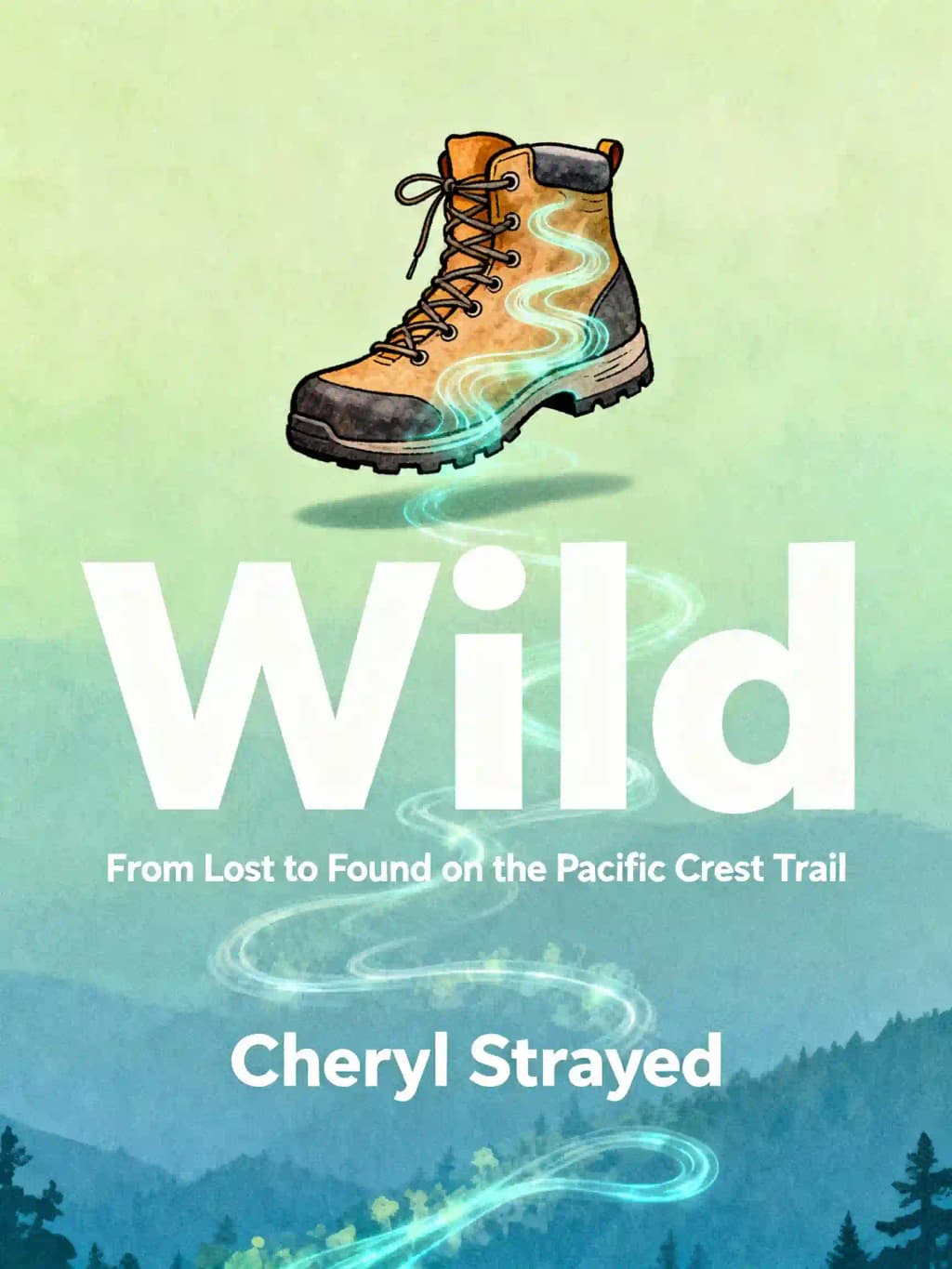
Wild
From Lost to Found on the Pacific Crest Trail
Overview of Wild
After her mother's death, Strayed hiked 1,100 miles alone on the Pacific Crest Trail, transforming her grief into resilience. Oprah's first Book Club 2.0 pick and Reese Witherspoon's Oscar-nominated film role, "Wild" sparked a hiking revolution among diverse adventurers nationwide.

Key Themes in Wild
- grief processing
- wilderness survival
- solitary pilgrimage
- radical self-reliance
- emotional healing
Quotes from Wild
Healing through endurance.
Pain, as she would learn, is a patient traveler.
I didn't know who I was anymore.
The woman with the hole in her heart.
Sometimes our most transformative decisions arrive through what feels like cosmic intervention?
Characters in Wild
- Cheryl StrayedThe author and protagonist hiking the PCT
- Cheryl's motherThe emotional core whose death catalyzes the story
About the Author
About the Author of Wild
Cheryl Strayed, internationally acclaimed memoirist and bestselling author of Wild: From Lost to Found on the Pacific Crest Trail, is celebrated for her raw explorations of grief, resilience, and self-discovery. Born in 1968 in Pennsylvania, Strayed channeled profound personal tragedy—including her mother’s early death, divorce, and struggles with addiction—into her transformative 1,100-mile solo hike along the Pacific Crest Trail, which became the foundation for Wild.
The memoir, a gripping blend of adventure and introspection, debuted as the first pick for Oprah’s Book Club 2.0 and spent over 200 weeks on the New York Times bestseller list.
Strayed’s other notable works include Tiny Beautiful Things, a collection of her compassionate “Dear Sugar” advice columns from The Rumpus, and Brave Enough, a curated anthology of wisdom. A graduate of Syracuse University’s MFA program, she co-founded VIDA: Women in Literary Arts and has been featured in The New York Times, Vogue, and NPR. Her writing, translated into nearly 40 languages, resonates for its unflinching honesty and lyrical prose.
Wild was adapted into a 2014 Academy Award–nominated film starring Reese Witherspoon, cementing its status as a modern classic. The book has sold millions of copies worldwide and remains a touchstone for readers navigating loss and transformation.
Download Summary of Wild
Get the Wild summary as a free PDF or EPUB. Print it or read offline anytime.
FAQs About This Book
Wild chronicles Cheryl Strayed’s 1,100-mile solo hike on the Pacific Crest Trail (PCT) after her mother’s death, divorce, and heroin addiction shattered her life. At 26, she embarked on the grueling journey with no hiking experience, seeking redemption and self-discovery. The memoir intertwines her physical struggles on the trail with flashbacks to her grief and self-destructive choices, culminating in a story of resilience and healing.
This book resonates with readers navigating grief, addiction, or major life transitions. It appeals to outdoor enthusiasts, memoir lovers, and anyone seeking inspiration to overcome personal challenges. Strayed’s raw honesty about failure and growth makes it particularly valuable for those interested in themes of self-reinvention and emotional resilience.
Yes—Wild became a bestseller and Oscar-nominated film for its unflinching portrayal of human vulnerability and strength. Strayed’s vivid storytelling balances harrowing moments (like ill-fitting boots and near dehydration) with humor and profound insights about loss. Critics praise its authenticity, though some note it prioritizes personal narrative over nature writing.
Strayed frames her PCT hike as a physical manifestation of coping with her mother’s death. The trail’s isolation forces her to confront regrets, her fractured family, and self-sabotage. Through exhaustion and solitude, she gradually releases shame, symbolized by shedding weight from her oversized backpack (“Monster”). The journey mirrors her emotional progression from despair to acceptance.
Some argue Wild overlooks the Pacific Crest Trail’s natural grandeur in favor of Strayed’s inner turmoil. Nature writers critique its anthropocentric focus, contrasting it with works by John Muir or Annie Dillard. Others question her unpreparedness (e.g., packing errors, risky decisions), though many readers find this relatable.
The 2014 film starring Reese Witherspoon condenses Strayed’s 94-day hike but retains core themes: grief, addiction, and self-forgiveness. Key differences include reduced focus on her heroin use and abortion. Both versions highlight her physical suffering (e.g., losing toenails) and moments of trail camaraderie.
Strayed saw the trek as a radical act of self-reliance after years of destructive behavior. With no prior hiking experience, she aimed to prove she could endure pain and solitude. The PCT symbolized a clean break from her past, though she later acknowledges the journey’s communal aspects through fellow hikers.
Nicknamed “Monster,” the oversized backpack represents Strayed’s emotional baggage—guilt over her mother’s death, divorce, and addiction. As she discards unnecessary items mid-hike, it mirrors her gradual release of shame. By the trail’s end, the lighter pack signifies her hard-won self-acceptance.
Strayed defies 1990s stereotypes of female vulnerability by tackling the PCT solo, confronting predatory men, and embracing her body’s strength. Her journey inspired a wave of women to pursue long-distance hiking. The memoir reframes “recklessness” as courage, showing how risk-taking can catalyze growth.
- Embrace imperfection: Strayed’s mistakes (e.g., inadequate boots) highlight growth through failure.
- Lean into discomfort: Pain on the trail mirrors emotional healing.
- Seek connection: Fellow hikers and trail angels model communal resilience.
- Reframe loss: Grief becomes a catalyst for renewal, not an endpoint.
Strayed’s repetitive hiking mantras (“I am not afraid”) mirror mindfulness techniques to manage anxiety. Her immersion in nature’s rhythms—forced by the trail’s demands—echoes therapeutic practices like forest bathing. The memoir underscores how physical exertion can quiet mental chaos.
- “I’m a free-spirited wanderer with a home inside my head.”
- “There was no question that I’d spend the rest of my life trying to summon her.” (about her mother)
- “Fear begets fear… Power begets power.”
These lines capture Strayed’s raw honesty about love, loss, and self-reliance.
Despite Strayed’s struggles, her memoir sparked a 300% increase in PCT applications post-publication. Readers relate to her mix of awe and suffering, which demystifies long-distance hiking. The book emphasizes that preparation matters, but grit and adaptability matter more.