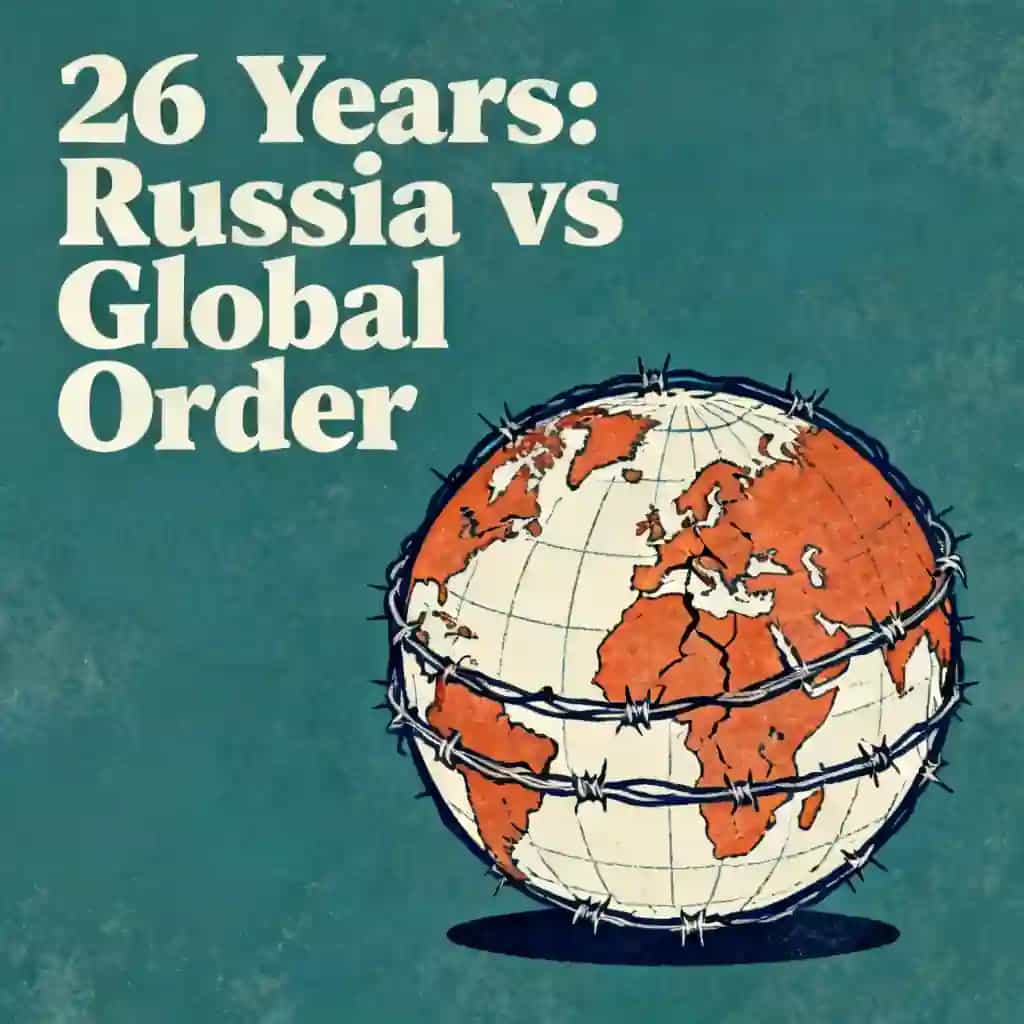
Overview of Putin's People
Putin's People reveals how the KGB reclaimed Russia and weaponized corruption against the West. Described as "reading like a John le Carre novel" by The Guardian, this Sunday Times bestseller exposes the shadowy networks behind Putin's $200B kleptocracy that's reshaping global politics.
- Putin’s KGB roots drove Russia’s resurgence as a global anti-Western power.
- Siloviki elites transformed Russia’s economy into a state-controlled kleptocracy.
- KGB networks merged with organized crime to consolidate Putin’s power structure.
- Post-Soviet oligarchs enabled Putin’s rise before being purged or co-opted.
- Russia’s annexation of Crimea mirrored KGB tactics of destabilization and proxy warfare.
- Putin’s inner circle funded covert influence operations abroad via offshore wealth.
- Western financial systems unknowingly facilitated Kremlin corruption and political meddling.
- The FSB replaced open markets with mafia-style governance after the USSR’s collapse.
- Putin leveraged terrorism and media control to justify authoritarian consolidation.
- Catherine Belton exposes KGB-aligned oligarchs as architects of hybrid warfare.
- Russia’s “managed democracy” masks a KGB-engineered takeover of legal institutions.
- Putin’s People reveals how Soviet-era spies weaponized capitalism against the West.
About the Author of Putin's People
Catherine Belton, acclaimed investigative journalist and bestselling author of Putin’s People: How the KGB Took Back Russia and Then Took On the West, is a leading authority on Russian geopolitics and authoritarian power structures. A former Moscow correspondent for the Financial Times (2007–2013) and investigative reporter for Reuters, Belton draws on over a decade of frontline reporting to dissect the Kremlin’s covert strategies. Her work, praised as "the most important book on modern Russia" by The Times, blends rigorous investigative journalism with insights from high-level Kremlin insiders, exposing the KGB’s resurgence under Vladimir Putin.
Belton’s expertise earned her a 2023 MBE for services to journalism and the 2021 Magnitsky Award for Outstanding Investigational Reporting. As a Washington Post correspondent, she continues to analyze Russia’s global influence operations. Putin’s People, a Sunday Times No. 1 bestseller and multiple "Book of the Year" honoree, has been translated into over 20 languages, cementing its status as a definitive work on post-Soviet political corruption.
FAQs About Putin's People
What is Putin's People by Catherine Belton about?
Putin's People investigates how Vladimir Putin and a network of former KGB operatives orchestrated a strategic takeover of Russia’s political, economic, and legal systems after the Soviet Union’s collapse. Catherine Belton traces their efforts to consolidate power, undermine Western democracies, and restore Russia’s global influence through covert financial networks and political manipulation.
Who should read Putin's People?
This book is essential for readers interested in modern Russian history, geopolitical strategy, or the mechanics of authoritarian regimes. Journalists, policymakers, and scholars will value its exhaustive research, while general audiences gain insight into Putin’s rise and the KGB’s enduring shadow over global politics.
Is Putin's People worth reading?
Yes—the book is a Sunday Times bestseller and acclaimed for its groundbreaking revelations. Belton’s access to Kremlin insiders and meticulous documentation of financial schemes make it a critical resource for understanding 21st-century Russian power dynamics.
How does Catherine Belton trace the KGB’s influence in Putin’s Russia?
Belton identifies a clandestine KGB network that survived the USSR’s fall, leveraging Putin’s St. Petersburg connections and state-corporate alliances to seize control. She details their strategy to infiltrate institutions, manipulate oligarchs, and weaponize corruption to rebuild Russia as a revanchist power.
What evidence does Belton provide about Putin’s rise to power?
The book highlights Putin’s KGB background, his role in 1990s St. Petersburg politics, and alliances with oligarchs like Boris Berezovsky. Belton exposes how these ties enabled systemic corruption, election interference, and the silencing of dissent to cement authoritarian rule.
How does Putin’s People explain Russia’s relationship with the West?
Belton argues Putin’s regime deliberately destabilizes Western democracies through cyberattacks, financial compromises, and disinformation. The KGB elite views the West as an adversary to be weakened, not a partner—a strategy rooted in Cold War-era tactics.
What are the main criticisms of Putin’s People?
Some experts debate Belton’s portrayal of Putin as a KGB puppet rather than an autonomous leader. Others note speculative claims, like Trump’s financial ties to Russia, lack direct evidence. However, most praise the book’s depth and investigative rigor.
How does Belton’s journalistic background shape the book?
As a former Financial Times Moscow correspondent, Belton combines decade-long reporting with leaked documents and insider testimonies. This approach provides unprecedented access to clandestine deals and Kremlin decision-making.
What key quotes from Putin’s People reveal Putin’s strategy?
“‘You in the West think you’re playing chess with us. But you’ll never win because we don’t follow rules’” (KGB operative). Another quote warns, “Revolutionary cycles…morph into military dictatorship,” reflecting Putin’s distrust of democratic movements.
How does Putin’s People compare to other books on modern Russia?
Unlike broader histories, Belton focuses on the KGB’s institutional resurgence and its global financial networks. The book’s reliance on insider accounts distinguishes it from academic analyses, offering a narrative-driven exposé.
What role do oligarchs play in Belton’s narrative?
Oligarchs initially thrived under Yeltsin but were co-opted or crushed by Putin’s regime. Belton shows how figures like Mikhail Khodorkovsky were imprisoned, while loyalists like Igor Sechin gained control of state enterprises like Rosneft.
How does the book address Russian interference in Western democracies?
Belton details schemes to fund political campaigns, exploit legal loopholes, and cultivate influential allies—tactics designed to erode trust in Western institutions. These operations aim to reposition Russia as a dominant global power.
Feel the book through the author's voice
Turn knowledge into engaging, example-rich insights
Capture key ideas in a flash for fast learning
Enjoy the book in a fun and engaging way
Key Themes in Putin's People
Quotes from Putin's People
The KGB was creating private companies for the Communist Party.
Dresden became a meeting place for terrorists.
They frantically burned documents day and night.
Putin became the point man for dealing with law enforcement.
Characters in Putin's People
Quick Summary Mode - Read or listen to Putin's People Summary in 9 Minutes

Break down key ideas from Putin's People into bite-sized takeaways to understand how innovative teams create, collaborate, and grow.

Flash Card Mode - Top 7 Insights from Putin's People in a Nutshell

Distill Putin's People into rapid-fire memory cues that highlight key principles of candor, teamwork, and creative resilience.

Fun Mode - Putin's People Lessons Told Through 18-Min Stories

Experience Putin's People through vivid storytelling that turns innovation lessons into moments you'll remember and apply.
Personalize Mode - Read or listen to Putin's People Summary in 0 Minutes

Ask anything, pick the voice, and co-create insights that truly resonate with you.

From Columbia University alumni built in San Francisco
"Instead of endless scrolling, I just hit play on BeFreed. It saves me so much time."


"I never knew where to start with nonfiction—BeFreed’s book lists turned into podcasts gave me a clear path."


"Perfect balance between learning and entertainment. Finished ‘Thinking, Fast and Slow’ on my commute this week."
"Crazy how much I learned while walking the dog. BeFreed = small habits → big gains."
"Reading used to feel like a chore. Now it’s just part of my lifestyle."

"Feels effortless compared to reading. I’ve finished 6 books this month already."
"BeFreed turned my guilty doomscrolling into something that feels productive and inspiring."

"BeFreed turned my commute into learning time. 20-min podcasts are perfect for finishing books I never had time for."
"BeFreed replaced my podcast queue. Imagine Spotify for books — that’s it. 🙌"

"It is great for me to learn something from the book without reading it."
"The themed book list podcasts help me connect ideas across authors—like a guided audio journey."
"Makes me feel smarter every time before going to work"
From Columbia University alumni built in San Francisco
"Instead of endless scrolling, I just hit play on BeFreed. It saves me so much time."
"I never knew where to start with nonfiction—BeFreed’s book lists turned into podcasts gave me a clear path."
"Perfect balance between learning and entertainment. Finished ‘Thinking, Fast and Slow’ on my commute this week."
"Crazy how much I learned while walking the dog. BeFreed = small habits → big gains."
"Reading used to feel like a chore. Now it’s just part of my lifestyle."
"Feels effortless compared to reading. I’ve finished 6 books this month already."
"BeFreed turned my guilty doomscrolling into something that feels productive and inspiring."
"BeFreed turned my commute into learning time. 20-min podcasts are perfect for finishing books I never had time for."
"BeFreed replaced my podcast queue. Imagine Spotify for books — that’s it. 🙌"
"It is great for me to learn something from the book without reading it."
"The themed book list podcasts help me connect ideas across authors—like a guided audio journey."
"Makes me feel smarter every time before going to work"
"Instead of endless scrolling, I just hit play on BeFreed. It saves me so much time."
"I never knew where to start with nonfiction—BeFreed’s book lists turned into podcasts gave me a clear path."
"Perfect balance between learning and entertainment. Finished ‘Thinking, Fast and Slow’ on my commute this week."
"Crazy how much I learned while walking the dog. BeFreed = small habits → big gains."
"Reading used to feel like a chore. Now it’s just part of my lifestyle."
"Feels effortless compared to reading. I’ve finished 6 books this month already."
"BeFreed turned my guilty doomscrolling into something that feels productive and inspiring."
"BeFreed turned my commute into learning time. 20-min podcasts are perfect for finishing books I never had time for."
"BeFreed replaced my podcast queue. Imagine Spotify for books — that’s it. 🙌"
"It is great for me to learn something from the book without reading it."
"The themed book list podcasts help me connect ideas across authors—like a guided audio journey."
"Makes me feel smarter every time before going to work"
"Instead of endless scrolling, I just hit play on BeFreed. It saves me so much time."
"I never knew where to start with nonfiction—BeFreed’s book lists turned into podcasts gave me a clear path."
"Perfect balance between learning and entertainment. Finished ‘Thinking, Fast and Slow’ on my commute this week."
"Crazy how much I learned while walking the dog. BeFreed = small habits → big gains."
"Reading used to feel like a chore. Now it’s just part of my lifestyle."
"Feels effortless compared to reading. I’ve finished 6 books this month already."
"BeFreed turned my guilty doomscrolling into something that feels productive and inspiring."
"BeFreed turned my commute into learning time. 20-min podcasts are perfect for finishing books I never had time for."
"BeFreed replaced my podcast queue. Imagine Spotify for books — that’s it. 🙌"
"It is great for me to learn something from the book without reading it."
"The themed book list podcasts help me connect ideas across authors—like a guided audio journey."
"Makes me feel smarter every time before going to work"

Get the Putin's People summary as a free PDF or EPUB. Print it or read offline anytime.