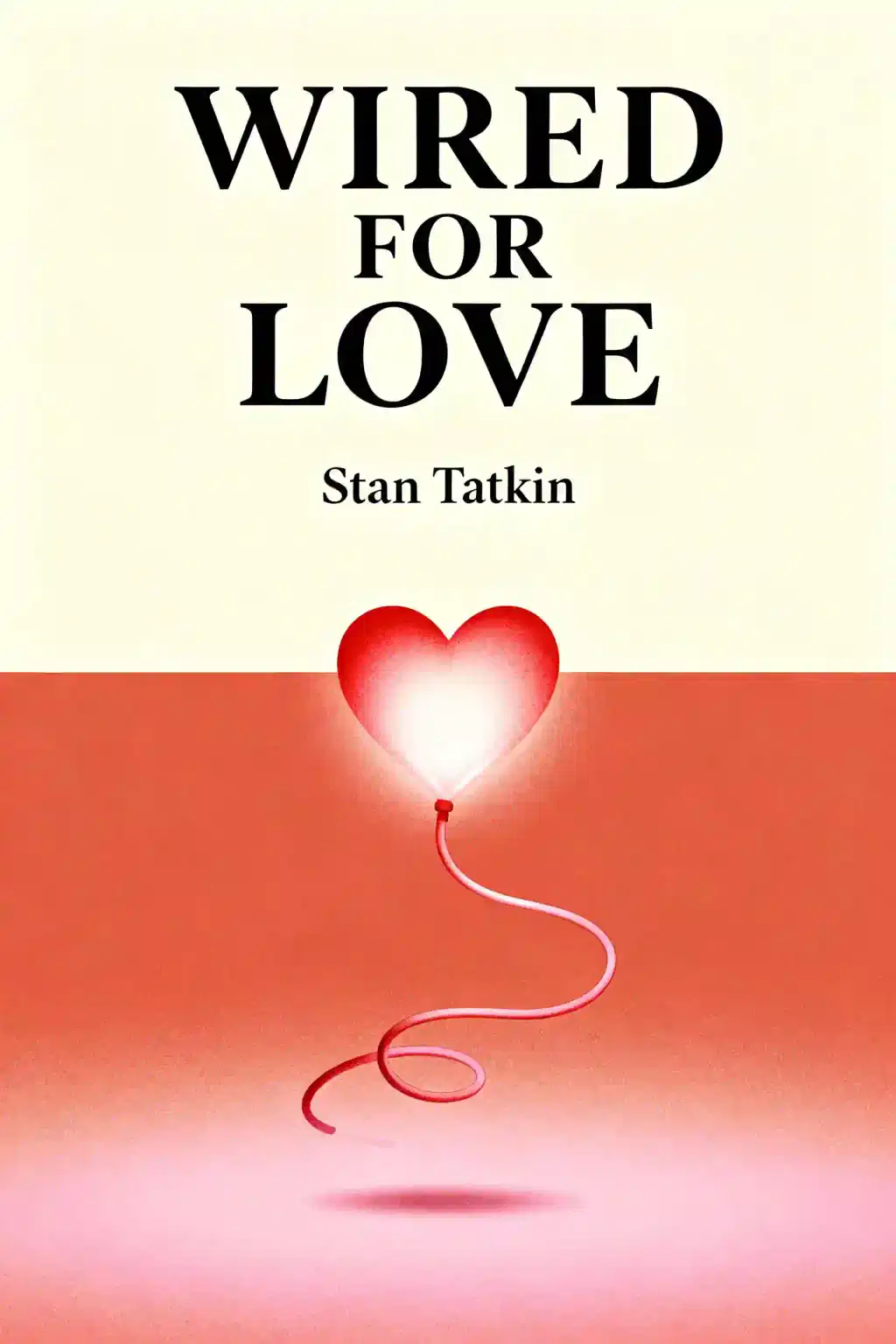
Wired for Love: How Understanding Your Partner's Brain and Attachment Style Can Help You Defuse Conflict and Build a Secure Relationship by Stan Tatkin Summary

Overview of Wired for Love
Discover why therapists worldwide recommend "Wired for Love" - the revolutionary guide that blends neuroscience with attachment theory to decode your relationship patterns. Learn about your "warring brain" versus "loving brain" and build an unshakeable "couple bubble" that transforms conflicts into deeper connection.
- Stan Tatkin’s "couple bubble" creates mutual safety by prioritizing relational security over individuality
- Secure relationships require partners to become experts in each other’s attachment triggers and soothing needs
- Replace blame with "we first" teamwork during conflicts to maintain psychological safety
- Daily rituals like morning/bedtime routines anchor connection in high-stress modern relationships
- Insecure attachment styles (anchors/waves/islands) explain 90% of recurring relationship conflicts
- Pro-relationship stance means valuing partnership permanence over temporary emotional reactions
- Mutual tethering prevents third-party interference by making partners primary emotional resources
- "Fight well" by addressing distress within 30 minutes to prevent neural hijacking
- Eye contact triggers oxytocin release to rekindle intimacy during emotional distance
- Relationship security acts as natural antidepressant by reducing existential anxiety through partnership
- Avoid "submission competitions" by co-creating rules that honor both partners' non-negotiable needs
- Repair attempts must address both partners' attachment wounds to rebuild trust authentically
About the Author of Wired for Love
Stan Tatkin, PsyD, is the bestselling author of Wired for Love and a clinical psychologist renowned for his pioneering work in couples therapy and attachment science. A leading expert in psychobiological approaches to relationships, Tatkin developed the Psychobiological Approach to Couples Therapy (PACT), which integrates neuroscience, attachment theory, and arousal regulation to foster secure-functioning partnerships.
His book explores how understanding brain dynamics and attachment styles can transform romantic relationships, drawing from his decades of clinical practice and faculty roles at UCLA and Kaiser Permanente. Tatkin has authored multiple influential works, including Wired for Dating, Your Brain on Love, and In Each Other’s Care, establishing him as a vital voice in modern relationship psychology.
Founder of the PACT Institute with his wife, Tracey Boldemann-Tatkin, he has trained thousands of therapists globally. His TEDx talk on relational neuroscience has garnered over 1.7 million views, and his books have been translated into Spanish, Chinese, Turkish, and Romanian. Recognized as 2014 Educator of the Year by the California Association of Marriage and Family Therapists, Tatkin’s work remains a cornerstone in couples counseling, blending rigorous science with practical strategies for lasting love.
FAQs About Wired for Love
What is Wired for Love by Stan Tatkin about?
Wired for Love explores how neuroscience and attachment theory shape romantic relationships, offering tools to build secure, conflict-resilient partnerships. Stan Tatkin introduces concepts like the "couple bubble" (a mutual safety zone) and explains how understanding brain biology helps partners regulate emotions, repair conflicts, and prioritize mutual care.
Who should read Wired for Love?
This book is ideal for couples seeking science-backed strategies to improve communication and therapists interested in psychobiological relationship frameworks. It’s particularly valuable for those navigating recurring conflicts or wanting to deepen emotional security through attachment-aware practices.
Is Wired for Love worth reading?
Yes—it synthesizes complex neuroscience into actionable steps for relationships, emphasizing mutual responsibility and repair over blame. Readers praise its practicality, though some critique its dense academic language. The book’s focus on creating "secure-functioning" partnerships makes it a standout in relationship literature.
What is the "couple bubble" in Wired for Love?
The "couple bubble" is a shared psychological safe space where partners prioritize each other’s well-being. Tatkin argues this concept reduces threats of abandonment or rejection by ensuring mutual visibility, care, and rapid conflict resolution—key for long-term relational stability.
How does Wired for Love suggest managing conflict?
Tatkin advises partners to approach disagreements as allies in a "trench," prioritizing collaboration over being right. Techniques include regulating physiological arousal during fights, repairing ruptures within two hours, and avoiding toxic behaviors like prolonged withdrawal or unfair blame.
What are "islands" and "waves" in attachment styles?
- Islands: Prefer independence, often feeling intruded upon by a partner’s proximity.
- Waves: Crave closeness, fearing rejection.
Tatkin explains how these styles clash and offers strategies to bridge gaps, such as mutual adaptability and sensory-based reconnection practices.
Does Wired for Love address repairing relationships?
Yes—it emphasizes swift, intentional repair to prevent resentment. Key tactics include acknowledging harm, avoiding defensiveness, and recommitting to the "couple bubble." Unresolved conflicts are framed as threats to relational security.
How does stress affect relationships according to Wired for Love?
Chronic stress undermines the couple bubble by heightening defensiveness. Tatkin advises partners to co-regulate stress through physical touch, shared routines, and avoiding prolonged anger. Relationships thrive when both parties act as buffers against external pressures.
How does Wired for Love compare to The Seven Principles for Making Marriage Work?
While Gottman’s work focuses on behavioral patterns, Tatkin adds a neurobiological lens—explaining why conflicts escalate and how attachment styles shape reactions. Both emphasize repair, but Wired for Love uniquely integrates arousal regulation and procedural memory insights.
What criticisms exist about Wired for Love?
Some readers find its reliance on clinical jargon challenging, and others note it oversimplifies complex trauma’s role in relationships. However, its actionable frameworks for secure-functioning partnerships are widely praised.
What is a key quote from Wired for Love?
“Your job is to know what matters to your partner.” This underscores the book’s theme of mutual attentiveness. Tatkin argues relationships thrive when partners actively prioritize each other’s needs and emotional triggers.
Why is Wired for Love relevant in 2025?
As remote work and digital communication strain intimacy, Tatkin’s emphasis on co-regulation and intentional connection offers timely solutions. The rise of AI-driven relationship tools also makes his psychobiological insights critical for maintaining human-centric partnerships.
Feel the book through the author's voice
Turn knowledge into engaging, example-rich insights
Capture key ideas in a flash for fast learning
Enjoy the book in a fun and engaging way
Key Themes in Wired for Love
Quotes from Wired for Love
Our brains prioritize survival over love.
Partners can spend decades together yet still feel they don't truly know each other.
Islands often mistake their adaptation to childhood neglect for genuine independence.
They abandon each other at social gatherings, then feel victimized when roles reverse.
This isn't coincidence-it's your brain's wiring at work.
Characters in Wired for Love
Quick Summary Mode - Read or listen to Wired for Love Summary in 14 Minutes

Break down key ideas from Wired for Love into bite-sized takeaways to understand how innovative teams create, collaborate, and grow.

Flash Card Mode - Top 10 Insights from Wired for Love in a Nutshell

Distill Wired for Love into rapid-fire memory cues that highlight key principles of candor, teamwork, and creative resilience.

Fun Mode - Wired for Love Lessons Told Through 24-Min Stories

Experience Wired for Love through vivid storytelling that turns innovation lessons into moments you'll remember and apply.
Personalize Mode - Read or listen to Wired for Love Summary in 0 Minutes

Ask anything, pick the voice, and co-create insights that truly resonate with you.

From Columbia University alumni built in San Francisco
"Instead of endless scrolling, I just hit play on BeFreed. It saves me so much time."


"I never knew where to start with nonfiction—BeFreed’s book lists turned into podcasts gave me a clear path."


"Perfect balance between learning and entertainment. Finished ‘Thinking, Fast and Slow’ on my commute this week."
"Crazy how much I learned while walking the dog. BeFreed = small habits → big gains."
"Reading used to feel like a chore. Now it’s just part of my lifestyle."

"Feels effortless compared to reading. I’ve finished 6 books this month already."
"BeFreed turned my guilty doomscrolling into something that feels productive and inspiring."

"BeFreed turned my commute into learning time. 20-min podcasts are perfect for finishing books I never had time for."
"BeFreed replaced my podcast queue. Imagine Spotify for books — that’s it. 🙌"

"It is great for me to learn something from the book without reading it."
"The themed book list podcasts help me connect ideas across authors—like a guided audio journey."
"Makes me feel smarter every time before going to work"
From Columbia University alumni built in San Francisco
"Instead of endless scrolling, I just hit play on BeFreed. It saves me so much time."
"I never knew where to start with nonfiction—BeFreed’s book lists turned into podcasts gave me a clear path."
"Perfect balance between learning and entertainment. Finished ‘Thinking, Fast and Slow’ on my commute this week."
"Crazy how much I learned while walking the dog. BeFreed = small habits → big gains."
"Reading used to feel like a chore. Now it’s just part of my lifestyle."
"Feels effortless compared to reading. I’ve finished 6 books this month already."
"BeFreed turned my guilty doomscrolling into something that feels productive and inspiring."
"BeFreed turned my commute into learning time. 20-min podcasts are perfect for finishing books I never had time for."
"BeFreed replaced my podcast queue. Imagine Spotify for books — that’s it. 🙌"
"It is great for me to learn something from the book without reading it."
"The themed book list podcasts help me connect ideas across authors—like a guided audio journey."
"Makes me feel smarter every time before going to work"
"Instead of endless scrolling, I just hit play on BeFreed. It saves me so much time."
"I never knew where to start with nonfiction—BeFreed’s book lists turned into podcasts gave me a clear path."
"Perfect balance between learning and entertainment. Finished ‘Thinking, Fast and Slow’ on my commute this week."
"Crazy how much I learned while walking the dog. BeFreed = small habits → big gains."
"Reading used to feel like a chore. Now it’s just part of my lifestyle."
"Feels effortless compared to reading. I’ve finished 6 books this month already."
"BeFreed turned my guilty doomscrolling into something that feels productive and inspiring."
"BeFreed turned my commute into learning time. 20-min podcasts are perfect for finishing books I never had time for."
"BeFreed replaced my podcast queue. Imagine Spotify for books — that’s it. 🙌"
"It is great for me to learn something from the book without reading it."
"The themed book list podcasts help me connect ideas across authors—like a guided audio journey."
"Makes me feel smarter every time before going to work"
"Instead of endless scrolling, I just hit play on BeFreed. It saves me so much time."
"I never knew where to start with nonfiction—BeFreed’s book lists turned into podcasts gave me a clear path."
"Perfect balance between learning and entertainment. Finished ‘Thinking, Fast and Slow’ on my commute this week."
"Crazy how much I learned while walking the dog. BeFreed = small habits → big gains."
"Reading used to feel like a chore. Now it’s just part of my lifestyle."
"Feels effortless compared to reading. I’ve finished 6 books this month already."
"BeFreed turned my guilty doomscrolling into something that feels productive and inspiring."
"BeFreed turned my commute into learning time. 20-min podcasts are perfect for finishing books I never had time for."
"BeFreed replaced my podcast queue. Imagine Spotify for books — that’s it. 🙌"
"It is great for me to learn something from the book without reading it."
"The themed book list podcasts help me connect ideas across authors—like a guided audio journey."
"Makes me feel smarter every time before going to work"

Get the Wired for Love summary as a free PDF or EPUB. Print it or read offline anytime.