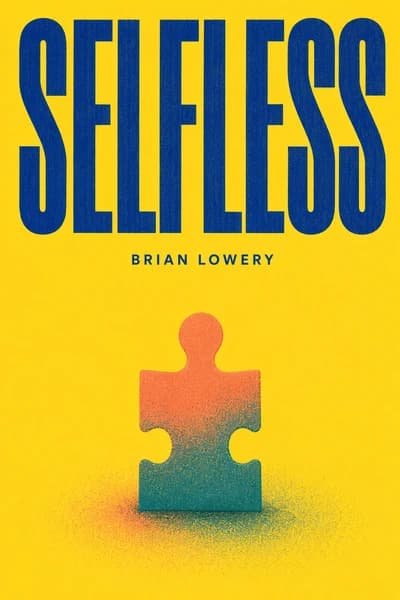
Selfless
The Social Creation of “You”
Overview of Selfless
"Selfless" shatters the myth of fixed identity, revealing how our 'self' is constantly shaped by social forces. Named among 2023's top psychology books, Lowery's work gives language to that strange feeling when parts of your past feel like another lifetime. Who are you without others?

Key Themes in Selfless
- social constructionism
- relational identity
- multiple selves
- interdependent selfhood
- social mirror effect
Quotes from Selfless
There is no true self waiting to be discovered.
Complete freedom from external influence is impossible.
We need social engagement to survive and thrive.
You are the product of your social world.
We understand ourselves through others' responses to us.
Characters in Selfless
- Brian LoweryAuthor and Stanford professor
- Charles CooleySociologist who described the looking glass self
- George Herbert MeadThinker who studied the social development of self
About the Author
About the Author of Selfless
Brian S. Lowery, author of Selfless: The Social Creation of You, is a Stanford social psychologist and organizational behavior expert renowned for his research on identity, relationships, and societal inequality. As the Walter Kenneth Kilpatrick Professor at Stanford Graduate School of Business and co-director of the Stanford Institute for Advancing Just Societies, his work bridges academic rigor with real-world impact, exploring how social interactions shape our sense of self and purpose.
The book, a thought-provoking blend of psychology and sociology, challenges individualistic paradigms by arguing that identity emerges through communal bonds—a theme rooted in Lowery’s decades of teaching Stanford’s iconic Interpersonal Dynamics course and leading initiatives like the Leadership for Society program.
Lowery amplifies these ideas through his podcast Know What You See, featuring conversations on human connection, and his TED2024 talk on fostering meaningful workplaces. His insights have been featured in outlets like the Washington Post, and his academic research on privilege and inequality informs corporate and institutional equity strategies. Selfless builds on his legacy of redefining leadership through relational awareness, cementing its status as a modern cornerstone for understanding identity in an interconnected world.
Download Summary of Selfless
Get the Selfless summary as a free PDF or EPUB. Print it or read offline anytime.
FAQs About This Book
Selfless argues that your sense of self isn’t innate but constructed through social relationships. Brian Lowery, a Stanford social psychologist, uses research to show how identities shift based on interactions, cultural norms, and power structures. The book challenges the myth of individualism, explaining how race, gender, and community shape who we become.
This book is ideal for readers interested in social psychology, identity, or societal systems. It appeals to those seeking to understand how relationships define personal and collective identities, including educators, leaders, and anyone grappling with questions of autonomy and social influence.
Yes—Selfless offers a transformative lens to rethink identity and society. Inc. named it a 2023 Best Book, praising its actionable insights on systemic inequity. Readers call it “accessible” and “humbling,” with practical relevance for personal growth and leadership.
- No fixed self: Identity emerges from social contexts, not an internal essence.
- Power of relationships: We’re shaped by others’ perceptions and societal structures.
- Myth of individualism: Autonomy is an illusion; collective connections drive behavior.
Lowery defines the self as a dynamic social creation—not a static core but a mosaic of interactions. For example, workplace roles or family dynamics activate different “selves.” This perspective aligns with research showing identity shifts across contexts.
- “You can’t be yourself by yourself”: Selfhood requires social reflection, not isolation.
- “Selves don’t emanate from some ineffable light within”: Identity is externally forged through systemic forces like race or gender norms.
The book rejects the idea of a self-made identity, arguing that achievements and traits stem from communal influences. Lowery uses examples like career success (shaped by mentors) to show how individualism overlooks systemic privilege.
Yes—by recognizing how others shape us, readers can consciously nurture relationships that align with their goals. Lowery’s framework aids leaders in building inclusive teams and individuals in navigating identity conflicts.
Some note the book prioritizes conceptual framing over step-by-step solutions. However, fans argue its strength lies in reframing problems (e.g., bias, inequality) to inspire systemic rather than individual-level change.
Unlike purely academic texts, Selfless blends storytelling and philosophy for broader appeal. It complements Adam Grant’s work on rethinking assumptions but focuses more on identity’s social roots than behavioral change tactics.
As debates about equity and AI-driven social fragmentation persist, Selfless provides tools to analyze group dynamics and build cohesive communities. Its insights apply to workplace diversity initiatives and interpersonal conflict resolution.
Lowery likens identity to a “mosaic” shaped by others’ “hands,” emphasizing collaboration over solo creation. This contrasts with common metaphors like “inner light” or “authentic core”.