In a world of digital chaos, Cal Newport's bestselling manifesto reveals the radical 30-day declutter process that's reshaping how Silicon Valley views technology. What if constant connectivity is actually sabotaging your productivity? Discover why tech minimalists report profound improvements in focus, happiness, and real-world connections.
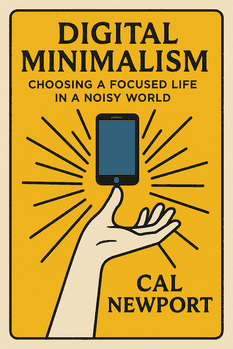
Calvin C. Newport, bestselling author of Digital Minimalism: Choosing a Focused Life in a Noisy World, is a computer science professor at Georgetown University and a leading voice in technology’s impact on productivity. His work explores the intersection of digital tools, deep focus, and meaningful work – themes rooted in his academic research on distributed systems and communications.
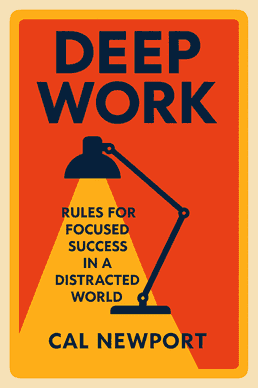
Newport first gained recognition with Deep Work (2016), which popularized strategies for sustained concentration, and later expanded his critique of workplace communication in A World Without Email (2021).
A regular contributor to The New Yorker and host of the Deep Questions podcast, Newport maintains the long-running Study Hacks blog where he analyzes productivity systems. His eight books, translated into 40+ languages, blend contrarian advice with rigorous analysis – an approach reflecting his dual expertise as an MIT-trained technologist and cultural critic. Digital Minimalism has become essential reading in tech ethics discussions since its 2019 publication, with Newport’s body of work collectively selling over 2 million copies worldwide.
Digital Minimalism outlines a philosophy for intentionally using technology to support personal values, avoiding digital overload. Cal Newport advocates a 30-day "digital declutter" to reset habits, then reintroducing only tools that add significant value. Key ideas include prioritizing analog leisure, avoiding solitude deprivation, and resisting attention economy traps.
This book is ideal for anyone feeling overwhelmed by constant connectivity, social media addiction, or smartphone overuse. It’s particularly relevant for professionals seeking productivity, parents modeling healthy tech habits, or individuals prioritizing mental clarity and real-world relationships.
Yes, especially if you struggle with distraction or screen fatigue. Newport combines research with actionable steps, offering a structured approach to reclaim focus. Critics note it overlaps with his earlier work Deep Work, but it remains a vital guide for navigating modern tech challenges.
These principles help users avoid passive consumption and focus on meaningful engagement.
Newport recommends a 30-day break from optional technologies, followed by reintroducing tools only if they:
This reset helps build intentional, long-term habits.
Solitude deprivation refers to losing the ability to be alone with one’s thoughts due to constant digital stimulation. Newport links this to rising anxiety and advocates practices like walks without devices or journaling to restore mental clarity.
Newport describes social media as creating a paradox: it fosters superficial connection while deepening loneliness. Platforms offer fleeting validation but often replace higher-quality offline interactions, leading to emotional dissatisfaction.
Newport advises avoiding passive engagement (e.g., liking posts) and prioritizing high-quality communication, like calls or meetups. He critiques "likes" as low-value gestures that fuel compulsive use without meaningful connection.
These emphasize intentionality and the cost of constant connectivity.
Some argue Newport’s approach is overly rigid or redundant with his prior work. Others note it underestimates social media’s role in modern networking. However, most praise its practical frameworks for tech-life balance.
While Deep Work focuses on professional concentration, Digital Minimalism addresses personal tech habits. Both emphasize intentionality, but the latter expands into leisure, relationships, and resisting algorithmic manipulation.
As AI and immersive tech expand, Newport’s principles offer a blueprint for safeguarding attention and mental health. The rise of AR/VR and algorithmic content makes his call for analog hobbies and solitude more critical than ever.
Feel the book through the author's voice
Turn knowledge into engaging, example-rich insights
Capture key ideas in a flash for fast learning
Enjoy the book in a fun and engaging way
A philosophy of technology use in which you focus your online time on a small number of carefully selected and optimized activities that strongly support things you value, and then happily miss out on everything else.
We didn't sign up for this.
Your mind is being programmed.
Clutter is costly.
Optimization matters.
Break down key ideas from Digital Minimalism into bite-sized takeaways to understand how innovative teams create, collaborate, and grow.
Distill Digital Minimalism into rapid-fire memory cues that highlight key principles of candor, teamwork, and creative resilience.

Experience Digital Minimalism through vivid storytelling that turns innovation lessons into moments you'll remember and apply.
Ask anything, pick the voice, and co-create insights that truly resonate with you.

From Columbia University alumni built in San Francisco
"Instead of endless scrolling, I just hit play on BeFreed. It saves me so much time."
"I never knew where to start with nonfiction—BeFreed’s book lists turned into podcasts gave me a clear path."
"Perfect balance between learning and entertainment. Finished ‘Thinking, Fast and Slow’ on my commute this week."
"Crazy how much I learned while walking the dog. BeFreed = small habits → big gains."
"Reading used to feel like a chore. Now it’s just part of my lifestyle."
"Feels effortless compared to reading. I’ve finished 6 books this month already."
"BeFreed turned my guilty doomscrolling into something that feels productive and inspiring."
"BeFreed turned my commute into learning time. 20-min podcasts are perfect for finishing books I never had time for."
"BeFreed replaced my podcast queue. Imagine Spotify for books — that’s it. 🙌"
"It is great for me to learn something from the book without reading it."
"The themed book list podcasts help me connect ideas across authors—like a guided audio journey."
"Makes me feel smarter every time before going to work"
From Columbia University alumni built in San Francisco

Get the Digital Minimalism summary as a free PDF or EPUB. Print it or read offline anytime.
Check your screen time report right now. Go ahead-the number will likely surprise you. Five hours? Seven? More? Now multiply that by 365 days. That's roughly 2,500 hours annually, or about 104 full days spent staring at a glowing rectangle. What if you spent that time learning languages, deepening friendships, or mastering a craft? This isn't a guilt trip-it's a wake-up call. We've handed over our most precious resource to algorithms designed by the brightest minds in Silicon Valley with one singular goal: keep you scrolling. Digital minimalism isn't about becoming a Luddite or retreating to a cabin in the woods. It's about something more radical: deciding for yourself how technology fits into your life, rather than letting technology decide for you. Remember when phones were just phones? When Facebook was simply a way to see what college friends were up to? That innocence died quickly. Today's digital platforms are engineered with the precision of Vegas slot machines, exploiting the same psychological vulnerabilities that keep gamblers pulling levers. Former Google ethicist Tristan Harris wasn't exaggerating when he compared tech executives to "tobacco farmers in t-shirts"-both industries profit from addiction, just through different delivery mechanisms. The mechanism is devastatingly simple: intermittent variable rewards. Psychologist B.F. Skinner discovered that unpredictable rewards create the strongest behavioral conditioning. Pigeons in his experiments would peck buttons compulsively when rewards came randomly rather than consistently. Your thumb scrolling through Instagram follows the exact same pattern-you never know when that next dopamine hit of likes, comments, or compelling content will arrive, so you keep checking.