The Road to Unfreedom: Russia, Europe, America by Timothy Snyder Summary

Overview of The Road to Unfreedom
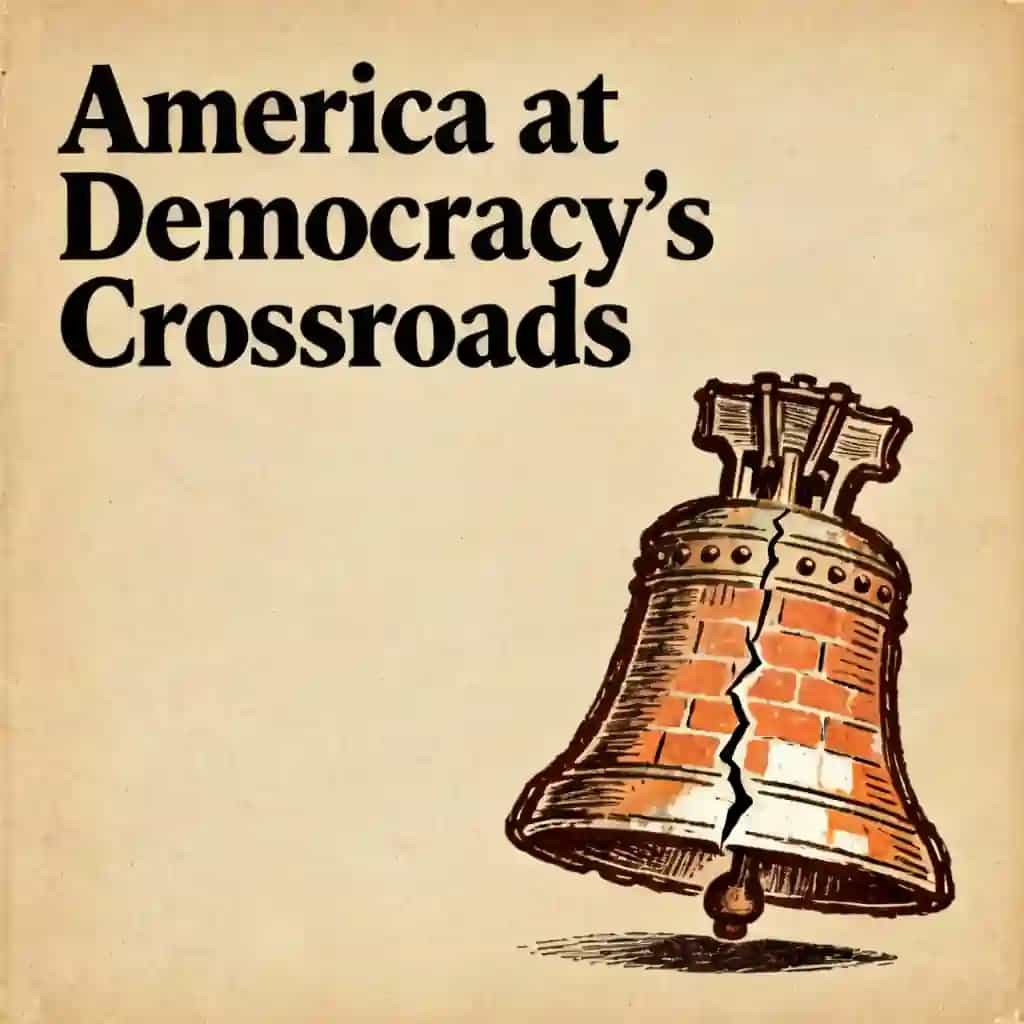
Snyder's New York Times bestseller exposes authoritarianism's playbook across Russia, Europe, and America. A chilling prophecy of democracy's fragility that sparked global debate - predicting Putin's tactics and earning Snyder the prestigious 2025 Moynihan Prize for his evidence-based warnings. What freedoms are you losing without noticing?
- The “politics of inevitability” fosters complacency by assuming democratic progress is automatic.
- Putin’s Russia weaponizes the “politics of eternity” to trap nations in cyclical victimhood narratives.
- Ivan Ilyin’s fascist philosophy underpins Putin’s anti-democratic ideology and expansionist foreign policy.
- Russia destabilizes democracies by exploiting social media to amplify division and distrust.
- Authoritarianism thrives when institutions fail to check oligarchic power and legal nihilism.
- Trump’s 2016 campaign mirrored Russian tactics by prioritizing spectacle over factual governance.
- Managed democracy replaces genuine elections with staged crises and manipulated outcomes.
- Ukraine’s struggle symbolizes the global clash between Eurasian imperialism and European integration.
- Cyberwarfare transforms truth into collateral damage, empowering post-truth authoritarian regimes.
- Individual agency—not historical inevitability—determines whether societies resist or embrace fascism.
About the Author of The Road to Unfreedom
Timothy David Snyder, author of The Road to Unfreedom: Russia, Europe, America, is a Pulitzer Prize-finalist historian and leading expert on authoritarianism, disinformation, and 20th-century European history. A Yale professor and permanent fellow at Vienna’s Institute for Human Sciences, Snyder merges academic rigor with urgent political analysis, drawing from his fluency in ten European languages and decades studying Eastern Europe’s turbulent past.
His acclaimed works—including Bloodlands: Europe Between Hitler and Stalin and On Tyranny: Twenty Lessons from the Twentieth Century—expose patterns of power and propaganda, themes central to The Road to Unfreedom’s dissection of modern illiberalism.
Frequently featured in The New York Times, CNN, and major documentaries, Snyder has advised governments and institutions on democratic resilience. Recognized with the Hannah Arendt Prize and the Leipzig Award for European Understanding, his books have been translated into 40 languages and adopted by universities and policymakers worldwide. Bloodlands alone has sold over 1 million copies, cementing Snyder’s reputation as a vital voice in understanding authoritarian threats.
FAQs About The Road to Unfreedom
What is The Road to Unfreedom about?
The Road to Unfreedom examines the resurgence of authoritarianism in Russia under Vladimir Putin and its corrosive influence on Western democracies. Timothy Snyder traces how Putin’s regime revived fascist ideologies to justify oligarchy, weaponized cyberwarfare, and exploited divisions in Europe and the U.S., culminating in events like the 2016 election. The book warns against complacency, urging renewed commitment to democratic values.
Who should read The Road to Unfreedom?
This book is essential for readers interested in modern geopolitics, historical patterns of authoritarianism, and threats to liberal democracy. Policymakers, students of political science, and engaged citizens will gain insights into Russia’s strategies and the vulnerabilities of Western institutions. Snyder’s blend of historical analysis and contemporary reporting appeals to those seeking actionable lessons from recent events.
Is The Road to Unfreedom worth reading?
Yes—it became a New York Times bestseller for its incisive critique of modern authoritarianism. While some critics argue it overemphasizes Russian influence on Western politics (e.g., framing Trump’s election as a Kremlin success), its analysis of propaganda, cyberwarfare, and democratic erosion remains widely praised. Readers should approach it as a provocative call to defend institutional integrity.
What are the main themes in The Road to Unfreedom?
Key themes include:
- The Kremlin’s use of disinformation to destabilize democracies.
- The dangers of “politics of inevitability” (blind faith in progress) and “eternity” (nostalgic nationalism).
- Cyberwarfare’s role in reshaping global power dynamics.
- The interdependence of European and American democratic institutions.
How does Timothy Snyder explain Russia’s influence on Western democracies?
Snyder argues Russia exploits existing fractures—such as economic inequality and nationalist sentiment—through cyberattacks, funding extremist groups, and disseminating propaganda. By promoting distrust in institutions and amplifying divisive narratives, Putin’s regime weakens collective resistance to authoritarianism, as seen in Brexit and the 2016 U.S. election.
What historical events does Snyder analyze in The Road to Unfreedom?
The book dissects the 2014 annexation of Crimea, the Maidan protests in Ukraine, and Russia’s interference in the 2016 U.S. election. Snyder contextualizes these within a longer history of Soviet and post-Soviet tactics, showing how Putin’s regime repurposes imperialist and fascist ideologies.
What are key quotes from The Road to Unfreedom?
- “The choice between inevitability and eternity is a false one.” Snyder rejects both blind optimism and nostalgic nationalism, advocating proactive democratic engagement.
- “Post-truth is pre-fascism.” Highlights how disinformation erodes factual discourse, enabling authoritarianism.
How does The Road to Unfreedom relate to Snyder’s previous work like On Tyranny?
While On Tyranny offers practical lessons for resisting authoritarianism, The Road to Unfreedom provides a deeper historical and geopolitical analysis of its roots. Both emphasize vigilance against tyranny but differ in scope: one is a manifesto, the other a detailed case study.
What critiques exist about The Road to Unfreedom?
Critics argue Snyder overstates Russia’s role in Western democratic decline, downplaying domestic factors like economic inequality and institutional rot. Some find his Trump-Putin narrative reductionist, neglecting broader systemic failures. However, his warnings about disinformation and cyberwarfare are broadly validated.
How does Snyder define “the politics of inevitability”?
This term describes the belief that liberal democracy and globalization are unstoppable forces. Snyder warns that such complacency leaves societies unprepared for authoritarian backlash, as seen in the EU’s handling of Russian aggression and America’s institutional overconfidence.
What solutions does Snyder propose in The Road to Unfreedom?
He advocates for a “politics of responsibility”: citizens must actively defend democratic institutions, reject fatalism, and prioritize factual discourse. Strengthening international alliances, regulating cyberwarfare, and revitalizing civic education are key steps.
Does The Road to Unfreedom discuss the role of social media in politics?
Yes. Snyder details how platforms like Facebook amplify propaganda, enabling Russian disinformation campaigns. He argues that unregulated social media erodes shared reality, making democracies susceptible to manipulation and factionalism.
Feel the book through the author's voice
Turn knowledge into engaging, example-rich insights
Capture key ideas in a flash for fast learning
Enjoy the book in a fun and engaging way
Key Themes in The Road to Unfreedom
Quotes from The Road to Unfreedom
To abandon facts is to abandon freedom. If nothing is true, then no one can criticize power, because there is no basis upon which to do so.
Post-truth is pre-fascism.
Evil begins where the person begins.
Robbers to present themselves as redeemers.
A system that cannot survive its creator.
Characters in The Road to Unfreedom
Quick Summary Mode - Read or listen to The Road to Unfreedom Summary in 9 Minutes

Break down key ideas from The Road to Unfreedom into bite-sized takeaways to understand how innovative teams create, collaborate, and grow.

Flash Card Mode - Top 10 Insights from The Road to Unfreedom in a Nutshell

Distill The Road to Unfreedom into rapid-fire memory cues that highlight key principles of candor, teamwork, and creative resilience.

Fun Mode - The Road to Unfreedom Lessons Told Through 25-Min Stories

Experience The Road to Unfreedom through vivid storytelling that turns innovation lessons into moments you'll remember and apply.
Personalize Mode - Read or listen to The Road to Unfreedom Summary in 0 Minutes

Ask anything, pick the voice, and co-create insights that truly resonate with you.

From Columbia University alumni built in San Francisco
"Instead of endless scrolling, I just hit play on BeFreed. It saves me so much time."


"I never knew where to start with nonfiction—BeFreed’s book lists turned into podcasts gave me a clear path."


"Perfect balance between learning and entertainment. Finished ‘Thinking, Fast and Slow’ on my commute this week."
"Crazy how much I learned while walking the dog. BeFreed = small habits → big gains."
"Reading used to feel like a chore. Now it’s just part of my lifestyle."

"Feels effortless compared to reading. I’ve finished 6 books this month already."
"BeFreed turned my guilty doomscrolling into something that feels productive and inspiring."

"BeFreed turned my commute into learning time. 20-min podcasts are perfect for finishing books I never had time for."
"BeFreed replaced my podcast queue. Imagine Spotify for books — that’s it. 🙌"

"It is great for me to learn something from the book without reading it."
"The themed book list podcasts help me connect ideas across authors—like a guided audio journey."
"Makes me feel smarter every time before going to work"
From Columbia University alumni built in San Francisco
"Instead of endless scrolling, I just hit play on BeFreed. It saves me so much time."
"I never knew where to start with nonfiction—BeFreed’s book lists turned into podcasts gave me a clear path."
"Perfect balance between learning and entertainment. Finished ‘Thinking, Fast and Slow’ on my commute this week."
"Crazy how much I learned while walking the dog. BeFreed = small habits → big gains."
"Reading used to feel like a chore. Now it’s just part of my lifestyle."
"Feels effortless compared to reading. I’ve finished 6 books this month already."
"BeFreed turned my guilty doomscrolling into something that feels productive and inspiring."
"BeFreed turned my commute into learning time. 20-min podcasts are perfect for finishing books I never had time for."
"BeFreed replaced my podcast queue. Imagine Spotify for books — that’s it. 🙌"
"It is great for me to learn something from the book without reading it."
"The themed book list podcasts help me connect ideas across authors—like a guided audio journey."
"Makes me feel smarter every time before going to work"
"Instead of endless scrolling, I just hit play on BeFreed. It saves me so much time."
"I never knew where to start with nonfiction—BeFreed’s book lists turned into podcasts gave me a clear path."
"Perfect balance between learning and entertainment. Finished ‘Thinking, Fast and Slow’ on my commute this week."
"Crazy how much I learned while walking the dog. BeFreed = small habits → big gains."
"Reading used to feel like a chore. Now it’s just part of my lifestyle."
"Feels effortless compared to reading. I’ve finished 6 books this month already."
"BeFreed turned my guilty doomscrolling into something that feels productive and inspiring."
"BeFreed turned my commute into learning time. 20-min podcasts are perfect for finishing books I never had time for."
"BeFreed replaced my podcast queue. Imagine Spotify for books — that’s it. 🙌"
"It is great for me to learn something from the book without reading it."
"The themed book list podcasts help me connect ideas across authors—like a guided audio journey."
"Makes me feel smarter every time before going to work"
"Instead of endless scrolling, I just hit play on BeFreed. It saves me so much time."
"I never knew where to start with nonfiction—BeFreed’s book lists turned into podcasts gave me a clear path."
"Perfect balance between learning and entertainment. Finished ‘Thinking, Fast and Slow’ on my commute this week."
"Crazy how much I learned while walking the dog. BeFreed = small habits → big gains."
"Reading used to feel like a chore. Now it’s just part of my lifestyle."
"Feels effortless compared to reading. I’ve finished 6 books this month already."
"BeFreed turned my guilty doomscrolling into something that feels productive and inspiring."
"BeFreed turned my commute into learning time. 20-min podcasts are perfect for finishing books I never had time for."
"BeFreed replaced my podcast queue. Imagine Spotify for books — that’s it. 🙌"
"It is great for me to learn something from the book without reading it."
"The themed book list podcasts help me connect ideas across authors—like a guided audio journey."
"Makes me feel smarter every time before going to work"

Get the The Road to Unfreedom summary as a free PDF or EPUB. Print it or read offline anytime.