Homo Deus: Uma Breve História do Amanhã by Yuval Noah Harari Summary

Overview of Homo Deus
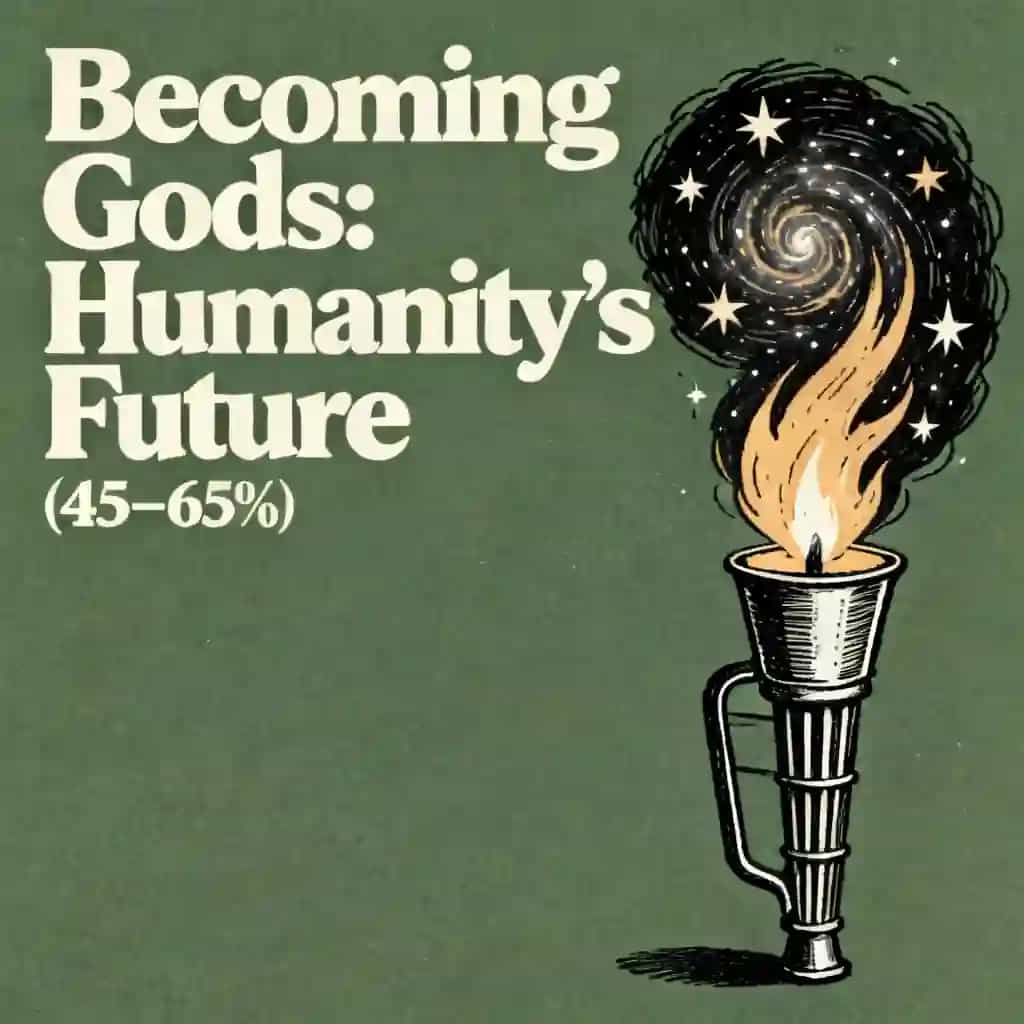
In "Homo Deus," Harari explores humanity's future as we pursue godlike powers through technology. Endorsed by Mark Zuckerberg and translated into 50+ languages, this 10-million-copy bestseller asks: What happens when algorithms know us better than we know ourselves?
- Humanity transitions from fighting famine to pursuing immortality and eternal bliss.
- Dataism emerges as the new religion valuing data over human experience.
- Artificial intelligence could outperform humans in decision-making and governance.
- Free will is a myth shaped by biological algorithms.
- Biotechnology and AI merge to create upgraded "Homo deus" humans.
- Humanism declines as algorithms increasingly dictate societal norms.
- Consciousness becomes obsolete in a world dominated by data processing.
- Ethical crises arise from gene-editing and life-extension technologies.
- Traditional religions adapt to worship technology and scientific progress.
- Happiness replaces survival as humanity’s primary evolutionary goal.
- Social structures collapse under decentralized algorithmic authority.
- Historical human supremacy narratives face irrelevance in a post-human era.
About the Author of Homo Deus
Yuval Noah Harari is an Israeli historian and the bestselling author of Homo Deus: A Brief History of Tomorrow. He is renowned for merging macrohistory with provocative futurism.
Born in 1976, Harari is an Oxford-educated professor at the Hebrew University of Jerusalem. He rose to global prominence through his exploration of humanity’s past and future, blending evolutionary biology, philosophy, and technology studies.
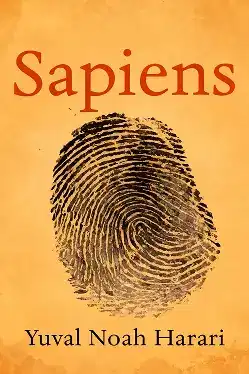
Homo Deus continues the trajectory of his groundbreaking work Sapiens: A Brief History of Humankind (2011), examining how artificial intelligence and biotechnology might redefine human existence. Harari is also a co-founder of the social impact company Sapienship.
Harari regularly contributes to global discourse through TED Talks and publications like 21 Lessons for the 21st Century and Nexus: A Brief History of Information Networks. His works, translated into 65 languages, have sold over 45 million copies worldwide, establishing him as one of the most influential public intellectuals of the digital age.
FAQs About Homo Deus
What is Homo Deus: A Brief History of Tomorrow about?
Homo Deus explores humanity’s future by analyzing historical trends, technological advancements, and philosophical challenges. Yuval Noah Harari argues that humans may evolve into god-like beings through biotechnology and AI, while grappling with existential questions about consciousness, dataism, and the decline of humanism. The book examines how societies might prioritize happiness, immortality, and divine creation over traditional goals like survival.
Who should read Homo Deus: A Brief History of Tomorrow?
This book suits readers interested in futurism, philosophy, and technology’s societal impact. Educators, tech professionals, and policymakers will value its insights into AI ethics and transhumanism. Fans of Harari’s Sapiens or works by Jared Diamond and Daniel Kahneman will appreciate its macro-historical perspective.
Is Homo Deus worth reading?
Yes, for its provocative analysis of humanity’s potential trajectories. While some critics argue its predictions are overly pessimistic, the book offers a compelling framework for understanding AI, bioengineering, and shifting global priorities. It ranks among Harari’s most cited works, with endorsements from Bill Gates and Barack Obama.
What are the main ideas in Homo Deus?
Key concepts include:
- Dataism: The idea that data flow will surpass human cognition as the supreme value.
- Techno-humanism: Humans merging with machines to upgrade physical/mental capabilities.
- Post-human evolution: Potential speciation into biologically enhanced or AI-driven entities.
Harari frames these trends as extensions of humanity’s historical quest to conquer famine, plague, and war.
How does Homo Deus differ from Sapiens?
While Sapiens examines humanity’s past, Homo Deus focuses on future scenarios. It shifts from factual history to speculative philosophy, emphasizing technology’s role in redefining human purpose. Critics note its darker tone but praise its audacious interdisciplinary synthesis.
What does Yuval Noah Harari predict in Homo Deus?
Harari anticipates:
- Humans prioritizing immortality and happiness over survival.
- Algorithms replacing human decision-making in politics/economics.
- A new “data religion” undermining traditional belief systems.
He warns these changes could create unprecedented inequality or render Homo sapiens obsolete.
What is “dataism” in Homo Deus?
Dataism posits that the universe consists of data flows, and value derives from processing information efficiently. Harari suggests this emerging ideology could replace humanism, reducing art, relationships, and ethics to algorithmic patterns—a shift with profound ethical implications.
How does Homo Deus address artificial intelligence?
The book argues AI and machine learning will outperform humans in most tasks, from medical diagnosis to governance. Harari cautions that uncontrolled AI development might erode human agency, creating a “useless class” of economically irrelevant individuals.
What criticisms exist about Homo Deus?
Critics argue Harari oversimplifies complex systems like consciousness and underplays solutions to technological risks. Some historians contest his dismissal of human agency, while ethicists note his sparse guidance for mitigating dystopian outcomes.
What iconic quotes appear in Homo Deus?
- “The greatest danger for humans is not AI replacing us—it’s us becoming AI.”
- “History began when humans invented gods and will end when they become gods.”
These lines encapsulate Harari’s themes of technological transcendence and existential paradox.
How does Homo Deus relate to current AI trends?
The book presciently discusses GPT-style language models, neural implants, and algorithmic governance—topics dominating 2025’s tech discourse. Its warnings about data monopolies and cognitive outsourcing align with contemporary debates about AI regulation.
What books complement Homo Deus?
Pair with Ray Kurzweil’s The Singularity Is Near for techno-optimism, or Naomi Klein’s The Shock Doctrine for critiques of unchecked capitalism. For alternate futures, try Kim Stanley Robinson’s The Ministry for the Future.
Feel the book through the author's voice
Turn knowledge into engaging, example-rich insights
Capture key ideas in a flash for fast learning
Enjoy the book in a fun and engaging way
Key Themes in Homo Deus
Quotes from Homo Deus
Organisms are algorithms.
We are consequently facing a dual revolution. Biotechnology will enable us to upgrade humans, while infotech will enable us to merge them into immense data networks.
Our perception of danger often doesn't align with statistical reality.
We seem to hit a glass ceiling of satisfaction.
The right to pursue happiness has subtly shifted toward an expectation.
Characters in Homo Deus
Quick Summary Mode - Read or listen to Homo Deus Summary in 10 Minutes

Break down key ideas from Homo Deus into bite-sized takeaways to understand how innovative teams create, collaborate, and grow.

Flash Card Mode - Top 10 Insights from Homo Deus in a Nutshell

Distill Homo Deus into rapid-fire memory cues that highlight key principles of candor, teamwork, and creative resilience.

Fun Mode - Homo Deus Lessons Told Through 24-Min Stories

Experience Homo Deus through vivid storytelling that turns innovation lessons into moments you'll remember and apply.
Personalize Mode - Read or listen to Homo Deus Summary in 0 Minutes

Ask anything, pick the voice, and co-create insights that truly resonate with you.

From Columbia University alumni built in San Francisco
"Instead of endless scrolling, I just hit play on BeFreed. It saves me so much time."


"I never knew where to start with nonfiction—BeFreed’s book lists turned into podcasts gave me a clear path."


"Perfect balance between learning and entertainment. Finished ‘Thinking, Fast and Slow’ on my commute this week."
"Crazy how much I learned while walking the dog. BeFreed = small habits → big gains."
"Reading used to feel like a chore. Now it’s just part of my lifestyle."

"Feels effortless compared to reading. I’ve finished 6 books this month already."
"BeFreed turned my guilty doomscrolling into something that feels productive and inspiring."

"BeFreed turned my commute into learning time. 20-min podcasts are perfect for finishing books I never had time for."
"BeFreed replaced my podcast queue. Imagine Spotify for books — that’s it. 🙌"

"It is great for me to learn something from the book without reading it."
"The themed book list podcasts help me connect ideas across authors—like a guided audio journey."
"Makes me feel smarter every time before going to work"
From Columbia University alumni built in San Francisco
"Instead of endless scrolling, I just hit play on BeFreed. It saves me so much time."
"I never knew where to start with nonfiction—BeFreed’s book lists turned into podcasts gave me a clear path."
"Perfect balance between learning and entertainment. Finished ‘Thinking, Fast and Slow’ on my commute this week."
"Crazy how much I learned while walking the dog. BeFreed = small habits → big gains."
"Reading used to feel like a chore. Now it’s just part of my lifestyle."
"Feels effortless compared to reading. I’ve finished 6 books this month already."
"BeFreed turned my guilty doomscrolling into something that feels productive and inspiring."
"BeFreed turned my commute into learning time. 20-min podcasts are perfect for finishing books I never had time for."
"BeFreed replaced my podcast queue. Imagine Spotify for books — that’s it. 🙌"
"It is great for me to learn something from the book without reading it."
"The themed book list podcasts help me connect ideas across authors—like a guided audio journey."
"Makes me feel smarter every time before going to work"
"Instead of endless scrolling, I just hit play on BeFreed. It saves me so much time."
"I never knew where to start with nonfiction—BeFreed’s book lists turned into podcasts gave me a clear path."
"Perfect balance between learning and entertainment. Finished ‘Thinking, Fast and Slow’ on my commute this week."
"Crazy how much I learned while walking the dog. BeFreed = small habits → big gains."
"Reading used to feel like a chore. Now it’s just part of my lifestyle."
"Feels effortless compared to reading. I’ve finished 6 books this month already."
"BeFreed turned my guilty doomscrolling into something that feels productive and inspiring."
"BeFreed turned my commute into learning time. 20-min podcasts are perfect for finishing books I never had time for."
"BeFreed replaced my podcast queue. Imagine Spotify for books — that’s it. 🙌"
"It is great for me to learn something from the book without reading it."
"The themed book list podcasts help me connect ideas across authors—like a guided audio journey."
"Makes me feel smarter every time before going to work"
"Instead of endless scrolling, I just hit play on BeFreed. It saves me so much time."
"I never knew where to start with nonfiction—BeFreed’s book lists turned into podcasts gave me a clear path."
"Perfect balance between learning and entertainment. Finished ‘Thinking, Fast and Slow’ on my commute this week."
"Crazy how much I learned while walking the dog. BeFreed = small habits → big gains."
"Reading used to feel like a chore. Now it’s just part of my lifestyle."
"Feels effortless compared to reading. I’ve finished 6 books this month already."
"BeFreed turned my guilty doomscrolling into something that feels productive and inspiring."
"BeFreed turned my commute into learning time. 20-min podcasts are perfect for finishing books I never had time for."
"BeFreed replaced my podcast queue. Imagine Spotify for books — that’s it. 🙌"
"It is great for me to learn something from the book without reading it."
"The themed book list podcasts help me connect ideas across authors—like a guided audio journey."
"Makes me feel smarter every time before going to work"

Get the Homo Deus summary as a free PDF or EPUB. Print it or read offline anytime.