
Livre
Atomic Habits
James Clear
Comprehensive guide to building good habits and breaking bad ones.

00:00
00:00
Honest Headway app review covering features, pricing, pros and cons, and the best alternatives in 2026.

Headway is a gamified book summary app that condenses nonfiction books into 15-minute reads and audio clips — and after extensive testing in 2026, it remains one of the best options for building a daily learning habit if you respond well to streaks, badges, and progress bars. With over 50 million downloads, it's clearly doing something right. But the real question is whether its gamification-first approach delivers lasting value, or if it's just another app that feels productive without making you smarter.
If you want a learning app that goes beyond summaries and turns books into personalized AI podcasts tailored to your interests, BeFreed offers a different path — with 50,000+ titles and adaptive learning plans that adjust to how you actually learn.
Headway is a mobile-first learning platform that transforms nonfiction books into bite-sized summaries you can read in about 15 minutes or listen to in audio format. Founded in Ukraine, the app has grown to over 50 million downloads across iOS and Android by leaning heavily into gamification — think Duolingo for book summaries.
The core idea: make learning feel like a game so you actually stick with it. Every day, Headway nudges you with streaks, achievement badges, and themed challenges designed to keep you opening the app. It's built for people who want to learn from books like Atomic Habits or Feel-Good Productivity but struggle to carve out time for full reads.
Comprehensive guide to building good habits and breaking bad ones.

Discover how to boost productivity through joy, not grind. Unlock your potential by making work feel good.
Each summary distills a book's key ideas into a structured read that takes about 15 minutes. You get both text and audio formats, and you can switch between them mid-summary — start reading on your lunch break, then switch to audio on your commute. The summaries are well-organized with clear section breaks, highlighted quotes, and key insight callouts.
This is Headway's most underrated feature and the one that actually separates it from competitors. After you finish a summary, the app generates flashcards from the key concepts and resurfaces them at scientifically optimized intervals. It's the same technique used in language learning apps, applied to book knowledge. If you've read about the science behind this in James Clear's Atomic Habits — the idea that small, repeated actions compound over time — Headway puts that principle into practice for retention.
Comprehensive guide to building good habits and breaking bad ones.
Headway's gamification goes beyond simple streak counting. You earn achievement badges, unlock progress milestones, and can track your learning stats over time. The daily streak system works like Duolingo's — miss a day and you lose your streak, which creates a surprisingly strong psychological pull to keep going. For some users, this is exactly the push they need. For others, it can feel like pressure rather than motivation.
Challenges group related summaries into curated learning paths around specific goals — emotional intelligence, business growth, mindfulness, and more. Interactive Shorts are a newer feature: branching narrative stories that let you explore real-life scenarios and make decisions, turning passive reading into active problem-solving.
Headway works on iOS, Android, and web, with Apple CarPlay and Android Auto integration for listening while driving. Offline downloads are available for premium subscribers, so you can learn without a connection.
What works well:
What falls short:
Headway offers four pricing tiers:
| Plan | Price | Per Month |
|---|---|---|
| Monthly | $12.99 | $12.99 |
| Quarterly | $29.99 | ~$10.00 |
| Annual | $89.99 | ~$7.50 |
| Lifetime | $299.99 | One-time |
The free tier gives you one summary per day — chosen by Headway, not by you. Premium unlocks the full library, offline downloads, and all flashcard features.
The annual plan is the sweet spot for most users. Lifetime deals occasionally appear on StackSocial and similar marketplaces for $50–$80, which is a solid deal if you plan to use the app long-term. Just note: Headway removed its free trial in 2026, so you'll need to commit to a paid plan or evaluate the app through the daily free summary.
| Feature | Headway | Blinkist | BeFreed | Shortform |
|---|---|---|---|---|
| Library size | 1,700+ titles | 7,500+ titles | 50,000+ titles | 1,000+ titles |
| Summary format | Text + audio | Text + audio | AI podcast + text | Text with exercises |
| Gamification | Streaks, badges, challenges | Basic progress tracking | Adaptive learning plans | Reading exercises |
| AI personalization | No | Limited | Yes — AI podcasts adapt to your interests | No |
| Offline access | Yes (premium) | Yes (premium) | Yes | Yes (premium) |
| Spaced repetition | Yes — flashcards | No | No — but AI recaps reinforce concepts | Exercises serve similar purpose |
| Starting price | $89.99/year | $99.99/year | Free with premium options | $199/year |
| Best for | Habit builders | Large library browsers | Deep, personalized learners | Analytical readers |
Blinkist has the bigger library (7,500+ vs 1,700+), and if you care about having access to the widest range of titles, it wins on selection alone. But Headway's gamification and flashcard system make it better at helping you remember what you read. Blinkist feels more like a library; Headway feels more like a learning program. Price-wise, Headway is about $10 cheaper per year.
This is the most interesting comparison because the two apps have fundamentally different philosophies. Headway uses gamification to build habits — streaks, badges, and external rewards keep you coming back. BeFreed uses AI to personalize the learning experience itself — its AI podcast generator creates custom audio summaries from 50,000+ titles, adapting the depth (10, 20, or 40 minutes) and focus areas to your specific interests. If you want someone to make learning fun, choose Headway. If you want an app that actually learns how you learn, BeFreed is the stronger pick.
For a quick audio deep-dive into habit science, listen to Atomic Habits: The Science of Tiny Changes — it covers how small behavioral shifts compound into transformative results.


Discover why willpower isn't the problem—your system is. Learn James Clear's Four Laws of Behavior Change to make good habits inevitable and transform your life one percent at a time.
Shortform targets readers who want analytical depth — detailed chapter-by-chapter breakdowns with exercises and context. It's almost the opposite of Headway's quick-hit approach. Shortform costs significantly more ($199/year) and has a smaller library, but the summaries are genuinely deeper. If you're a serious reader who wants to understand a book thoroughly, Shortform wins. If you want breadth and consistency, Headway is more practical.
Headway is a great fit if you:
Headway probably isn't for you if you:
Headway and BeFreed represent two different philosophies about how people learn best in short bursts. Headway bets on gamification — external rewards to build habits. BeFreed bets on personalization — AI that shapes the content to fit your brain.
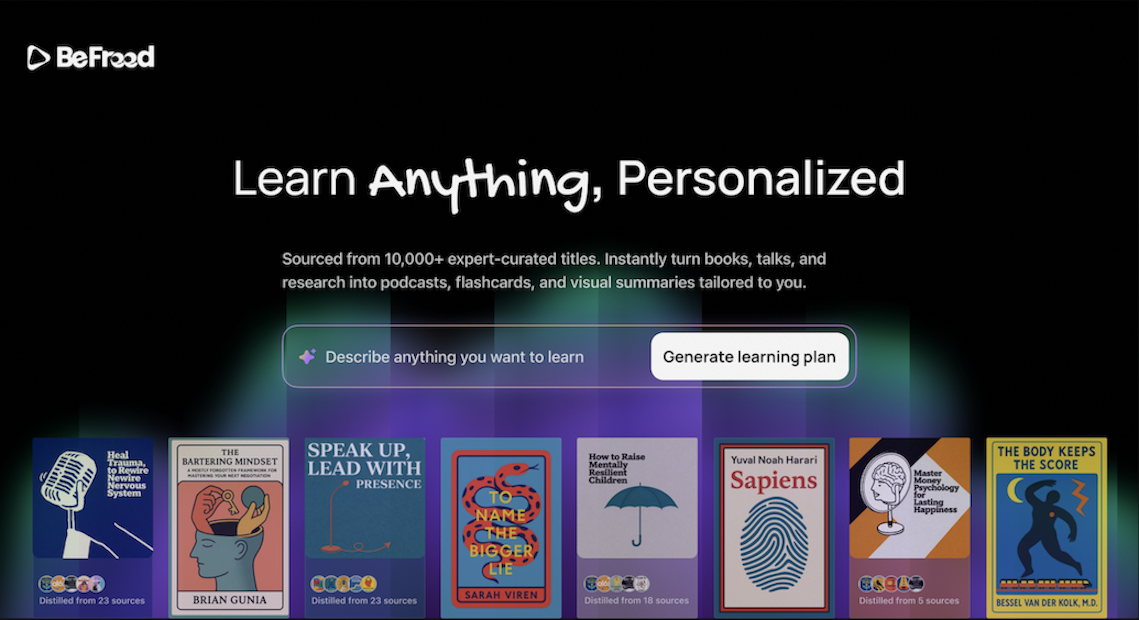
With BeFreed, you're not getting a one-size-fits-all summary. The AI podcast generator pulls from a library of 50,000+ titles and creates audio experiences tailored to your interests and preferred depth. You choose whether you want a quick 10-minute overview or a thorough 40-minute deep dive. The platform also builds adaptive learning plans that evolve as you progress.
If you're the kind of learner who reads Atomic Habits and wants to understand how those principles apply specifically to your work and life, BeFreed's AI approach will feel more useful than a static summary. Ali Abdaal's Feel-Good Productivity argues that productivity thrives when it feels like play — and BeFreed takes that idea seriously by making learning feel like a conversation, not a chore.
Comprehensive guide to building good habits and breaking bad ones.
Discover how to boost productivity through joy, not grind. Unlock your potential by making work feel good.
Headway is a solid book summary app that excels at one thing: making daily learning feel like a habit you actually want to maintain. The gamification is the best in the category, the flashcards genuinely help with retention, and at $89.99/year, the price is fair.
But it has real limitations. The library is small compared to the competition, the summaries lack depth, and there's no AI personalization — every user gets the same content regardless of their background or goals. If gamification is what makes or breaks your learning consistency, Headway deserves your attention. If you want a more personalized, AI-driven learning experience with a much larger library, BeFreed is the better long-term investment.

Make a an app
This comprehensive plan bridges the gap between technical coding skills and commercial product success. It is ideal for aspiring developers and entrepreneurs who want to build high-quality mobile apps from the ground up while ensuring business viability.

AI for Dating Apps & Business: 2026+
As the digital landscape evolves, integrating AI with human psychology is essential for building sustainable dating and networking platforms. This plan is designed for entrepreneurs and product managers looking to master the technical and strategic pillars of AI-powered business models.

Stay motivated with habit app after 54 days
Maintaining momentum often fails once the novelty of a tracking app wears off, typically around the two-month mark. This plan is designed for high-performers and habit-builders who want to transition from fleeting motivation to permanent identity-based change.

How to build a great language learning app
Building a successful language app requires a unique blend of pedagogical science, psychological triggers, and high-performance product design. This plan is essential for developers, product managers, and educators looking to transform language learning into a scalable, high-retention digital experience.
The 12 Week Year AI Execution System
Traditional annual planning often leads to a year-end rush and wasted time. This system is designed for high-performers and entrepreneurs who want to leverage AI to maintain peak productivity and achieve more in 12 weeks than most do in 12 months.

Meditate Without the App
This plan is designed for practitioners who want to move beyond guided audio and build a self-sustaining meditation practice. It is ideal for anyone seeking to master their nervous system and achieve mental clarity using only their internal biological tools.
NextUp: Launching the Music Marketplace
This plan is essential for entrepreneurs and developers looking to disrupt the music industry with a platform model rather than a simple app. It provides a strategic roadmap for anyone aiming to master marketplace dynamics, viral user acquisition, and investment-ready financial engineering.

AI Implementation for Daily Productivity
In an era of rapid technological shifts, mastering AI integration is essential for maintaining a competitive edge. This plan is designed for busy professionals looking to move beyond basic chat prompts toward a fully automated personal operating system.