Best Deepstash Alternatives 2026: 8 Apps Compared
Deepstash review 2026: verified pricing, free vs Pro comparison, honest worth-it verdict, and 8 best alternatives compared. Try BeFreed free.

Introduction
The best Deepstash alternatives in 2026 are BeFreed, Blinkist, Headway, Matter, Notion, Khan Academy, Volv, and Audible — each solving a specific learning need that Deepstash's bite-sized idea cards leave unmet. If Deepstash's shallow content, aggressive upselling, or gamification fatigue pushed you to search for something better, this guide matches the right app to your exact frustration.
BeFreed stands out as the top pick — your brilliant friend who turns everything you're curious about into engaging audio lessons you can actually finish. Powered by a proprietary content engine, it takes any knowledge source — a book, a research paper, a YouTube video, or just a spark of curiosity — and transforms it into a personalized audio lesson built around your language, your level, and your available time. No streak popups, no paywall after every third idea card, no badge notifications interrupting your learning.
Deepstash built a massive library of 200,000+ idea cards, and the concept is appealing: quick bites of knowledge from books, articles, and podcasts. But in practice, the app's problems are well-documented across Trustpilot, App Store reviews, and Reddit threads. The free tier is nearly unusable with constant upsell prompts. Deepstash Pro costs $12.99/month, with annual plans listed between $49.99 and $119.99 on the App Store as of July 20, 2026 — yet many users report unauthorized charges, confusing cancellation processes, and buggy features that undermine the premium experience. This guide breaks down what each alternative does better — and which one fits your learning style.
Deepstash Pricing Quick Answer (Checked July 2026)
Is Deepstash free? Yes — Deepstash has a free tier, but it is heavily restricted: a capped daily idea feed, ads between cards, and limited stashing. Most useful features require Deepstash Pro.
How much does Deepstash Pro cost? $12.99/month, $29.99 per 3 months, or an annual plan at roughly $89.99/year (App Store in-app purchase listing, verified July 20, 2026). Annual tiers range from $49.99 to $119.99 depending on promotions and region.
| Plan | Price (US, checked July 20, 2026) |
|---|---|
| Free | $0 — daily idea feed with ads, limited stashing |
| Pro Monthly | $12.99/month |
| Pro 3 Months | $29.99 / 3 months (~$10/mo) |
| Pro Yearly | ~$89.99/year typical (listed tiers: $49.99–$119.99) |
If you mainly want a free learning app, Khan Academy is completely free, Volv is free for news, and BeFreed offers a free tier with personalized audio lessons — no paywall wall after every third card.
Quick Verdict
BeFreed is the best Deepstash alternative in 2026 for anyone who wants real learning progress instead of a feed of idea cards — it turns any book, topic, PDF, or video into a personalized audio lesson with a step-by-step learning plan. Is Deepstash worth it? As a free app for casual browsing, it is fine. As a paid subscription — $12.99/month, with annual plans listed between $49.99 and $119.99 on the App Store as of July 20, 2026 — most learners get more depth per dollar from BeFreed, Blinkist, or Headway. Is Deepstash legit? Yes: it is a real, widely used app rated 4.6/5 across roughly 53,000 App Store ratings. The recurring caution is billing — Trustpilot reviewers repeatedly report surprise renewals and hard-to-find cancellation, so subscribe through the App Store or Google Play and set a renewal reminder.
Key Takeaways
- Switch to BeFreed if you want to actually finish learning what you start. It turns any topic, book, or file into a personalized audio lesson you can complete during a commute — in your language, at your level, with a step-by-step learning plan instead of random snippets.
- Pick Blinkist for structured 15-minute book summaries with professional narration. Its library of 7,000+ nonfiction titles is the largest among summary apps.
- Choose Headway if you want spaced repetition flashcards to actually retain what you learn. Its review system resurfaces key ideas at scientifically optimized intervals.
- Try Matter if your main goal is saving articles and newsletters to read later. Its free tier is genuinely useful — unlimited saving, full-text search, and a browser extension.
- Use Notion if you need to organize and connect your own knowledge. It gives you complete control over how you store, link, and export your ideas — something Deepstash never offered.
- Pick Khan Academy for free, structured academic courses. It covers math through college-level economics with mastery-based progression and an AI tutor.
Quick Picks Based on Our Review
- BeFreed — Best overall Deepstash alternative for real learning progress (personalized audio lessons, step-by-step learning plans)
- Blinkist — Best for quick, polished book summaries with audio
- Headway — Best for habit-building and long-term retention
- Matter — Best for saving and reading articles, newsletters, and PDFs
- Notion — Best for building your own knowledge management system
- Khan Academy — Best free option for structured academic learning
- Volv — Best for staying informed with ultra-short news briefings
- Audible — Best for full-length audiobook listening
How to Choose: Match Your Deepstash Frustration to the Right App
Your ideal Deepstash alternative depends on what frustrated you most. Here is a quick decision guide:
If your problem was content that stays at surface level → switch to BeFreed (personalized audio lessons you can actually finish, with a step-by-step learning plan that adapts to your language, level, and schedule)
If your problem was wanting structured book summaries, not random cards → switch to Blinkist (chapter-by-chapter summaries with professional narration)
If your problem was forgetting everything within a week → switch to Headway (spaced repetition flashcards resurface ideas at optimal intervals)
If your problem was the paywall blocking basic features → switch to Matter (free tier includes unlimited saving, search, and browser extension)
If your problem was no way to export or organize saved ideas → switch to Notion (you own your data, export anything, link ideas across sources)
If your problem was wanting real courses, not snippets → switch to Khan Academy (free structured curriculum from basic to advanced)
If your problem was using Deepstash mainly for trending topics → switch to Volv (9-second news summaries without the gamification)
If your problem was summaries not being enough — you want the full book → switch to Audible (800K+ full-length audiobooks with professional narration)
The common thread: Deepstash users searching for alternatives want real learning outcomes, not a feed of motivational snippets dressed up with streak counters.
Deepstash Alternatives: Pricing Comparison Table
Use this table for a direct price-to-price comparison. All prices are standard US rates verified at our last check — every app runs periodic promotions, so confirm at checkout.
| App | Monthly Price | Annual Price | Free Tier | Best For |
|---|---|---|---|---|
| Deepstash | $12.99/mo | ~$89.99/yr (tiers: $49.99–$119.99) | Yes — limited daily feed, ads | Browsing bite-sized idea cards |
| BeFreed | Premium available | Premium available | Yes — try personalized audio lessons free | Personalized audio lessons and learning plans |
| Blinkist | ~$16/mo | ~$100/yr | 1 random daily pick | Polished 15-min book summaries |
| Headway | ~$13/mo | ~$90/yr | Limited access | Retention via spaced repetition |
| Matter | ~$8/mo | ~$60/yr | Generous — unlimited saving | Save and read articles |
| Notion | ~$10/mo (Plus) | ~$96/yr (Plus) | Generous — unlimited pages | Knowledge management |
| Khan Academy | Free | Free | Completely free | Structured academic courses |
| Volv | Free | Free | Completely free | 9-second news briefings |
| Audible | $7.95–$14.95/mo | ~$96–$180/yr | 30-day trial | Full-length audiobooks |
Deepstash Review: What It Is and Why Users Leave
Deepstash is a mobile learning app that curates bite-sized ideas — called "stashes" — from books, articles, podcasts, and videos. Each idea card presents a single concept in a few sentences, and users can save cards into personal collections.
Pricing: Deepstash Pro costs $12.99/month, $29.99 per 3 months, or an annual plan listed between $49.99 and $119.99 on the App Store (verified July 20, 2026 — full breakdown below). Pro unlocks unlimited saving, offline access, audio playback, and an ad-free experience. The free tier limits how many ideas you can read per day and inserts ads between cards.
Where Deepstash works well: It makes learning feel accessible. You can open the app, read a few idea cards in under a minute, and feel like you picked up something useful. The interface is clean, the topic variety is broad, and the onboarding is quick.
Where Deepstash falls short: User reviews across Trustpilot, the App Store, and Google Play reveal consistent pain points:
- Aggressive paywalling. The free version pushes Pro subscriptions constantly. Users report full-screen upsell prompts after every few cards, making casual browsing frustrating.
- Billing and cancellation issues. Multiple Trustpilot reviewers report unauthorized charges after trials expire, difficulty finding the cancel button, and charges continuing after cancellation. Some users describe being charged for an annual plan immediately upon entering card details for a "free trial."
- Shallow content without context. Idea cards strip away the reasoning, evidence, and narrative that make a book's argument convincing. You get the conclusion without the journey — which means the ideas rarely stick.
- Gamification that serves the app, not the learner. Daily streaks, badges, and full-screen "streak status" popups interrupt the reading flow. The mechanics are designed to drive daily opens, not learning outcomes.
- Poor audio quality. The read-aloud feature uses a robotic text-to-speech voice that multiple reviewers describe as "old school" and hard to listen to for more than a few minutes.
- No real export. Shared ideas link back to Deepstash's database rather than including the source and author — making it difficult to reference ideas outside the app.
- Content format changes. Users report that standalone quotes and loose ideas have been removed, with everything now locked behind full book summaries that require Pro.
These are not edge cases — they represent the most frequently cited reasons users search for Deepstash alternatives.
Deepstash Cost: Free Tier vs Pro Plans (Checked July 2026)
Deepstash Pro costs $12.99 per month, $29.99 for three months, or an annual subscription listed on the App Store at price points from $49.99 to $119.99 — with roughly $89.99/year the commonly cited standard US rate. We verified these figures against Deepstash's official App Store in-app purchase listing on July 20, 2026; Deepstash's own website lists Free and Pro tiers but does not display dollar amounts publicly, so the App Store listing is the most reliable public record of its current prices.
| Plan | Price (US, checked July 20, 2026) | What you get |
|---|---|---|
| Free | $0 | Daily idea feed with limits, ads between cards, limited stashing |
| Pro Monthly | $12.99/month | Ad-free reading, audio playback, offline access, unlimited reading history |
| Pro 3 Months | $29.99 per 3 months | Same Pro features at a lower effective monthly rate |
| Pro Yearly | Listed tiers from $49.99 to $119.99; ~$89.99 typical | Same Pro features at the lowest effective monthly rate |
Two things to know before you pay:
- The "$29.99 per year" figure floating around review sites is not the standard annual price. On the official App Store in-app purchase list, $29.99 is the three-month plan. Deepstash runs frequent promotional and regional discounts, so a sub-$50 annual offer can appear during sales — treat it as a promotion and confirm the billing period on the checkout screen before paying.
- The free tier is browsable but constrained. You get the daily idea feed with ads and limited saving. If you mainly want a free learning app, Khan Academy, Volv, and Matter's free tier (all covered below) give you more without an upsell wall, and BeFreed's free tier lets you try personalized audio lessons before paying anything.
Is Deepstash Worth It in 2026? Our Honest Review
Deepstash is worth it if you want a pleasant, low-effort way to browse ideas from popular nonfiction for a few minutes a day — and not worth it if your goal is deep understanding, retention, or structured progress, where the same money buys more elsewhere.
To be fair to Deepstash, it does several things well. The app is genuinely popular — its App Store listing reports 5+ million users and holds a 4.6/5 rating across roughly 53,000 ratings (checked July 20, 2026). The interface is clean, topics range from productivity to philosophy, and the idea-card format makes picking up one useful thought in under a minute effortless. As a replacement for doomscrolling, it succeeds.
The case against paying for Pro comes down to what $89.99–$155.88 a year buys: the same idea-card format with the ads removed and offline access, audio playback, and unlimited history added. The cards still strip out the reasoning and evidence behind each idea, the text-to-speech audio still lags behind professional or modern AI narration, and there is still no structured path from "interested in a topic" to "actually understand it." For that money, Blinkist gives you full professional summaries, Headway adds retention mechanics, and BeFreed builds an adaptive learning plan with audio lessons customized to your level and schedule.
Is Deepstash Legit?
Yes — Deepstash is a legitimate app, not a scam. It has operated for years, claims 5+ million users, and its 4.6/5 App Store rating across roughly 53,000 ratings reflects a mostly satisfied user base. The consistent caution is billing practice rather than the product itself: on Trustpilot, where the score sits around 4 stars from roughly 755 reviews (checked July 20, 2026), the most common complaints describe renewal charges arriving without clear notice and cancellation being hard to find. The practical safeguard is simple: subscribe through the App Store or Google Play rather than the website, since platform subscriptions can be cancelled in one place, and set a calendar reminder a few days before any trial or annual renewal date.
Top 8 Deepstash Alternatives in 2026
1. BeFreed — AI-Powered Book Learning (Our Top Pick)
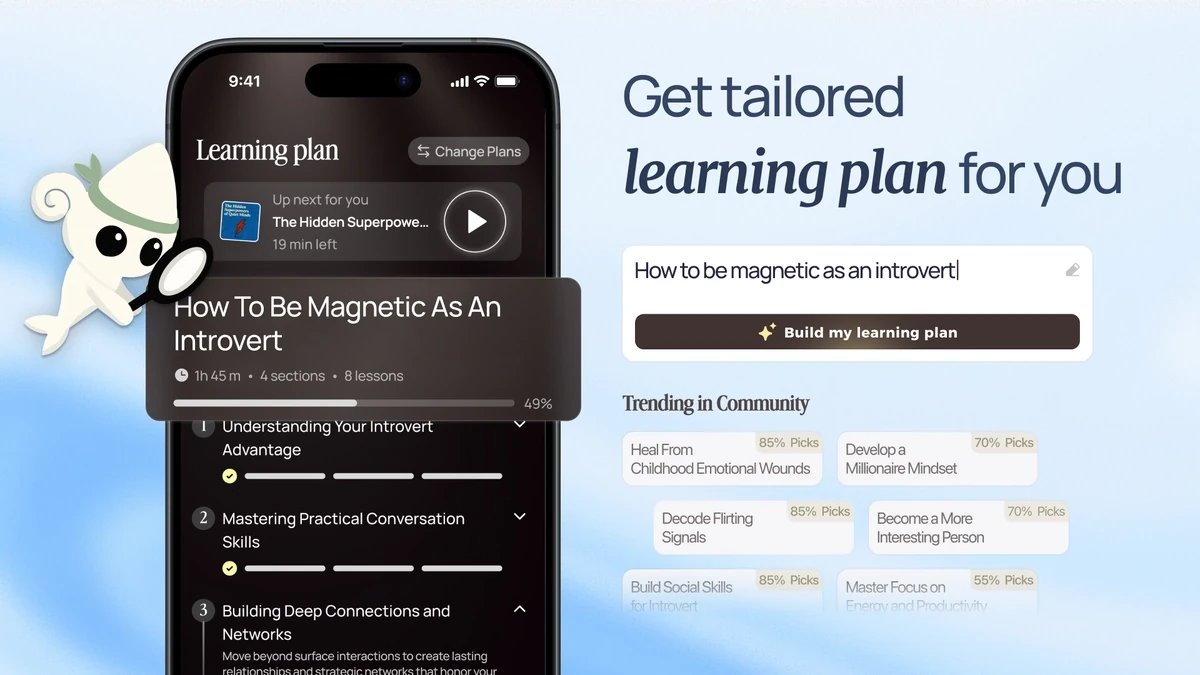
BeFreed takes a fundamentally different approach to learning. Most people don't fail to learn because they lack curiosity — they fail because the format gets in the way. Finding something in your language, at your level, that fits into a 10-minute commute is surprisingly hard. Powered by a proprietary content engine, BeFreed takes any knowledge source — a topic, a book, a PDF, a URL, or a YouTube video — and transforms it into an engaging audio lesson built around you.
The difference matters because Deepstash gives everyone the same static idea cards. BeFreed lets you create learning plans from the best sources — expert talks, research papers, and books — personalized to your goal. You set the length, language, voice, and narration style — or write a custom prompt for your own lecturer. A 10-minute commute gets a 10-minute lesson. A weekend deep-dive gets a 40-minute lesson covering multiple sources. The library spans over 100,000 titles, and you can combine multiple books into a single cohesive lesson that connects ideas across sources.
Beyond individual lessons, BeFreed is built for real progress. Every lesson maps to a personalized, step-by-step learning plan — so you always know where you are, how much you've completed, and how close you are to the goal you set for yourself. While you listen, you can talk directly to your lecturer to dig deeper or get clarity on anything. Save highlights or turn key ideas into flashcards to keep what matters. Every day, every small session adds up. CarPlay and Android Auto let you learn hands-free during commutes, walks, and workouts. You can also browse lessons created by other learners, or publish your own and share them with a link.
Why It Stands Out: BeFreed is the only app on this list that lets you start with a topic or goal and get a personalized learning plan built from the best sources — not just summaries, but a structured path using books, experts, and research. Where Deepstash gives you a sentence about an idea, BeFreed gives you engaging audio lessons you can actually finish.
Pricing: Free tier available. Premium subscription unlocks the full library and advanced features.
My Take: If your main complaint about Deepstash is that the content feels shallow — you read dozens of idea cards but never build real understanding — BeFreed solves that directly. It turns curiosity into a structured learning plan you can actually finish, with engaging audio lessons that deliver coherent narrative rather than disconnected snippets. It is especially strong for commuters and listeners who learn better by ear — and supports 40+ languages, so non-English learners are not left out. The trade-off: you need to be comfortable with AI-generated audio rather than human narration. Most users find the quality surprisingly natural, but it is worth trying the free tier first.
2. Blinkist — Quick Book Summaries With Professional Audio
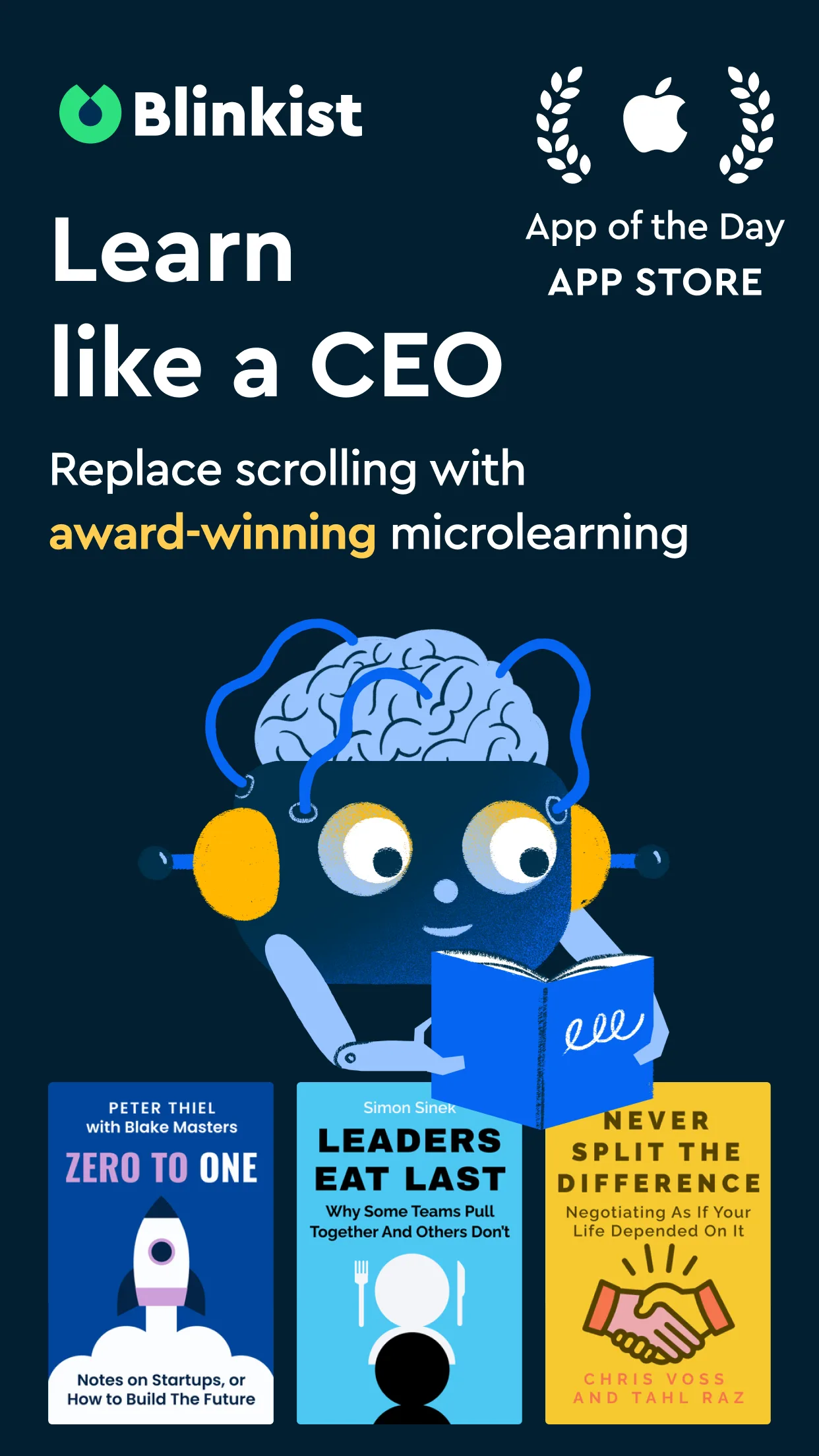
Blinkist is the most established book summary app on the market. It condenses over 7,000 nonfiction titles into 15-minute summaries available in both text and professionally narrated audio. Each summary follows a consistent chapter-by-chapter structure that preserves the book's argument — a clear step up from Deepstash's disconnected idea cards.
The library spans 27+ categories including business, psychology, science, health, parenting, and history, with new titles added regularly. Blinkist Connect lets you share your subscription with one other person at no extra cost, effectively cutting the per-person price in half.
Why It Stands Out: Consistent quality across a massive library. Every summary is professionally written and narrated, so you know what to expect — unlike Deepstash, where idea card quality varies wildly depending on who curated it.
Pricing: Free tier offers one random daily pick. Premium costs approximately $100/year or $16/month and includes the full library, audio, and offline downloads. See our full Blinkist Pricing 2026 breakdown.
My Take: Blinkist is the safe choice if you want polished, reliable book summaries without customization. The downside compared to BeFreed is that every user gets the identical 15-minute summary — you cannot go deeper on the parts that matter most to you or adjust the format. If you left Deepstash because content was too shallow, Blinkist is better but still has a ceiling. For a detailed comparison, read our Blinkist Review.
3. Headway — Habit-Building With Spaced Repetition
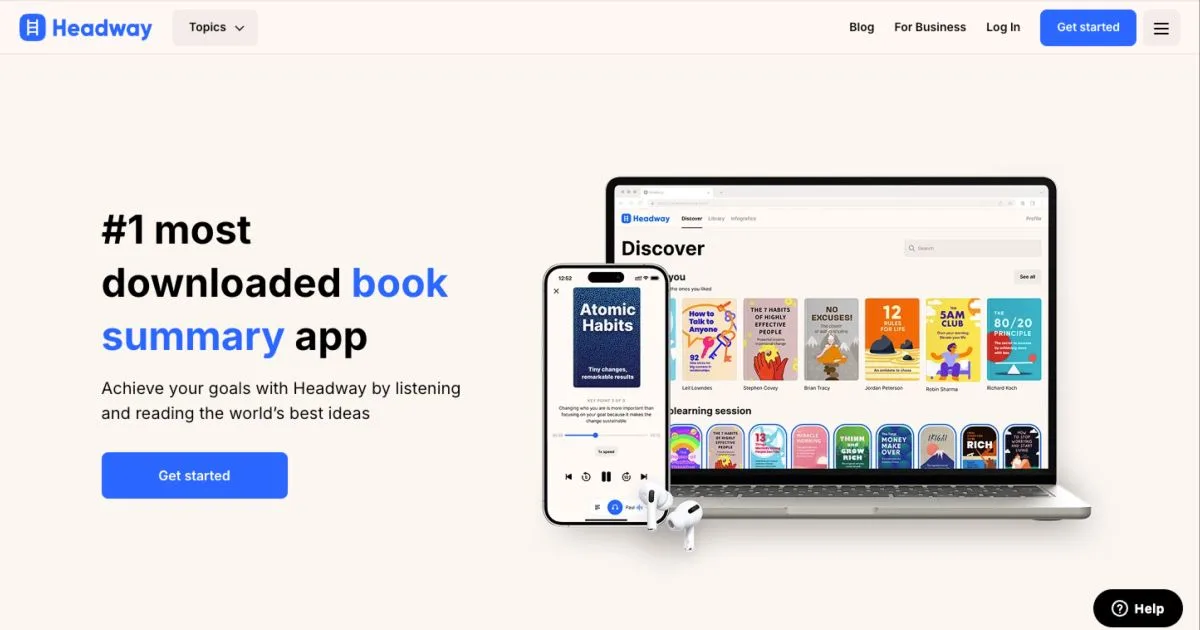
Headway focuses on making book learning stick through a habit-building approach. Its standout feature is spaced repetition flashcards — after you read a book summary, the app saves key insights and resurfaces them at scientifically optimized intervals, similar to how Anki works for language learning.
The library includes 2,000+ book summaries with text and audio formats, daily challenges, and progress tracking. Unlike Deepstash's streak mechanics that just count consecutive opens, Headway's gamification ties directly to learning outcomes through the flashcard review system. You are rewarded for remembering ideas, not just for opening the app.
Why It Stands Out: Spaced repetition is one of the most evidence-backed techniques for long-term memory retention. Headway is the only book summary app that builds it directly into the reading experience — addressing the core problem that Deepstash users describe: "I read all these ideas but can't remember any of them."
Pricing: Approximately $13/month, or $90/year with a 7-day free trial. A lifetime deal has been available for around $59. For more detail, see our Headway Pricing 2026 guide.
My Take: Headway directly answers one of the biggest Deepstash frustrations: the feeling that you consumed hundreds of ideas without retaining a single one. The library is smaller than Blinkist's (2,000+ vs 7,000+), and individual summaries are shorter, but the retention mechanics genuinely work. The gamification feels more purposeful than Deepstash's — closer to Duolingo than a mobile game pushing daily opens. Read our full Headway App Review for a deeper look.
4. Matter — Read-It-Later for Articles and Newsletters
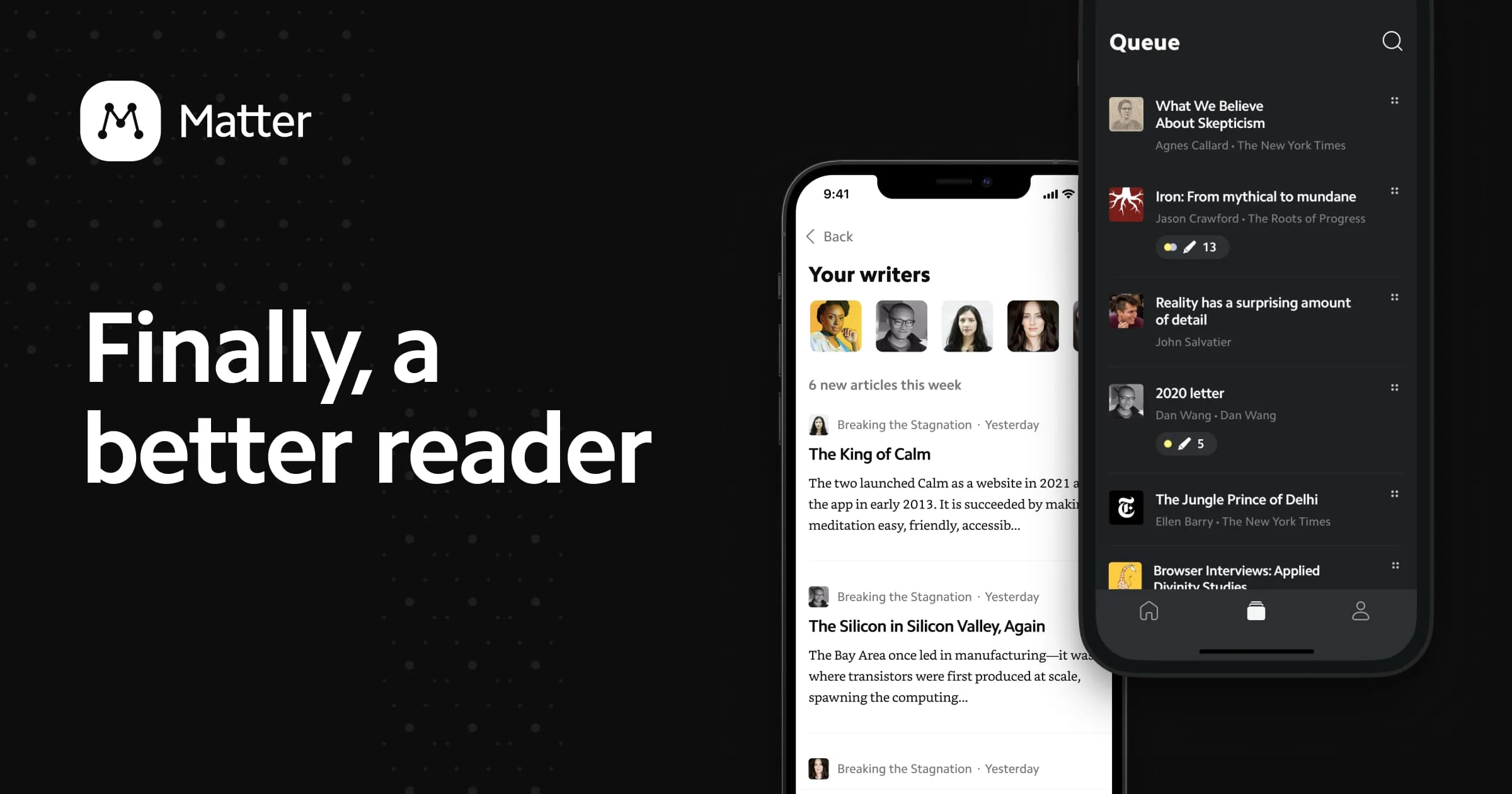
Matter takes a completely different approach from Deepstash — instead of serving curated content, it lets you save articles, newsletters, PDFs, and web pages to read later in a clean, distraction-free interface.
The free tier is genuinely useful: unlimited article saving, a browser extension, full-text search, and highlighting. This alone makes it more functional than Deepstash's free plan, where constant upsell prompts interrupt every reading session. Premium ($60/year) adds HD text-to-speech, advanced highlighting, RSS feeds, and integrations with tools like Notion and Readwise. The app strips ads, popups, and clutter from saved articles, creating a focused reading experience.
Why It Stands Out: Matter solves a different problem than most learning apps. If you already find great content but need a better place to actually read, organize, and revisit it, Matter delivers. The Notion and Readwise integrations mean your highlights actually go somewhere useful — unlike Deepstash, where saved ideas are trapped inside the app.
Pricing: Free tier with unlimited saving. Premium at $8/month or $60/year adds text-to-speech, RSS feeds, and integrations.
My Take: Matter is the right pick if you were never really interested in Deepstash's curated feed — you wanted to choose your own content and read it without distractions. The free tier alone is more functional than Deepstash's free version. The trade-off is clear: Matter does not generate summaries or help you learn from books; it is a reading tool, not a learning tool. Pair it with BeFreed if you want both article management and book learning.
5. Notion — Knowledge Management and Organization
Notion is not a learning app — it is a flexible workspace for organizing anything. It makes this list because one of Deepstash's most cited frustrations is the inability to export or organize saved ideas outside the app. Notion solves that completely: you can clip web content, build databases of book notes, create linked wikis of ideas, and structure your learning however you want.
The free personal plan is generous: unlimited pages and blocks with no artificial limits. The web clipper saves articles and highlights directly into your workspace. Notion AI adds summarization, writing assistance, and Q&A across your saved content — turning your personal knowledge base into something searchable and actionable.
Why It Stands Out: Complete ownership of your knowledge. Every note, every highlight, every connection between ideas belongs to you. You can export everything, share selectively, and build a system that grows with your learning. Deepstash's locked ecosystem is the opposite.
Pricing: Free for personal use with generous limits. Plus plan at $10/month adds unlimited file uploads and version history. Team and Enterprise tiers available.
My Take: Notion is the power-user answer to Deepstash's closed knowledge problem. You own your data, you can export everything, and the system adapts to your workflow. The downside: Notion does not serve you content. There is no library, no summaries, no audio — you bring your own material and build the system yourself. If that sounds like work, stick with BeFreed or Blinkist. If you love building systems and connecting ideas across sources, Notion is unmatched.
6. Khan Academy — Free Structured Learning
Khan Academy is the opposite of Deepstash's approach: instead of bite-sized inspiration, it offers full structured courses with video lessons, practice exercises, and mastery-based progress tracking — all completely free. No premium tier gatekeeping core content.
The platform covers math, science, economics, computing, arts, and humanities from elementary through college level. Khanmigo, its AI tutor, provides personalized guidance, answers questions in real time, and adapts to your learning pace. The content is created by educators and follows a proper curriculum progression — you build skills sequentially, not randomly.
Why It Stands Out: No other platform on this list offers completely free, structured education with this depth. If Deepstash made you feel like you were learning without actually building skills, Khan Academy is the antidote — real courses with real assessments that prove mastery.
Pricing: Completely free for all courses. Khanmigo AI tutor is available as an optional premium add-on.
My Take: Khan Academy is the clear winner if your learning goals are academic. The structured curriculum means you build real, verifiable skills — not just collect trivia from idea cards. The limitation is scope: it does not cover business books, self-improvement content, or the practical nonfiction that Deepstash and BeFreed specialize in. For academic subjects, use Khan Academy. For book-based learning, pair it with BeFreed.
7. Volv — Quick News Briefings Without the Noise
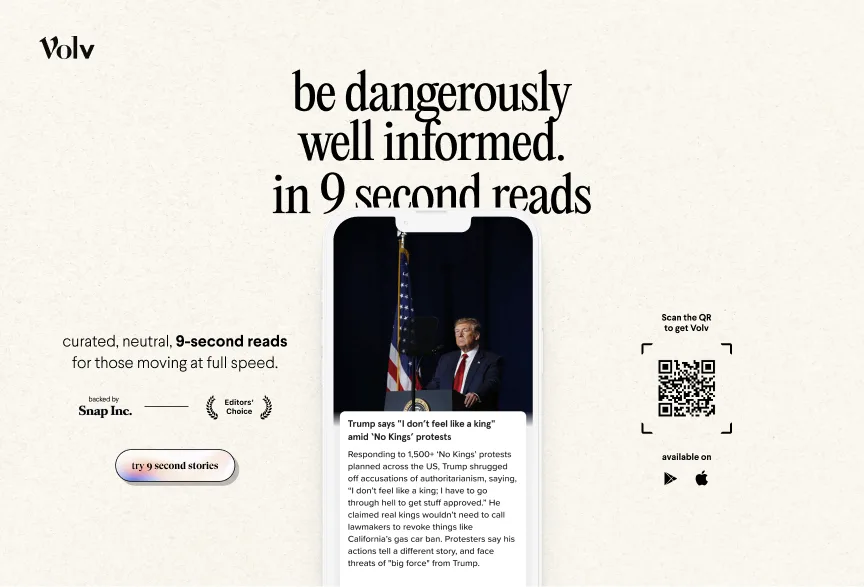
Volv compresses the day's most important news into 9-second reads — ultra-short summaries curated by a combination of AI and human editors. If you used Deepstash mainly for its trending topics and news-adjacent content rather than book learning, Volv does that job better with zero clutter.
The app covers global news, business, tech, AI, markets, lifestyle, and entertainment. Every summary links directly to the original source for deeper reading, and a built-in audio player lets you listen hands-free. The personalized feed adapts to your reading patterns without requiring you to maintain streaks or earn badges.
Why It Stands Out: Radical simplicity. No accounts needed for basic use, no gamification, no streaks, no upsell prompts between articles — just the news reduced to its essential point. Volv respects your time in a way Deepstash stopped doing.
Pricing: Free.
My Take: Volv is hyper-focused: it does news briefings and nothing else. If you opened Deepstash mainly to scan trending topics and skim quick takes, Volv replaces that use case with less friction. It will not help you learn from books or build deep knowledge — it is purely a current-events tool. The 9-second format is satisfying without feeling manipulative.
8. Audible — Full-Length Audiobooks
Audible sits at the opposite end of the spectrum from Deepstash. Instead of bite-sized idea cards, you get complete audiobooks narrated by professional voice actors — over 800,000 titles across fiction, nonfiction, business, self-help, and more.
The platform offers three tiers: Audible Plus ($7.95/month) for unlimited streaming from a curated catalog, Audible Standard ($8.99/month) for one credit per month plus streaming, and Premium Plus ($14.95/month) for one credit plus full catalog access. Whispersync lets you switch between Kindle reading and Audible listening without losing your place — a seamless experience no other app here matches.
Why It Stands Out: If you realized that summaries and idea cards are not enough — you want to hear the author's complete argument in their own structure — Audible has the largest audiobook library available with consistently high narration quality.
Pricing: Audible Plus at $7.95/month (streaming only). Standard at $8.99/month (1 credit + streaming). Premium Plus at $14.95/month (1 credit + full catalog). All include a free trial.
My Take: Audible is the right choice when you decide summaries are not enough and you want the full book experience. The trade-off is time: a typical audiobook runs 8–12 hours compared to BeFreed's 10–40 minute personalized lessons or Blinkist's 15-minute summaries. For committed readers with available hours, Audible delivers the deepest experience. For busy learners who need core ideas efficiently, BeFreed is the better daily driver.
Deepstash Alternatives Comparison Table
| Feature | BeFreed | Blinkist | Headway | Matter | Notion | Khan Academy | Volv | Audible |
|---|---|---|---|---|---|---|---|---|
| Content Type | Engaging audio lessons from any source — books, research, PDFs, YouTube, topics | 15-min book summaries | Book summaries + flashcards | Save articles, newsletters, PDFs | Personal knowledge workspace | Structured academic courses | 9-second news summaries | Full-length audiobooks |
| Library Size | 100K+ titles | 7,000+ nonfiction | 2,000+ nonfiction | User-saved content | User-created | Thousands of lessons | Daily curated news | 800K+ audiobooks |
| Audio | AI-generated, personalized | Professional narration | Audio summaries | HD text-to-speech (Premium) | No | Video lessons | Audio playback | Professional narration |
| Personalization | Depth, language, voice, narration style, length | Same for all users | Spaced repetition timing | Feed adapts to habits | Fully customizable | Adaptive exercises | Feed adapts to interests | Bookmarks and clips |
| Free Tier | Yes, with limits | 1 random daily pick | Limited access | Generous — unlimited saving | Generous — unlimited pages | Completely free | Free | 30-day trial only |
| Price (Annual) | Premium available | ~$100/year | ~$90/year | $60/year | $96/year (Plus) | Free | Free | ~$96–$180/year |
| Offline Access | Yes | Yes (Premium) | Yes (Premium) | Yes | Yes | Yes (app) | Limited | Yes |
| Export/Integration | Flashcards, sharing | Limited | Limited | Notion, Readwise | Full export | N/A | Source links | Whispersync (Kindle) |
| Best For | Real learning progress with personalized audio lessons you can actually finish | Quick, professional book overviews | Retaining ideas long-term | Organizing reading from the web | Building a personal knowledge system | Academic subjects and skills | Staying informed fast | Complete book experiences |
Why BeFreed Is the Best Deepstash Alternative in 2026
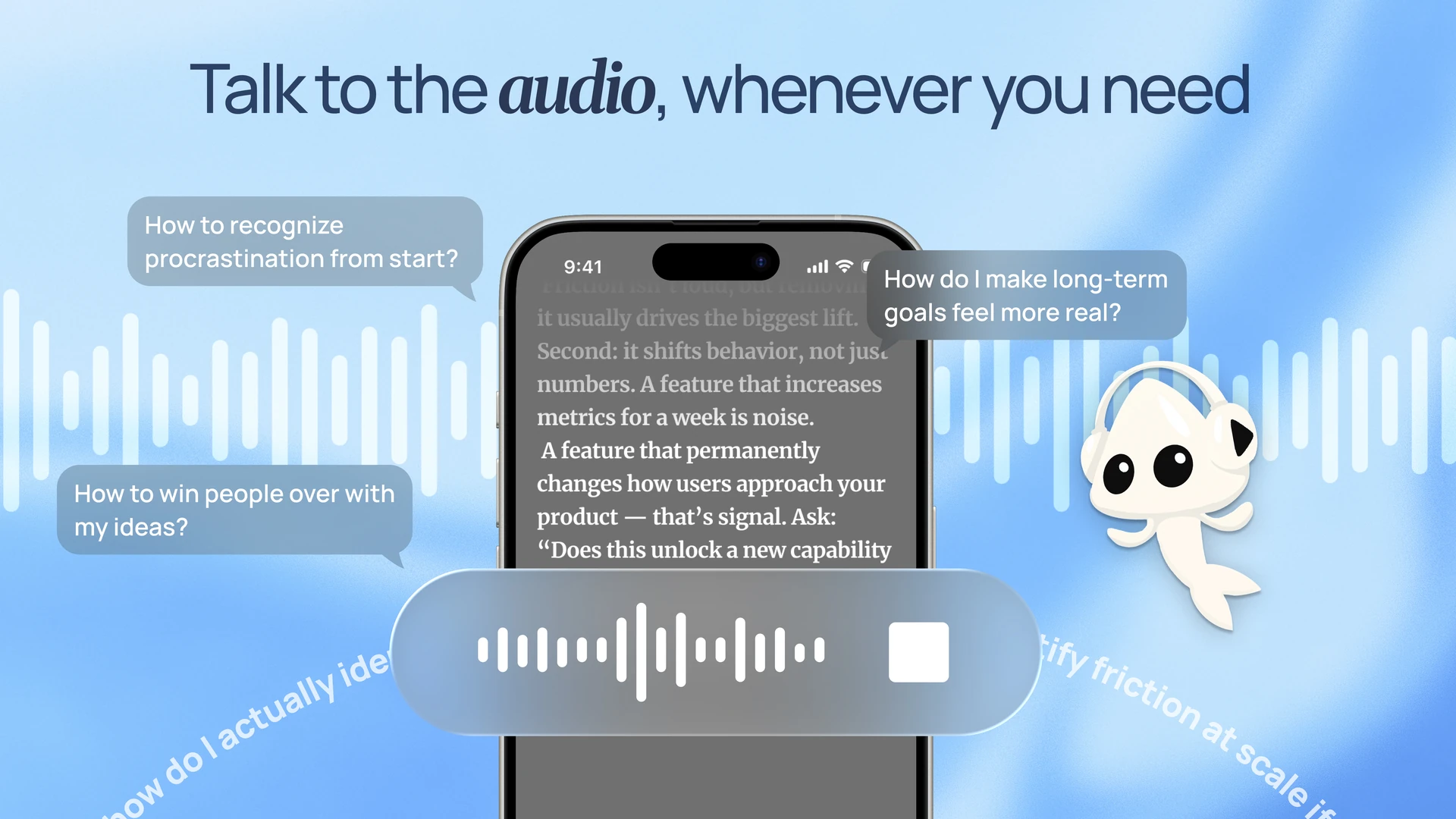
BeFreed addresses the fundamental problem: great ideas shape people's lives, but most of them never land because the format gets in the way. Here is how it solves each of Deepstash's core pain points.
Depth over snippets. Deepstash gives you a sentence or two about a book's idea — stripped of context, evidence, and reasoning. BeFreed's proprietary content engine generates an engaging audio lesson that walks through the concept, explains the logic behind it, and connects it to related ideas. You finish a BeFreed lesson understanding a topic, not just aware that it exists.
No gamification pressure. No streak popups, no badges, no full-screen "streak status" announcements. BeFreed does not need artificial engagement mechanics because the content itself is worth coming back to.
Learn naturally, your way. Deepstash's idea cards are a fixed format — one size fits all. BeFreed lets you choose a 10-minute overview, a 20-minute deep-dive, or a 40-minute comprehensive lesson. You pick the language, the voice, and the narration style — or write a custom prompt for your own lecturer. You can combine multiple books into a single lesson that connects themes across sources.
Your schedule, your terms. CarPlay and Android Auto support turns commutes, walks, and workouts into learning sessions. You do not need to be staring at a phone screen to make progress.
Real progress, not fragments. Deepstash draws from books, articles, and podcasts, but always in the same idea-card format with no sense of progression. BeFreed generates lessons from PDFs, URLs, YouTube videos, and custom prompts — in whatever depth, language, and format works for your schedule. Your learning plan builds a personalized, step-by-step roadmap that evolves as you progress — every small session adds up, so you always know how far you've come and what's next. You can also discover lessons created by other learners or publish your own and share them with a link.
For anyone who has hit the ceiling of what bite-sized idea cards can teach, BeFreed offers the natural next step: a brilliant friend who turns your curiosity into real understanding — delivered in a format you can actually finish.
Our Final Verdict
Deepstash works as an entry point for casual curiosity — but its shallow content depth, aggressive paywalling, documented billing issues, and gamification-heavy design push many users to look elsewhere. The best alternative depends on what you actually want from a learning app.
For most users leaving Deepstash, BeFreed is the strongest overall replacement. It takes any knowledge source — books, articles, research, or just a topic you're curious about — and turns it into a personalized learning plan with engaging audio lessons you can actually finish, adapted to your goals, your language, and your schedule. If your budget is tight, Khan Academy (academic) and Volv (news) are excellent free options. If you want polished book summaries without surprises, Blinkist remains the industry standard. If retention is your priority, Headway's spaced repetition system works. And if your real need was always organization rather than content, Notion gives you full control.
The bottom line: Deepstash made micro-learning popular, but the format has limits. Every alternative on this list goes further — deeper content, better retention, cleaner reading, or complete control over your knowledge. Try BeFreed free and see how a personalized learning plan with audio lessons you can actually finish compares to scrolling through idea cards.
FAQ
发现更多

The Deep Work Strategy
In an era of constant digital distraction, the ability to focus deeply is a rare and valuable superpower. This plan is essential for professionals and creatives who want to increase their cognitive output and master hard skills quickly.

The Deep Reader's Comeback
In an era of digital fragmentation, this plan is designed for anyone struggling to focus on long-form content. It provides the behavioral tools and cognitive strategies needed to transform reading from a chore into a high-leverage skill for personal growth.

Deep Work for High-Stakes Deadlines
In an era of constant digital noise, the ability to focus on complex tasks is a rare competitive advantage. This plan is designed for professionals facing tight deadlines who need to optimize their mental energy and reclaim control over their schedules.
Boost focus, cut excess, and gain freedom.
In an era of constant digital noise, the ability to protect your attention and simplify your lifestyle is a competitive advantage. This plan is designed for ambitious professionals and creators who want to escape burnout and build a life centered on deep work and personal autonomy.

Find daily alternatives to SM
This learning plan is essential for anyone feeling overwhelmed by social media's grip on their daily life and seeking to reclaim their time, attention, and relationships. It's particularly valuable for professionals, students, and creators who recognize that constant digital distraction is preventing them from doing their best work and experiencing genuine human connection. By following this structured approach, you'll transform your relationship with technology from reactive and draining to intentional and life-enhancing.

Spot hidden habits killing productivity
In an era of constant digital noise, traditional time management is no longer enough to stay effective. This plan is designed for professionals and students who feel busy but unproductive, offering the tools to reclaim focus and master cognitive energy.

Deep Dialogue and Digital Storytelling
This plan is essential for creators and journalists looking to bridge the gap between profound human connection and digital visibility. It is ideal for podcasters, writers, and content strategists who want to master the balance of emotional vulnerability and technical SEO optimization.

The Inner Citadel: Stoic Resilience
In an era of constant digital noise and uncertainty, this plan offers a practical framework for mental sovereignty. It is ideal for professionals and individuals seeking to build emotional stability and focus through the timeless principles of Stoic philosophy.