
Why don't students like school?: a cognitive scientist answers questions about how the mind works and what it means for your classroom

《Why don't students like school?》概述
Discover why our minds struggle with classroom learning in Willingham's myth-busting guide that challenges the popular "learning styles" theory. Praised by educators worldwide for transforming teaching practices with cognitive science - making this the essential handbook for anyone who wants students to actually remember what they learn.
- Daniel Willingham explains why thinking is slow and memory-driven in learning
- Students avoid schoolwork when content is too hard or too easy
- Background knowledge in long-term memory accelerates new learning efficiency
- Effective teaching minimizes cognitive overload by respecting working memory limits
- Growth mindset gains are small but possible with focused practice
- Learning styles like visual or auditory are debunked by cognitive science
- Curiosity thrives when problems are challenging yet solvable with effort
- Intelligence shifts through environment and effort, not fixed genetic traits
- Teachers must connect content to questions students find inherently meaningful
- Pattern recognition and chunking bypass the brain's resistance to thinking
- Rote practice builds automaticity, freeing working memory for complex tasks
- Willingham's cognitive principles prioritize factual knowledge over learning preferences
《Why don't students like school?》作者介绍
Daniel T. Willingham, author of Why Don’t Students Like School?: A Cognitive Scientist Answers Questions About How the Mind Works and What It Means for the Classroom, is a cognitive psychologist and professor at the University of Virginia renowned for bridging cognitive science with K–12 education.
A Harvard-trained PhD and Duke University alumnus, he distills complex neuroscience into practical teaching strategies, addressing core themes of student engagement, memory systems, and effective learning practices.
Willingham’s authority stems from his long-running “Ask the Cognitive Scientist” column in American Educator and bestselling books like The Reading Mind and When Can You Trust the Experts?, which explore evidence-based education. Appointed by President Obama to the National Board for Education Sciences, his work is cited in over 23 languages.
Why Don’t Students Like School? has become a modern education classic, praised by The Washington Post and The Wall Street Journal for reshaping classroom pedagogy worldwide.
关于《Why don't students like school?》的常见问题
What is Why Don't Students Like School? by Daniel T. Willingham about?
Why Don't Students Like School? explores how cognitive science principles explain why traditional education often fails students. Daniel Willingham argues that the brain avoids effortful thinking, and effective teaching requires aligning instruction with how memory and problem-solving work. Key themes include the role of factual knowledge, the inefficiency of learning styles, and strategies to make learning engaging.
Who should read Why Don’t Students Like School??
This book is essential for educators, school administrators, and parents seeking evidence-based strategies to improve learning outcomes. It’s particularly valuable for those interested in cognitive psychology’s applications to education, offering practical insights into curriculum design, student motivation, and classroom practices.
Is Why Don’t Students Like School? worth reading?
Yes. Willingham synthesizes decades of cognitive research into actionable teaching methods, challenging myths like learning styles. The book’s blend of scientific rigor and classroom relevance makes it a timeless resource for improving educational practices.
What are the main cognitive principles in Why Don’t Students Like School??
Willingham outlines nine principles, including the brain’s preference for avoiding overthinking, the necessity of factual knowledge for critical thinking, and the importance of practice. These principles emphasize designing lessons that reduce cognitive overload while building long-term memory.
How does Why Don’t Students Like School? challenge learning styles?
The book debunks the myth that tailoring instruction to visual, auditory, or kinesthetic learners improves outcomes. Willingham argues that content-specific strategies (e.g., using diagrams for spatial topics) matter more than innate learning preferences, as proven by cognitive studies.
What role does memory play in learning, according to Willingham?
Willingham distinguishes working memory (limited, short-term processing) from long-term memory (vast storage of facts and skills). Effective teaching helps students “chunk” information into long-term memory through repetition, contextualization, and connecting new material to prior knowledge.
How can teachers apply Willingham’s ideas to make school enjoyable?
The book suggests framing lessons around solvable problems to trigger curiosity, balancing challenge and skill to avoid frustration, and using stories or humor to reduce cognitive strain. Teachers should prioritize depth over breadth and reinforce effort over innate ability.
What does Willingham say about intelligence and effort?
Willingham rejects the notion of fixed intelligence, emphasizing that effort and practice reshape the brain. Praising persistence—not innate talent—motivates students to embrace challenges, fostering resilience and growth.
How does Why Don’t Students Like School? address standardized testing?
While acknowledging testing’s focus on factual recall, Willingham argues that foundational knowledge is crucial for higher-order thinking. Teachers should integrate critical thinking into content-rich lessons rather than treating them as separate skills.
What criticisms exist about Why Don’t Students Like School??
Some educators argue the book oversimplifies classroom complexities or undervalues socioemotional factors in learning. However, its evidence-based approach and focus on cognitive fundamentals remain widely influential.
Why is Why Don’t Students Like School? still relevant in 2025?
The 2021 second edition updates examples while retaining core principles, ensuring applicability to modern challenges like hybrid learning. Its insights into memory, motivation, and metacognition remain critical for navigating evolving educational landscapes.
What practical strategies does Willingham offer for overwhelmed teachers?
Key tips include breaking lessons into manageable “chunks,” using analogies to link new ideas to familiar concepts, and spacing out practice over time. Willingham also advocates for teacher collaboration to refine methods based on cognitive science.
通过作者的声音感受这本书
将知识转化为引人入胜、富含实例的见解
快速捕捉核心观点,高效学习
以有趣互动的方式享受这本书
《Why don't students like school?》主要人物
- Daniel T. WillinghamCognitive psychologist and author of the book
《Why don't students like school?》核心主题
- cognitive load theory
- factual knowledge acquisition
- optimal challenge level
- memory-based learning
- applied cognitive science
《Why don't students like school?》经典语录
Our brains aren't actually designed for thinking-they're designed to avoid it.
Thinking is cognitively expensive, requiring significant energy and attention.
Memory is the residue of thought-we remember what we think about.
Factual knowledge isn't just stuff we memorize-it's the foundation that makes thinking possible.
The Devil is wise because he's old.
探索你的学习方式
 快速摘要模式
11分钟阅读或收听《Why don't students like school?》摘要
将《Why don't students like school?》的核心观点拆解为易于理解的要点,了解创新团队如何创造、协作和成长。

 趣味模式
趣味模式
《Why don't students like school?》的启示 - 23分钟故事
通过生动的故事体验《Why don't students like school?》,将创新经验转化为令人难忘且可应用的精彩时刻。
 个性化模式
个性化模式
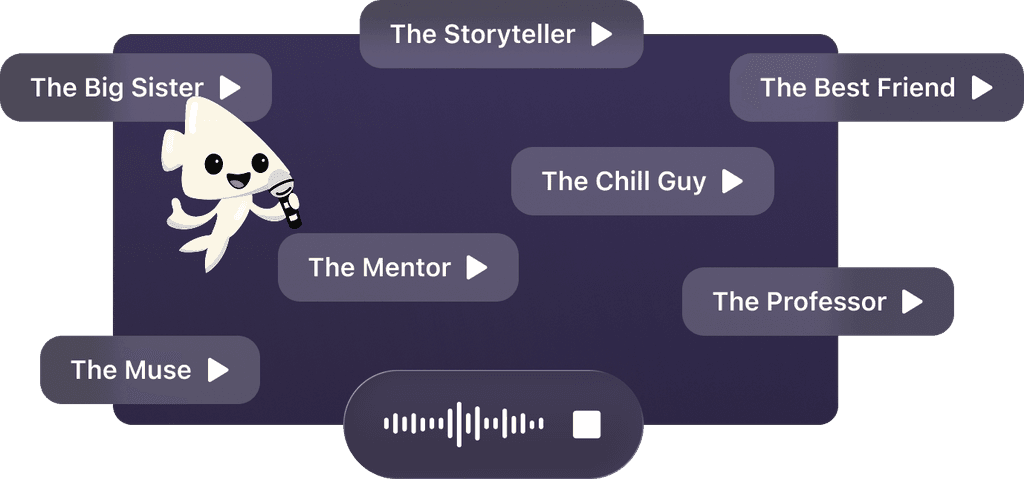
用你自己的学习方式体验《Why don't students like school?》
随时提问,选择你的学习方式,共创真正适合你的洞察。
"Instead of endless scrolling, I just hit play on BeFreed. It saves me so much time."


"I never knew where to start with nonfiction—BeFreed’s book lists turned into podcasts gave me a clear path."


"Perfect balance between learning and entertainment. Finished ‘Thinking, Fast and Slow’ on my commute this week."
"Crazy how much I learned while walking the dog. BeFreed = small habits → big gains."
"Reading used to feel like a chore. Now it’s just part of my lifestyle."

"Feels effortless compared to reading. I’ve finished 6 books this month already."
"BeFreed turned my guilty doomscrolling into something that feels productive and inspiring."

"BeFreed turned my commute into learning time. 20-min podcasts are perfect for finishing books I never had time for."
"BeFreed replaced my podcast queue. Imagine Spotify for books — that’s it. 🙌"

"It is great for me to learn something from the book without reading it."
"The themed book list podcasts help me connect ideas across authors—like a guided audio journey."
"Makes me feel smarter every time before going to work"
"Instead of endless scrolling, I just hit play on BeFreed. It saves me so much time."
"I never knew where to start with nonfiction—BeFreed’s book lists turned into podcasts gave me a clear path."
"Perfect balance between learning and entertainment. Finished ‘Thinking, Fast and Slow’ on my commute this week."
"Crazy how much I learned while walking the dog. BeFreed = small habits → big gains."
"Reading used to feel like a chore. Now it’s just part of my lifestyle."
"Feels effortless compared to reading. I’ve finished 6 books this month already."
"BeFreed turned my guilty doomscrolling into something that feels productive and inspiring."
"BeFreed turned my commute into learning time. 20-min podcasts are perfect for finishing books I never had time for."
"BeFreed replaced my podcast queue. Imagine Spotify for books — that’s it. 🙌"
"It is great for me to learn something from the book without reading it."
"The themed book list podcasts help me connect ideas across authors—like a guided audio journey."
"Makes me feel smarter every time before going to work"
"Instead of endless scrolling, I just hit play on BeFreed. It saves me so much time."
"I never knew where to start with nonfiction—BeFreed’s book lists turned into podcasts gave me a clear path."
"Perfect balance between learning and entertainment. Finished ‘Thinking, Fast and Slow’ on my commute this week."
"Crazy how much I learned while walking the dog. BeFreed = small habits → big gains."
"Reading used to feel like a chore. Now it’s just part of my lifestyle."
"Feels effortless compared to reading. I’ve finished 6 books this month already."
"BeFreed turned my guilty doomscrolling into something that feels productive and inspiring."
"BeFreed turned my commute into learning time. 20-min podcasts are perfect for finishing books I never had time for."
"BeFreed replaced my podcast queue. Imagine Spotify for books — that’s it. 🙌"
"It is great for me to learn something from the book without reading it."
"The themed book list podcasts help me connect ideas across authors—like a guided audio journey."
"Makes me feel smarter every time before going to work"
"Instead of endless scrolling, I just hit play on BeFreed. It saves me so much time."
"I never knew where to start with nonfiction—BeFreed’s book lists turned into podcasts gave me a clear path."
"Perfect balance between learning and entertainment. Finished ‘Thinking, Fast and Slow’ on my commute this week."
"Crazy how much I learned while walking the dog. BeFreed = small habits → big gains."
"Reading used to feel like a chore. Now it’s just part of my lifestyle."
"Feels effortless compared to reading. I’ve finished 6 books this month already."
"BeFreed turned my guilty doomscrolling into something that feels productive and inspiring."
"BeFreed turned my commute into learning time. 20-min podcasts are perfect for finishing books I never had time for."
"BeFreed replaced my podcast queue. Imagine Spotify for books — that’s it. 🙌"
"It is great for me to learn something from the book without reading it."
"The themed book list podcasts help me connect ideas across authors—like a guided audio journey."
"Makes me feel smarter every time before going to work"

下载《Why don't students like school?》摘要
免费获取《Why don't students like school?》摘要的 PDF 或 EPUB 版本。可打印或随时离线阅读。


