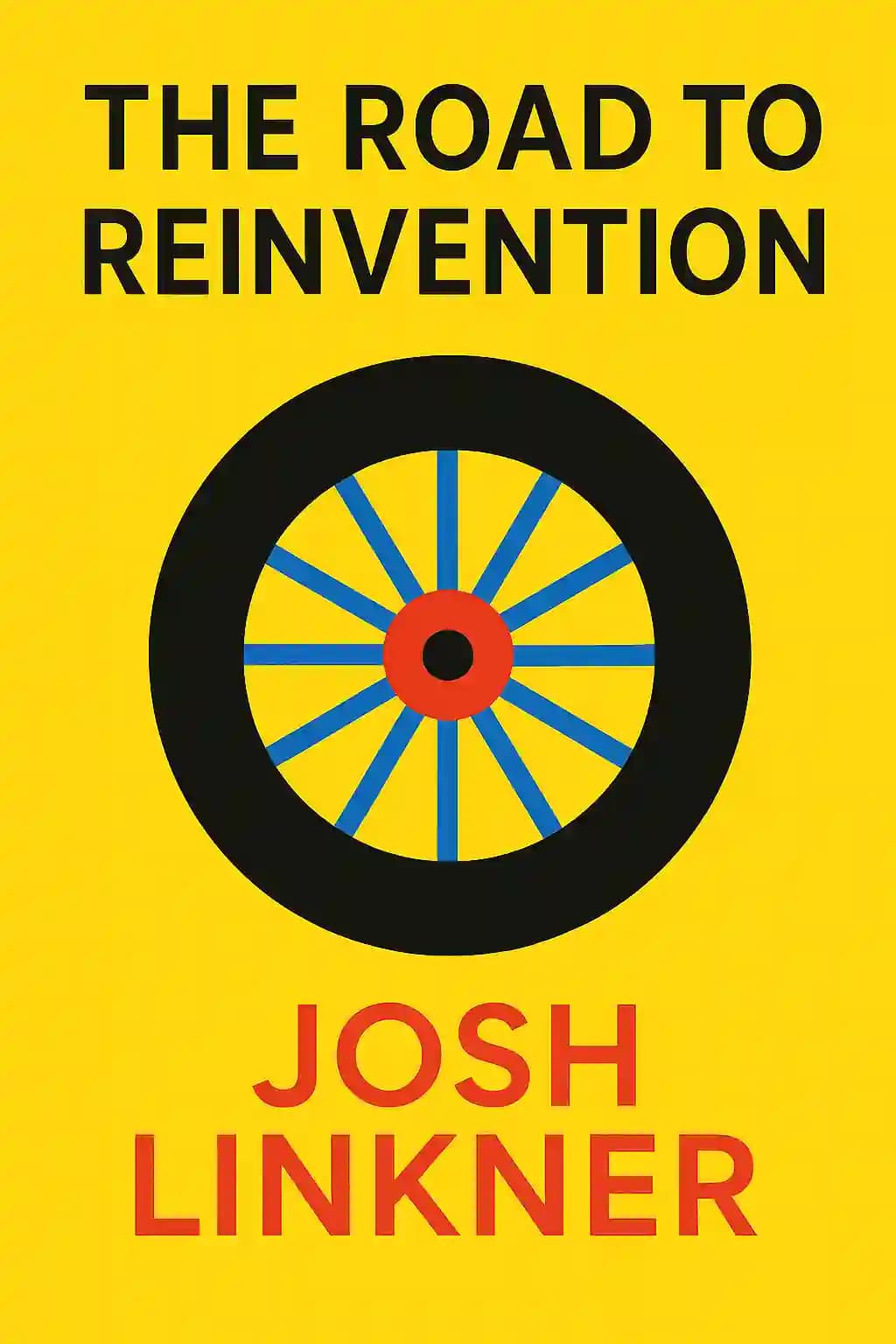
In "The Road to Reinvention," Josh Linkner reveals why disruption is essential for survival. Endorsed by AOL co-founder Steve Case, this guide uses Detroit's dramatic rebirth as proof: those who don't reinvent get left behind. Ready to create your own disruption?
Josh Linkner, New York Times bestselling author of The Road to Reinvention, is a serial entrepreneur and innovation expert renowned for his insights on business transformation.
A Detroit native and Berklee College of Music alumnus, Linkner merges his jazz background with entrepreneurial acumen, crafting frameworks for organizational reinvention and creative leadership. His book, centered on disruption and adaptability, draws from his experience founding five tech companies—including ePrize and Detroit Venture Partners—which collectively sold for over $200 million and created 10,000+ jobs.
A two-time EY Entrepreneur of the Year, Linkner co-founded Muditā Venture Partners, fueling groundbreaking startups, and chairs innovation consultancy Platypus Labs. His work has earned recognition from the White House, including the Presidential Champion of Change Award.
A sought-after keynote speaker, Linkner’s ideas have shaped strategies at Fortune 500 firms and inspired global audiences through TED Talks and media features. The Road to Reinvention reflects his lifelong mission to empower leaders navigating rapid change, cementing his status as a leading voice in modern business strategy.
The Road to Reinvention provides a strategic blueprint for businesses and individuals to thrive amid disruption. Josh Linkner argues that constant reinvention—reshaping products, services, operations, and culture—is essential for long-term success. The book combines actionable frameworks with real-world examples, including Detroit’s revitalization, to illustrate how purposeful transformation drives resilience and growth.
Entrepreneurs, corporate leaders, and professionals navigating industry shifts will gain actionable insights. It’s particularly valuable for those in fast-evolving sectors like tech, marketing, or manufacturing, as well as mid-career professionals seeking personal reinvention. Linkner’s strategies are tailored for anyone aiming to future-proof their career or organization.
Yes—ranked a New York Times bestseller, the book offers practical tools for driving innovation and adaptability. Linkner’s experience as a five-time tech entrepreneur and venture capitalist lends credibility, while case studies (e.g., Detroit’s rebirth) provide tangible examples of reinvention principles in action.
Core ideas include:
Reinvention is the proactive process of overhauling strategies, operations, or personal habits to align with evolving challenges. It’s not just survival—it’s about seizing opportunities to dominate markets or careers. Linkner emphasizes that reinvention requires deliberate effort, not passive adaptation.
Linkner identifies six areas to reinvent:
The book advocates for immersive experiences that stimulate senses (e.g., sight, sound) and foster emotional bonds. For example, Linkner suggests using storytelling or personalized engagement to turn transactional relationships into loyal partnerships.
Detroit’s journey from industrial collapse to tech-driven rebirth illustrates large-scale reinvention. Linkner highlights how the city leveraged entrepreneurship, public-private partnerships, and cultural shifts to rebuild its economy—a metaphor for organizational transformation.
Some argue the book prioritizes aggressive disruption over incremental improvement, which may not suit stable industries. Others note that Linkner’s venture capital perspective might overlook resource constraints faced by small businesses.
With AI, automation, and geopolitical shifts accelerating change, Linkner’s frameworks help readers adapt to volatility. The 2025 relevance lies in its focus on anticipatory innovation—critical in today’s fast-moving tech and labor markets.
While Good to Great focuses on sustaining excellence, Linkner’s book emphasizes proactive transformation. Collins’ “hedgehog concept” aligns with stability, whereas Linkner advocates for perpetual reinvention—a necessity in hyper-competitive markets.
通过作者的声音感受这本书
将知识转化为引人入胜、富含实例的见解
快速捕捉核心观点,高效学习
以有趣互动的方式享受这本书
Change everything but your wife and children.
Creativity has become the most sustainable competitive advantage.
Success is a lousy teacher.
Failure isn't just inevitable-it's essential to discovery.
You'll see it when you believe it.
将《The Road to Reinvention》的核心观点拆解为易于理解的要点,了解创新团队如何创造、协作和成长。
将《The Road to Reinvention》提炼为快速记忆要点,突出坦诚、团队合作和创造力的关键原则。

通过生动的故事体验《The Road to Reinvention》,将创新经验转化为令人难忘且可应用的精彩时刻。
随心提问,选择声音,共同创造真正与你产生共鸣的见解。

"Instead of endless scrolling, I just hit play on BeFreed. It saves me so much time."
"I never knew where to start with nonfiction—BeFreed’s book lists turned into podcasts gave me a clear path."
"Perfect balance between learning and entertainment. Finished ‘Thinking, Fast and Slow’ on my commute this week."
"Crazy how much I learned while walking the dog. BeFreed = small habits → big gains."
"Reading used to feel like a chore. Now it’s just part of my lifestyle."
"Feels effortless compared to reading. I’ve finished 6 books this month already."
"BeFreed turned my guilty doomscrolling into something that feels productive and inspiring."
"BeFreed turned my commute into learning time. 20-min podcasts are perfect for finishing books I never had time for."
"BeFreed replaced my podcast queue. Imagine Spotify for books — that’s it. 🙌"
"It is great for me to learn something from the book without reading it."
"The themed book list podcasts help me connect ideas across authors—like a guided audio journey."
"Makes me feel smarter every time before going to work"

免费获取《The Road to Reinvention》摘要的 PDF 或 EPUB 版本。可打印或随时离线阅读。
Picture a CEO standing before his executives, revenues soaring 250% over six years, and declaring: "Change everything but your wife and children." This wasn't desperation - it was Samsung's Lee Kun-Hee recognizing a terrifying truth during a world tour. Despite stellar numbers, Samsung TVs gathered dust on back shelves while competitors' products commanded prime retail space. That Frankfurt Declaration became Samsung's pivotal moment, transforming them into the world's largest TV and smartphone manufacturer with revenues exceeding $250 billion - 17% of South Korea's entire GDP. What makes this story remarkable isn't the success that followed, but the wisdom to reinvent from a position of strength. Most organizations wait until crisis forces their hand, by which point only 10% ever regain market leadership. The brutal reality of today's marketplace is that standing still equals moving backward. Fickle consumer trends, friction-free global markets, and relentless technological disruption have created an environment where even century-old giants can collapse overnight. Creativity has become the only sustainable competitive advantage - the one thing no company can outsource. The question isn't whether to change, but whether you'll drive that change or be driven by it.