第 1 章
Trust in a World of Lies: The Ultimate Challenge for Modern Brands
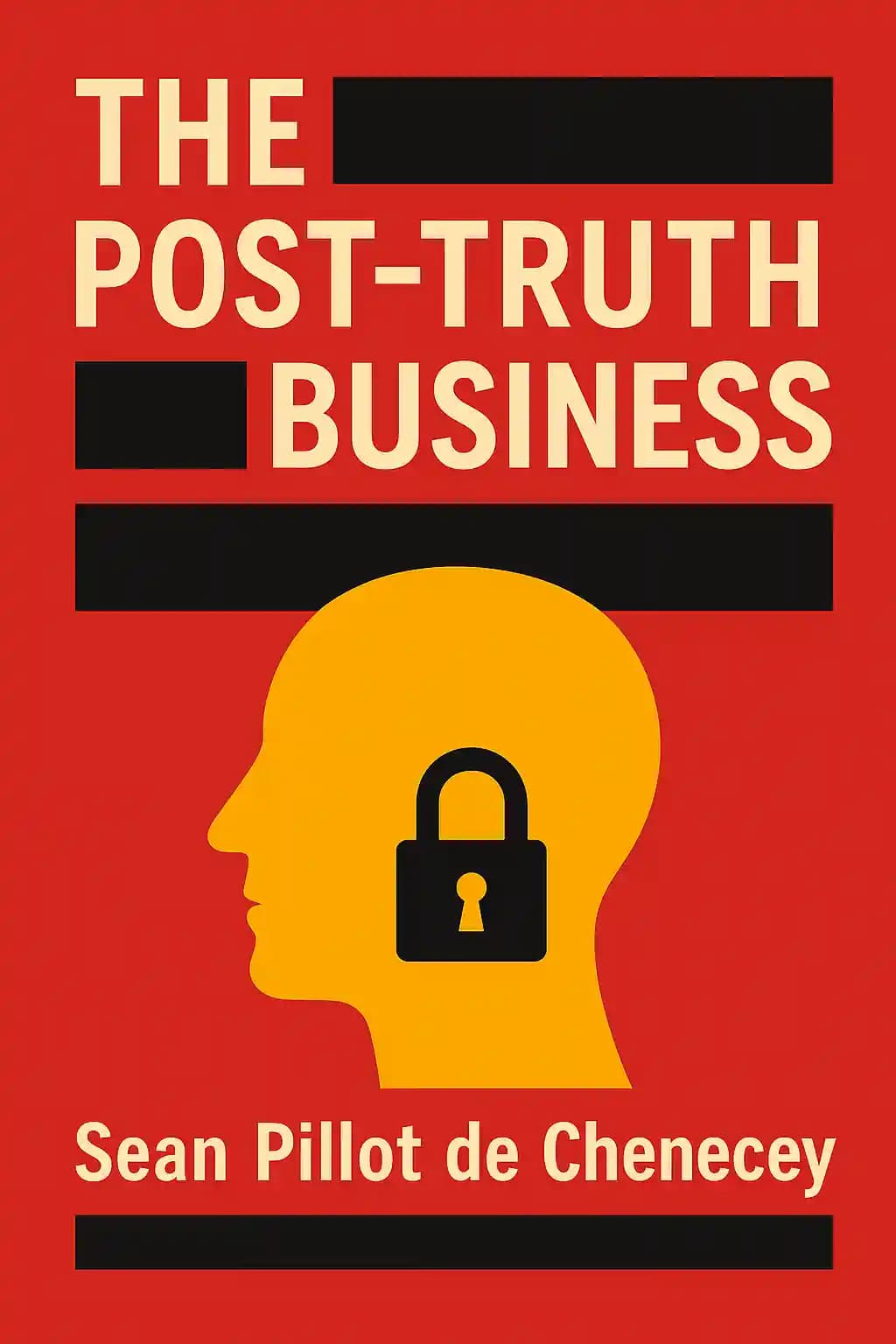
In a world increasingly defined by skepticism and suspicion, Sean Pillot de Chenecey's "The Post-Truth Business" arrives as a crucial roadmap for organizations navigating treacherous waters. The book has become something of a bible for brand strategists since its publication, with marketing executives from Apple to Unilever citing its frameworks in boardroom discussions. Oprah Winfrey famously mentioned it during a 2019 interview as "the book that helped me understand why we're all so confused these days." What makes this work particularly compelling is how it connects our personal experiences of information overload and trust erosion with practical business strategies for rebuilding authentic connections. As fake news proliferates and social media algorithms drive us further into echo chambers, Pillot de Chenecey offers a compelling vision for how brands can become islands of trust in an ocean of deception. His background spanning both academic research and frontline brand strategy gives the work a rare combination of intellectual depth and practical applicability that has made it required reading in business schools worldwide.
第 2 章
The Post-Truth Crisis: When Truth Becomes Optional
We're living in a media landscape where truth is deliberately manipulated, trust has been catastrophically devalued, and organized misinformation thrives as a multi-billion dollar growth business. This isn't just troubling for democracy-it's an existential threat to brands built on consumer trust, affecting everything from product launches to crisis management.
The term "post-truth" originated with playwright Steve Tesich in the 1990s, writing about the Iran/Contra scandal where President Reagan admitted his "heart and best intentions" contradicted facts and evidence. Unlike Nixon's Watergate disgrace, Reagan's popularity recovered after his emotional appeal, revealing Americans had "freely decided to live in some post-truth world," preferring comforting lies to uncomfortable truths. This marked a pivotal shift in how public figures could navigate scandals through emotional resonance rather than factual accountability.
Fast forward to today, where social media has transformed from democratic promise to divisive reality. Facebook admitted Russian-purchased ads reached nearly 130 million Americans during the 2016 election, targeting both liberals and conservatives on hot-button issues like immigration, race relations, and gun rights. Twitter identified over 2,700 Russian "troll factory" accounts that sent 1.4 million messages in just two months. The threat has evolved beyond text to include deepfakes-AI-generated video and audio that can show people giving speeches they never made, with technology so sophisticated that even experts struggle to identify manipulated content.
Our brain's dual-process model exacerbates this problem in ways previous generations never faced. System One thinking (fast, instinctual, automatic) drives our social media browsing, while System Two (slow, deliberate, logical) remains disengaged. When scrolling feeds, we share content without critical evaluation, allowing misinformation to spread rapidly through trusted networks. Studies show false news spreads six times faster than true stories on social media platforms, primarily because it triggers stronger emotional responses of surprise and disgust.
The most insidious aspect is how fake news deliberately creates an "infosmog" of falsehoods, twisted truths, and confusion where determining reality becomes increasingly difficult. This content thrives because it's never boring-it's loud, outrageous and shocking, leaving mainstream media struggling to compete while maintaining journalistic standards. Conspiracy theories about COVID-19, election fraud, and climate change demonstrate how this ecosystem can rapidly spread dangerous misinformation globally.
What does this mean for brands? Trust forms the foundation of every business relationship, and the stakes have never been higher. When 70% of global consumers worry about fake news being weaponized and media becomes the least trusted institution, brands face unprecedented challenges in establishing credibility. Companies must now navigate complex verification processes, combat false information about their products, and maintain transparency in an environment where skepticism is the default position. As Timothy Garton Ash urges, we must not surrender to this post-truth reality, but instead rebuild public trust through authentic communication, verified information sources, and transparent practices that acknowledge both successes and failures.
第 3 章
Privacy: The New Battleground for Consumer Trust
Have you ever felt that creepy sensation when an advertisement appears for something you just discussed in private? You're not alone. Privacy has become a central battleground in modern marketing, with attitudes varying dramatically across cultures and individuals.
Research by ComRes found 79% of global respondents expressed concern about online privacy, with South Koreans, Britons, Australians and French being most critical. The tension between personalization and privacy is reaching a critical point-over half of British adults find personalized adverts "creepy," though targeting the one-third receptive to tailored messaging can yield strong ROI.
The Cambridge Analytica scandal represented a watershed moment in this conversation. Investigative journalism revealed how the company harvested data from 87 million Facebook users to build systems that could profile and target American voters with personalized political advertisements. The fallout included congressional hearings, class-action lawsuits, and Cambridge Analytica's eventual closure.
Voice-activated technology particularly concerns users-76% fear smart home gear, with unauthorized data collection the primary worry. Amazon's "voice-sniffing" patents and Google's Home Mini recording incidents have transformed these devices from convenient tools into potential surveillance machines in consumers' eyes.
The EU's General Data Protection Regulation (GDPR) represents a radical shift in the privacy landscape, empowering individuals over corporations by creating a legal firewall around personal data. Jeffrey Chester calls it "an incredible breakthrough" that rebalances power from digital marketing giants to individuals and democratic society.
For brands, the implications are enormous: with only 20% of the public trusting how organizations store their information, embedding privacy protection into customer communications becomes essential for rebuilding confidence. This urgency is heightened by massive data breaches at companies like Yahoo (affecting all three billion user accounts) and Facebook's admission that most users' public profiles could have been "scraped."
In certain contexts, privacy trade-offs can provide clear benefits-for instance, elderly people maintaining independence through IoT-enabled monitoring devices. For monetized privacy to work, trust becomes the key pillar of any brand relationship. As a Harvard Business Review study found, financial firms like PayPal received the highest trust rankings while social networks like Facebook came in last.
第 4 章
The Communication Crisis: When Nobody Believes Advertising
The communications world, particularly advertising, faces unprecedented turmoil as consumer trust erodes. While the "golden age" of advertising enjoyed limited media channels and positive consumer attitudes, today's landscape is radically different. The Havas Group's "Meaningful Brands" survey revealed a devastating truth: most consumers wouldn't care if 74% of brands they use vanished, and 60% of company content is considered poor or irrelevant.
Trust in brands has been disintegrating for three decades, with advertising professionals ranking so low on the Ipsos MORI Veracity Index they don't even make the list. Consumers most trust themselves and each other-explaining why word-of-mouth remains marketing's holy grail, influencing up to 50% of purchasing decisions according to McKinsey.
We're drowning in #Infosmog-the overwhelming flood of advertising, social media, and information competing for our attention 24/7. The result is chaos, driving consumers to adopt adblockers and avoidance techniques. Digital advertising faces a crisis of effectiveness and trust: P&G cut $100 million in digital spending with little business impact, proving those ads were largely ineffective. Meanwhile, ad fraud threatens to exceed $50 billion globally by 2025, becoming organized crime's second-largest revenue source after drugs.
Dave Trott's sobering statistic reveals the scale of the problem: 89% of advertising isn't noticed or remembered, with only 4% remembered positively. In today's post-trust environment, brands must rethink their approach. Today's consumers seek transformational rather than merely experiential relationships with brands, willing to pay more for products that deliver wellbeing and fulfillment-but only if the brand's commitment feels sincere rather than manufactured.
Smart brands transform consumers into marketing channels by "weaponizing audiences" to spread brand messages organically. Adidas exemplifies this approach through "dark social" tactics-leveraging private messaging apps where sharing can't be tracked by analytics platforms. They build hyper-local "squads" in cities worldwide, creating exclusive communities that generate FOMO (Fear Of Missing Out) and drive engagement.
Brand strategist Gareth Kay emphasizes the need for brands with soul in today's oversaturated market. He argues brands have resorted to "essentially lying to create some sense of distinctiveness" despite minimal actual differences between products. Kay advocates shifting from fantasy-based marketing toward brands built on substance that prove their value in consumers' lives. Successful brands understand what people need, leverage their strengths, and build bridges between the two rather than creating products and manipulating consumers to want them.
第 5 章
Purpose Beyond Profit: The Rise of Conscious Capitalism
As consumers increasingly seek moral alignment with their purchases and younger generations prioritize meaning and purpose in their work lives, brands face mounting pressure to demonstrate ethical practices. Against a backdrop of informed consumers with endless choices, the distinction between "good" and "bad" brands becomes a crucial differentiator.
While traditional marketing becomes less effective, community-based marketing has emerged as a cornerstone strategy for vibrant brands. Companies like Nike, Starbucks and Google built their success through community engagement that validates their authenticity. The Harvard Business Review emphasizes this isn't merely a marketing tactic but a comprehensive business strategy supporting organization-wide goals.
Strategy director Marie Agudera warns against "purpose-washing"-making authenticity a marketing strategy rather than a business one, which ultimately appears manufactured and inauthentic. Martin Raymond of The Future Laboratory notes that advertising has shifted from individualism to promoting fulfillment through community and collaboration-"the socialist colonization of advertising."
Conducting ethnographic in-situ research-talking with the right people in relevant contexts-quickly reveals which products aren't working and where brands can add value. This community-based approach captures feedback in consumers' terms, on their turf, in brand-contextual situations. Brands like Vans excel by creating physical spaces like "House of Vans" where their community gathers around shared interests.
Harley-Davidson's Harley Owners Group (HOG) represents the pinnacle of brand community with over a million obsessively loyal members across nearly 1,500 official chapters worldwide. For these owners, Harley isn't just a product but a lifestyle and culture that resonates globally.
The link between conscious capitalism, brand activism, and direct action continues to shorten in our post-truth world. Informed consumers increasingly demand brands not just profit from society but give back meaningfully-starting with paying proper taxes. Despite media portrayal focusing on extremists, these protests primarily comprise ordinary consumers-the very people brands target.
Patagonia exemplifies the activist brand model, though not without paradox-their anti-consumption messaging often drives increased sales, as demonstrated by their famous "Don't buy this Jacket" Black Friday campaign. Founder Yvon Chouinard humorously captures this tension: "I've been a businessman for almost 60 years. It's as difficult for me to say those words as it is for someone to admit being an alcoholic or a lawyer."
The "triple bottom line" concept measures success beyond profit to include people and planet. B Lab exemplifies this approach by certifying companies that meet rigorous standards of social sustainability, transparency, and environmental performance. This movement reflects growing consumer expectations that companies serve a social purpose, with 85% of Americans having engaged in some form of activism in the past year.
第 6 章
Transparency: The New Brand Currency
Imagine picking up a product and instantly knowing not just what it contains, but who made it, where, under what conditions, and for what true cost. This level of transparency has evolved from a "nice-to-have option" to a "need-to-have asset" in earning consumer trust.
Pricing innovation has become strategically crucial as global markets open and technology connects buyers and sellers worldwide. Everlane demonstrates transparent pricing by letting consumers choose what they pay for overstock items with clear explanations of how different price points benefit the company. The "pay what you want" (PWYW) model works best for independent businesses where customers feel connected to the brand's success.
Consumers increasingly demand complete transparency from companies about ingredients, production processes, and supply chains. What was once considered an "unrealistic" amount of information has become the #NewNormal. Fashion Revolution believes transparency is vital to transform the industry, stating bluntly that "lack of transparency costs lives." Their Fashion Transparency Index ranks global fashion brands on disclosure about suppliers, policies, and social and environmental impacts, with the average score being just 49 out of 250.
Blockchain technology is radically transforming retail by enabling unprecedented transparency. Until recently, "Informed Consumers" making "intentional buying choices" faced significant barriers to accessing detailed product information beyond PR-friendly narratives. Blockchain "enables physical products to gain a digital identity that links the flow of physical products to a distributed ledger," creating a series of verifiable "digital handshakes" throughout the supply chain. This technology provides consumers with a "common level playing field of trust"-an accessible, absolute proof system where every physical product comes with a digital "passport" verifying authenticity and origin.
Voice-activated technology is revolutionizing ethical e-commerce by removing barriers between conscious consumers and ethical brands. With ComScore predicting half of all searches will be voice-based by 2020 and Ovum forecasting "more digital assistants than humans" by 2021, this technology represents a paradigm shift in consumer behavior. By simply "ticking a virtual box" to demand best practices, consumers can delegate ethical purchasing decisions to AI assistants that leverage blockchain-verified sourcing.
The healthcare sector is experiencing unprecedented technological transformation, with blockchain offering solutions to longstanding trust issues. By enabling encrypted health information to be securely shared between providers without privacy breaches, blockchain addresses a common consumer complaint: lack of knowledge and control over personal medical histories.
Transparent information fundamentally shifts the brand-consumer power dynamic by enabling truly informed purchasing decisions. Blockchain technology's "end-to-end" transparency protects everyone in the supply chain by making product origins traceable and verifiable. In today's marketplace where genuine brand differentiation is increasingly rare, being perceived as "more trustworthy, nicer and better" through transparent practices provides competitive advantage.
第 7 章
The Maker Movement: Authenticity Through Creation
This chapter explores how "maker" brands often forge the strongest authentic connections with consumers. While technology-focused maker culture represents one end of the spectrum, the chapter focuses more broadly on various innovators from street-food entrepreneurs to craft-beer producers who have collectively disrupted both local and global markets.
As urban living spaces shrink, public gathering spaces become essential. In cities lined with identical global brands, street-food operators provide a needed alternative with affordable, authentic offerings that enable "spontaneous socializing." From London's Street Feast to Melbourne's Food Truck Park to Brooklyn's Hard Times Sundaes, these vibrant operations share a collective, cooperative ethos where producers, makers and customers all benefit.
The maker movement benefits all parties: local suppliers satisfy consumers' desire to "eat local," makers sell directly with minimal overhead, and consumers access quality, personalized items at reasonable prices. Many makers have abandoned corporate careers to pursue their passions as "free entrepreneurs," connecting app developers in Hanoi with self-taught chefs in Helsinki through a shared start-up mentality requiring agility and passion.
The small-business ethos connects to intentional buying, where limited production creates naturally "limited edition" products. This ecosystem thrives through social media, e-commerce, and simplified distribution, reinforcing the entrepreneurial maker as "The Brand Called You" micro-corporation. Publications like Hole & Corner and Selvedge have reinvigorated craft's image, elevating it from dated overtones to modern coolness.
Products with "the hand of the artisan" are valued as genuine because their reality is their story-something that can't be faked. The craft beer industry exemplifies this authenticity-driven disruption, with independents like BrewDog growing from small-town brewers to international giants without losing their "punk" credentials. When large corporations buy craft breweries, customers often react with fury-one drinker tweeted about Camden Town's sale: "What's the going rate for a soul these days?"
Authenticity isn't limited to low-tech brands-Tesla exemplifies how a futuristic product can maintain authenticity through its originator's vision. Tesla achieved the extraordinary feat of becoming the first successful new American car company since Ford, despite having founders with zero automotive industry experience. Elon Musk, who effectively is "Mr. Tesla," famously described the Model D's acceleration options as "normal, sport, and insane."
Musician Lucy Rose exemplifies authentic artist-fan connection in the digital age. Though her music hadn't been released in South America, fans there contacted her through social media begging for performances. Without funds for venues, she created an ingenious solution: fans paid for her flights, hosted her in their homes, and organized free gigs. What she expected to be small gatherings became packed venues across eight countries, with audiences who knew every word of her songs despite her being "unknown" there.
第 8 章
Cultural Marketing: The Authenticity Trap
Youth marketing exemplifies the problematic "marketing of culture" where brands obsessively chase authenticity and coolness but typically alienate those invested in the culture. Martin Raymond notes that "authenticity" itself became suspect when commercialized through "beards and hipsters." A breakfast cereal campaign attempting to leverage Northern Soul culture demonstrates this disconnect-using music with deep emotional resonance to sell unrelated products creates "memory theft," embedding unwanted brand associations in people's minds.
Pepsi's catastrophic Kendall Jenner protest commercial epitomizes failed cultural marketing. Despite years of youth culture connections, Pepsi's "going through the motions" approach backfired spectacularly. The ad, produced by their in-house Creators League studio (not an external agency), became a global laughingstock, with late-night hosts Jimmy Kimmel, Jimmy Fallon and Stephen Colbert all mocking it mercilessly. Colbert particularly criticized the generic "Join the Conversation" protest signs as "the most corporate thing of all time."
Parisian chic represents an enduring cultural style that brands struggle to authentically capture. Coco Chanel established this philosophy around women's independence-borrowing from men's wardrobes, embracing simplicity, and creating timeless pieces that don't need reinvention every season. Today's Parisian chic embodies nonchalance-appearing effortlessly thrown together without overthinking. It's about confidence, comfort, and mixing old with new rather than copying trends wholesale.
Burning Man represents the ultimate "unbranded event" founded on principles of decommodification and creative culture. What began in the 1980s with Larry Harvey burning a wooden effigy has evolved into a 70,000-person festival in Nevada's Black Rock Desert where participants are expected to actively contribute, not merely spectate. However, the festival's cultural authenticity faces challenges as Silicon Valley tech executives and celebrities like Paris Hilton arrive with luxury accommodations.
The pursuit of authenticity in culturally-based brand activity requires continuous effort to genuinely understand the core of cultural issues. Brands must determine where they can legitimately add value to a culture or learn from it in ways relevant to their identity. Only then can collaborations achieve true authenticity that validates the partnership. As Howard Schultz observed, "mass advertising can help build brands, but authenticity is what makes them last."
Authenticity fundamentally differentiates brands in crowded marketplaces where product differences may be minimal. Two essential principles emerge: first, "don't just say it, do it and be it"-brands must move beyond mere claims to demonstrable action rather than virtue signaling; second, "real people trust real people"-audiences connect with authentic voices who genuinely live their expertise.
第 9 章
The Post-Truth Brand Manifesto
In a post-truth world, brands face serious challenges as modern life is increasingly defined by mistrust. Strong brand-consumer relationships, like all relationships, depend on trust. Without faith and confidence in people, institutions, ideas, objects, technology and systems around us, society would collapse. For brands, being trustworthy isn't optional-why would consumers choose a brand they don't trust?
Drawing from the book's key insights, the Post-Truth Brand Manifesto provides essential guidance for brands seeking to rebuild authenticity and trust in a skeptical world:
Be authentic: Authentic brands obsess over their heritage and origins, highlighting their individuality and distinctiveness. They engage with informed consumers making intentional buying choices. Fakery has no place in authentic brand practices-they earn trust by "living it like they say it." Their credibility enables more persuasive brand storytelling and stronger customer engagement.
Be transparent: From environmental standards to labor practices, brands keep being found out when they lie. Brand claims about good behavior must be truthful and substantiated, communicated transparently for public scrutiny. In an era of distrusting consumers and watchful media, brands must find ways to regain confidence through honest practices-from transparent pricing to blockchain-enabled product information.
Respect privacy: Privacy is a fundamental human right requiring protection. While concerns about data usage grow, many consumers willingly trade privacy for clear benefits. Brands must understand and demonstrate ethical behavior regarding data use, with clarity of purpose and effect. Those profiting from "surveillance capitalism" face serious consequences if they abuse consumer privacy.
Demonstrate empathy: Consumers increasingly want to feel morally good about their purchases and are drawn to brands reflecting their viewpoints. Empathetic brands "tell it like they do it" regarding social impacts and own their mistakes openly. They negotiate with consumers rather than imposing themselves. To substantiate their social empathy, brands should publish mission statements and annual social impact reports demonstrating their "brand positive" ethos.
Be trustworthy: In a world of endless choice, mistrusted brands lose while trusted ones win. Companies must be consistent and trustworthy throughout their organization and supply chain-"from the first hand of production to the final hand of the consumer." The most trusted brands have either demonstrated their credentials over time, maintain clear connections to makers or innovators, or have built transparency into their business model. Their trustworthiness comes from aligning actions with claims while behaving honestly, competently, reliably and empathetically.
What if brands approached truth not as an optional marketing strategy but as their fundamental reason for existence? In our increasingly skeptical world, this might be the only sustainable path forward-not just for business success, but for rebuilding the social fabric that connects us all.