第 1 章
Leadership: The Art of Inspiring Greatness in Others
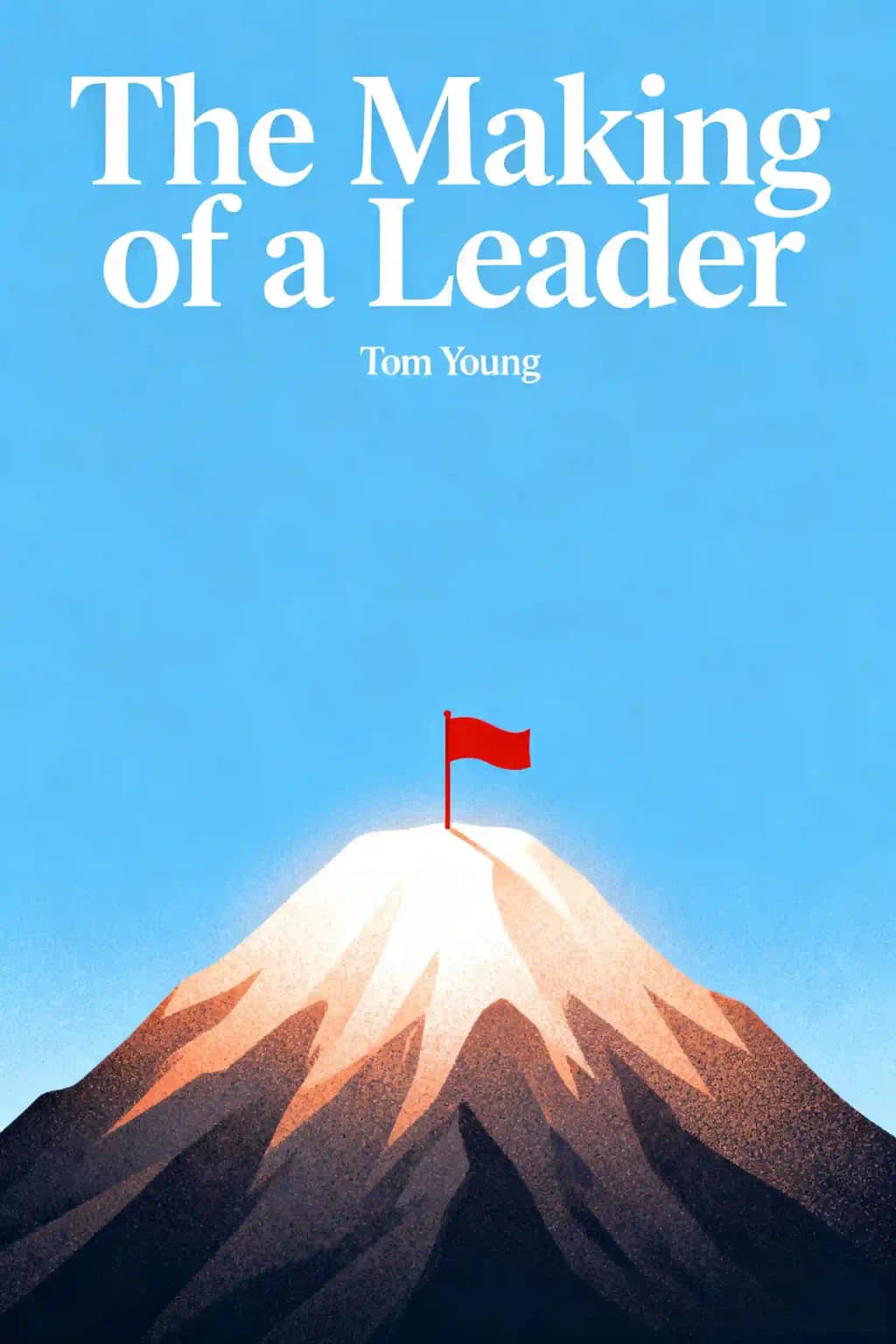
What makes a truly exceptional leader? Is it innate talent, learned skills, or something deeper? In "The Making of a Leader," Tom Young takes us on a fascinating journey through the minds of seven elite sports leaders who have shaped championship teams across rugby, football, cricket, and American football. This isn't just another leadership manual-it's a masterclass in human psychology and motivation from those who've faced the crucible of high-stakes competition and emerged victorious.
The book has become required reading at institutions like Harvard Business School and has influenced leadership thinking across industries far beyond sports. Celebrated by figures ranging from Bill Gates to Simon Sinek, Young's work reveals that exceptional leadership isn't about charisma or authority, but about understanding human nature at its core. As Jurgen Klopp noted after reading it, "Leadership isn't about being the smartest person in the room-it's about creating an environment where others can flourish."
第 2 章
The Human Behind the Leader: Origins of Leadership Identity
Leadership doesn't emerge from a vacuum. Each leader interviewed in the book-from Roberto Martinez to Stuart Lancaster-reveals how their approach was fundamentally shaped by their upbringing, family values, and early experiences.
Michael Maguire, who coached Wests Tigers and the New Zealand national rugby team, credits his parents as the primary source of his leadership values. As the second youngest of six children in a sports-loving family from Canberra, Maguire watched his taxi driver father demonstrate an incredible work ethic that became the foundation of his own drive for continuous improvement. "Footie and family" became the twin pillars of Maguire's life philosophy-values he would later instill in his teams.
For Roberto Martinez, leadership education began at home where his father served as both his parent and a living leadership laboratory. Martinez Senior played for and managed Spanish third-tier side CF Balaguer, giving young Roberto a front-row seat to leadership principles in action. This unique exposure helped shape Martinez's ability to motivate players, study tactics, and adjust his leadership style based on circumstances. Even after signing his first professional contract with Real Zaragoza, his father kept him grounded, emphasizing fitness and encouraging academic studies-which led to Roberto earning a physiotherapy degree while exploring the scientific aspects of football.
Gary Kirsten's development followed a different path in Cape Town's renowned cricketing family. With his father serving as groundsman at Newlands Cricket Ground and brothers who played the sport, Kirsten grew up in an environment with "no freebies and no easy road." His parents encouraged independent decision-making and living with consequences-instilling a sense of responsibility that would later define his leadership approach. Cricket became not just a pursuit but a sanctuary for the young Kirsten.
What emerges from these stories is a pattern: strong family foundations provided these leaders with values like work ethic, reliability, authenticity, honesty, resilience, and empathy-qualities that would later define their leadership approaches. While their specific circumstances differed dramatically-from Cumbria to Cape Town, Surrey to Catalonia-these early experiences created the bedrock upon which their leadership identities would be built.
第 3 章
Teaching: The Essence of Effective Leadership
"Effective leaders are, first and foremost, good teachers," declared legendary basketball coach John Wooden. This sentiment echoes throughout the stories of elite coaches interviewed for the book, many of whom began their careers teaching in schools.
Stuart Lancaster describes teaching as "the purest form of coaching" where one practices planning, implementing, and evaluating on a daily basis. While his role with England Rugby involved only 10% actual coaching (with 50% management and 40% leadership), his move to Leinster allowed him to return to his teaching roots with 90% of his time spent directly coaching players at all levels. Lancaster values this developmental work so deeply that he states he would happily return to teaching if he couldn't coach rugby anymore, preferring being outside helping kids improve over boardroom meetings.
Dan Quinn, Atlanta Falcons Head Coach, identifies teaching as his core passion despite lacking formal teaching qualifications. He focuses on understanding each player's unique learning needs to help them develop, regardless of how long they might stay with the team. Similarly, Sean Dyche, often mischaracterized by his tough appearance, passionately wants his players to exceed his own achievements: "I don't want them to do it like I used to do it! I want them to do it ten times better."
This teaching mindset creates a powerful framework for leadership. Sydney Finkelstein's research on "super-bosses" confirms that exceptional leaders teach in three key areas: professionalism, craft knowledge, and life lessons-often informally and with perfect timing. The best teachers, like the best leaders, are remembered not just for what they taught but for how they made people feel.
The story of Ian Wright reconnecting with his former teacher Mr. Pigden illustrates this principle perfectly. Wright, who became a football star, broke down in tears when reunited with the teacher who had recognized his potential and given him purpose decades earlier. This emotional moment demonstrates how great teachers-and by extension, great leaders-can change lives by believing in others and helping them discover their capabilities.
第 4 章
The Leadership Ingredients: Resilience, Empathy, and Values
While there's no universal formula for effective leadership, certain qualities consistently emerge across successful leaders. Resilience-the ability to recover from setbacks-stands out as essential. All interviewed leaders demonstrated remarkable resilience, navigating career challenges including being fired and rehired.
Sean Dyche emphasizes resilience as "massive in football management," particularly with social media's unfiltered criticism. Gary Kirsten's resilience was forged through personal tragedy when his father died when he was eighteen, and through cricket's challenges. He describes batting as a "love-hate relationship" that was "really, really dark" when struggling. Michael Maguire's career-ending neck injury became motivation for future coaching success, demonstrating his intense competitive drive and intolerance for losing.
Alongside resilience, empathy emerges as a non-negotiable leadership quality. Despite their competitiveness, each interviewed leader demonstrates warmth and people-focus. Stuart Lancaster emphasizes understanding team dynamics and individuals. Michael Maguire's career-ending injury helps him empathize with players' emotional journeys while recognizing diverse personalities. Gary Kirsten rejects one-size-fits-all approaches: "I'm trying to get the best out of people in whatever way I can."
Under pressure, exceptional leaders pause before responding, tailoring their approach rather than defaulting to autopilot reactions. This emotional intelligence allows them to connect with individuals while maintaining the group's direction.
Personal values provide the third critical ingredient. Leaders must align with clear personal values to make consistent decisions. Ashley Giles connects authenticity with making tough decisions: "It's about being true to yourself...I have to hire and fire people...so you have to do it right." Michael Maguire emphasizes family values in coaching: "The tighter that becomes, the stronger the bond and the more you are willing to do for each other."
Leaders with congruent personal values inspire loyalty and high performance. While elite sport can seem mercenary, values-based decisions earn respect even when disappointing others. These values become the compass guiding leaders through their most challenging moments.
第 5 章
Approaches to Leadership: Finding Your Authentic Style
Leadership has fascinated people throughout history, not just in modern times. From ancient military commanders to modern CEOs, the quest to understand effective leadership has spawned countless theories and frameworks. Theories range from Thomas Carlyle's 19th century "great man theory" (suggesting leaders are born with natural gifts) to more recent approaches like authentic leadership (focusing on inner compass and morals) and transformational versus transactional styles. Each era has contributed its own perspective on what makes an effective leader.
Despite numerous theories, no single model defines leadership because each leader combines unique characteristics, experiences and values. What emerges instead is the importance of developing a clear personal leadership philosophy that guides decision-making in volatile environments. This philosophy acts as an internal compass, helping leaders navigate complex situations while maintaining consistency in their approach.
Stuart Lancaster's dual-philosophy framework offers valuable insight, distinguishing between on-field philosophy (game style, tactical approach, performance standards) and off-field philosophy (leading people with honesty and integrity, building culture). This separation helps leaders address both the technical and human aspects of leadership. Ashley Giles similarly emphasizes legacy and long-term impact beyond immediate results, focusing on developing both people and systems that outlast his tenure. Roberto Martinez maintains an unwavering possession-based philosophy rooted in his Catalan upbringing and Johan Cruyff's influence, focusing on player responsibility and engagement. His approach demonstrates how cultural background and mentorship shape leadership style.
Sean Dyche defines leadership as "knowing what to do when you don't know what to do," emphasizing the importance of intuition in decision-making. His practical approach acknowledges that leadership often requires quick decisions in ambiguous situations. Despite rejecting formal "philosophy," Dyche acknowledges that sometimes leaders must trust their gut instincts when textbooks offer no answers. Malcolm Gladwell's concept of "thin-slicing" supports this - experts can make effective rapid decisions with minimal information based on accumulated experience. This ability comes from years of pattern recognition and experiential learning.
A clear leadership philosophy provides guiding principles and internal congruence for sustainable decision-making. Roberto Martinez exemplifies this with his unwavering commitment to his possession-based approach across ten seasons, maintaining consistent training methods despite changing circumstances. This steadfastness allows him to establish his position quickly within organizations and build trust with teams. His success demonstrates how a well-defined philosophy can create stability even in high-pressure environments.
Gary Kirsten emphasizes that consistency becomes particularly crucial when managing teams through constant evolution. Having a clear personal philosophy allows leaders to confidently and instinctively guide teams, even when they must be assembled quickly with minimal preparation time. This is especially relevant in modern organizations where team composition frequently changes and adaptation is constant. Successful leaders maintain their core principles while adjusting tactical approaches to suit different situations and team dynamics.
The most effective leaders develop their philosophy through continuous reflection, learning from both successes and failures. They understand that leadership style must authentically align with their values and experiences while remaining flexible enough to evolve with new challenges and insights.
第 6 章
Creating a High-Performance Culture: Purpose Beyond Winning
An effective culture forms the foundation of successful organizations, though it's not the culture itself but the people within it who perform. Creating and sustaining a culture in sport takes time, not just a week as Sean Dyche emphasizes. Culture isn't merely buzzwords or clean changing rooms; it requires challenging beliefs, habits, values and cognitive biases.
Strong cultures attract talent, increase productivity, improve retention, and become key differentiators between similarly talented organizations. Despite the precarious nature of coaching positions in elite sport, effective leaders maintain focus on long-term vision while balancing immediate results.
A sense of purpose drives human achievement beyond mere extrinsic rewards. When leaders articulate a captivating group purpose that aligns with individuals' search for meaning, they win hearts and minds, driving people beyond self-interest. This is exemplified by Andres Iniesta's decision to leave Barcelona despite having a lifetime contract-his emotional attachment to the club's purpose trumped personal ambition.
Elite sport provides unique moments to communicate purpose effectively. Sir Alex Ferguson had Sir Bobby Charlton speak to Manchester United players about the Munich air disaster to help them understand their responsibility to the club's enduring spirit. Thomas Bjrn showed his Ryder Cup team an emotional video connecting them to past captains and the legacy they represented.
Creating a strong team identity connects players to something greater than themselves. Stuart Lancaster emphasized the importance of emotional connection to the England shirt, creating a "band of brothers" mentality where players fight for a cause beyond self-interest. Dan Quinn built the Atlanta Falcons around the concept of "brotherhood," a bond strengthened rather than broken by adversity.
The connection between team and community forms a powerful cultural foundation. At South Sydney Rabbitohs, there's a palpable community spirit that extends beyond the field. Sean Dyche maximized this at Burnley with their "Our Town, Our Turf, Our Team" ethos, creating a one-club mentality that dominates the community. Dyche built a team that mirrors Burnley itself-tough, gritty and persistent, yet remarkably resilient.
The concept of legacy gained prominence through James Kerr's study of the New Zealand All Blacks, where new players receive a book showing jerseys from legendary past teams followed by blank spaces-communicating that the team's legacy now rests in their hands. Players are taught they don't own their shirt but are borrowing it before leaving it in a better place for those who follow.
第 7 章
Building a High-Performance Culture: The Implementation
Building a high-performance culture requires leaders to carefully assess both historical context and current environment before implementing changes. Elite sports teams carry rich histories and traditions that new leaders must understand and respect.
Ashley Giles emphasizes respecting past championships when entering organizations like Lancashire. Gary Kirsten warns about introducing new behaviors too quickly, while Michael Maguire strategically uses "the good years" and brings back former winners to reinforce a winning mentality. The leadership skill lies in knowing when to embrace the past versus when to break from it, particularly when limiting beliefs from past failures might hold a team back.
Beyond understanding history, leaders must carefully evaluate existing personnel, environment and behaviors. Roberto Martinez emphasizes "an intense period of understanding the organization" before making changes. Leaders must display genuine interest, appreciation and humility when inheriting a team, asking questions and truly listening before implementing changes.
Leaders identify influential individuals-"cultural architects" (term coined by psychologist Willi Railo)-who can "change the mindset of others" and "transfer self-confidence to other players." These respected figures, whether formal captains or informal leaders, create direction and set examples from their influential position.
Achieving authentic buy-in from team members represents leaders' most challenging task. Gary Kirsten emphasizes "if you don't have the changing room as a leader, then you have nothing," while Stuart Lancaster refers to leadership as "the art of influence." Kirsten admits initially taking a naive approach with India's cricket team by presenting his vision before building trust, later realizing he needed to demonstrate his work ethic by "throwing to guys non-stop" and being "physically there for them" to gain their trust.
In the affluent Premier League, individual relationships are crucial. Sean Dyche aligns players by connecting their individual progress to team goals, regularly communicating how "what is good for them is also good for the team." Roberto Martinez emphasizes engaging with players at their specific career stage-helping older players influence others, young players become important, or addressing contract situations.
Gary Kirsten identifies engaging senior players as crucial to cultural change: "You've got to be very clever in your management of people in that space, rather than just coming in with a blanket, one-size-fits-all approach." While younger players tend to be more open to change and have less voice, culture must flow "from the top down, not the bottom up" as senior players are more influential.
第 8 章
Leading and Managing Others: The Human Connection
The chapter begins by exploring the etymological distinction between leadership and management-"manage" derives from Latin "manus" (hand) suggesting control, while "lead" comes from old English "laedan" meaning "to go before as a guide." The most effective individuals possess both skill sets, adapting between roles as situations demand.
The interviewed leaders share a common philosophy of prioritizing human development over athletic performance. Stuart Lancaster emphasizes helping players "learn and grow on and off the field," while Ashley Giles considers people "the most important asset" of any organization, valuing personal development over trophies. This approach gives players reason to follow their leaders, building trust through genuine care that cannot be fabricated.
The leaders share a profound commitment to making lasting impacts on players' lives beyond sport. Gary Kirsten, grounded in his faith, values hearing "Thanks for the influence you had in my life" more than "We won a trophy," believing personal development translates to better decision-making under pressure. Michael Maguire encourages community involvement and preparation for post-athletic careers, helping players avoid being defined solely by their sporting achievements.
Effective relationships form the beating heart of sporting performance. The coach-athlete relationship is a unique dynamic shaped by interpersonal thoughts and feelings where both parties are mutually interdependent. Examples like Michael Phelps and Bob Bowman showcase how tension and deep trust can coexist in successful partnerships, while Tommy Fleetwood and Alan Thompson demonstrate how trust can rebuild careers.
When leading teams, acknowledging individual characters rather than taking a one-size-fits-all approach is crucial. Sport history shows successful cases where players received different treatment based on their personalities, like Eric Cantona under Sir Alex Ferguson. At the 2018 Ryder Cup, Thomas Bjrn and his vice-captains tailored communication to each player's personality type, recognizing that some required detailed structure while others thrived with more freedom.
Despite the pressure to focus on measurable outcomes in professional environments, relationship-building remains crucial. Dan Quinn demonstrates this in the NFL, where his caring approach connects with players despite his tough appearance. He believes relationships override strategy: "There are plenty of really talented coaches who have a fantastic strategy model... but the relationships that you make are really important. That is what makes the whole game come to life, we're not robots."
第 9 章
Responding to Leadership Challenges: The Test of True Leadership
Leaders face various contextual challenges that test their principles and approaches. Whether dealing with talented but difficult personalities, disciplinary issues, or managing media relations, these situations reveal the true nature of leadership.
Mavericks-highly skilled, unpredictable athletes-present a unique challenge. Stuart Lancaster won't select players who are "culturally dysfunctional" as they would "erode trust within the group," though he acknowledges that strong cultures can absorb difficult players. Ashley Giles warns you can only manage "one or two" mavericks before reaching a "critical mass" that threatens the team's "heart and soul." Gary Kirsten takes a pragmatic approach, using mavericks' talents while limiting their team contributions: "they are using the team for their advance... Well I want to use the maverick to further our team cause."
Leaders must balance discipline with performance considerations. Michael Maguire handles disciplinary issues privately, telling players when their actions "really hurt" while protecting them from external scrutiny: "I close ranks because no one really knows the actual truth in the outside world." Though known as a disciplinarian, Maguire shows a caring, paternal side. He forgives first mistakes but rarely second ones: "If they make it twice they tend not to be part of our organisation."
Player transfers create uncertainty comparable to organizational restructuring in business. When Sam Burgess left South Sydney Rabbitohs for Bath Rugby, Michael Maguire reframed this loss as opportunity: "I actually think it gives growth to everyone else who is coming through. Younger players get to stand up and become someone like him now." Roberto Martinez emphasizes clarity and respect during transfer speculation, helping maintain trust between player and leader while offering certainty in uncertain circumstances.
Dropping players from teams tests a leader's communication skills. Roberto Martinez believes in honesty and clarity: "The player deserves to understand why you are making a decision like that... You have to outline a solution." Stuart Lancaster insists on delivering bad news face-to-face: "All of those conversations are done by me, rather than by text message, or turning over a flip chart to reveal the team."
Press conferences and media interactions require careful management as every word is scrutinized. Michael Maguire approaches media cautiously, aware his players are watching: "You have got to use the media in the right way. What I am saying on camera, one of my players can take that the wrong way." Gary Kirsten maintains "an incredibly low media profile" because his work "sits behind the scenes, not in front." When he must engage, he remains "incredibly generic, unemotional in responses," never criticizing players publicly.
第 10 章
The Leadership Journey: A Continuous Evolution
Leadership emerges as a journey filled with inevitable highs and lows rather than a destination. Two constants appear across all elite leaders: resilience in the face of setbacks and the fundamental importance of genuine human relationships. Leaders demonstrate "an almost obsessive reaction to challenge" throughout their careers, whether recovering from defeats, career-ending injuries, or personal hardships. This resilience manifests in various ways - from Alex Ferguson rebuilding Manchester United multiple times over decades to Pat Riley reinventing his coaching style across different NBA eras. Equally crucial is their "ability and genuine desire to understand the human beings they encounter," forming authentic connections regardless of how briefly athletes may be part of their teams.
Elite leaders share the introspective quality of constantly seeking improvement, combined with vulnerability and openness to learning. They build support staff that balance loyalty with challenging the status quo, creating what Bill Walsh called "communities of excellence." These leaders actively seek out diverse perspectives and encourage constructive disagreement, recognizing that innovation often emerges from healthy conflict. Culture emerges as a critical precursor to high performance, with leaders needing to embody and reinforce key values while balancing big-picture concepts like purpose and legacy with the demands for short-term results.
The journey involves mastering multiple paradoxes: being both confident and humble, maintaining high standards while showing empathy, and balancing tradition with innovation. Successful leaders develop what Carol Dweck terms a "growth mindset," viewing challenges as opportunities for development rather than threats. They understand that leadership styles must evolve with changing times and team dynamics, as demonstrated by Phil Jackson's ability to adapt his approach between the Jordan-era Bulls and the Kobe-Shaq Lakers.
What becomes clear through these seven leadership journeys is that there is no perfect formula for leadership-only authentic approaches that align with one's values, experiences, and the specific needs of their team. The best leaders remain students of their craft, continuously evolving while staying true to their core principles. They create environments where failure is viewed as feedback, innovation is encouraged, and every team member feels valued and challenged to grow.
As Roberto Martinez summarizes in his three-point leadership masterclass: be authentic, prepare thoroughly, and dream big. This framework emphasizes the importance of self-awareness, rigorous preparation, and inspiring vision. Perhaps that's the ultimate lesson-leadership isn't about following someone else's template but about creating your own path that inspires others to achieve greatness together. The most successful leaders combine timeless principles with contemporary practices, personal authenticity with professional excellence, and unwavering values with adaptive strategies.