第 1 章
The Hidden Architecture of Team Genius
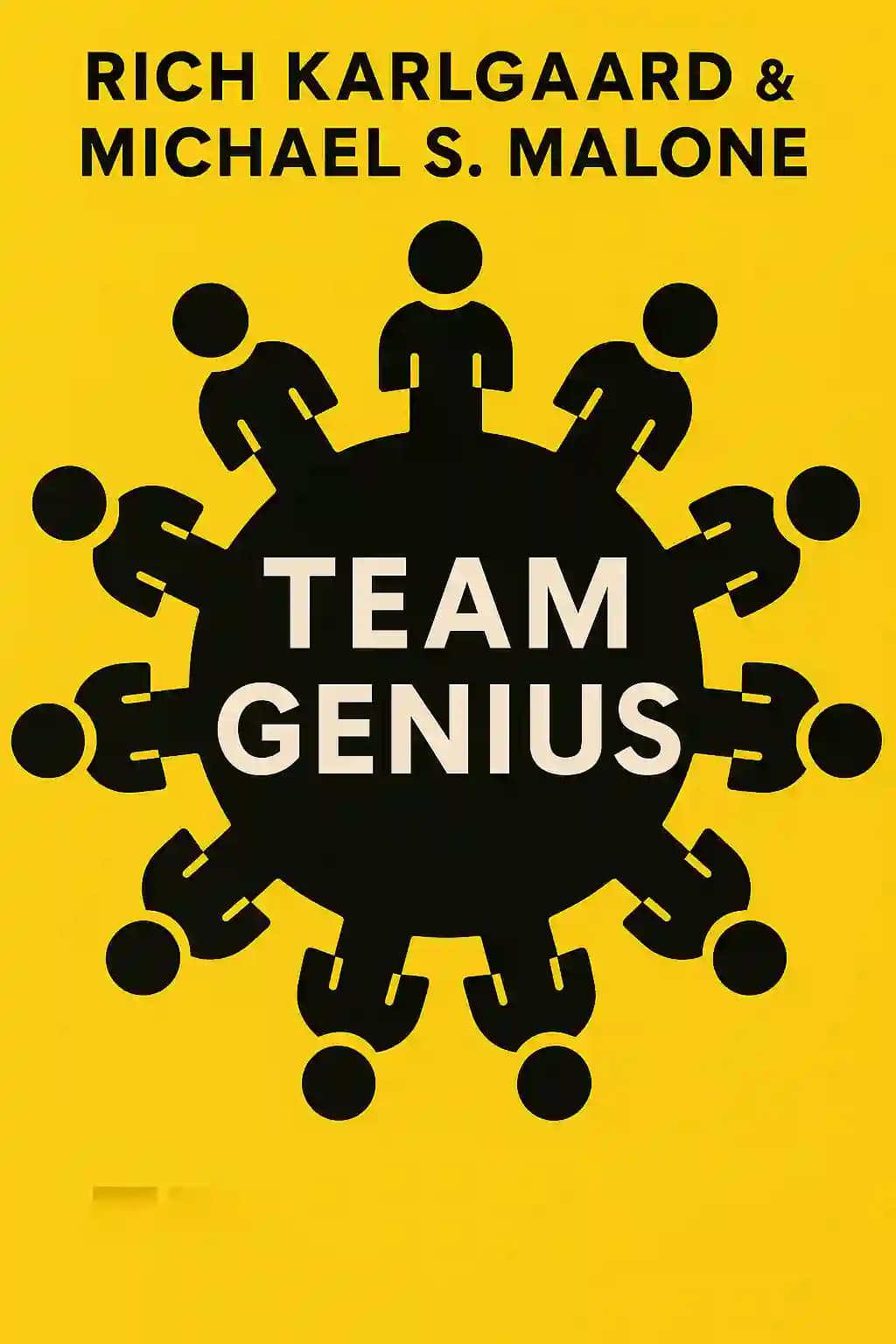
Have you ever wondered why some teams achieve the impossible while others with equally talented members flounder? When Apple introduced the iPhone in 2007, it wasn't just Steve Jobs' vision that created this revolutionary device-it was a carefully constructed team operating at peak performance. In fact, Jobs himself acknowledged this reality when he told "60 Minutes" that his business model was The Beatles: "Four guys that kept each other's negative tendencies in check... Great things in business are never done by one person; they are done by a team of people." This insight from one of history's most celebrated "lone geniuses" reveals a profound truth: teams, not individuals, drive breakthrough innovation. Rich Karlgaard and Michael Malone's "Team Genius" has become required reading for executives at companies like Google and Microsoft, who recognize that in today's hypercompetitive environment, mastering the science of team formation isn't just advantageous-it's essential for survival.
第 2 章
The Exponential Challenge of Modern Business
The digital revolution is accelerating at a pace few truly comprehend. While we've grown accustomed to Moore's Law-the doubling of semiconductor performance every two years-we don't fully grasp its explosive implications. What seemed like rapid change in computing's first forty years was merely the shallow part of an exponential curve that's now nearly vertical. Combined with Metcalfe's Law, which states that a network's value grows proportionally to the square of its users, we're creating an almost infinite number of digital connections as billions more people and devices join the internet.
In this environment, scale and global reach alone aren't enough to capture opportunities. They're being rapidly commoditized. Even small companies can achieve large-scale efficiency thanks to excess capacity created by Moore's law-not just in electronics but in oil drilling, factories, shipping, and everything else. Similarly, cloud technology has democratized global reach by making top-class computing power available to anyone.
The uncomfortable truth is that humans evolve much slower than our inventions. We are the "gating factor" limiting progress, making maneuverability-not just scale or technology-the true differentiator between successful enterprises and struggling also-rans. Maneuverability isn't just rapid evolution; it's the capacity to turn quickly without losing internal cohesion. Like football legend Jerry Rice, who could "turn on a dime" despite not having the fastest straight-line speed, organizations need precision and agility more than raw power.
Today's exponential forces reward winners quickly and punish losers mercilessly. The counterintuitive key to maneuverability is structure-teams whose size and composition match ancient archetypes possess organic strength that synthetic groupings can't match. Even large organizations can maneuver effectively when built around genius teams with execution power and peripheral trust.
Steve Jobs understood this principle intuitively. Far from the lone genius mythology portrays, he was a serial partner who strategically teamed with complementary talents throughout his career. His partnerships evolved from Wozniak to Markkula to his final and perhaps most effective pairing with Tim Cook. Cook provided the discipline, organization, and behind-the-scenes management that balanced Jobs' creative chaos. Their partnership worked because Cook accepted anonymity while Jobs took public credit-a common arrangement Jobs made with loyal team members.
第 3 章
The Magic Numbers That Shape Human Collaboration
Teams aren't merely practical responses to challenges but fundamental to human nature-encoded in our DNA and critical to civilization's development. Archaeological evidence shows humans have always grouped together, from 2.3-million-year-old hunting parties to modern organizations. Throughout history, even the largest human organizations-from ancient armies to modern corporations-ultimately function as aggregations of small teams within larger management structures.
But why do teams consistently form in certain sizes across cultures and millennia? Research reveals two key factors. First, leadership's natural span of control limits effective management to 6-10 people before requiring subdivision with subordinate team leaders. Second, structural stability makes certain team configurations inherently more durable-pairs being the most stable as they reflect basic human relationships like friendship and marriage.
The optimal team size ranges from 5-7 members, with effective functioning possible between 4-9 members, and cohesive operation up to 12. This pattern appears consistently throughout human history-from prehistoric hunting parties to modern military units. The British Army operates with 4-person "fire teams" and 8-person "sections," while US Army squads typically consist of 9 members.
This consistency aligns with psychologist George Miller's famous "magical number seven, plus or minus two"-the capacity limit of human short-term memory. Our brains effectively process between five and nine items of information, which likely explains why teams of similar size work best. Below this range, teams often split into pairs or trios; above it, they tend to divide into more stable quintets or sextets.
Anthropologist Robin Dunbar discovered recurring "clusters of intimacy" across human groups throughout history. His research revealed several key thresholds: 3-5 closest friends (our "clique"), 12-15 people whose death we'd deeply mourn ("sympathy group"), 50 people in traditional overnight camps ("band"), and the famous "Dunbar number" of 150-the maximum individuals with whom we can maintain genuine social relationships. These numbers scale by a factor of three. The largest threshold, 1,500, represents the limit of our long-term memory-the number of faces we can attach names to.
Hewlett and Packard intuitively understood these thresholds. By the late 1940s, they could no longer personally hand out Christmas bonuses. In the early 1950s, they recognized employees' faces but struggled with names. The tipping point came in the late 1950s when they encountered employees they'd never seen before. At around 1,500 employees, they divided HP into divisions, establishing a pattern that would define the company's structure for decades.
Network mathematics explains why team size matters. As teams grow, connections between members increase exponentially: 2 members create 1 connection, 3 members create 3 connections, and so on. By the time you reach Dunbar's 1,500, you have over 1.1 million potential interconnections. Humans simply can't maintain meaningful relationships at this scale. Most people manage 5-6 constant connections well but struggle with dozens.
第 4 章
The Neurological Foundation of Teamwork
Humans are neurologically designed for cooperation. When we engage with others, we create intimate brain-to-brain connections-not metaphorically, but physically. These connections affect our well-being so deeply they activate genes controlling our immune systems. The "social intelligence hypothesis" suggests our advanced cognitive abilities resulted from selection pressures of complex social interactions. Simulation experiments by microbiologist Luke McNally showed that when groups faced cooperative problems, organisms invariably selected for greater cognitive abilities-we're literally smarter because we had to work together.
While kin relations might seem the obvious explanation for human cooperation, archaeological evidence shows hunter-gatherer groups contained too few relatives to drive genetic change. Instead, large networks of unrelated adults evolved capacities for social learning and created cumulative culture. Studies comparing capuchin monkeys, chimpanzees, and human children solving complex puzzles demonstrate this uniquely human trait-while primates worked individually, children naturally collaborated, teaching each other and sharing rewards.
Modern examples of successful collaboration abound. Open-source software development has created critical internet infrastructure like Apache's HTTP server and Linux operating systems. Wikipedia's volunteer writers and editors outperformed traditional encyclopedias. Even the Maine lobster industry demonstrates collective action's power-when facing collapse, 5,400 separate fishing businesses established shared sustainability practices through voluntary cooperation.
Our prosocial traits manifest in social norms that shape behavior without legal enforcement. Studies across diverse cultures show people typically share 40-50% of resources with anonymous recipients even without penalties for not sharing. Even toddlers as young as fourteen months cooperate in joint tasks. Researcher Joe Henrich found that societies requiring more collaboration for survival demonstrate greater generosity toward strangers in "ultimatum games."
Oxytocin, a hormone produced by the hypothalamus and stored in the pituitary gland, serves as the neurobiological foundation of human teaming. Despite its brief three-minute half-life, oxytocin powerfully mediates pair bonds and social behavior. It enhances our ability to process positive social cues while decreasing threat-related signals that trigger avoidance. This creates a virtuous cycle: positive interactions increase oxytocin levels, which then boost social interaction, improve processing of positive information, and enhance in-group trust.
Mirror neurons, among neuroscience's most important recent discoveries, help explain language evolution, emotional empathy, and social identity formation. These specialized brain cells create a "motor copy" of observed actions-whether our own or others'-in our premotor cortex, transforming visual information into knowledge. Discovered accidentally in the 1980s when researchers found monkey brain cells firing both when performing actions and when watching others perform them, mirror neurons enable us to emulate others' emotions and actions instantly.
Beyond mirror neurons, other specialized brain cells help us interact in teams. Intuition-that irrational gut feeling prized by great executives and chess champions like Garry Kasparov-comes partly from spindle cells that transmit thoughts and feelings at remarkable speed. Within 1/20th of a second, these cells trigger neural networks that make judgment calls with minimal evidence, such as determining someone's trustworthiness. Meanwhile, oscillator neurons regulate physical coordination between people, like cellists playing in unison.
第 5 章
Harnessing Cognitive Diversity for Team Success
Recent research confirms people think differently from one another, yet we rarely consider this when forming teams. Consequently, teams can look perfect on paper-with complementary talents and good interpersonal dynamics-yet still fail in practice. Traditional definitions of "diversity" are meaningless for teams; cognitive diversity-how people think-is what matters.
Teams need both independent thinkers and socially attuned conformists, with research showing optimal radical-innovation teams require specific distributions: 20-30% creative types, 10-20% conformists, and up to 10% detail-oriented members. The remaining 50% can vary based on project needs.
Cultural backgrounds create significant cognitive diversity through different thinking patterns. Research by Nisbett and Masuda found Americans focus on foreground objects while Japanese participants notice background elements and relationships between objects. Teams also benefit from balancing context-dependent thinkers (more socially attuned) with context-independent thinkers (more autonomous).
While recent research questions physiological differences between brain hemispheres, the personality differences between logical "left-brain" and creative "right-brain" thinkers remain valuable for team composition. Creating "whole-brain teams" with balanced thinking styles provides diverse problem-solving approaches. Jerry Hirshberg at Nissan Design deliberately paired free-form thinkers with analytical designers, finding that "sometimes the right person for the job is two people."
Despite our tendency toward "leader attribution error"-crediting or blaming leaders for team outcomes-research consistently shows teams outperform individuals. Studies of 17.9 million scientific papers found highly influential work exhibits interdisciplinary complexity beyond what individuals can achieve, with teams 37.7% more likely to introduce novel combinations into familiar knowledge domains.
Diversity in teams presents a paradox: while essential for success, it creates significant challenges. Scott Page's diversity prediction theorem shows that team errors decrease as diversity increases. However, traditional diversity hiring often fails if new members think similarly despite demographic differences.
The key insight from Williams and O'Reilly's 40-year research review is that diversity is truly double-edged-it brings varied ideas but can trigger social categorization where members view others through stereotypes, potentially causing exclusion and distrust. This creates the central paradox: the most successful teams are diverse, but heterogeneous teams face serious structural challenges requiring exceptional leadership to prevent implosion.
To harness diversity's benefits while minimizing its risks, teams need active management-the more diverse the team, the more hands-on leadership it needs. This means selecting professional team leaders dedicated solely to management rather than operational duties. Teams must also guard against specific threats: turnover (countered by building strong social identity), proper framing (presenting diversity as an integration and learning opportunity rather than just fairness or market access), belief (teams that believe diversity gives them competitive advantage perform better), tenure (longer-lasting teams experience fewer negative diversity effects), and interpersonal congruence (when members see others as those others see themselves).
Research shows teams with high interpersonal congruence actually enhance performance through diversity, while those with low congruence see diversity impair performance. Remarkably, this congruence can be established quickly-in one study, teams sharing positive self-appraisals in their first ten minutes maintained benefits four months later.
第 6 章
The Power of Pairs: The Foundation of All Teams
The power of pairs lies in their complementary strengths, as demonstrated by Howard Schultz and Howard Behar at Starbucks. When Starbucks' rapid expansion threatened customer service quality in the early 1990s, Schultz, the driven type-A entrepreneur, promoted Behar, his temperamental opposite who prioritized employee culture. Despite their differences-Schultz tall and athletic, Behar short and round-their partnership thrived for eight years.
In today's competitive economy, complementary skills are essential. Yet pair selection remains surprisingly crude, often based on perceived compatibility or simply teaming the best available individuals. Companies invest billions in sophisticated hiring processes but resort to intuition and proximity when forming teams.
Professional pairings take many forms, which can be classified into twelve different types across four categories: occasion, similarity, inequality, and difference. These pairings represent the building blocks of all larger team structures.
"Got Your Six" pairs form spontaneously during crises. The military phrase "I've got your six" (watching your vulnerable back side) captures its essence. These pairs may form between strangers facing immediate threats, characterized by complete trust and selfless commitment. Though extraordinarily powerful as "force multipliers," these partnerships are typically short-lived due to their intensity and narrow focus on specific challenges.
"Magic Moment" partnerships resemble perfect pairs but differ in two crucial ways: the members may accomplish little individually but create extraordinary work together, and they typically exist for much briefer durations. The quintessential example is Jobs and Wozniak, whose relationship wasn't the childhood friendship often portrayed. Jobs brought vision and destiny to Woz's technical brilliance, creating a partnership that, though lasting less than a decade, revolutionized computing.
"Yin and Yang" teams combine individuals with different skills to create a complete competitive force. Common in sales, education, law enforcement, and creative professions, one partner typically brings artistic skills while the other contributes empirical abilities; one verbal, the other nonverbal; one extroverted, the other introverted. High-tech startups almost universally feature entrepreneur-techie partnerships (Jobs and Wozniak being the archetype), with investors viewing companies lacking this combination suspiciously.
"Artist and Angel" partnerships mirror the venture capitalist-entrepreneur relationship, uniting individuals with different skills, interests, and definitions of success into symbiotic teams. The quintessential example is Vincent and Theo van Gogh. As Vincent's only patron during his lifetime, art dealer Theo financially and emotionally supported his brother through mental deterioration. Without Theo, Vincent's masterpieces-now among the world's most valuable artworks-would never have existed.
第 7 章
From Small Teams to Organizational Genius
While pairs are common in daily life through marriages and business partnerships, and trios are rare due to their volatility, teams of four are equally uncommon but for the opposite reason-they're too stable. The most successful small teams typically range from five to nine members-what the authors call "72 teams." These appear everywhere: corporate boards, venture capital firms, sports teams, sitcoms, rock bands, start-ups, and even the Supreme Court.
Midsize teams typically feature no more than two levels of leadership and members who know each other personally. According to Robin Dunbar, five represents our most intimate friends ("cliques"), while fifteen represents our "sympathy groups"-people we deeply trust. Dr. Meredith Belbin identifies four to six members as the functional sweet spot, with teams becoming progressively less effective as they grow larger.
The "large midsize team" of twelve to eighteen members appears naturally across domains-from studio musicians like Motown's Funk Brothers and LA's Wrecking Crew to technology innovators like Microsoft's founding team and Apple's Macintosh group. These 153 teams are the smallest that can divide labor while maintaining dedicated management for each subteam, allowing true independent operation without waiting for a single manager racing between groups.
Beyond the 153 team, each subsequent team size increases approximately threefold, with growing gaps between team types that represent significant investment jumps-another reason to keep teams as small as possible. At the 50-member level, we enter the world of large teams, which come in two varieties: Company 1 (5010 members) and Company 2 (15030 members). These represent the last "knowing teams" where mutual trust remains a defining element, even if limited.
Very large teams ranging from 450 to 1,500+ members differ significantly from smaller teams but remain, at their essence, teams-actually dazzling hierarchies of teams, from pairs and trios up through multiple midsize and large teams. Organizations could potentially achieve much greater performance if they acknowledged themselves as aggregations of teams rather than masses of individuals, and focused on nurturing these team structures.
第 8 章
The Life Cycle of Extraordinary Teams
Every team follows a narrative that begins with a formation phase where members establish relationships while understanding their assignment. Next comes the establishment phase for creating rules, metrics, and communication systems. The operational phase shifts focus to actual work, followed by the functional phase where teams adjust to initial results and member personalities.
Many teams fail because they're doomed from the start, ignoring key research findings about team composition. Four critical recruitment lessons include: focusing on true diversity of experiences and thought processes rather than surface differences; maximizing proximity between team members; keeping teams as small as possible for the task; and minimizing management layers and hierarchy.
Creating a team requires establishing a "sacred space" through rituals that psychologically separate members from everyday life. These ceremonies mark the threshold where members enter a smaller, safer environment surrounded by trustworthy peers. Whether simple or elaborate, kickoff events serve critical purposes: setting an official synchronized start time; establishing relationships through introductions and communication exchanges; clearly defining shared rules; seeding the desired team culture; setting attitudes; and establishing communication protocols.
Great teams develop powerful stories that define their identity and values. Bill Hewlett cutting the lock off HP's storage room transformed the company by establishing the famous "HP Way" culture of trust. The stories teams tell reveal their health: successful teams recount turning points with pride and confidence, while unhealthy teams' stories carry pessimism even when discussing victories.
Team turnover is inevitable as talented members get promoted or leave for personal reasons. Two critical practices maintain team health during transitions: departure ceremonies that recognize contributions and provide closure, and welcoming events that quickly assimilate new members. Failing to properly send off departing members creates uncertainty, while neglecting proper onboarding leaves newcomers feeling alienated.
Unlike companies, maturity is beneficial for teams as they consolidate operations and work harmoniously toward goals. Teams divide tasks based on skills and timing, with members working independently before bringing results together. This sophisticated coordination happens daily in newsrooms, which require robust infrastructure, clear communication channels, established rules, consideration of precedent, and experienced members working together.
We're taught to finish well, yet human nature drives us to rush completion and move to the next thing. In today's accelerated product cycles, teams must handle tasks previously left to others-documentation, performance specs, manuals, training materials-requiring leaders to design these expanded completion duties into projects from the beginning. When truly finished, celebrate properly-recount achievements, reminisce about the team's journey, recognize each member's contributions, and exit on a high note.
第 9 章
The Team as Our Greatest Creation
The story of Washington's farewell at Fraunces Tavern resonates deeply because it represents one of history's greatest teams. Washington's Continental Army officers accomplished the seemingly impossible-defeating the world's most powerful empire despite overwhelming odds. What makes this team remarkable wasn't just their victory but how Washington held together such a diverse group through impossible conditions. From aristocratic Southern planters to Northern merchants, from seasoned military veterans to inexperienced militia leaders, Washington forged unity from diversity through shared purpose and mutual respect.
Today's teams don't need Washington's luck; we have decades of precedent, empirical research into team psychology and sociology, and understanding of team life cycles. Modern research has revealed key patterns in how high-performing teams develop, from Bruce Tuckman's "forming, storming, norming, performing" model to Amy Edmondson's work on psychological safety. Studies show that successful teams share certain characteristics: clear goals, strong communication channels, complementary skills, and mutual accountability. While our teams may not change the world like Washington's, they can make it better, increase company success, and provide fulfilling careers through these proven principles.
The science of teamwork has evolved dramatically, revealing that factors like team size (optimal between 5-9 members), diversity of thinking styles, and even physical workspace design significantly impact performance. Research from companies like Google's Project Aristotle has identified that psychological safety, dependability, structure/clarity, meaning, and impact are the five key dynamics of successful teams. Not every team can do something great, but every team can be great by intentionally cultivating these elements.
As we face unprecedented technological acceleration and global competition, mastering the science of team formation isn't just an academic exercise-it's the critical differentiator between organizations that will thrive and those that will struggle to survive. The rise of remote work, artificial intelligence, and global collaboration platforms has created new challenges and opportunities in team dynamics. By understanding the natural patterns of human collaboration that have persisted throughout our evolutionary history, and applying new insights from neuroscience and behavioral psychology, we can create teams capable of extraordinary performance in even the most challenging environments.
The ultimate reward extends beyond mere productivity metrics - it's about creating environments where people can do their best work while building meaningful relationships. Teams that master these principles not only achieve their objectives but create lasting bonds and memories that define careers and lives. Looking back, team members know their time was well spent with colleagues who became more than just coworkers - they became trusted allies in pursuit of shared goals.