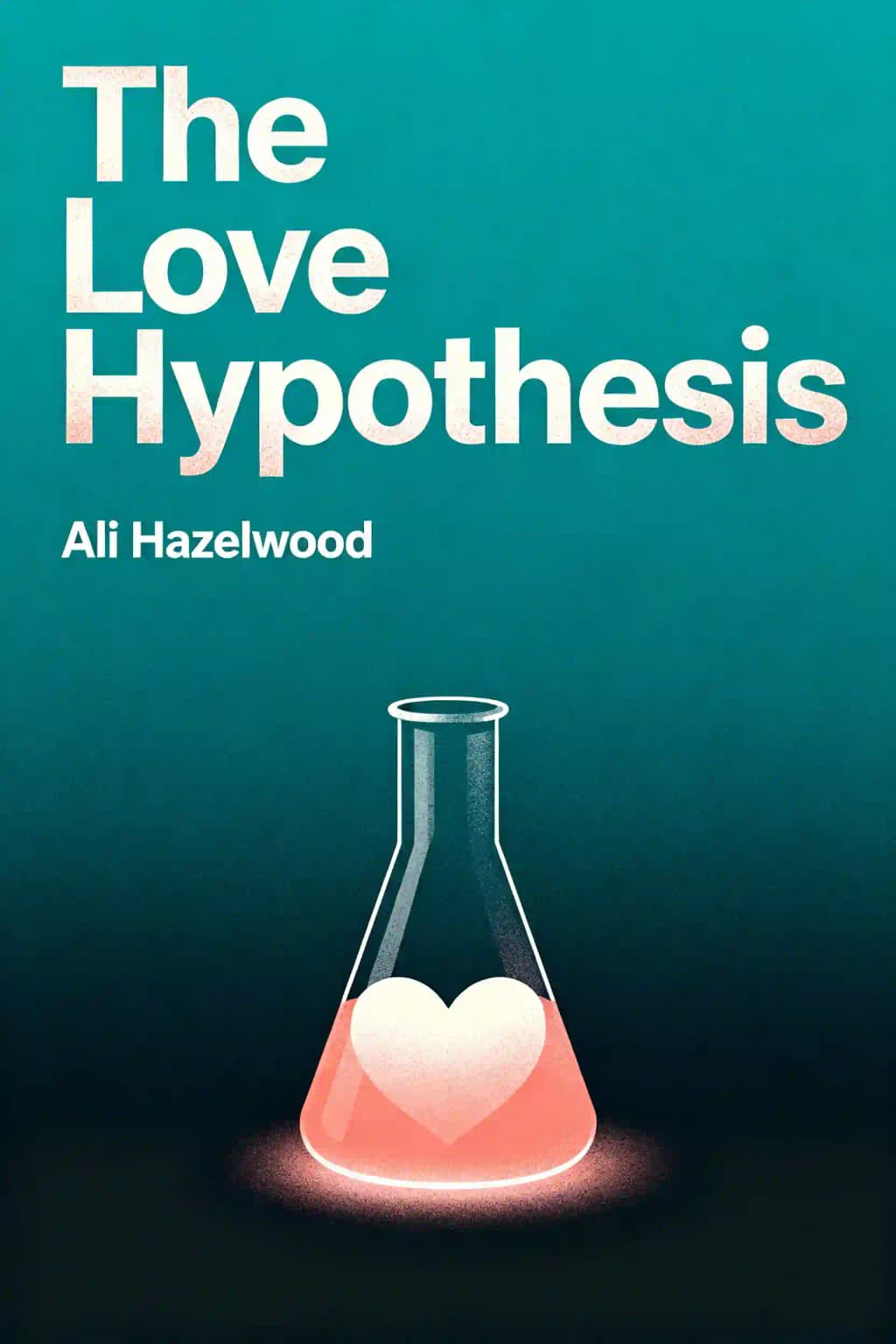
When STEM meets romance: Ali Hazelwood's bestselling "The Love Hypothesis" blends fake-dating tropes with academic rigor, sparking the "STEMinist" romance genre revolution. Readers obsess over its clever fourth-wall-breaking humor and powerful representation of women scientists navigating love and laboratories.
Ali Hazelwood, New York Times bestselling author of The Love Hypothesis, is a neuroscience professor turned romance novelist renowned for crafting witty STEMinist romances blending academia and heart-fluttering chemistry.
Born in Italy and now based in the U.S., Hazelwood draws on her PhD in neuroscience to create relatable heroines navigating careers in male-dominated STEM fields, a theme central to her debut novel’s fake-dating plot between a Stanford biology student and her intimidating professor.
Her other works—including Love on the Brain, Love, Theoretically, and the paranormal romance Bride—continue this legacy of blending scientific rigor with emotional depth. A former fan fiction writer, Hazelwood’s relatable voice and academic authenticity have resonated globally.
The Love Hypothesis spent over 40 weeks on the New York Times bestseller list and has been translated into 35+ languages, cementing her status as a defining voice in contemporary romance.
The Love Hypothesis follows Olive Smith, a Stanford PhD student studying pancreatic cancer, who kisses a stranger to convince her friend she’s moved on. The stranger—grumpy professor Adam Carlsen—agrees to a fake relationship to appease his employers. As they navigate academic pressures and growing attraction, their arrangement blurs into real love. Themes include fake dating, STEM academia, and overcoming personal insecurities.
This novel appeals to fans of contemporary romance, STEM-inspired storytelling, and the fake-dating trope. Readers who enjoy witty banter, slow-burn relationships, and academic settings will appreciate Olive and Adam’s dynamic. It’s ideal for ages 14+ due to mild steamy scenes.
Key tropes include fake dating, grumpy-sunshine pairing, and academic rivals-to-lovers. The story also features forced proximity (lab collaborations) and a protective love interest. Hazelwood balances humor and emotional depth, with Olive’s scientific mindset clashing humorously with her romantic inexperience.
The novel highlights the high-pressure environment of PhD programs, grant competitions, and lab politics. Olive’s pancreatic cancer research mirrors real-world challenges in scientific funding, while Adam’s reputation as a harsh professor reflects academic power dynamics. The story critiques institutional sexism and sexual harassment in STEM.
Critics note repetitive physical descriptions of Adam (e.g., his size) and rushed conflict resolutions. Some find the professor-student dynamic problematic despite Adam not being Olive’s direct supervisor. However, fans praise its humor, emotional payoff, and STEM representation.
No, it’s a standalone novel. Hazelwood has since written spin-offs like Love on the Brain and Love, Theoretically, which feature new couples in similar STEM-centric settings.
The fake relationship begins when Olive impulsively kisses Adam to avoid scrutiny, and he later proposes the arrangement to secure his lab funding. Their bond deepens through shared lab work, conference trips, and defending each other against professional rivals, blending humor and heartfelt moments.
Themes include overcoming grief (Olive’s late mother), trusting others after betrayal, and balancing career ambitions with personal happiness. The story also addresses workplace harassment and the importance of ethical mentorship in academia.
Notable lines include Adam’s confession: "I want you to choose me. Want to be the person you trust more than anyone else." The book uses scientific metaphors for love, such as Olive comparing relationships to hypothesis testing.
Olive faces funding shortages, plagiarism threats, and ethical dilemmas with her research. Adam struggles with university distrust and maintaining his lab’s reputation. The story underscores resilience and collaboration in overcoming academic hurdles.
Originally a Rey/Kylo Ren (Star Wars) fanfiction, the novel retains traces of its roots through Adam’s brooding personality and physical description. Hazelwood, a neuroscience PhD, drew from her academic experiences to craft the STEM setting.
Yes! Olive and Adam confess their feelings, expose a predatory professor, and secure their professional futures. The epilogue shows them happily married, collaborating on research.
通过作者的声音感受这本书
将知识转化为引人入胜、富含实例的见解
快速捕捉核心观点,高效学习
以有趣互动的方式享受这本书
Science, it seems, has a sense of humor.
将《The Love Hypothesis》的核心观点拆解为易于理解的要点,了解创新团队如何创造、协作和成长。
通过生动的故事体验《The Love Hypothesis》,将创新经验转化为令人难忘且可应用的精彩时刻。
随时提问,选择你的学习方式,共创真正适合你的洞察。

"Instead of endless scrolling, I just hit play on BeFreed. It saves me so much time."
"I never knew where to start with nonfiction—BeFreed’s book lists turned into podcasts gave me a clear path."
"Perfect balance between learning and entertainment. Finished ‘Thinking, Fast and Slow’ on my commute this week."
"Crazy how much I learned while walking the dog. BeFreed = small habits → big gains."
"Reading used to feel like a chore. Now it’s just part of my lifestyle."
"Feels effortless compared to reading. I’ve finished 6 books this month already."
"BeFreed turned my guilty doomscrolling into something that feels productive and inspiring."
"BeFreed turned my commute into learning time. 20-min podcasts are perfect for finishing books I never had time for."
"BeFreed replaced my podcast queue. Imagine Spotify for books — that’s it. 🙌"
"It is great for me to learn something from the book without reading it."
"The themed book list podcasts help me connect ideas across authors—like a guided audio journey."
"Makes me feel smarter every time before going to work"

免费获取《The Love Hypothesis》摘要的 PDF 或 EPUB 版本。可打印或随时离线阅读。
What would you do if one impulsive decision unraveled your entire carefully constructed life? Olive Smith, a third-year PhD candidate at Stanford, finds herself in exactly this predicament when she kisses a random man in the biology department hallway. Her mission is simple: convince her best friend Anh that she's moved on and doesn't need to be set up with her ex. The execution, however, is spectacularly disastrous. The stranger she grabs turns out to be Dr. Adam Carlsen-the most feared professor in the department, notorious for his brutal critiques and career-crushing standards. The kiss is awkward, one-sided, and mortifying. When Adam threatens a Title IX complaint for sexual misconduct, Olive's humiliation is complete. She's certain her academic career is over before it's truly begun. Yet beneath this catastrophic beginning lies something unexpected. Adam's reaction, while stern, isn't as devastating as it could be. There's a flicker of curiosity in his response that neither character fully recognizes yet. This moment of panic becomes the catalyst for an unusual arrangement: a fake relationship that benefits them both. For Olive, it maintains her lie to Anh. For Adam, it convinces the department chair he's settled enough to stay at Stanford, unfreezing his research funds. What begins as a mutually beneficial transaction soon becomes something neither of them anticipated-a connection that challenges everything they thought they knew about love, trust, and vulnerability.
Their arrangement begins with clinical precision: weekly coffee dates at Starbucks, minimal disclosure, clear boundaries. When Olive fumbles through basic questions like "What's your favorite color?" Adam's uncertain answer-"Blue. No, green. Wait-blue-green"-reveals unexpected awkwardness beneath his intimidating exterior. What makes their setup compelling is how it subverts academic power dynamics. Outside their pretense, Adam could make or break careers with a single recommendation. Within their fake relationship, they're equals navigating unfamiliar territory. Their coffee dates reveal surprising commonalities. Adam pays for Olive's extravagant order because he understands graduate student finances firsthand. When Olive ends up on Adam's lap during a crowded scientific talk, she discovers it ranks "in the top fifth percentile for comfort, coziness, and enjoyment." Physical proximity breaks down barriers, creating genuine connection amid their pretense. Their fake relationship becomes a controlled experiment where the variables keep changing.
At fifteen, Olive lost her mother to pancreatic cancer and entered foster care, developing deep abandonment fears. "Everyone I've ever loved has disappeared from my life," she tells Malcolm. This fear drives her to avoid genuine romantic connections - a fake relationship with clear boundaries feels safer than risking real heartbreak. Yet the same loss fuels her academic passion. Her research focuses on early detection methods for pancreatic cancer, transforming personal tragedy into scientific determination. "I want to find a way to detect pancreatic cancer early enough that people have a fighting chance," she reveals to Adam during a late-night conversation. What makes Olive compelling is how vulnerability coexists with strength. Despite insecurities, she pursues her research with unwavering dedication. When her advisor becomes less involved, she adapts. When a senior researcher threatens to steal her work, she fights back. Adam recognizes this resilience before she does: "You're brilliant. I wish you could see yourself the way I see you."
Adam Carlsen appears as the archetypal academic villain - brilliant but brutal, feared for harsh critiques. Yet beneath this exterior lies a principled scientist shaped by trauma. During his PhD, an abusive advisor publicly humiliated students and pitted them against each other. When Adam and his friend Holden chose collaboration over competition, they were denied funding and their work was published without credit. This experience instilled Adam's unwavering commitment to scientific integrity. What others perceive as harshness is his way of maintaining essential standards. He pushes students because he believes in their potential. Raised by emotionally distant diplomats, constantly moving between countries, he developed fierce self-sufficiency and difficulty expressing emotions. Most surprisingly, Adam's interest in Olive predates their arrangement by years - he remembers her Star Trek reference in her first seminar and watching her play freeze tag at a department picnic. With Olive, he reveals patience, humor, and vulnerability that surprise even close friends.
Through Olive's experiences, we see how gender politics, ambition, and institutional power shape scientific careers. Academia becomes a pressure cooker where self-worth hinges on publications, grants, and recognition. Over beers and s'mores, Olive and Anh catalog their sacrifices - working weekends, surviving on meager stipends, postponing life milestones - all for uncertain academic positions. They fantasize about industry jobs offering better pay and luxuries like "sleeping in on Sundays and buying a wireless vacuum cleaner." Gender dynamics complicate everything. Dr. Aslan advises Olive to "carry herself with the confidence of a mediocre white man" - a sardonic acknowledgment of double standards. The novel's darkest exploration comes through Tom Benton, whose predatory behavior - attempting to kiss Olive, threatening to steal her research, suggesting sexual favors for advancement - represents the abuse of power in academic hierarchies. What makes this portrayal nuanced is recognizing that toxic behaviors persist because systems reward them. Tom's Harvard position shields him from consequences. Yet hopeful counterexamples exist through Dr. Aslan, who supports Olive by connecting her with other researchers, suggesting that intentional effort can transform toxic academic culture.
Olive frames experiences as scientific hypotheses to be tested. Her early predictions are pessimistic: "When given a choice between A (a slightly inconveniencing situation) and B (a colossal shitshow with devastating consequences), I will inevitably end up selecting B." This reflects her belief that disaster is her default state. The Boston conference marks the transition from fake to real. When Olive returns devastated after Tom's predatory behavior, Adam abandons the department social to care for her - taking her to a sushi train restaurant and carrying her barefoot to their room. These acts reveal genuine care rather than performance. The emotional climax arrives when Olive realizes she's been so afraid of Type I errors (seeing something that isn't there) that she's committed a Type II error (failing to see what is there). When Holden reveals Adam has been interested in Olive since they first met, the extent of his genuine care becomes undeniable. Their reunion transforms their accidental beginning into an intentional choice.
In a world that teaches us to protect our hearts, *The Love Hypothesis* reminds us that the greatest discoveries happen when we're brave enough to be vulnerable. Olive and Adam's journey from fake dating to genuine love becomes a testament to the transformative power of allowing ourselves to be truly seen. What begins as a catastrophic kiss challenges both characters' deepest fears. For Olive, who lost everyone she loved, it means risking abandonment again. For Adam, whose childhood taught him self-sufficiency, it means learning to express feelings directly. Their fake relationship creates a safe space where authentic connection emerges-proving that vulnerability met with acceptance can heal even the deepest wounds. The novel reminds us that love, like science, requires courage to test our assumptions and embrace uncertainty. In Olive's words, spoken in Adam's childhood Dutch: "Ik hou van jou"-I love you. Three words that transform hypothesis into theory, doubt into certainty, and fear into the most beautiful experiment of all.