第 1 章
When Science Meets Romance: The Equation for True Love
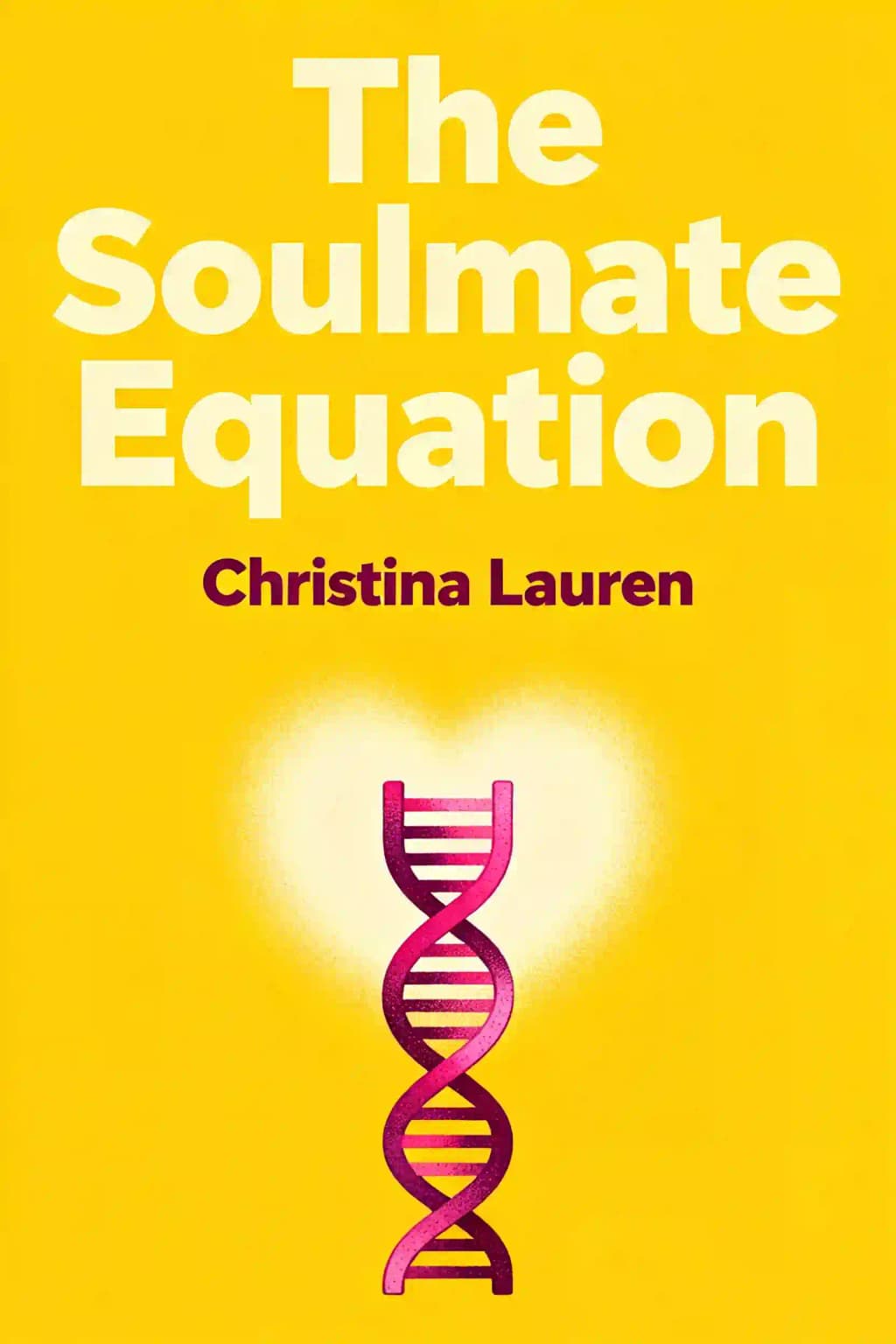
Have you ever wondered if science could identify your perfect match? The Soulmate Equation by Christina Lauren explores this tantalizing possibility through a blend of romance, science, and family dynamics. This New York Times bestseller has captivated readers since its 2021 release, with celebrities like Reese Witherspoon featuring it in her book club. The novel's unique premise-DNA-based matchmaking-taps into our collective fascination with finding "the one" while questioning whether love can truly be reduced to genetic compatibility. As dating apps continue to dominate modern romance, this story offers a refreshing perspective on what happens when cutting-edge science meets messy human emotions. What if a simple cheek swab could lead you to your soulmate? Would you trust the algorithm-or your heart?
第 2 章
Single Motherhood and Statistical Improbabilities
Jessica Davis has her life figured out - or so she thinks. As a thirty-year-old freelance statistician and single mother to seven-year-old Juno, Jess has constructed a carefully controlled existence within a four-block radius of San Diego's University Heights neighborhood. Her world revolves around client meetings at local coffee shops, precise school drop-off schedules, and weekly coffee dates with her best friend Fizzy at Twiggs, where they share pastries and stories about Fizzy's romance novel writing career. Dating? That's a statistical improbability she's mathematically calculated to have a 0.0087% chance of success - a number she's comfortable ignoring until Juno reaches college.
Jess's reluctance toward romance stems from hard-earned life lessons that have left permanent marks on her worldview. Abandoned by her boyfriend Alec when she became pregnant at twenty-two - after he declared he "wasn't ready for this level of commitment" - Jess learned early about the unreliability of others. Raised by her loving but aging grandparents after her mother's addiction to prescription painkillers made her an unpredictable presence, Jess developed a fierce independence and an unshakeable belief that self-reliance is the only guaranteed constant in life. Her approach to life is fundamentally mathematical - she calculates risks down to three decimal points, weighs probabilities against historical data, and makes decisions based on spreadsheets rather than instinct or emotion.
Living in "Harley Hall," the bright green Victorian-converted apartment complex owned by her grandparents, Jess has created a stable if modest home for Juno despite limited resources. She meticulously juggles freelance statistical analysis contracts with parenting duties, working late into the night after Juno's bedtime to meet deadlines. She often feels the unique isolation that comes with single parenthood - like being the only solo adult at school functions surrounded by couples, or calculating how to handle both the science fair project supervision and the bake sale contributions single-handedly. Her refrigerator is covered with Juno's artwork and perfectly organized scheduling calendars, a visual representation of their structured life. Her existence isn't perfect, but it's predictable, and for Jess, predictability equals safety.
When Juno leaves a New Year's resolution on their dry-erase board reading "Do more things that skare me" under Mom's section (complete with endearing second-grade spelling), Jess dismisses it as cute but irrelevant. She doesn't need adventure - she needs stability, routine, and the comfort of known variables. Yet somewhere beneath her carefully constructed routine lies a woman who once believed in possibilities, including true love. The statistics may suggest it's unlikely - a mere 12.7% chance of finding lasting love as a single mother, according to her own calculations - but sometimes the most improbable outcomes are the ones most worth pursuing, even for someone who lives by the numbers.
第 3 章
The Science of Soulmates: GeneticAlly's Revolutionary Promise
In a sleek La Jolla office building overlooking the Pacific, GeneticAlly stands at the vanguard of romantic innovation. Founded by brilliant but socially awkward scientist River Pena, the company promises something unprecedented: DNA-based matchmaking that can identify your biological soulmate with mathematical precision. Their proprietary DNADuo technology examines over 3,500 genes using a sophisticated neural network developed in partnership with Caltech, assigning compatibility scores ranging from Base Matches (7-24) to the coveted Diamond Matches (90+). These scores incorporate everything from neurotransmitter production to hormone regulation patterns, creating a comprehensive profile of romantic compatibility.
The science behind GeneticAlly emerged from River's doctoral research studying attraction patterns in college students, then expanded to analyzing long-term compatibility in married couples. What began as a modest study across 200 genes from 300 couples evolved into a massive database encompassing thousands of genes from more than 100,000 test subjects worldwide. The research revealed surprising patterns - certain genetic combinations consistently predicted not just initial attraction, but long-term relationship satisfaction, communication styles, and even conflict resolution approaches. The resulting algorithm claims to predict romantic compatibility with unprecedented accuracy, factoring in elements like dopamine sensitivity, oxytocin receptor variations, and serotonin transport genes.
During Jess and Fizzy's visit to GeneticAlly's state-of-the-art facilities, customer relations representative Lisa Addams emphasizes their technology's inclusive nature. The system operates completely blind to ethnicity, sexual orientation, and gender - focusing purely on genetic compatibility markers. Rather than artificially creating matches, it identifies natural biological harmony that already exists between individuals. The technology examines factors like immune system compatibility, pheromone reception patterns, and genetic diversity - elements that historically influenced human mate selection unconsciously.
What sets GeneticAlly apart is its focus on predicting lasting compatibility rather than just initial attraction. Their extensive data shows remarkable results - every couple scoring above 80 has maintained their relationship, with divorce rates practically nonexistent among high-scoring pairs. The system analyzes genetic markers linked to emotional processing, attachment styles, and stress responses, creating matches that complement each other's psychological tendencies. For instance, someone with genes indicating high emotional reactivity might match well with a partner whose genetic profile suggests natural emotional stability.
However, the fundamental question persists: can the intricate dance of human connection - with its spontaneous chemistry, emotional complexity, and inexplicable magic - truly be reduced to genetic algorithms and compatibility percentages? While GeneticAlly's data is compelling, it challenges our romantic notions about love's mysterious nature. The technology raises profound questions about free will in matters of the heart, the role of choice in relationship formation, and whether understanding the science of attraction enhances or diminishes its power.
第 4 章
An Unexpected Match: When Statistics Defy Probability
After a particularly awful day - losing a major client who had accounted for thirty percent of her design firm's revenue and feeling like an outsider at her daughter's school fundraiser where the other mothers formed tight circles of conversation that excluded her - Jess impulsively submits her DNA sample to GeneticAlly. She expects nothing to come of it, viewing it as a momentary lapse in judgment rather than a genuine search for connection, much like late-night online shopping or downloading a dating app only to delete it the next morning. So when she receives a mysterious red notification from the DNADuo app asking her to call GeneticAlly's office at her "earliest convenience," she's perplexed.
Nothing could prepare Jess for what happens next. Summoned to GeneticAlly's sleek downtown offices after hours, she finds herself facing the entire executive team, including River Pena - the surly, handsome regular from her coffee shop whom she's nicknamed "Americano" for his daily order of a triple shot with exactly two ice cubes. The revelation is stunning: Jess and River have scored a 98% compatibility match, significantly higher than any previously recorded match in the company's history. The next highest match in their database was 93%, making their pairing truly unprecedented. They are, according to science, perfect biological soulmates.
The irony isn't lost on either of them. River, client 000001 in the system and the company's brilliant but socially awkward chief scientist, has never received a match because he set his criteria to only show Diamond Matches - those above 95% compatibility. Jess, client 144326, is the woman he's been coolly observing at Twiggs for years without exchanging more than coffee orders and occasional barbed comments about his perfectionist tendencies. Their initial reaction is mutual disbelief - how could two people who barely interact, and when they do, seem to irritate each other, possibly be perfect matches?
For Jess, the statistical anomaly is too much to process. She laughs nervously, deletes the app on the spot, and flees the meeting, leaving behind a conference room of stunned executives. For River, the scientist who has dedicated his career to perfecting GeneticAlly's matching algorithm, it's a data point that demands investigation - one that challenges his professional reputation and personal beliefs simultaneously. Their opposing reactions to the same information reveal the fundamental tension between them: Jess trusts her gut feelings over algorithms, relying on the intuition that's guided her through single motherhood and running her own business, while River believes unwaveringly in the empirical evidence his life's work has produced.
This unexpected match sets up the central question of their relationship: When science says you're perfect for someone but your experience suggests otherwise, which do you trust? And what happens when financial incentives complicate an already complex emotional equation? The situation becomes even more complicated when GeneticAlly's board sees a marketing opportunity in their match, suggesting they date publicly to prove the algorithm's effectiveness - adding external pressure to an already charged situation.
第 5 章
The Proposition: Romance as Business Transaction
Three days after learning about their match, Jess finds herself at an upscale dinner with GeneticAlly executives Brandon Butkis and David Morris-and River. The atmosphere is tense as they order the five-course tasting menu at Addison restaurant. Before River can explain GeneticAlly's technology, Jess admits she understands the science but questions their specific match. When she confesses she generally wants to "commit a felony" when seeing River rather than feeling romantic compatibility, River settles back in his chair and declares the dinner "a waste of our time."
Then comes the real purpose of the meeting: a business proposition. GeneticAlly will pay Jess $10,000 a month until their IPO in May to date River and give their match a chance. The company needs a success story-a perfect Diamond Match-to showcase their technology before going public. Jess and River are that story, whether they feel compatible or not.
For Jess, a single mother who just lost a major client, the financial incentive is impossible to ignore. Ten thousand dollars monthly would transform her life, creating security for her and Juno that she's never experienced. Yet the ethical implications trouble her-can you manufacture authentic connection for profit? When she asks River if he believes their match is real, his answer is telling: he wants to prove he's right. It's not about romance for him, but validation of his life's work.
After consulting with her grandparents and considering Juno's innocent questions about whether anyone would get hurt or if she'd be lying, Jess decides to accept the offer. She signs a contract with GeneticAlly's head legal counsel Omar Gamble, agreeing to date River publicly and give their match a genuine chance. The arrangement is clear: this is business, not pleasure-at least initially.
What begins as a financial transaction soon becomes complicated by genuine attraction. During their first official date at a Thai restaurant, Jess and River discover unexpected common ground. Their conversation flows more easily than either anticipated, and they find themselves genuinely enjoying each other's company. When their waiter Rama, who knows Jess well, makes it obvious she's never brought a date there before, an awkward but charged moment passes between them-the first hint that their compatibility might extend beyond genetic markers.
第 6 章
From Pretense to Passion: The Chemistry of Connection
What starts as a business arrangement quickly develops an unexpected chemistry. During a photoshoot for the San Diego Union-Tribune, River wraps Jess in his coat when she mentions being cold, pulling her against him. The physical contact ignites tension between them, with River admitting he's "starting to like" her and Jess confessing to "lust." The photographer captures their intimate moment, neither realizing it would become the perfect candid shot for the front page.
Their first kiss happens at an investor event at the Grubers' penthouse. When party guests begin clinking glasses for them to kiss, River and Jess share a passionate kiss that surprises them both with its intensity, leaving them breathless and wanting more as the crowd erupts in applause. River later admits he's particularly drawn to her mouth rather than her striking blue eyes, noting, "You don't give those smiles away for free."
As they spend more time together, their connection deepens beyond physical attraction. When Jess's grandmother Nana Jo is hospitalized with a fractured femur, River steps in without hesitation. He picks up Juno from school, takes her to ballet class, brings sandwiches to the hospital, and waits hours to ensure everyone is okay. His genuine concern for Jess's family reveals a tenderness that contradicts his initially cold demeanor.
In the hospital parking lot, an exhausted but grateful Jess initiates a kiss with River. What begins as a tentative gesture quickly escalates into passionate kissing that leaves them both breathless. Only when Jess remembers Juno sleeping in the car does she pull away, feeling both exhilarated and panicked by how quickly things are moving.
Their relationship continues to evolve as River meets Jess's daughter and she meets his sisters Natalia and Pilar. During dinner with his siblings, Jess learns about River's childhood-his awkward phase with headgear and a bowl cut, his protective nature toward his sisters, and his childhood fondness for watching telenovelas with his grandmother. These personal details endear him further to Jess, who realizes there's much more to River than his scientific brilliance and social awkwardness.
When they finally spend a night together at River's apartment, their connection feels profound. River is attentive and considerate, repeatedly checking that Jess is comfortable. After their passionate encounter, they talk openly about their pasts and their feelings. River admits he's been attracted to her since before their official match, though he fought against the algorithm just as she did. As their relationship deepens, River tells Jess "I love you" for the first time before a People magazine interview, and she immediately reciprocates.
第 7 章
The Revelation: When Data Betrays Trust
Just as Jess and River's relationship reaches its emotional peak, the foundation crumbles beneath them. While waiting in David's messy office before the People magazine interview, Jess discovers the raw data of her and River's compatibility test. Initially fascinated by the tangible evidence of their connection, she notices something troubling: comparing their results with another couple's 93% match from 2014, she finds suspicious similarities. The identical end times on different days and altered values in circled sections lead her to a devastating conclusion: River and Jess were never a true Diamond Match-someone manipulated their data.
When Jess shows River the evidence, his reaction is immediate and visceral. He calls it "a catastrophe" and insists on confronting David alone, despite Jess's protests that she deserves answers too. His primary concern is for his company and life's work rather than their relationship. When Jess tells him she loves him regardless of the data, River barely acknowledges her feelings, declaring "This is my company" before leaving abruptly with only a vague promise to call.
For eight days, River disappears from Jess's life. No calls, no texts, no explanation. When he finally reappears, he reveals that both David and Brandon manipulated their compatibility data. They never actually had a real compatibility score-David selected Jess because he thought she'd be "what River was into." The deception cuts deep, not just because it undermines their relationship, but because it calls into question the validity of GeneticAlly's entire premise.
This revelation forces both characters to confront fundamental questions: If their match was fabricated, what does that say about their feelings for each other? Can genuine love grow from artificial beginnings? For River, whose identity is deeply intertwined with his scientific work, the data manipulation represents not just professional betrayal but personal crisis. For Jess, who has always been skeptical of the algorithm, the revelation paradoxically affirms what she's come to believe-that their connection transcends scientific explanation.
The data betrayal becomes a crucible for their relationship. River's disappearance during the crisis reveals his difficulty communicating during emotional turmoil, while Jess's willingness to love him regardless of their compatibility score demonstrates her growth beyond needing statistical certainty. Their different reactions to the same revelation highlight the fundamental tension that has existed between them from the beginning: science versus intuition, data versus emotion, certainty versus faith.
第 8 章
Family Dynamics: The Heart of the Equation
While romance drives the plot, family relationships form the emotional core of Jess and River's story. As a single mother, Jess's primary relationship is with her precocious seven-year-old daughter Juno. Their bond is portrayed with authentic complexity-from Juno's snake facts and roller coaster obsession to her perceptive observations about her mother's happiness. When Juno casually mentions finding River's "shorts" at their apartment and teasingly calls her mother "Jessica Nicolas," it's clear she approves of the relationship developing before her eyes.
Jess's relationship with her grandparents Nana Jo and Pops provides another layer of family connection. Having raised Jess after her mother's addiction made her an unreliable parent, they continue to offer unconditional support. When Nana Jo fractures her femur in a bowling accident, the family rallies together, with River unexpectedly becoming part of their support system. The multigenerational living arrangement at "Harley Hall" creates a rich tapestry of family life that contrasts with River's more isolated existence.
River's family dynamics reveal much about his character. Raised by emotionally distant parents after his beloved grandmother died when he was fourteen, River found warmth primarily through his sisters Natalia and Pilar. Their dinner together shows a different side of River-the protective brother who tutored classmates to help Pilar win a student council election and defended his sisters against bullies. His childhood fondness for watching telenovelas with his grandmother connects to his work with GeneticAlly-creating real-life love stories through science.
The novel also explores Jess's complicated relationship with her mother Jamie. When Jamie calls unexpectedly, drunk and claiming to be in trouble with the police, Jess reluctantly agrees to help. This interaction forces Jess to confront her fears about repeating her mother's mistakes, particularly when she snaps at Juno after a sleepless night waiting for River to call. The parallel between River's disappearance and Jamie's unreliability isn't lost on Jess, who has spent her life building defenses against abandonment.
Family ultimately becomes the lens through which both characters evaluate their relationship. When River mentions finding "a house with enough space for her projects" before realizing the significance of his words, he's envisioning a future that includes not just Jess but Juno and their extended family. The science fair scene at the end-with River lifting Juno in celebration after her roller coaster project wins first place while she exclaims, "We did it, River Nicolas!"-represents the true success of their relationship: creating a family where everyone belongs.
第 9 章
Beyond Algorithms: Choosing Love Despite the Data
The central question of The Soulmate Equation isn't whether science can identify perfect matches, but whether love requires certainty to flourish. When Jess and River discover their match was fabricated, they face a choice: walk away from something built on false premises or recognize that their connection has grown beyond its origins.
After River's eight-day disappearance, he returns to Jess with an important revelation. He ran their DNA samples properly and offers Jess the results in an envelope, but she makes a pivotal decision-she doesn't want to know their score. She chooses to love River regardless of what science says, embracing uncertainty in a way that would have been impossible for her at the beginning of their journey.
This choice represents Jess's fundamental growth. As a statistician who has always sought certainty through numbers, choosing love without knowing their compatibility score is her ultimate leap of faith. It's an acknowledgment that some things in life-perhaps the most important things-can't be quantified, predicted, or reduced to data points.
River's growth is equally significant. As GeneticAlly's new CEO following the executive team restructuring, he could have insisted on scientific validation of their relationship. Instead, he cryptically suggests that the company won't be making any public statements about their corrected match results. His willingness to leave their compatibility score undefined shows how far he's come from the man who needed to "prove he was right" about their match.
Two months later, at Juno's school science fair, their blended family has found its rhythm. River and Juno have spent a month perfecting her roller coaster project, ordering special wheels from Germany and building four test cars. Despite GeneticAlly's IPO being scheduled for the next day, River prioritizes being present for Juno's big moment-a clear indication of how his priorities have shifted.
When Jess suggests moving in together that summer, River enthusiastically agrees. As Mrs. Klein announces the winners and Juno's project takes first place, River lifts her in celebration while Juno exclaims, "We did it, River Nicolas!" Watching them embrace, Jess thinks to herself, "Yeah, we did," acknowledging that beyond tomorrow's IPO, GeneticAlly has already accomplished something extraordinary by bringing them together-not through algorithms, but through the messy, unpredictable, and ultimately more satisfying process of choosing each other, day after day.
In the end, The Soulmate Equation suggests that while science might help us find potential matches, true love requires something algorithms can't measure: the courage to choose someone even when certainty isn't guaranteed. Perhaps that's the real soulmate equation-not a perfect score, but a perfect willingness to write your own formula for happiness together.