第 1 章
When Science Meets Seduction: A Tale of Theoretical Love
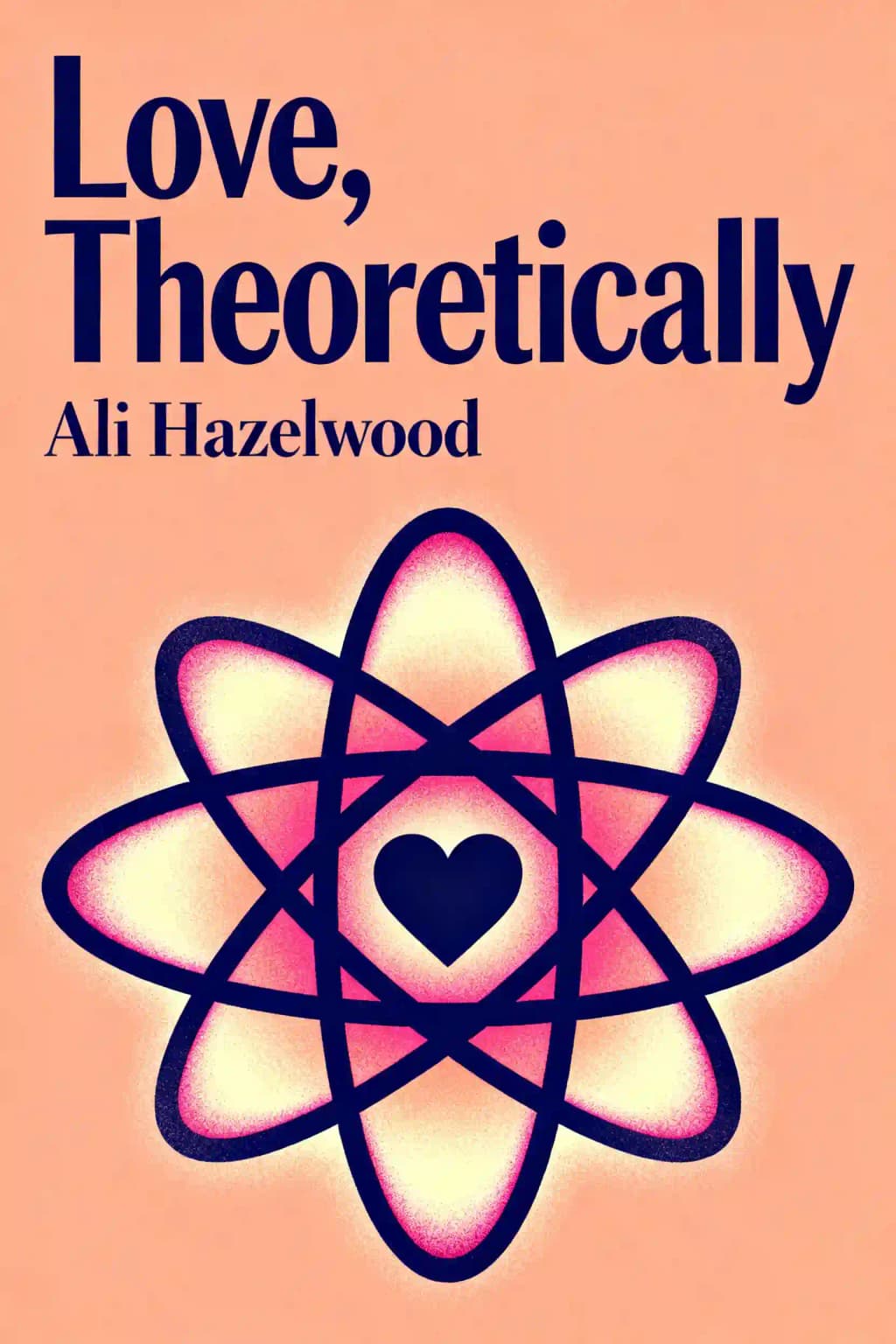
Ali Hazelwood's "Love, Theoretically" has captivated readers worldwide with its perfect formula of academic tension, fake dating hijinks, and slow-burning romance. This enemies-to-lovers story set in the competitive world of theoretical physics has earned praise from celebrities like Reese Witherspoon, who featured it in her book club, calling it "the perfect blend of brains and heart." The novel's exploration of imposter syndrome resonates deeply with readers across professions, while its witty dialogue and steamy scenes have made it a TikTok sensation with over 2 billion views under #LoveTheoretically. Hazelwood, a neuroscientist-turned-author, brings authentic academic politics to romance, creating a cultural phenomenon that bridges the gap between STEM and fiction.
第 2 章
The Duality of Elsie: Particle and Wave
Elsie Hannaway lives a double life that perfectly mirrors the quantum duality she studies. Just as light can behave as both particle and wave depending on what the observer wants to see, Elsie has mastered becoming whoever people need her to be. By day, she's a brilliant but underpaid theoretical physicist juggling adjunct positions at multiple universities - teaching advanced quantum mechanics at one school while running physics labs at another. Her research focuses on quantum entanglement, a fitting parallel to her own entangled existence. By night, she works for Faux, an elite agency providing fake dating services to clients needing temporary companions for social obligations, from family weddings to business functions.
This chameleon-like ability to adapt began early in Elsie's life, rooted in a childhood that demanded constant adaptation. Growing up with hyperactive twin brothers who monopolized their parents' attention and resources, she learned invisibility as a survival strategy. Her parents - her father absorbed in his medical practice and her mother overwhelmed by the twins - seemed oblivious to her needs, creating a young girl who became exquisitely attuned to others' expectations. This pattern crystallized during her undergraduate years at MIT, where she molded herself to please demanding professors, and continued through her doctorate at Stanford, where she learned to navigate the competitive physics department by becoming whatever her advisors needed. Now this adaptability extends to her work with Faux, where she transforms seamlessly from the nurturing librarian girlfriend for Greg Smith to an art gallery curator for another client to a tech startup founder for yet another.
"I've learned to be multiple versions of myself," Elsie reflects, a skill that serves her well in academia's political landscape and in her fake dating career. She's perfected the art of reading rooms and adjusting her personality accordingly - serious and scholarly in faculty meetings, approachably brilliant with students, and whatever character her dating clients require. But this constant shape-shifting comes at a devastating personal cost. With each role she plays, Elsie loses touch with her authentic self, becoming increasingly uncertain about her own desires and identity. She's developed what she calls her "APE protocol" - Assess what someone wants, Plan how to become it, and Enact the performance - a systematic approach that leaves little room for genuine self-expression or emotional vulnerability.
When we first meet Elsie, she's attending the ninetieth birthday party of Greg Smith's grandmother as his fake girlfriend, navigating a crowded room of family dynamics and expectations. She's playing the role of Caroline, a children's librarian - carefully calibrated to be nurturing enough to please Greg's traditional family but not so accomplished or attractive that they'd question why she couldn't find someone more successful than Greg. She's meticulously researched the role, from the sensible shoes to the carefully rehearsed anecdotes about story time with children. But her well-practiced facade begins to crack when she encounters Jack Smith, Greg's intimidating older brother - a brilliant surgeon whose penetrating gaze seems to cut through her performances. Unlike others who readily accept her carefully constructed personas, Jack possesses an uncanny ability to spot the inconsistencies in her act, threatening to unravel the intricate web of identities she's woven around herself.
第 3 章
When Worlds Collide: The Academic Battlefield
Elsie's carefully compartmentalized life implodes when she discovers that Jack Smith-her fake boyfriend's brooding brother-is actually Jonathan Smith-Turner, the infamous experimental physicist heading MIT's Physics Institute. This revelation comes at the worst possible moment: during her interview for a coveted faculty position at MIT that could rescue her from adjunct purgatory.
The academic world Hazelwood portrays is ruthlessly political, divided by tribal loyalties between theoretical and experimental physicists. This division traces back fifteen years to a controversial paper Jack published that humiliated theoretical physicists by exposing methodological flaws in their work. The same scandal destroyed the career of Dr. Christophe Laurendeau, Elsie's mentor and doctoral advisor.
Now Elsie finds herself trapped in an impossible situation. Her professional future depends on impressing a hiring committee that includes the man who's seen through her fake relationship with his brother. The stakes couldn't be higher-currently teaching nine courses across three universities with no benefits, Elsie desperately needs this position not just for career advancement but for basic survival. Her insulin for Type 1 diabetes costs a fortune without proper insurance, and her current cobbled-together employment barely covers her medical expenses.
"Academia is the stupidest of career choices," Elsie laments to her roommate Cece, who also works for Faux to supplement her income. Their shared frustration highlights the precarious reality many adjunct professors face-highly educated professionals working multiple jobs just to make ends meet.
The interview process becomes increasingly complicated as Elsie navigates departmental politics. Dr. Monica Salt, head of the theoretical physics department, reveals that the position is contested territory between her department and Jack's Physics Institute. The theorists want Elsie; the experimentalists favor another candidate named George. The tension between these factions reflects real-world academic politics where interdepartmental rivalries often determine hiring decisions more than candidate qualifications.
When Elsie and Jack finally confront each other in a bathroom during her interview dinner, their encounter crackles with tension. Jack accuses her of lying to Greg about her identity, while Elsie can't explain their fake relationship arrangement without betraying her client's confidence. Their standoff culminates in Elsie's bold declaration: "I've hated you since I first read about you in Scientific American at age twelve," she tells him, vowing not only to get the MIT position but to make his professional life miserable when she does.
第 4 章
The Gravitational Pull: Attraction Despite Resistance
Despite their professional antagonism, Jack and Elsie experience an undeniable attraction that defies their logical minds. Their interactions are charged with a magnetic tension that neither can fully resist, even as they try to maintain their adversarial positions.
During Elsie's teaching demonstration, Jack surprises her with his respectful behavior and thoughtful questions. When he takes over her campus tour, showing her what would be her office if hired-a spectacular space with hardwood floors, beautiful desk, and a giant whiteboard overlooking campus-Elsie finds herself wanting the position more than ever. Their conversation turns unexpectedly personal when Jack questions her chameleon-like behavior, calling her "the real girl who wished to be a puppet" and accusing her of erasing herself in every interaction.
This moment marks a turning point in their relationship. Jack sees through Elsie's carefully constructed personas to the authentic person beneath-something both terrifying and liberating for her. "With Jack, I don't need to pretend," she realizes, finding an unexpected freedom in his perceptiveness despite how unsettling it feels.
Their connection deepens when Elsie experiences a diabetic episode during their tour, and Jack responds with genuine concern rather than judgment. As he helps her recover, sharing his student's soda with her, their conversation turns surprisingly intimate. "It would be a waste for you to be anyone else," Jack tells her, the first person in Elsie's life to value her authentic self over the roles she plays for others.
This gravitational pull between them continues during Elsie's research presentation, where she discusses her liquid crystal models with genuine confidence. Unlike the various personalities she's adopted to please others, her scientific ability is authentic-the one area where she hasn't faked her way through. To her surprise, Jack seems almost admiring of her work, agreeing that his nematics experiments could benefit from her theoretical model.
Their professional and personal worlds continue to collide at a faculty reception where Elsie encounters Austin-Monica's son whom she immediately recognizes as a former Faux client who once propositioned her inappropriately. When Jack intervenes with a threatening warning that sends Austin retreating, Elsie feels both protected and exposed, unable to explain herself when Jack's penetrating gaze sees through her completely.
第 5 章
Theoretical Vulnerability: Breaking Down Defenses
The walls Elsie has built around herself begin to crumble when circumstances force her and Jack into closer proximity. After Greg's emergency dental surgery, they end up at his apartment where Jack reveals he's suspected Greg might be gay and feels terrible for dismissing his brother's earlier attempt to come out to him. This moment of vulnerability from Jack-admitting his mistake and showing genuine concern for his brother-begins to shift Elsie's perception of him.
When Elsie explains that Greg hired her to pretend-date him to relieve family pressure, Jack surprises her by apologizing for accusing her of lying. Their conversation turns unexpectedly personal as Jack reveals more about his family-that Caroline is actually his stepmother, Greg's mother, and that his own mother died when he was young. This glimpse into Jack's past adds complexity to the man Elsie had dismissed as merely arrogant and antagonistic.
The most shocking revelation comes when Jack admits he's attracted to the real Elsie-not any of her performed personas. "Since meeting you at Greg's family dinner six months ago," he confesses, "I've been drawn to you-noticing your vigilance, your ability to protect Greg, feeling jealous of your relationship." Despite trying to avoid his feelings, they've only grown stronger.
This confession leaves Elsie reeling, unable to process that someone could want her authentic self-the very self she's spent years hiding behind carefully crafted personas. It challenges her fundamental belief that she needs to become what others want to be accepted and valued.
Their relationship takes another dramatic turn when Elsie runs into Jack with Georgina Sepulveda, who reveals she's accepted the MIT position Elsie interviewed for. Overwhelmed with disappointment, Elsie flees down the snowy street, only for Jack to catch up moments later. He explains that the interview was conducted in "bad faith"-the outcome predetermined before she ever set foot on campus. Despite her anger and tears, Jack comforts her and invites her to his place to explain everything.
This moment of genuine vulnerability-Elsie breaking down in front of Jack, Jack offering comfort without judgment-marks a significant shift in their dynamic. For perhaps the first time, Elsie allows herself to be seen in a moment of raw emotion rather than performing a calculated response.
第 6 章
The Experiment: Testing Theories of Connection
As Jack and Elsie begin spending time together outside their professional antagonism, they embark on what feels like a scientific experiment-testing theories of connection and compatibility despite their seemingly opposing natures.
Jack takes Elsie to a small gathering hosted by friends, explaining that having witnesses might help her feel more relaxed. There, she discovers a side of Jack she never imagined-surrounded by a warm chosen family of scientists who clearly care about him deeply. She meets Adam and Olive, whose own academic romance offers a glimpse of what's possible between scientists, and even Georgina (George) Sepulveda, who insists they have lunch to make up for their awkward first meeting.
Throughout their early dates, Jack consistently pushes Elsie toward authenticity. When the hostess asks their seating preference at a restaurant, Jack leaves the decision entirely to Elsie, continuing his insistence on her honesty. During dinner, he orders her the cheese board, having noticed how much she wanted it previously. "I pay attention to you in a way I don't with others," he explains, demonstrating a level of perception that both unnerves and attracts Elsie.
This leads to a vulnerable conversation where Elsie shares the story of her relationship with J.J.-how she molded herself to please him only to be discarded when his ex returned. Jack perceptively summarizes her trauma: "You gave him a perfect version of you, and he still didn't want you." This insight cuts to the heart of Elsie's fear-that even her best performance isn't enough to make someone stay.
Their relationship deepens as they spend more time together, with Jack consistently demonstrating his interest in knowing the real Elsie. When her phone reminds her to change her insulin pod, she hesitates but decides on honesty. To her surprise, Jack asks to see how it works, wanting to understand this part of her life. "Because I want to know these things," he says, the unspoken meaning clear: he wants to know her completely.
This pattern continues as Jack shares vulnerable parts of himself-stories about his Swedish theoretical physicist mother who died when he was very young, whose diaries became his connection to her during difficult times. These exchanges build a foundation of mutual understanding that transcends their professional differences.
When they finally become physically intimate, it feels like a natural extension of the emotional intimacy they've been building. "The connection between us transcends physical sensation," Elsie reflects, "it feels right, like where we both belong." Their lovemaking becomes another form of honest communication, with Jack whispering how beautiful she is and laughing at her earlier fears that sex between them wouldn't be good.
第 7 章
Critical Mass: When Truth Explodes
Just as Elsie begins to trust the possibility of a relationship with Jack, their carefully constructed connection reaches critical mass when long-buried truths explode to the surface. During a gathering at George's apartment, Elsie overhears Andrea confronting Jack in the kitchen, revealing not only her feelings for him but questioning his interest in Elsie-"a theorist"-when he supposedly "despises people like her."
Though Jack defends Elsie fiercely, calling her "a better scientist than you or I will ever be" and declaring she could be his "damn wife" if she wanted, Andrea's mention of Jack "ruining careers" in theoretical physics plants seeds of doubt. When Elsie later questions him about these comments, Jack is forced to reveal the truth about his infamous article and its connection to Dr. Laurendeau.
The revelation is devastating: Jack wrote the article specifically to target Laurendeau for allegedly sabotaging his mother's career. His mother, Grethe Turner, had been pushed out of her research group after a disagreement with Laurendeau, her controlling lead researcher. The article that destroyed Laurendeau's reputation and created a rift between theoretical and experimental physicists was actually a seventeen-year-old Jack's attempt at revenge.
This truth creates an explosive confrontation between Jack and Elsie. Despite Jack's insistence that Laurendeau is controlling her just as he controlled his mother, Elsie feels betrayed by his dishonesty. The argument exposes the painful contradiction in her life-she's criticized others for dishonesty while tolerating Laurendeau's manipulation of her own career.
The confrontation propels Elsie to finally confront Dr. Laurendeau about George's job offer, where she discovers the full extent of his manipulation when he admits to hiding other job offers from her over the years. When she stands her ground, he becomes increasingly hostile, reminding her that she "owes" her career to him. As their heated exchange reaches its climax, Elsie makes her final stand, telling Laurendeau he should start calling her "Elsie" rather than "Elise" before walking out of his office-and his influence-for good.
This moment represents Elsie's first true act of self-determination. Rather than molding herself to please Laurendeau or even Jack, she makes decisions based on her own desires. She files a formal complaint against her former advisor, accepts George's job offer at MIT, and begins embracing her authentic self.
第 8 章
Equilibrium: Finding Balance in Authenticity
In the aftermath of these revelations, both Jack and Elsie embark on journeys toward greater authenticity. Jack publishes an open letter in the prestigious Annals of Theoretical Physics, publicly admitting that his infamous article was written to sabotage Laurendeau for what he'd done to Jack's mother, not because he believed theoretical physics was inferior. He expresses shame for letting his work become a weapon in the theoretical/experimental physics divide, specifically acknowledging the pain he caused someone he "deeply respects."
This public reckoning represents Jack's willingness to face the consequences of his past actions. By citing Elsie's work among meaningful theoretical contributions, he also publicly acknowledges her value as a scientist-something that means more to her than any personal compliment could.
Meanwhile, Elsie begins reclaiming her life piece by piece. Her breakthrough moment comes when she finally confesses to Cece that she's been faking her love of art films. "I hate all auteur-style movies," she admits, revealing her true preference for Twilight. Though initially shocked, Cece responds with unconditional acceptance: "I will love you forever, even if you're an animal with no taste." This moment allows Elsie to introduce herself anew: "I'm Elsie. And I really like cheese, particle physics, and movies with sparkly vampires."
When Elsie and Jack finally reunite, their interaction reflects their new commitment to honesty. In a moment of newfound boldness, Elsie tells Jack she hates him but might also love him, admitting her fear that he'll like her less the more he knows her. Jack confesses his own feelings: "I want you, Elsie. All the time... There is no universe in which I'm going to let you go." He admits being "obsessed" while she acknowledges she's "practically there" emotionally but needs time. Jack promises to wait, giving her the space to find her footing.
Eight months later, their relationship has settled into comfortable routines that accommodate both their professional ambitions and personal growth. Sunday nights are spent reading articles together, Mondays feature family dinners at Millicent's, and Tuesdays are reserved for therapy sessions where Elsie works through her lingering insecurities. Their professional lives flourish too, with Elsie and George celebrating the acceptance of their paper in Nature Physics.
Through it all, Elsie recognizes she remains "a mess" and "a work in progress," but takes comfort in knowing Jack loves her not despite her flaws, but because of them. Their relationship achieves a state of equilibrium-not perfect balance, but a dynamic stability that allows both of them to be authentically themselves while continuing to grow together.
第 9 章
The Universal Constant: Love Beyond Equations
At its heart, "Love, Theoretically" explores how true connection requires vulnerability rather than performance. Throughout the novel, Elsie's journey from professional fake girlfriend to someone capable of genuine intimacy parallels her academic evolution from adjunct struggling for recognition to respected researcher following her passion. This transformation mirrors the quantum physics she studies - just as particles exist in multiple states until observed, Elsie maintains multiple versions of herself until forced to collapse into authenticity.
The central irony of Elsie's life is that her ability to become whatever others want - her "superpower" as she initially sees it - actually prevents her from experiencing authentic connection. Her carefully calibrated personas, from the sophisticated wine enthusiast to the outdoorsy adventurer, create a barrier between her true self and others. Only when she stops performing and starts revealing her true self - her love of cheese and Twilight, her diabetes management, her scientific ambitions, her fear of abandonment - does she find people who value her for who she really is. Her collection of fake dating spreadsheets and personality matrices becomes a poignant symbol of how she's tried to quantify and control human connection.
Jack serves as the catalyst for this transformation not because he's perfect, but because he sees through Elsie's performances from the beginning. His persistent question - "What came first, your fake-girlfriend business or your habit of impersonating different versions of yourself?" - forces her to confront the patterns that have shaped her life since childhood. His suggestion that she hides her true self to avoid rejection hits uncomfortably close to home, challenging her to examine why she's spent so long becoming what others want rather than discovering what she wants. Their initial conflicts, particularly over her side business and his past relationships, become opportunities for deeper understanding rather than deal-breakers.
Their relationship succeeds not because either of them changes fundamentally, but because they create space for each other's authentic selves. Jack's willingness to publicly acknowledge his past mistakes and confront his own fear of commitment demonstrates his commitment to honesty, while Elsie's decision to pursue her research passion at MIT - even at the risk of geographical separation - shows her growing confidence in her own worth. Their shared love of physics becomes more than common ground; it becomes a metaphor for how they approach love: with curiosity, wonder, and acceptance of complexity.
Like the theoretical physics they study, their love operates according to principles more complex than simple attraction and repulsion. It requires acknowledging uncertainty, embracing vulnerability, and recognizing that the most meaningful connections happen not between carefully constructed personas, but between people brave enough to show their true selves - flaws, passions, and all. Their relationship demonstrates that real intimacy emerges from sharing not just successes but also fears, insecurities, and failures.
In the end, Elsie discovers that love isn't about becoming what someone else wants - it's about finding someone who wants exactly who you are, diabetes monitor beeps and physics jokes included. As Jack tells her when she worries about being "work" to him: "That's not how love works." True love, like the best scientific theories, doesn't require contorting reality to fit preconceived notions. Instead, it adapts to accommodate what's real, finding beauty in truth rather than illusion. Their story suggests that authentic love, like good science, requires both courage and curiosity - the courage to be seen as we are and the curiosity to truly see others.