第 1 章
The Digital Mesh: How Connected Devices Are Reshaping Our World
The Internet of Things represents one of the most profound technological shifts in human history, yet it has emerged so gradually that many of us barely notice its presence. When Kevin Ashton coined the term "Internet of Things" in 1999, few could have imagined how thoroughly connected our world would become. Today, over 21.5 billion IoT devices monitor, analyze, and respond to our needs and activities-a number projected to grow exponentially. The technology has transformed from science fiction to everyday reality, with even celebrities like Elon Musk investing heavily in neural interfaces and Mark Zuckerberg building his home around smart systems. Beyond personal convenience, the IoT is revolutionizing industries, healthcare, and urban planning. Its cultural impact is so significant that shows like "Black Mirror" regularly explore its darker implications, while the technology has become essential infrastructure during global crises like the COVID-19 pandemic. As Samuel Greengard reveals in his comprehensive exploration, we're witnessing nothing less than a fundamental rewiring of our physical world-one that promises tremendous benefits but demands careful consideration of its far-reaching consequences.
第 2 章
A Day in the Connected Life
My typical day showcases how deeply the Internet of Things has penetrated daily routines. It begins with a vibrating Apple Watch alarm that not only wakes me but has already analyzed my sleep quality overnight, tracking REM cycles, disturbances, and even my breathing rate. As I step on my connected scale, it transmits my weight, body fat percentage, muscle mass, bone density, and hydration levels to an app that tracks trends over time, providing weekly and monthly progress reports. My smart lock, equipped with biometric authentication, secures the door automatically behind me as I leave for a morning run, where my fitness tracker monitors every step, heartbeat, elevation change, stride length, and calorie burned.
Throughout the day, my home operates as an intelligent ecosystem. Sprinklers activate based on sophisticated soil moisture readings, local weather forecasts, and seasonal adjustments rather than rigid schedules. The system even skips watering when rain is predicted. When packages arrive, my garage door opens briefly to secure deliveries before automatically closing, while sending an instant notification with photo verification to my phone. Motion sensors trigger security cameras that distinguish between humans, animals, and vehicles. As evening approaches, lights adjust gradually to sunset times, with color temperatures shifting from bright daylight to warmer tones to support natural circadian rhythms. At bedtime, a simple voice command not only turns off all household lights but also adjusts the thermostat, arms the security system, and ensures all doors are locked after I've finished reading on my tablet.
My modest home now hosts 27 wireless clients, from smart appliances to entertainment systems, each with its own IP address and specific role in the automated household. This network eliminates countless manual tasks while delivering new insights through detailed energy usage reports, maintenance alerts, and behavior patterns. This connected ecosystem continues expanding daily-from smart mattresses that adjust firmness based on sleep patterns and body temperature to microchipped pets that trigger automated feeding systems and track their activity levels. Even my refrigerator maintains a running inventory and suggests recipes based on its contents, while my washing machine selects optimal wash cycles based on load weight and fabric types. The principle seems clear: if something can be connected, someone has likely already done it, and the benefits often extend beyond mere convenience.
The transformation began when networks emerged in the 1990s, but everything truly changed on August 6, 1991, when Tim Berners-Lee introduced the World Wide Web project at CERN. His revolutionary vision of a hypertext document system that could share information across different hardware and software platforms became reality when CERN made it freely available in 1993. This foundation, built on ARPAnet's packet-based networks and TCP/IP protocols, enabled today's ubiquitous connectivity. With approximately 85% of US households now having broadband internet access and 75% with cellular data plans, we've created the robust infrastructure necessary for billions of devices to communicate within the Internet of Things, transforming our homes into smart environments that anticipate and respond to our needs.
第 3 章
The Technological Convergence Powering IoT
The Internet of Things represents a remarkable convergence of multiple technologies that together create something far more powerful than their individual components. Connected devices now appear in countless forms-from smart parking meters and learning thermostats to AI-enabled traffic cameras and GPS-based livestock tracking systems. These interconnected objects provide unprecedented capabilities as digital technologies merge with sophisticated hardware, software, artificial intelligence, and persistent connectivity through 5G and advanced networking protocols.
Automation has evolved dramatically from simple mechanical systems to sophisticated IoT implementations that control complex operations. Smart home systems now manage everything from adaptive lighting and climate control to security systems and entertainment, while industrial IoT enables predictive maintenance and real-time production optimization in factories. Modern manufacturing facilities use thousands of sensors to monitor equipment performance, predict failures, and automatically adjust production parameters for optimal efficiency.
Computer vision has become increasingly sophisticated, combining high-resolution sensors with advanced AI algorithms to interpret images with capabilities often exceeding human perception. These systems power everything from quality control in manufacturing to medical diagnostics and autonomous vehicle navigation. For instance, Amazon's cashierless stores use hundreds of cameras and deep learning algorithms to track shoppers and items, while hospitals employ AI-powered imaging systems to detect diseases in medical scans with remarkable accuracy.
Natural language processing has transformed human-machine interaction through voice interfaces like Alexa, Siri, and Google Assistant. These systems can now understand context, remember previous interactions, and execute complex commands across multiple connected devices. Machine learning allows IoT devices to continuously improve their performance through experience, enabling applications like smart energy management systems that learn occupancy patterns and optimize consumption automatically.
Deep learning, through sophisticated artificial neural networks, has revolutionized how IoT devices process and understand data. These systems can identify patterns in vast datasets that would be impossible for humans to detect. Edge AI has become crucial for applications requiring real-time processing, enabling devices to make split-second decisions without relying on cloud connectivity. For example, autonomous drones use edge computing to navigate obstacles and maintain stability even when network connections are unreliable.
Robotics has advanced significantly, creating autonomous machines that can operate in complex environments. Warehouse robots coordinate through IoT networks to manage inventory and fulfill orders, while agricultural drones use multispectral imaging to monitor crop health and apply treatments with precision. 3D printing has become integral to IoT manufacturing, enabling rapid prototyping and custom production at scale, while reducing waste and transportation costs.
Augmented and virtual reality technologies have created new paradigms for human-machine interaction, relying on sophisticated IoT infrastructure to deliver immersive experiences. Manufacturing workers use AR headsets that overlay maintenance instructions and real-time equipment data, while medical students practice procedures in VR environments with haptic feedback.
Blockchain technology has emerged as a crucial component for securing IoT environments, providing immutable records of device interactions and data exchanges. Smart contracts automatically execute actions when predefined conditions are met, enabling autonomous business processes across organizational boundaries.
Social media's integration with IoT has created powerful feedback loops for understanding human behavior and preferences. Platforms now combine traditional social data with IoT-generated information from connected devices, enabling sophisticated analysis of consumer patterns and trends. For example, retailers use beacon technology to track in-store customer movements and correlate them with social media activity to optimize store layouts and marketing strategies.
Crowdsourcing has been transformed by IoT capabilities, enabling real-time data collection at unprecedented scales. During the COVID-19 pandemic, Harvard Medical School's HealthMap combined data from social media, news reports, and connected medical devices to track outbreak patterns. Similarly, Kinsa's network of smart thermometers created real-time fever maps that helped predict virus spread weeks ahead of traditional surveillance methods.
第 4 章
The Technical Architecture Behind the IoT
Building reliable IoT systems presents enormous challenges: ensuring devices transmit data properly, detecting hardware failures, fixing software bugs, verifying data integrity, and managing secure data sharing-all across disparate IT systems from countless manufacturers. The IoT isn't a monolithic entity but a confederation of vendors, platforms, systems, and tools that must function with diverse legacy and modern systems.
Data movement between devices and systems forms the heart of IoT, with four primary network types addressing different requirements. Personal Area Networks (PANs) transmit data over a few meters, typically using Bluetooth Low Energy for devices like fitness trackers and wireless earbuds. Local Area Networks (LANs) support short-to-medium range communication within homes or small factories. Metropolitan Area Networks (MANs) provide city-scale connectivity for traffic grids and transit systems, while Wide Area Networks (WANs) connect devices across cities or beyond.
Sensors function as the eyes, ears, nose, and fingers of the IoT. Using technology developed since the 1950s, today's tiny sensors detect light, sound, temperature, magnetic fields, motion, moisture, pressure, gravity, electrical fields, chemicals and more. Unlike analog predecessors, modern microelectronics measure more accurately, incorporate multiple functions on single microchips, and use APIs to transmit data across diverse systems in real time.
IoT chipsets have evolved to maximize connectivity while minimizing power consumption. Modern chips can tap cellular networks in difficult locations while automatically adapting to radio frequency requirements. Edge AI chips represent another advancement, waking on demand and responding to limited built-in commands without cloud connectivity, offering faster, more energy-efficient performance with enhanced privacy.
Cloud computing has become essential for the IoT, allowing users to dynamically adjust bandwidth in real time. It enables efficient data processing, routing, and synchronization that would be impossible for any single organization to build. Through APIs, clouds create flexible, automated environments where different devices and systems can communicate despite using different standards or protocols.
Today's IoT tracks movement through an interconnected system of cameras, sensors, satellites, and GPS. While sensors generate data, actuators convert this information into physical actions-security systems locking doors, thermostats adjusting temperatures, or motors activating in response to specific conditions. Smart gateways optimize performance by using local storage and processing to minimize data transmission across clouds, reducing bandwidth, latency, and potential interruption points.
The emergence of 5G networks dramatically transforms IoT capabilities with speeds 10-20 times faster than 4G and significantly reduced latency. This allows approximately 1,000 more devices per meter than 4G networks, reducing congestion while enabling entirely new IoT applications and fundamentally changing how data flows between connected devices.
第 5 章
Smart Homes and Consumer IoT
Home automation has evolved dramatically from its early days of timer boxes and hobbyist kits. While Pico Electronics introduced the X10 standard in 1975 as one of the earliest home automation systems, it never achieved mainstream adoption. Today's wireless platforms like Z-Wave, ZigBee, and Insteon have revolutionized the field by creating mesh networks where each device strengthens the overall system.
The promise of home automation centers on convenience, security, and energy efficiency. Connected devices like smart smoke detectors can alert emergency responders during fires, while allowing users to silence low-battery chirps via smartphone. Smart thermostats optimize performance and reduce energy bills by up to 23 percent, with systems like Ecobee adjusting temperatures in different rooms using sensors. Future systems will learn occupants' patterns and adapt automatically through machine learning, potentially reducing U.S. energy consumption by 20-30 percent, saving 100 billion kilowatts and $15 billion annually.
The Internet of Things has also revolutionized health and wellness tracking. While early devices like Fitbits simply counted steps, today's advanced wearables like the Apple Watch include medical-grade features such as FDA-approved electrocardiograms that can detect potentially fatal cardiac arrhythmias. The watch can also detect falls, monitor sleep, measure blood oxygen, track menstrual cycles, and alert users to damaging sound levels-all at a fraction of traditional medical costs.
Beyond individual monitoring, these devices collect massive anonymous health data for research. Apple's Research App channels information from hundreds of thousands of participants to researchers studying women's health, heart conditions, and hearing loss. Other IoT health innovations include Bloomlife's contraction tracker for pregnant women and Pilleve's smart medication bottles that alert healthcare providers when patients take opioids.
Modern vehicles showcase the IoT's transportation revolution through onboard navigation systems linked to smartphones, allowing drivers to monitor vehicle diagnostics, control navigation, and even lock doors remotely. Apple's CarPlay uses Siri for voice commands, while CarKey enables remote vehicle access and ignition. Many vehicles now feature mobile Wi-Fi hotspots alongside adaptive cruise control, automated braking, and lane departure warnings.
The race toward autonomous vehicles continues with Google's Waymo leading the charge. After millions of test miles since 2009, Waymo One now offers self-driving ride-hailing services in Arizona, while Waymo Via aims to transform trucking. These systems rely on advanced sensing technology like Google's Laser Bear Honeycomb LiDAR, which shoots millions of light bursts per second to create detailed environmental maps with 360-degree horizontal views.
第 6 章
The Industrial Internet of Things
The Industrial Internet of Things (IIoT) creates a sophisticated infrastructure connecting machines with advanced sensors, intelligent software, and high-speed communications systems, enabling unprecedented smart automation across diverse sectors including precision farming, advanced manufacturing, renewable energy production, personalized healthcare, and intelligent transportation. This deep integration delivers massive efficiency gains while simultaneously reducing operational costs, improving workplace safety, and enabling predictive maintenance capabilities that prevent costly downtime.
The Fourth Industrial Revolution (4IR) seamlessly blends digital technologies including smart sensors, collaborative robotics, high-precision GPS, industrial 3D printing, advanced machine learning algorithms, and immersive augmented reality-all interconnected through IoT platforms. The fundamental goal is achieving greater system interconnectivity, dramatically improved information transparency, and increasingly automated, decentralized decision-making. This often results in enhanced sustainability through optimized resource usage and reduced waste. For example, smart factories using IIoT systems typically report 20-30% energy savings and up to 30% reduction in maintenance costs.
Digital twins-sophisticated virtual replicas of physical objects and systems-allow designers and engineers to model how machines operate under various conditions and predict when systems might fail. This technology has gained significant traction across multiple sectors: in agriculture for crop yield optimization, in medicine for surgical planning, in manufacturing for production line simulation, and in utilities for grid management. NASA extensively uses digital twins to design and test spacecraft before physical construction begins, while GE operates complex virtual steam turbines and wind farms that perfectly mirror physical assets, enabling predictive maintenance and resulting in production increases of up to 20%. Some implementations have shown maintenance cost reductions of up to 25%.
Augmented and virtual reality technologies are fundamentally revolutionizing industries like architecture, construction, and engineering, allowing professionals to walk through detailed 3D spaces before physical construction begins. Using mixed reality devices like Microsoft HoloLens or Magic Leap, workers can view real-time data overlays during construction to track progress, identify potential conflicts, and spot problems early in the development cycle. Major manufacturers like Boeing and Ford extensively use these technologies for employee training, complex assembly procedures, maintenance operations, and quality assurance protocols, reporting significant improvements in assembly time and error reduction.
At its core, the IIoT revolves around extracting actionable value from massive amounts of data. Today's pervasive computing infrastructure and ubiquitous networking enable real-time data transmission globally through an interconnected web of industrial computers, smart sensors, and connected devices. The data stream from connected machines is growing exponentially - for instance, a single Boeing 787 flight collects over 40 terabytes of data, which can be analyzed to reveal detailed insights about engine performance, fuel efficiency, and maintenance needs. Rolls Royce has developed sophisticated predictive maintenance systems that combine in-flight performance snapshots, black box data, flight plans, and weather information to determine precisely when engines need maintenance, reducing unplanned maintenance by up to 50%.
Real-time location systems have become critical for managing production and information flow in the Fourth Industrial Revolution. Advanced device tracking uses GPS, cellular technology, and IoT sensors to monitor transportation assets including trucks, ships, trains, and airplanes as they move through global supply chains. Modern fleet tracking places sophisticated GPS devices in vehicles to optimize routing, analyze driver behavior and efficiency, track speed and location in real-time, and understand detailed fuel consumption and maintenance costs. Inventory and asset tracking employs RFID and IoT sensors to identify and monitor physical assets throughout the supply chain, enabling robust inventory management systems and new capabilities like real-time shipment location tracking, temperature monitoring of sensitive goods, or detecting spoiled food in transit before it reaches consumers.
第 7 章
The Dark Side of Connectivity
The Internet of Things, like all technological waves, brings both intended and unintended consequences. While connected devices deliver greater automation, convenience, cost efficiencies, and improved safety, they also introduce significant risks. Technology's history is filled with optimistic visions that never fully materialize as expected. The IoT delivers automation, convenience, and efficiency gains, but also introduces serious threats: hackers sabotaging smart utility grids, terrorists hijacking autonomous vehicles, cybercriminals reprogramming sensors, or system malfunctions from inaccurate data.
A fundamental challenge with technology is designing systems that maintain reliability and safety. While technology often removes human error, it can introduce new hazards with potentially larger-scale consequences. The 2015 crash of AirAsia flight QZ8501, killing all 162 aboard, resulted from both computer malfunction and human error. As pilots struggled to interpret a jumble of alerts and warnings from a malfunctioning system, they made critical mistakes in their response.
This illustrates the "automation paradox": as systems become more reliable, humans tend to mentally "switch off" and depend on automation. When these increasingly complex systems do fail, the consequences are often catastrophic. As design expert Don Norman warns, "human error almost always occurs when people are forced to think and act like machines," highlighting the fundamental mismatch between machine logic and human cognition.
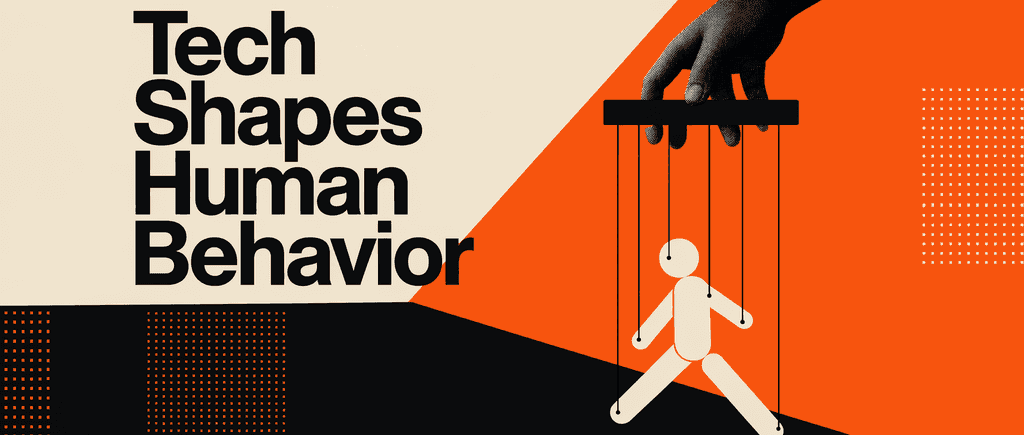
As smart devices proliferate, there's growing concern they may be making humans less capable. While smartphones store thousands of contacts, GPS devices navigate for us, and fitness wearables track our health metrics, these conveniences come with downsides. People can't remember important phone numbers, get lost without digital navigation, and despite unprecedented access to fitness tools, lifestyle diseases remain rampant. The more tasks devices perform for us, the less connected we become to our natural environment and rhythms, allowing certain cognitive and physical abilities to atrophy.
The IoT is accelerating job displacement through automation at an unprecedented pace. According to Brookings Institute, automation threatens 25% of U.S. jobs, particularly affecting those with less education and lower wages. Office administration, production, transportation, and food preparation roles are especially vulnerable, with 70% of these "high-risk" tasks being automatable. The restaurant industry illustrates this transformation. Robots like "Flippy" can now grill burgers and cook fries perfectly for just $3 per hour on a subscription basis, never calling in sick or risking food contamination.
The past decade has seen mounting security and privacy concerns as data breaches become daily occurrences. Identity theft has spiked dramatically, with a 2020 study finding 60% of Americans had been victims. The IoT presents contradictory security implications. While enabling stronger protections like multifactor authentication, it simultaneously creates countless new attack surfaces across diverse hardware, software and protocols. Hackers have already compromised baby monitors, refrigerators, televisions, cars, and medical devices-with potentially life-threatening consequences.
第 8 章
Glimpsing the Hyperconnected Future
By 2030, IoT will transform daily life in remarkable ways. Smart homes will anticipate needs-pajamas with sensory alerts will wake you, showers will automatically adjust to preferred temperatures, and lights will respond to your presence. Kitchen appliances will track food consumption and household robots will prepare meals. Self-driving cars will navigate optimized routes through smart city grids while handling maintenance autonomously.
The IoT has created an invisible computing framework spanning the globe, currently existing as islands of AI and automation. Connecting these islands and enhancing them with other digital technologies will further transform society and human-machine interactions. Physical and digital boundaries will continue blurring as augmented reality transposes virtual data onto the real world and voice assistants take on increasingly sophisticated tasks. David Clark of MIT predicts devices will develop their own "social networks" to share information and make cooperative decisions, with the Internet becoming more pervasive but less visible as it blends into the background.
While we can't precisely predict the future, it's clear the IoT is powerfully connecting and unleashing digital technologies across mobility, robotics, sensors, augmented reality, machine learning, and more. In an optimistic scenario, the IoT will enrich our lives by automating mundane tasks, improving health through preventative monitoring, creating safer vehicles, and enabling more sustainable practices. In a utopian vision, smart machines might continuously learn and self-improve, even developing solutions to problems technology itself creates.
However, a dystopian outcome remains possible-with unmanageable technology, increased cybercrime, surveillance states, and social discord fueled by deepfakes and bots so convincing that 30% of users believe they're human. Most likely, reality will land somewhere between these extremes. The IoT will introduce both frivolous gadgets and life-improving systems, making some tasks easier while complicating others. Like previous technological revolutions, it will eliminate certain jobs while creating new high-skill careers, causing stress for some while exciting others.
The fundamental question isn't whether the Internet of Things will transform our world-it already has. The real question is whether this hyperconnected ecosystem will enhance our humanity or diminish it. Will it bring us closer together or push us further apart? Will it make us more capable or more dependent? As we navigate this technological revolution, these are the questions that should guide our choices about how deeply we integrate these systems into our lives, businesses, and societies. After all, in a world of billions of connected things, the most meaningful connections remain those between people.