第 1 章
The Butterfly Effect of Innovation: How Small Discoveries Transform Our World
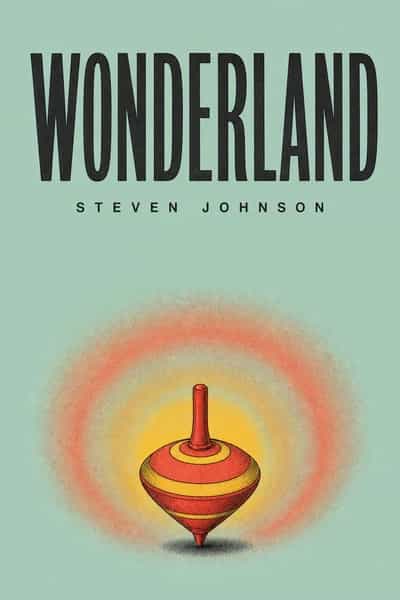
What if I told you that a block of ice from a frozen New England lake would reshape America's political landscape? Or that a swinging church lamp would eventually enable GPS navigation? Steven Johnson's "How We Got to Now" reveals the fascinating, often unexpected connections between seemingly simple innovations and profound societal transformations. This book has become required reading in Silicon Valley innovation hubs, with Bill Gates naming it one of his all-time favorites. Through Johnson's unique "long zoom" perspective-examining both microscopic details and sweeping historical patterns-we discover how ordinary objects like glass, clocks, and lightbulbs have triggered extraordinary changes in how we live, think, and interact with our world.
第 2 章
The Hummingbird Effect: When Innovation Takes Flight
Imagine a robot historian writing about the past millennium. While human historians focus on empires and wars, this robot might consider chess automatons and computational advances as the truly significant events. This thought experiment, proposed by philosopher Manuel De Landa, reveals how technologies fundamentally shape human evolution and thinking in ways we often overlook.
Johnson introduces the concept of the "hummingbird effect" to describe how change in one field triggers transformation in seemingly unrelated domains. Unlike the chaotic butterfly effect, these connections follow intelligible patterns. Consider Gutenberg's printing press: it created unprecedented demand for spectacles, which led to experimentation with lenses, enabling microscope invention, which ultimately revealed cellular biology-transforming our understanding of life itself.
These transformations rarely follow deliberate human planning. The inventors of air conditioning weren't trying to redraw America's political map, yet their technology enabled massive population shifts to the Sun Belt that transformed Congress and the White House. Google's search algorithms weren't designed to undermine newspaper economics, yet that became one of their most significant impacts.
The story of innovation is rarely about lone geniuses having eureka moments. Instead, it emerges from networks of people building upon each other's ideas, often working with similar concepts simultaneously. As Richard Feynman noted about understanding a flower, scientific knowledge doesn't subtract from wonder-it only adds layers of appreciation for the intricate connections between seemingly disparate elements of our world.
第 3 章
Through the Looking Glass: How Transparency Changed Everything
Twenty-six million years ago, intense heat melted Libyan Desert sand into glass, creating a substance caught between solid and liquid states. Ten thousand years later, someone discovered a fragment of this glass, which eventually became a scarab beetle brooch in Tutankhamun's tomb. But glass's truly transformative era began in 1291, when Venetian authorities relocated Turkish glassmakers to the island of Murano due to fire hazards-inadvertently creating history's first innovation hub where concentrated expertise flourished.
The science behind glass's transparency wasn't understood until the twentieth century. Unlike most materials, silicon dioxide has electron energy steps too large for visible light photons to be absorbed, allowing light to pass through. This unique property would transform human perception in ways no one could have imagined.
In twelfth-century monasteries, monks used curved glass pieces to magnify text while reading religious manuscripts. This eventually led to spectacles-roidi da ogli ("disks for the eyes")-with glass disks mounted in frames. These remained rare and expensive until Gutenberg's printing press created unprecedented demand for reading glasses. Suddenly thousands of people realized they were farsighted, triggering one of history's most extraordinary hummingbird effects: within a hundred years, spectacle makers were thriving across Europe, making glasses the first piece of advanced technology ordinary people regularly wore since Neolithic clothing.
The economic incentive created by the surging spectacle market generated a new pool of expertise in manipulating light through glass. These lens hackers sparked an optical revolution when Hans and Zacharias Janssen invented the microscope by aligning two lenses. Within seventy years, Robert Hooke published "Micrographia," revealing previously invisible worlds and naming the cell-life's fundamental building block. The telescope developed even more rapidly, allowing Galileo to observe Jupiter's moons and challenge Earth-centered cosmology just two years after the device's invention.
Glass transformed not just how we see the world, but how we see ourselves. The explosion of self-portraiture in European art after 1400 directly resulted from Murano glassmakers coating crystal-clear glass with tin and mercury amalgam to create mirrors. Before this innovation, people lived without ever seeing accurate representations of their own faces.
Mirrors seemed so magical they were incorporated into sacred rituals-pilgrims would position mirrors to capture reflections of holy relics as physical evidence of their pilgrimages. More profoundly, mirrors revolutionized art when Brunelleschi used one to invent linear perspective. This transformation went beyond art-mirrors reoriented society around the individual rather than collective units. Self-consciousness and introspection flourished, property rights evolved, and literature began probing inner mental lives with unprecedented depth.
Today, glass continues to transform our world through fiber optics-extraordinarily clear glass strands that transmit light encoded with binary data. The entire collection of voice and data traffic between North America and Europe now travels through glass fibers thinner than drinking straws, connecting us in ways that would have seemed magical just decades ago.
第 4 章
The Ice Age: How Artificial Cold Reshaped America
In the early summer of 1834, the ship Madagascar sailed into Rio de Janeiro carrying an improbable cargo: a frozen New England lake. The ship belonged to Frederic Tudor, known as "the Ice King," though for much of his early career he was considered a failure. Tudor's audacious idea emerged after a Caribbean trip where the sweltering heat convinced him that ice-worthless in Boston-would be priceless in tropical climates.
Despite initial ridicule and catastrophic losses, Tudor persevered through financial ruin and even imprisonment. Using sawdust as insulation and double-walled icehouses for storage, he eventually built a global empire shipping frozen New England water as far as India. By his death in 1864, Tudor had transformed his seemingly preposterous scheme into a $200 million fortune (in today's dollars), creating a unique trade that reversed traditional commerce patterns.
Tudor's success inspired countless imitators, with over 100,000 tons of Boston ice shipped globally by 1850. Ice transformed from curiosity to necessity, with two-thirds of New York homes receiving daily deliveries by 1860. The dependence grew so severe that warm winters would trigger newspaper warnings of "ice famines."
Ice revolutionized American geography, particularly transforming Chicago. While the city initially grew as a transportation hub for wheat, meat couldn't travel without spoiling. In 1868, pork magnate Benjamin Hutchinson built ice-cooled packing plants, allowing year-round meat processing. By 1878, Gustavus Swift's refrigerated railcars-ingeniously designed with ice bins above the meat-enabled nationwide beef distribution. This technology transformed slaughtering from local trade to global industry, turning the American plains from grasslands to industrial feedlots-"the most powerful environmental force transforming the American landscape since the Ice Age glaciers."
Despite the nineteenth century's industrial marvels, cold technology remained primitive, still harvesting frozen lake water. The ice trade's commercial success signaled opportunity, but innovation came not from profit-seeking entrepreneurs but from humanitarian need. In 1842 Florida, Dr. John Gorrie, desperate to cool his malaria patients, invented a compression-based refrigeration machine. Despite patenting his working invention, Gorrie died penniless after Tudor's smear campaign claimed his ice contained bacteria.
In 1916, naturalist Clarence Birdseye moved his family to frigid Labrador, where he noticed that fish freezing instantly in sub-zero air retained remarkable freshness. Through careful observation, Birdseye discovered that rapid "flash freezing" created smaller ice crystals that caused less cellular damage. By 1929, his General Seafood company was acquired for millions, introducing more nutritious options to American diets by extending food's reach across time and space.
By the 1950s, artificial cold had transformed American life, but the most revolutionary cold device was air conditioning. Willis Carrier accidentally invented it in 1902 while solving a humidity problem for a Brooklyn printing company. His breakthrough moment came in 1925 when he installed experimental air conditioning at Paramount's Rivoli theater in Manhattan, causing audience members to stop fanning themselves-prompting Paramount chief Adolph Zukor to declare, "the people are going to like it."
Air conditioning reshaped human geography, transforming America's political landscape as the Sun Belt grew exponentially. Cities like Tucson and Houston experienced population explosions, while Florida grew from one million residents in the 1920s to ten million within fifty years. This demographic shift altered the electoral map, with Sun Belt states gaining electoral votes while Northeastern states lost them. Beyond America, artificial cold has enabled the explosive growth of tropical megacities worldwide, with places like Chennai, Bangkok, Lagos and Dubai expected to gain a billion new residents by 2025-perhaps the largest mass migration in human history, triggered by a home appliance.
第 5 章
The Sound Revolution: From Cave Echoes to Digital Audio
The human fascination with sound began long before modern recording technology. In limestone caves near Paris, thirty-thousand-year-old paintings were discovered consistently placed at the most acoustically interesting parts of the cave complex-locations with profound reverberation. This suggests Neanderthals gathered in these sonically rich spaces for shamanic rituals, using natural acoustics to amplify their voices in a primitive form of sound engineering.
While vision-enhancing technologies like spectacles and microscopes developed primarily between the Renaissance and Enlightenment, sound technologies wouldn't fully emerge until the late nineteenth century. For millennia, the concept of recording sound remained unimaginable-sound was considered ethereal, not tangible.
In the 1850s, Parisian printer Edouard-Leon Scott de Martinville created the "phonautograph"-the first sound recording device. His invention funneled sound through a horn to vibrate a membrane, which moved a stylus to etch sound waves onto darkened paper. Remarkably, Scott's breakthrough came two decades before Edison's phonograph, but with one critical limitation: he never conceived of playback capability, seeing his invention purely as a visual record of sound.
Sound technology pioneers consistently misunderstood how their inventions would be used. Scott imagined people would learn to "read" sound waves visually like stenography. Though humans never developed this ability, in 2008, researchers scanned Scott's 1860 recordings and used computers to convert them back into audio, revealing his voice singing "Au clair de la lune" from beyond the grave. Fifteen years after Scott's patent, Alexander Graham Bell experimented with the phonautograph, incorporating a human ear from a cadaver, which led to his telephone invention. Yet Bell imagined telephones primarily for transmitting live music, while Edison thought his phonograph would be used for audio letters. Both were exactly wrong-people used phonographs for music and telephones for conversation.
During WWII, Bell Labs collaborated with mathematician Alan Turing on SIGSALY, a secure communication system that converted speech into digital code by "sampling" sound waves 20,000 times per second and encoding them in binary. This July 1943 breakthrough marked the birth of the digital age-the first time human experience was digitized. Beyond military security, SIGSALY's most revolutionary feature was that digital copies could be perfect copies, laying groundwork for future digital media transformations.
Radio technology, another Bell Labs innovation, quickly evolved from a two-way medium used by hobbyists into a broadcast model delivering packaged entertainment to home receivers. This transformation unleashed an unexpected cultural revolution: jazz, previously confined to New Orleans and African-American neighborhoods, suddenly became a national phenomenon. Musicians like Duke Ellington and Louis Armstrong became household names, with Armstrong becoming the first African-American to host a national radio show. This collision of jazz and radio created the first surge in a pattern that would repeat with rock 'n' roll and hip-hop: underground sounds finding mass audiences and creating overnight celebrities.
Vacuum tubes revolutionized public speech by enabling amplification that freed us from dependence on natural acoustics. For the first time in history, a single voice could address hundreds of thousands of people simultaneously, creating an entirely new kind of political event: the mass rally centered on an individual speaker. Beyond politics, tube amplification enabled massive musical gatherings and introduced deliberate noise to modern music. When bassist Grady Martin's malfunctioning amplifier created a "fuzz tone" during a Marty Robbins recording in 1960, it launched an aesthetic revolution. By 1965, Keith Richards was saturating "Satisfaction" with deliberate distortion, birthing the signature sound of rock music.
From Neanderthals chanting in caves to modern broadcasting, sound technology had always focused on extending our voices and ears. But a century ago, humans discovered sound could help us see. After the Titanic disaster, inventor Reginald Fessenden developed the first functional sonar device. Though initially rejected by navies during WWI, sonar eventually revolutionized maritime safety and evolved into medical ultrasound, saving millions of mothers and babies through improved prenatal care.
第 6 章
The Clean Revolution: How Water Changed Everything
In December 1856, Chicago engineer Ellis Chesbrough traveled to Europe to study sewers. Chicago desperately needed waste removal expertise as it rapidly transformed from hamlet to metropolis. Unlike other growing cities, Chicago suffered from one crippling geographical feature: it was unforgivingly flat. This flatness prevented proper drainage, as gravity-based sewer systems required some grade. As Chicago tripled in size during the 1850s, its sanitation crisis worsened dramatically, with gutters "running with filth at which the very swine turn up their noses in supreme disgust."
While underground trains and high-speed internet cables are impressive, the most essential yet overlooked urban achievement is the miracle of clean drinking water from a tap. Just 150 years ago, urban drinking water was like playing Russian roulette. The real killers of Victorian cities weren't criminals like Jack the Ripper but waterborne diseases. This was the fatal flaw in Chesbrough's Chicago sewer plan-his pipes drained into the Chicago River, which emptied into Lake Michigan, the city's drinking water source.
The medical establishment's initial reaction to germ theory seems incomprehensible today. Hungarian physician Ignaz Semmelweis was mocked in 1847 for suggesting doctors wash their hands before attending patients. His evidence came from Vienna's General Hospital, where he noticed mothers in the physician-attended ward died of puerperal fever at much higher rates than those attended by midwives. Despite proving that applying chlorinated lime as disinfectant dramatically reduced deaths, Semmelweis was derided and eventually lost his job, dying in an asylum.
This reveals a profound conceptual gap between us and our 19th-century ancestors. Bathing itself was considered dangerous throughout Europe from the Middle Ages until nearly the 20th century. Elizabeth I bathed monthly (considered excessive), while Louis XIII wasn't bathed until age seven. Only in the early 19th century did attitudes shift, with reformers like Charles Dickens advocating daily showers and public baths appearing in urban slums.
John Leal's daring chlorination experiment in Jersey City was vindicated in court, with the special master ruling that his device effectively rendered water "pure and wholesome" by removing dangerous germs. Harvard professors David Cutler and Grant Miller later quantified chlorination's impact between 1900-1930, finding it reduced total mortality by 43% and infant mortality by a staggering 74%. This transformation meant the excruciating experience of losing a child-once a routine fact of existence-became a rarity in the developed world.
The clean revolution that began with public health infrastructure has expanded into an $80 billion industry focused on personal hygiene. While this revolution dramatically reduced infant mortality and made surgery safer, some research suggests our increasingly sterile environments may contribute to rising asthma and allergies. The clean revolution also enabled unprecedented urban growth. Before 1800, no city had successfully sustained more than two million people, but solving water and waste problems allowed cities like London and New York to reach ten million with lower disease rates than their Victorian predecessors.
第 7 章
Time Discipline: From Sundials to Atomic Clocks
In October 1967, the General Conference on Weights and Measures made a revolutionary decision to change the very definition of time. For most of human history, time had been calculated by tracking celestial rhythms-the sun's daily cycle, the moon's monthly phases, and seasonal patterns. But as measurement tools became more precise, scientists discovered flaws in this celestial metronome, requiring a shift from the largest entity in our solar system to one of the smallest.
In 1583, nineteen-year-old Galileo Galilei was transfixed by a swaying altar lamp in Pisa's Duomo. He discovered the pendulum's "marvelous property" of making all vibrations "in equal times"-a revolutionary concept when mechanical clocks lost twenty minutes daily. In Galileo's era, the concept of second-accurate timekeeping seemed preposterous and unnecessary. With no buses to catch or meetings to join, knowing roughly what hour it was sufficed. But global navigation created demand for precision-determining longitude at sea required comparing two clocks, one set to home port time and one to current location.
Beneath the thunderous machinery of the industrial revolution ticked the equally transformative pendulum clock. Without accurate timekeeping, industrialization might never have happened. Pre-industrial time was measured by tasks rather than abstract units-the time to milk a cow or nail soles to shoes. Workers were paid by piece rather than hour, with comically unregulated schedules. Industrialists like Josiah Wedgwood implemented "clocking in" to synchronize hundreds of workers with mechanical production. Time became currency to be "spent" rather than "passed."
While timepieces became increasingly accurate, they remained luxury items until Aaron Dennison revolutionized watchmaking by applying standardized manufacturing techniques. By 1878, watch prices had plummeted from $40 to $3.50, making them widely accessible. This democratization of timekeeping revealed a new problem: thousands of distinct local times existed across America. Each town set its clocks to the sun's position, creating a patchwork of times that could vary by minutes between neighboring towns.
The measurement of time doesn't belong to a single scientific discipline-each advancement involves handing off from one field to another. From sundials to pendulums (astronomy to physics), the pattern remains consistent: scientists discover natural phenomena displaying "equal time," which inventors then use to synchronize devices. In the 1880s, the Curie brothers discovered piezoelectricity-quartz crystals vibrating at remarkably stable frequencies when subjected to alternating current. By 1928, W.A. Marrison built the first quartz clock at Bell Labs, achieving accuracy within a thousandth of a second per day.
Finding consistent oscillators is the essence of timekeeping. The atomic age revealed the most consistent oscillator yet: electrons orbiting within cesium atoms, which move with astonishing regularity unaffected by earthly disruptions. The first atomic clocks built in the mid-1950s measured nanoseconds-a thousand times more accurate than quartz microseconds. This leap forward led the International Conference of Weights and Measures in 1967 to redefine time itself: a second became "9,192,631,770 periods of radiation" in a cesium atom.
Modern timekeeping combines multiple disciplines-atomic clocks use quartz mechanisms corrected by cesium atoms, while still being periodically adjusted to match Earth's chaotic orbit. This nanosecond precision enables global air travel, telephone networks, financial markets, and GPS navigation. When your smartphone determines location, it triangulates signals from atomic clocks in orbiting satellites, comparing their timestamps to calculate your position.
We live in a paradoxical time relationship: our attention spans shrink as we surrender to the abstract grid of ever-more-precise atomic clocks, yet simultaneously we can imagine and record histories spanning thousands or millions of years. Our time horizons have expanded dramatically in both directions-from microseconds to millennia. The question remains whether we'll ultimately become high-frequency traders focused on the immediate, or good ancestors thinking in the long now.
第 8 章
Illuminating Progress: From Whale Oil to Lasers
If alien civilizations observed Earth across the galaxies, the most dramatic planetary change in 65 million years wouldn't be our opposable thumbs or written language-it would be the sudden glow of artificial light spreading across the nighttime planet starting just a century ago. Today's night sky shines 6,000 times brighter than 150 years ago.
Around 1712, a Nantucket ship captain named Hussey encountered a sperm whale in the North Atlantic. When locals dissected the massive creature, they discovered its head contained a white, oily substance called "spermaceti" that produced superior candles with stronger, whiter light without smoke. These became the most prized artificial light in America and Europe, with even George Washington spending the equivalent of $15,000 annually on them. The lucrative business spawned the "Spermaceti Trust" monopoly and built beautiful seaside towns like Nantucket and Edgartown.
Fossil fuels' first commercial use centered on light. The new petroleum lamps shone twenty times brighter than candles, sparking an explosion in publishing as evening hours became suitable for reading. Yale historian William Nordhaus tracked this evolution by measuring the cost of producing one thousand "lumen-hours" of light across centuries. In 1800, an hour's wages bought ten minutes of artificial light; by 1880 with kerosene, it bought three hours; today, it buys three hundred days of illumination-a four-hundred-fold increase in efficiency.
The electric lightbulb, contrary to popular mythology, wasn't the product of a single genius inventor but emerged through networked innovation over decades. While Thomas Edison is celebrated as its creator, at least a dozen inventors had already developed versions using carbon filaments in vacuum chambers before him. Edison's true genius lay in sweating the details-particularly finding the perfect bamboo filament through global expeditions-and assembling a diverse team of "muckers" with complementary skills. His Menlo Park operation pioneered the cross-disciplinary R&D lab model and equity compensation that would define 20th century innovation.
In 1968, sixteen members of Yale's School of Art and Architecture, led by Robert Venturi and Denise Scott Brown, ventured to Las Vegas to study a new urban phenomenon-the neon light. When British immigrant Tom Young brought neon to Las Vegas through his Young Electric Sign Company (YESCO), he created what Tom Wolfe would later describe as "the only city in the world whose skyline is made not of buildings... but signs"-towering, revolving, oscillating structures that defied conventional artistic vocabulary. The Vegas skyline's neon extravaganza drew Brown and Venturi to study its new visual language that challenged modernist design principles. Their resulting book, Learning from Las Vegas, became foundational to postmodern architecture.
While early science fiction fans might be disappointed to see lasers scanning chewing gum packages, they would appreciate the National Ignition Facility (NIF) in Northern California. Here, scientists have built the world's largest laser system, using 192 powerful laser beams to create nuclear fusion-essentially recreating the sun's core processes on Earth. In 2013, NIF achieved net positive energy during several shots, creating more energy than was required to initiate fusion-a remarkable advancement from whale oil lamps just two centuries ago.
第 9 章
Boundary Crossers: The Secret to Transformative Innovation
On July 8, 1835, Ada Byron married William King in a small London ceremony, becoming part of nobility while carrying her famous father Lord Byron's legacy. By 1840, they had three children and King became an earl, seemingly fulfilling Victorian expectations for women. Yet Ada's brilliant mathematical mind pulled her toward unconventional pursuits. She found her path by collaborating with Charles Babbage on his Analytical Engine, writing what are now considered the first computer programs and envisioning uses for computing that Babbage himself hadn't imagined, including the creation of music and art.
Ada Lovelace's visionary work stands as a remarkable exception to the pattern of simultaneous invention that characterizes most innovation. While most breakthroughs emerge when multiple inventors work within the "adjacent possible" of their time, Lovelace and Babbage were essentially time travelers, imagining programmable computers a century before their realization.
Beyond mere "genius," such time-traveling innovators typically work at disciplinary intersections or margins. Lovelace's unique position between mathematics and Romantic poetry allowed her to envision computational possibilities beyond calculation. These boundary-crossers remind us that while working within established disciplines enables incremental progress, true leaps often require crossing borders-whether geographic like Tudor's ice trade or conceptual like Scott's sound recording.
The most innovative minds, like Darwin with his diverse interests, benefit from intellectual "intercrossing," finding inspiration at the edges of conventional thought. Garages have become emblematic innovation spaces precisely because they exist outside traditional workspaces-not defined by a single field but by the inhabitants' eclectic interests. As Steve Jobs demonstrated, creative breakthroughs often come from stumbling into new experiences and maintaining the "lightness of being a beginner." Yet there's irony in Jobs's advice to "follow your heart"-the history of innovation shows that challenging your intuitions and exploring uncharted terrain is more valuable than remaining comfortable in your identity. To truly perceive hidden things, you must get a little lost.