In "The Avoidable War," former Australian PM Kevin Rudd delivers the definitive roadmap for preventing US-China catastrophe. Praised as the best single-volume analysis on China relations, this 2022 geopolitical must-read reveals how "managed strategic competition" could save millions of lives.
Kevin Michael Rudd, author of The Avoidable War, is an Australian diplomat, former Prime Minister, and leading authority on geopolitical strategy and US-China relations. Serving as Australia’s 26th Prime Minister (2007–2010, 2013) and current Ambassador to the United States, Rudd draws on decades of experience in international diplomacy, including his fluency in Mandarin and deep expertise in Chinese politics.
His book, a sharp analysis of global power dynamics, reflects his career-long focus on conflict prevention and multilateral cooperation, informed by his academic background in Chinese studies and crisis leadership during the 2007–2008 financial crisis.
Rudd’s insights are regularly featured in The Financial Times, The New York Times, and major media networks like the BBC and CNN. He is also the author of On Xi Jinping: How Xi’s Marxist Nationalism is Changing China and the World, which expands on his analysis of contemporary Chinese governance. A Senior Fellow at Harvard Kennedy School and President Emeritus of the Asia Society Policy Institute, Rudd combines scholarly rigor with real-world policymaking experience. The Avoidable War has been praised for its actionable frameworks to navigate rising global tensions, cementing Rudd’s reputation as a preeminent voice in 21st-century geopolitics.
The Avoidable War analyzes escalating tensions between the U.S. and China, arguing that conflict is not inevitable despite deepening distrust. Kevin Rudd, a former Australian prime minister, explores Xi Jinping’s worldview, identifies 10 potential flashpoints (like Taiwan), and proposes a framework of “managed strategic competition” to prevent war. The book combines historical analysis, geopolitical forecasting, and policy recommendations aimed at fostering competitive coexistence.
This book is essential for policymakers, students of international relations, and readers interested in U.S.-China relations. It offers insights for professionals in defense, diplomacy, or global business seeking to understand systemic risks and strategies for de-escalation. Rudd’s blend of academic rigor and practical diplomacy makes it accessible to both experts and informed general audiences.
Rudd’s central concept advocates for structured rivalry where the U.S. and China compete economically and ideologically without military conflict. It involves mutual deterrence, diplomatic channels to manage crises, and agreements to avoid unintended escalation. Critics note the idea lacks detailed implementation steps but praise its focus on coexistence over confrontation.
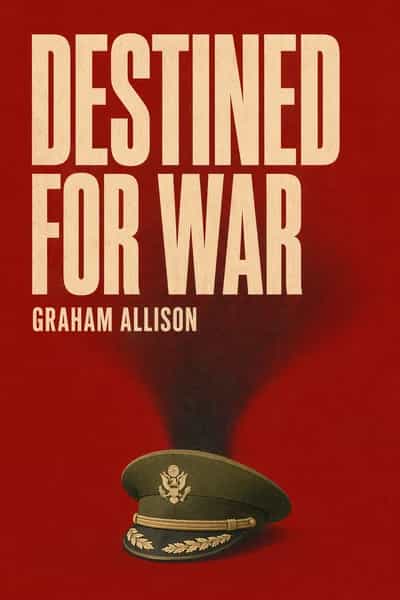
Unlike Allison’s “Thucydides Trap” framing, which emphasizes historical inevitability, Rudd argues war is preventable through deliberate policy choices. While both analyze U.S.-China rivalry, Rudd prioritizes actionable solutions like transparency measures and crisis hotlines, whereas Allison focuses on historical precedents.
Some experts argue Rudd’s “managed competition” framework is underdeveloped, lacking specifics on enforcement or balancing trade disputes. Others note his analysis of U.S. policymaking oversimplifies partisan dynamics. However, the book is widely praised for its nuanced exploration of Xi’s mindset and accessible synthesis of complex issues.
Rudd identifies 10 “concentric circles” shaping Xi’s ideology, including CCP legitimacy, nationalism, and the belief that the U.S. seeks to block China’s rise. He emphasizes Xi’s focus on total control, historical grievances, and China’s “rightful” global role, arguing these drivers make compromise difficult but not impossible.
The book details 10 scenarios, ranked by likelihood:
Rudd stresses that none are predestined but require proactive mitigation.
With U.S.-China tensions persisting over Taiwan, trade, and AI dominance, Rudd’s warnings about unmanaged rivalry remain urgent. The book provides a baseline for evaluating current policies, offering a structured lens to assess diplomatic developments or military posturing.
Rudd frames economic rivalry (e.g., semiconductor bans, Belt and Road Initiative) as inevitable but manageable. He advocates for “guardrails” to prevent disputes from spilling into military domains, stressing the need for bilateral crisis communication frameworks.
Taiwan is identified as the most likely trigger for conflict, with Rudd outlining scenarios ranging from blockade to invasion. He argues both sides must clarify redlines—for example, defining “strategic ambiguity” thresholds—to avoid misinterpretations during a crisis.
通过作者的声音感受这本书
将知识转化为引人入胜、富含实例的见解
快速捕捉核心观点,高效学习
以有趣互动的方式享受这本书
Xi's understanding of America exceeds any American leader's understanding of China.
Washington no longer believes in China's peaceful rise.
The deepening chasm of distrust has grown over years, with each side viewing the other's diplomatic language as fiction.
The challenge for both nations lies in managing this rivalry without triggering the very conflict that historical precedent suggests is likely.
将《The Avoidable War》的核心观点拆解为易于理解的要点,了解创新团队如何创造、协作和成长。
通过生动的故事体验《The Avoidable War》,将创新经验转化为令人难忘且可应用的精彩时刻。
随时提问,选择你的学习方式,共创真正适合你的洞察。

"Instead of endless scrolling, I just hit play on BeFreed. It saves me so much time."
"I never knew where to start with nonfiction—BeFreed’s book lists turned into podcasts gave me a clear path."
"Perfect balance between learning and entertainment. Finished ‘Thinking, Fast and Slow’ on my commute this week."
"Crazy how much I learned while walking the dog. BeFreed = small habits → big gains."
"Reading used to feel like a chore. Now it’s just part of my lifestyle."
"Feels effortless compared to reading. I’ve finished 6 books this month already."
"BeFreed turned my guilty doomscrolling into something that feels productive and inspiring."
"BeFreed turned my commute into learning time. 20-min podcasts are perfect for finishing books I never had time for."
"BeFreed replaced my podcast queue. Imagine Spotify for books — that’s it. 🙌"
"It is great for me to learn something from the book without reading it."
"The themed book list podcasts help me connect ideas across authors—like a guided audio journey."
"Makes me feel smarter every time before going to work"

免费获取《The Avoidable War》摘要的 PDF 或 EPUB 版本。可打印或随时离线阅读。
The world is entering what Kevin Rudd calls "the decade of living dangerously" - a period when U.S.-China tensions have escalated to their highest point in generations. This isn't just another foreign policy challenge; it's potentially the defining geopolitical relationship of our century. What makes Rudd's analysis so compelling is his rare combination of insider access and cultural fluency. As a Mandarin-speaking former Prime Minister who has met personally with Xi Jinping, Rudd offers insights few Western observers can match. The stakes couldn't be higher: these two superpowers possess the world's largest economies and most powerful militaries, yet they increasingly view each other through lenses of suspicion and strategic rivalry. The fundamental question isn't whether competition will continue - it's whether that competition can be managed without spiraling into catastrophic conflict.
Xi Jinping has abandoned China's decades-long approach of "hiding strength and biding time" for bold assertions that "time and momentum are on our side" - reflecting his confidence in China's ascendancy and determination to restore its global position. Through his anti-corruption campaign, Xi has eliminated rivals while consolidating unprecedented personal power and tightening party control over business, technology, and daily life. His message to tech titans like Jack Ma was clear: no one stands above the Communist Party. Concerning is the information bubble surrounding Xi. Despite his daughter attending Harvard and his 1980s visits to America, Xi neither speaks nor reads English. His understanding of America comes filtered through translations and briefings that skew negative, compounded by officials' fear of contradicting him - creating dangerous potential for miscalculation during crises when clear understanding of an adversary's intentions is crucial.
Have you ever wondered why great powers often end up in devastating wars despite wanting to avoid conflict? The ancient Greek historian Thucydides explained: "It was the rise of Athens and the fear that this instilled in Sparta that made war inevitable." This pattern - a rising power threatening to displace a ruling one - has resulted in war in 12 of 16 such cases over the past 500 years. The structural stresses of this "Thucydides Trap" are evident in today's U.S.-China relationship. China now has the world's largest navy by ship count and multiple aircraft carriers. Its "String of Pearls" ports enable global power projection, while advances in space, cyber capabilities, and AI have convinced Washington that Beijing harbors global ambitions. What makes this rivalry particularly dangerous is the profound mutual distrust between the nations. Americans struggle to understand China's opaque decision-making, while Beijing dismisses Washington's diplomatic language as fiction. Unlike the Cold War's clear division, today's superpowers remain economically integrated, creating "weaponized interdependence" where economic ties become strategic competition tools.
Xi Jinping's strategic thinking comprises ten concentric circles expanding outward. At the core is maintaining Communist Party control, with Xi positioning himself alongside Mao. The second circle focuses on territorial integrity, especially Taiwan. The third prioritizes economic prosperity for stability, while the fourth addresses environmental challenges. The fifth circle involves modernizing the People's Liberation Army into a technologically advanced force capable of projecting power beyond China's borders. The sixth manages relationships with fourteen neighboring states, while the seventh aims to secure China's maritime periphery by undermining confidence in American military effectiveness. The eighth circle extends influence across Eurasia through the Belt and Road Initiative, the ninth builds ties throughout the developing world to elevate China's economic relationships above American ones. The final circle involves reshaping international rules and norms - challenging American leadership by changing existing institutions from within while creating new ones outside established frameworks.
Xi Jinping's primary concern is ensuring the Communist Party's permanent rule with himself at the helm. Haunted by the Soviet Communist Party's 1991 collapse, Xi has reversed power flows to state bureaucracy, placing the party at the center of all decision-making while reasserting Marxist-Leninist ideology. The cornerstone of Xi's vision is the "China Dream" - restoring China to its central global role through "the great rejuvenation of the Chinese nation." This dream has specific milestones: becoming a "moderately prosperous society" by 2021 (already achieved) and a fully advanced economy by 2049, the PRC's centenary. A fundamental tension exists between Xi's economic objectives and his control agenda. This manifests in increasing state intervention in private businesses, with party secretaries embedded in firms and debates over state equity in private companies. After Jack Ma criticized financial regulators, authorities suspended Ant Group's IPO, investigated Alibaba, and imposed record fines - exemplifying this tension. This subordination of even China's most successful enterprises to party control risks business confidence, investment, and capital flight. Yet Xi appears willing to accept slower growth for tighter control, believing only the party can deliver the stability necessary for China's continued rise.
Many Americans underestimate Taiwan's importance to Beijing. While peripheral in Washington debates, Taiwan represents unfinished business from China's civil war and a cornerstone of Xi's "national rejuvenation" campaign. Beijing views America as the primary obstacle to completing this "sacred historical mission." The situation has grown increasingly volatile since Taiwan's democratization. Beijing's strategy of economic absorption failed when Hong Kong's autonomy was crushed in 2019, destroying Taiwanese support for the "one country, two systems" model. Recent polls show over 80% of Taiwanese reject this framework, with younger generations increasingly identifying as Taiwanese rather than Chinese. Xi has concluded the gradualist approach merely gave independence forces time to develop nationalist sentiment. He has accelerated military modernization specifically for Taiwan scenarios, building amphibious assault capabilities, missile systems, and cyber warfare tools. The PLA now regularly conducts exercises simulating Taiwan Strait blockades. Xi appears to be working to secure Taiwan during his political lifetime - possibly by the mid-2030s. Military analysts suggest China's capabilities for a Taiwan invasion will peak around 2027-2035, creating a dangerous window that aligns with broader PLA modernization goals.
Rudd proposes "managed strategic competition" as an alternative to capitulation or conflict. This approach requires understanding each other's strategic redlines, channeling rivalry into non-violent competition, and creating space for cooperation on mutual interests like climate change. The U.S. and China need crisis prevention procedures similar to those established between America and the Soviet Union after the Cuban Missile Crisis. Confidence-building measures could include abstaining from cyberattacks on critical infrastructure, reducing provocative military exercises near Taiwan, and respecting freedom of navigation in disputed waters. Few have considered a U.S.-China conflict's true cost - hundreds of thousands of casualties, global economic depression, and potential escalation to weapons of mass destruction. Modern economic interconnectedness makes containment particularly difficult. This approach doesn't rely on trust but on minimum rules with verification mechanisms like military hotlines, cyber incident protocols, and crisis communication channels. Strategic stability might eventually enable cooperation on common challenges. The question isn't whether competition can be avoided, but whether it can be managed without war. The choice between managed competition with clear rules or unmanaged rivalry with no guardrails may determine the 21st century's course.