第 4 章
The Advocate for Those Who Cannot Speak
Aaron Pitkin devoted his life to improving chicken welfare based on utilitarian calculations: with over eight billion chickens killed yearly in America, he could alleviate more suffering through this cause than any other. He wasn't motivated by sentimentality but by the sheer scale of factory farm suffering, where chickens endure chronic pain in their brief six-week lives. He considered them "more brutally trodden on than even the most oppressed people."
Aaron decided in high school that eating meat was wrong, but took six months to become vegetarian, guiltily eating bacon cheeseburgers until finally refusing to face a Christmas dinner with whole turkey and ham. Later, after visiting Farm Sanctuary, he learned about suffering in egg and dairy production and became vegan. In his youth, he was rebellious-into death metal, had long hair, kept a six-foot python named Snaky that slept in his bed, and frequently challenged authority.
In college, Aaron committed to social justice, initially planning to become a doctor in developing countries. Reading Peter Singer's "Famine, Affluence, and Morality" transformed his worldview-he became extremely frugal, documenting every expense, dumpster-diving for food, and avoiding alcohol. A turning point came during a college exam when he stopped to save worms from being crushed on rainy paths, making him late. This experience shifted him from rigid principles to consequentialist ethics-what mattered was reducing suffering, not moral purity.
Aaron's relationship with his girlfriend Jen became strained after moving in together-Aaron's extreme frugality created conflict. While Aaron reduced his spending to just $9,000 annually, Jen felt guilty about occasional small purchases despite her traumatic background of family abuse and homelessness. When Jen discovered Aaron had a trust fund and asked him to pay off her credit card debt, he refused, arguing the money was needed by starving people and animals in cages. He viewed his inheritance as "blood money" from his grandfathers' businesses that could only be redeemed by alleviating extreme suffering.
After separating from Jen, Aaron became obsessed with time efficiency rather than just money. He created flowcharts and lists to maximize productivity, positioned his computer beside his bed for immediate access, experimented with minimal sleep, and worked while walking on a treadmill. He avoided socializing or reflection, considering guaranteed work output more valuable than the uncertain benefits of friendship or contemplation.
Aaron's father Mike deteriorated in an assisted-living facility, eventually becoming unable to straighten his legs from lying in fetal position. After two failed attempts to disconnect his ventilator and twenty agonizing hours watching his father die without adequate pain relief, Aaron realized humans could suffer as helplessly as animals-trapped, immobile, without language to express their torment.
Aaron's work at the animal-rights organization began achieving significant victories for chickens through both legislative and corporate channels. Major companies committed to humanely raised poultry, California passed laws mandating more space for egg-laying hens, and American meat consumption began declining yearly. With his professional success, Aaron felt his sense of guilt and debt easing. He found himself unexpectedly happy with his work, relationship with Leana (who shared his frugality and ethical principles), and purpose.
第 5 章
The Moral Calculus of Obligation
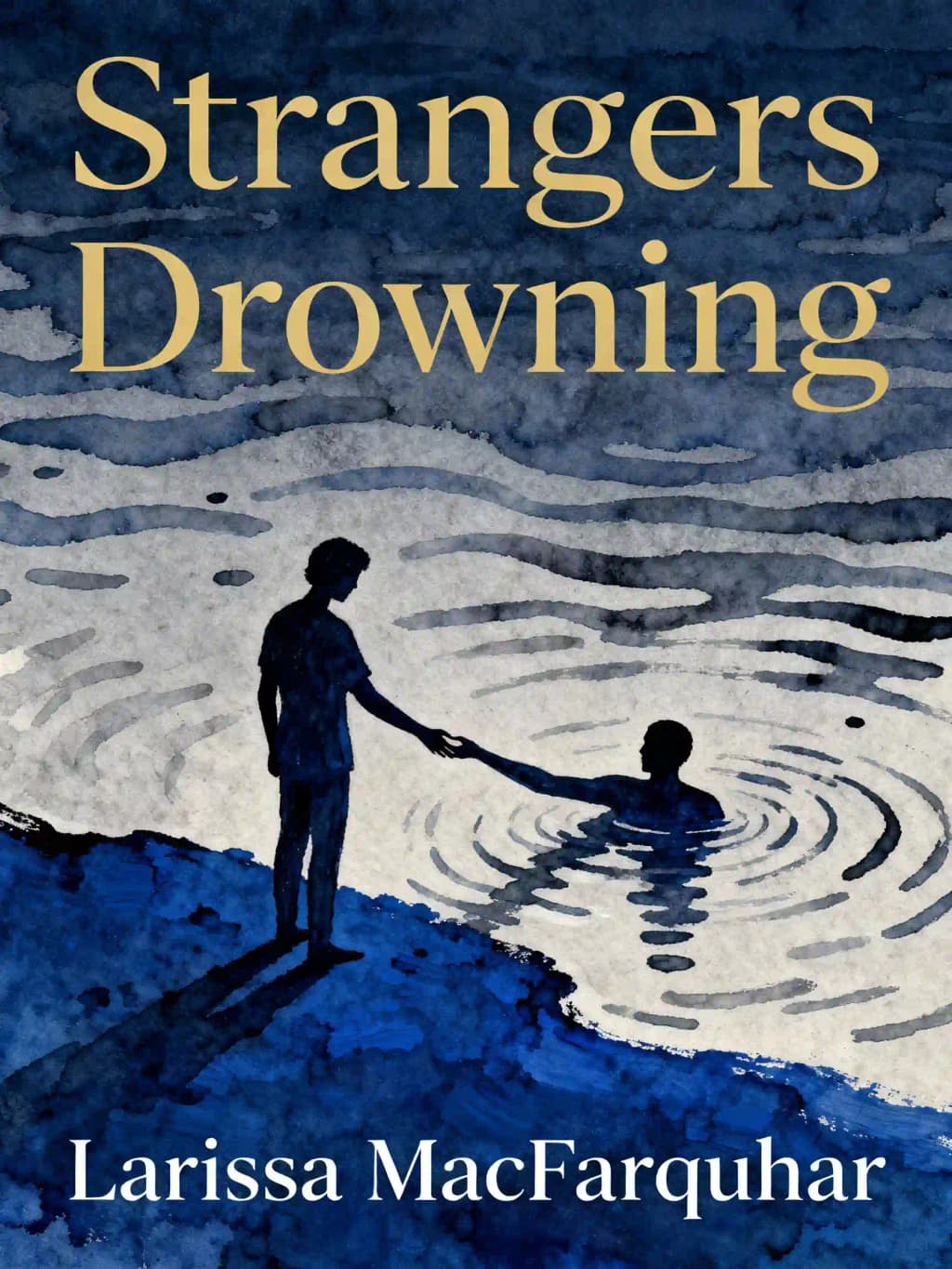
How much do we owe to others? This question lies at the heart of the do-gooder's dilemma. In response to the 1971 East Pakistan genocide and famine, philosopher Peter Singer wrote his famous essay arguing that spending money on middle-class luxuries rather than famine relief was morally depraved. His "shallow pond" argument compared ignoring distant suffering to walking past a drowning child to avoid muddying one's clothes. This argument profoundly affected people like Aaron Pitkin, providing moral clarity despite its demanding implications.
Singer's argument blurred the distinction between charity and rescue. Most people consider rescue (helping someone directly in front of you) a duty, while seeing charity (helping unseen distant people) as admirable but optional. To most humans, physical and emotional distance represents a profound moral fact that affects their sense of obligation, but Singer argued these differences carry no moral weight.
As a utilitarian, Singer believes moral actions should maximize overall well-being rather than follow fixed rules. This approach radically demands impartiality between family and strangers and imposes potentially limitless obligations. Unlike rules-based morality where one can fulfill specific duties and then be free, utilitarianism requires constant optimization. William Godwin, perhaps the most extreme utilitarian, declared that even spending a shilling on personal desires made one "a delinquent"-a position so universally repellent that utilitarianism retreated toward moderation.
To non-utilitarians, extreme moral demands seem evil because they violate duty to oneself. Bernard Williams argued that treating oneself as merely a tool for the general good resembles harvesting organs from kidnapped victims. He rejected the notion that morality always trumps other concerns, illustrating with his famous drowning scenario: a man who pauses to consider whether saving his wife rather than strangers is "permissible" has "one thought too many." Without selfish partiality to loved ones and places, we lose what gives human life meaning.
Is there a limit to morality's demands? Equating basic duties like truth-telling with extreme self-sacrifice threatens to destroy the concept of duty itself. If every good act becomes required rather than praiseworthy, virtue disappears, leaving only duty and vice. While Singer's conclusions seem extreme today, the idea that nearly everyone falls morally short was once commonplace. Though the do-gooder's obligation to care for strangers seems unnatural, sacrifice itself is a human instinct. There's something sublime about giving to unknown strangers-if adopting "the point of view of the universe" is unnatural, so too is imagining God's perspective.
第 6 章
The Woman Who Gave Half Her Income
Julia Wise had always felt morally obligated to value strangers equally to herself, a conviction that seemed obvious to her but strange to everyone else. Though she could argue rationally for her beliefs, they weren't merely intellectual-they were intrinsic to her character since childhood. She became a social worker but realized her greatest impact came through donating most of her income to effective charities helping those in extreme poverty. Despite loving material comforts, she saw giving not as virtuous but as simple duty.
Julia's moral principles created relationship challenges. After college, when her fiance Jeff bought her a candy apple, she broke down crying later that night, realizing the money could have bought life-saving bed nets. Jeff, who had begun considering charitable giving himself, also cried, wondering how they could build a life together with Julia seeing "malarial children everywhere." This crisis led them to create a financial system separating their money-Jeff would give 50% of his income while Julia gave 100% of hers, with strict personal allowances that couldn't be donated.
Julia and Jeff meticulously tracked every purchase in spreadsheets, adjusting their system over time. Their giving fluctuated with circumstances-donating $28,309 in 2009 while spending $15,688 on themselves, giving $36,056 in 2010, nothing in 2011 while Julia attended social work school, and $49,933 in 2012 after moving in with Jeff's parents. Eventually they merged finances, committing to donate 50% of their joint pre-tax income, even after buying a house. By 2014, they were donating $127,556.
After establishing their financial system, Julia and Jeff researched organizations to find the most effective charity-one that relieved the most suffering per dollar. Initially settling on Oxfam for its local workers and long-term development focus, they later discovered GiveWell, which evaluated charities based on effectiveness rather than overhead costs. They favored groups like the Against Malaria Foundation and Schistosomiasis Control Initiative, rejecting the notion they should help their local community first. Money went further abroad, and they questioned why strangers nearby deserved more help than those in Malawi.
Writing checks lacked the moral glamour of becoming an aid worker in dangerous places. There was no soul-stirring excitement in constantly thinking about money. But they recognized that well-spent money meant years of life saved, while money spent badly meant years lost. Julia observed how society irrationally values certain lives as "infinitely precious" while ignoring preventable deaths elsewhere.
Julia's compulsion to give began in childhood. When her mother sent a check marked "quail feeder" for her birthday, Julia donated it instead, comparing her behavior to addiction. Growing up in suburban Richmond, she initially put her allowance in church collection plates. After losing her religious faith at eleven, she briefly spent money on herself before learning about global poverty and resuming giving at thirteen. Though no longer religious, she sought community in Quaker meetings while dreaming of utopian communities where people shared resources and made sacrifices for others.
Julia and Jeff rarely discussed their giving with others because it created awkwardness. People didn't want to feel judged for their financial choices. When Julia tried raising the topic, responses ranged from mockery to accusations of self-imposed misery. In moments of frustration, she felt like she was pulling a car from a mud pit while others merely commented or ignored the struggle.
Their isolation ended when they discovered Giving What We Can, founded by Oxford moral philosopher Toby Ord. The organization required members to pledge at least 10% of their income to charity until retirement. Within a year of its 2009 founding, the group became the center of the effective-altruism movement, combining commitment to giving with rigorous research to identify charities that improved the most lives per dollar.
Julia's greatest moral challenge came with motherhood. Having children in a First World country was environmentally damaging, and the resources required to raise them could save many lives elsewhere. Eventually, Julia decided to have a baby, partly comforted by Jeff's calculation that if their child donated 10% of its income, they would "break even" on their parental investment versus direct charitable giving. Unlike Peter Singer, who spent heavily on his mother's Alzheimer's care despite his theories, Julia maintained that if ten families or one family could be spared suffering through more cost-effective interventions, she would "go with the ten families every time," even if her own family suffered.
第 7 章
The Family That Kept Growing
Sue and Hector Badeau ultimately adopted twenty children in addition to their two biological children. Sue's inspiration came from reading "The Family Nobody Wanted" as a child, while she and Hector originally planned for just four children total. Their family expanded as they kept encountering children who, due to age, disability, trauma or other factors, were unlikely to find homes.
Hector came from a large family himself-the twelfth of sixteen children born to French-Canadian immigrants in Vermont. His father Philorum was a harsh, unloving father who forced his sons to fight each other and frequently beat both children and wife when drunk. By twelve, Hector had resolved to become a different kind of father-one who would spend time with his children and express love openly.
After marrying in 1979, Sue and Hector bought a Christian bookstore where they created a space for homeless people. Their initial plan to have two biological children and adopt two quickly expanded. After their daughter Chelsea was born in 1980, they adopted Jose from El Salvador, had their son Isaac, then adopted Raj from India with cerebral palsy. Financial struggles led them to run a group home for delinquent boys in Vermont, where they witnessed the devastating effects of unstable foster care.
Despite already having four children, Sue and Hector continued adopting. They added Joelle, a premature Black baby with fetal alcohol syndrome, and decided Sue should get her tubes tied to focus on their adoption mission. At an adoption conference in Albuquerque, they felt an immediate connection to four siblings-Abel (10), SueAnn (9), George (8), and Flory (6)-describing it as "instant love" for children who seemed already theirs but weren't with them.
Sue thrived on the challenges of integrating new children into their family. She described the initial adjustment period as "almost like a high," finding purpose in arranging services and schools for each child. To manage their growing family, Sue created elaborate systems-color-coded charts for chores and activities, a prayer schedule, and a comprehensive Badeau Family Handbook outlining their values and rules.
As media attention grew around their unusual family, the Badeaus faced both admiration and criticism. Some viewed them as saints, while others questioned their motives, suggesting they were publicity-seekers or had psychological issues with "collecting" children. The Badeaus spotted six teenage siblings in a publication called Los Ninos who were at risk of being permanently separated. Despite social workers' objections that Sue and Hector were too young and too white, and that Vermont wasn't suitable for six Black teenagers, they persisted. These siblings-JD, Fisher, Lilly, Renee, Trish, and David-had survived horrific abuse.
When Lilly joined the family, she asked Sue how she could trust her. Sue explained their commitment was as serious as marriage vows-a promise not only to Lilly but to God that couldn't be broken regardless of circumstances. For Sue and Hector, chosen duties were as irrevocable as those from birth, unlike most people who distinguish between family obligations and voluntary commitments.
Running an adoption agency confronted Sue and Hector daily with children needing homes. They adopted Alysia, a tiny Black girl with severe cerebral palsy who doctors said would never walk. Next came Dylan, a blind four-year-old white boy with brain damage from being shaken as a baby. Later, they adopted Wayne, a Chinese American boy with terminal Sanfilippo syndrome, followed by Adam, a six-year-old white boy with the same disease plus fetal alcohol syndrome.
Despite their teachings and efforts, the family faced devastating cycles of crisis. Their adopted teenagers began having unplanned pregnancies-JD's girlfriend, then Lilly who quit college, followed by nearly every daughter despite contraceptive interventions. Fisher spiraled into crime, fathering multiple children with different women before imprisonment for domestic violence. The ultimate crisis came when Abel, 28, had a sexual relationship with his 16-year-old sister Alysia who had cerebral palsy. The family fractured over this betrayal, with Abel receiving an eight-year prison sentence.
Sue fell into profound depression, sometimes believing her entire life mission had been a mistake. Slowly, she recovered by accepting her limited role in God's larger story-a small creature laying bricks in what might someday be a cathedral. The family's social circle had contracted over the years, but amid the struggles were undeniable successes: most of their children gathered for holidays year after year-a testament that for everything that had happened, they remained a family.
第 8 章
The Novelist's Case Against Extreme Goodness
Fiction presents some of the most powerful critiques of do-gooders. Consider Ralph Eldred in Hilary Mantel's "A Change of Climate," who stubbornly refuses to see evil in people while neglecting his own family to help damaged children. His belief in human perfectibility contrasts with his wife Anna's acceptance of imperfection. Ralph's rigid moral stance-"I will be good. That is all I have to do"-leads to tragedy when his missionary work in Johannesburg ends with violence and the loss of his infant son.
Do-gooders are surprisingly rare in fiction, despite many writers being driven by moral rage. When virtuous characters do appear, they often reject the do-gooder label, like Doctor Rieux in Camus's "The Plague" who insists, "There's no question of heroism in all this. It consists in doing my job." Most fictional do-gooders are flawed-personally repellent, ineffective, weak, or ridiculous like Don Quixote or Mrs. Jellyby. Even George Eliot's Dorothea in "Middlemarch" is introduced as a "foundress of nothing."
Fiction's implicit moral stance embraces human messiness and imperfection while distrusting abstraction and preaching. It prizes the complex and particular over the ideal, encouraging readers to love humans as they are rather than as they should be. This acceptance of the human condition-with all its suffering and limitations-stands against do-gooders who love ideas rather than actual people.
Tolstoy's artistic journey exemplifies the tension between aestheticism and moralism. He condemned Shakespeare for moral agnosticism and for suggesting "one may be too good"-precisely the quality most novelists find essential to human wisdom. For Tolstoy, Shakespeare's world lacked moral certainty, promoting only moderation while viewing aspiration as ridiculous. He shockingly claimed that "Uncle Tom's Cabin" was superior to any Shakespeare play because it flowed from love of God and man.
"Uncle Tom's Cabin" changed the world by spreading abolitionism from zealots to the American public. Yet James Baldwin condemned the book, arguing its sentimentality revealed "secret and violent inhumanity." For Baldwin, such simplistic morality does violence to human complexity. This represents the novel's anti-do-gooder ethos: complexity and ambiguity stand against sentimentality and moralizing.
第 9 章
The Price and Promise of Extreme Goodness
What separates do-gooders from ordinary people is their lack of "innocence"-they cannot maintain the blindness that shields most people from the world's suffering. Do-gooders who last develop partial blindness to survive, but never completely. They live with the constant awareness that somewhere, someone is drowning, and they could help.
Blake, an early Romantic poet, rejected the view that desire should be restrained, seeing it instead as "the very stuff of life." The text explains that do-gooders' strangeness stems from following self-imposed rules rather than community norms-they act from personal duty rather than external obligation. While sacrifice once seemed ordinary during wartime, modern life in wealthy countries rarely demands such sacrifice, making do-gooders seem extreme.
What would happen if everyone thought like a do-gooder? The world would become unrecognizable. Yet without these "strange, hopeful, tough, idealistic, demanding" people, our world would be worse, as their "extravagant example" keeps life-sustaining qualities alive. They remind us that goodness isn't just about feeling good-it's about doing good, even when it's difficult, even when no one is watching, even when it requires sacrifice.
Do-gooders challenge our comfortable assumptions about what we owe to others. They force us to confront the question: If I can save a life at minimal cost to myself, am I obligated to do so? Their lives stand as both inspiration and rebuke-showing what's possible while highlighting how far most of us fall short. In a world that celebrates moderation and balance, they remind us that some moral truths are absolute, some obligations cannot be negotiated away, and some drowning strangers must be saved.