第 1 章
From Volunteer to Child Rescuer: A Journey of Unexpected Purpose
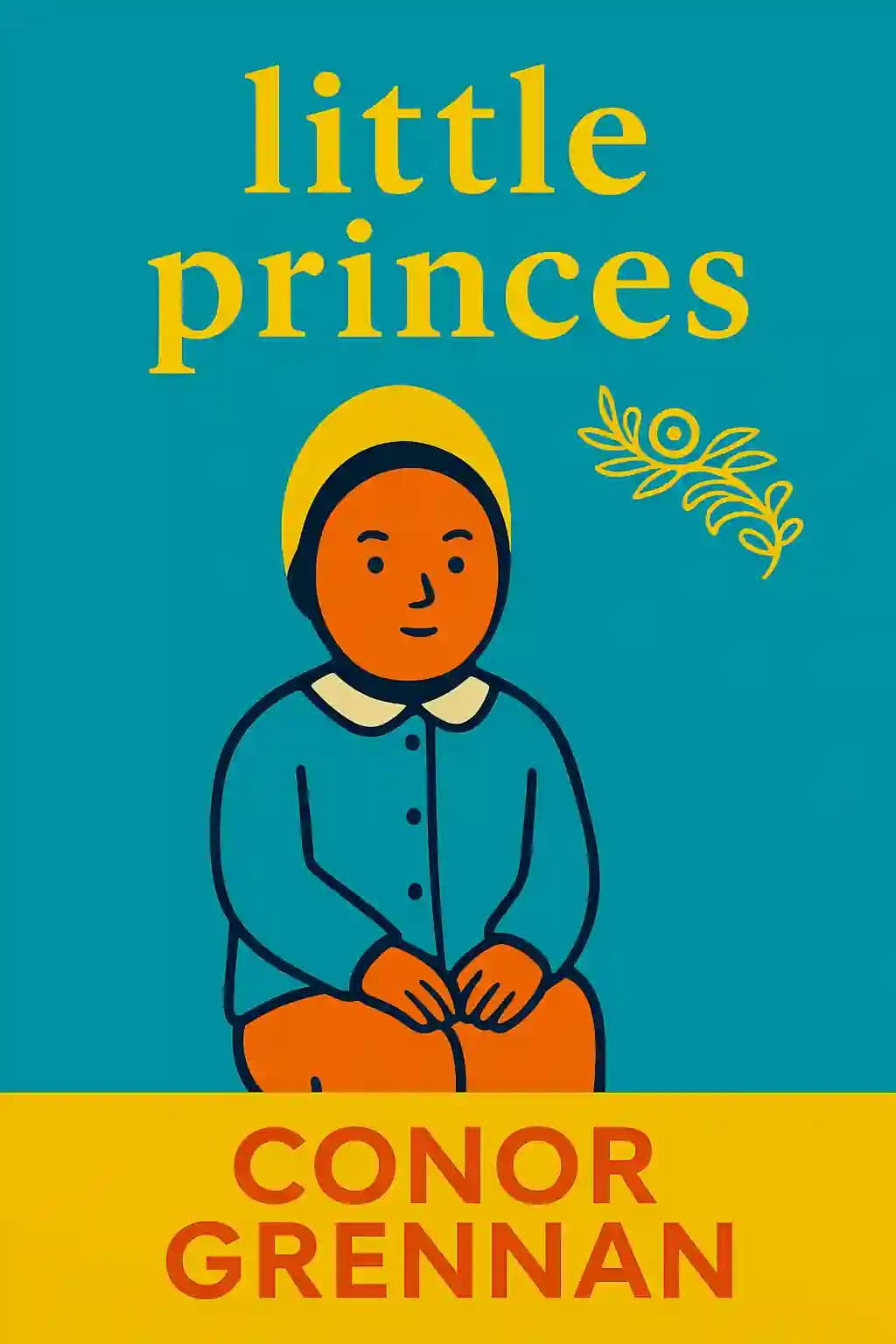
In a world where gap-year volunteering often serves as resume padding, Conor Grennan's journey began as exactly that-a self-admitted ploy to impress others. What started as a three-month stint at a Nepalese orphanage in 2004 transformed into a life-altering mission that would eventually reconnect hundreds of trafficked children with their families. "Little Princes" has captivated readers worldwide since its 2010 publication, earning praise from Nicholas Kristof who called it "a tale of passion and commitment that transcends borders." The book resonated deeply during a time when voluntourism was gaining popularity but facing criticism, offering an authentic account of how genuine connection can transform casual volunteering into profound purpose. Grennan's story reminds us that sometimes our most meaningful life paths begin with the most ordinary-or even self-serving-of intentions, only to evolve into something far more significant than we could have imagined.
第 2 章
The Accidental Volunteer: First Encounters with Nepal's Lost Children
When Conor Grennan first arrived at the Little Princes Children's Home in Godawari, Nepal, he had no idea that the eighteen children who greeted him would change the trajectory of his life. These weren't typical orphans-they were victims of child trafficking, taken from their families in remote villages with promises of safety during Nepal's brutal civil war. Traffickers like Golkka had convinced impoverished parents to pay substantial sums to protect their children from Maoist rebels who were forcibly recruiting young boys. Instead, these children were abandoned in Kathmandu, hundreds of miles from home.
Grennan's initial three months were filled with daily soccer matches, homework help, and the constant chaos of caring for energetic children. He formed unexpected bonds with children like Santosh, a bright teenager who helped translate, and little Anish, who persistently asked when Grennan would return. The children's resilience despite their circumstances was remarkable-they maintained their joy and playfulness even after experiencing profound betrayal and abandonment.
Life at the orphanage was complicated by Nepal's political instability. A harrowing incident involving fellow volunteer Sandra, who was kidnapped by Maoist rebels while trekking, brought the reality of the civil war into sharp focus. The rebels had demanded $2,000 for her release, eventually freeing her when they couldn't find evidence she was spying. This experience highlighted the dangers lurking beyond the orphanage walls and the precarious situation facing Nepal's children.
As his volunteer stint ended, Grennan faced an emotional farewell. When Anish kept asking when he would return, Grennan initially gave the noncommittal answer volunteers were trained to provide. But overcome with emotion while packing, he made a promise he genuinely intended to keep: "I'll be back in one year." Though other volunteers looked skeptical, this spontaneous commitment would ultimately set the course for his future.
What began as a brief adventure to kick off a year-long trip around the world had unexpectedly touched something deeper in Grennan. The children's stories, their unconditional affection, and their remarkable resilience had pierced his carefully constructed plans. As he left Nepal, he carried with him not just memories but a promise that would eventually pull him back into their lives-and into a mission far greater than he could have imagined.
第 3 章
World Traveler with a Changed Perspective
After leaving Nepal, Grennan embarked on the round-the-world adventure he had planned. For nine months, he traveled through sixteen countries across Asia, South America, and beyond. He purchased mountain bikes with his friend Glenn and rode across Thailand, took boats down the Mekong River through Laos, cycled through Cambodia and Vietnam with his friend Alex, and explored Sri Lanka and Indonesia alone. He hiked the Inca Trail with family in Peru, floated down the Amazon, bungee-jumped in multiple countries, paraglided, windsurfed, and rock-climbed-living the adventurous life he had envisioned.
Yet something fundamental had shifted in his worldview. In each new country, Grennan found himself noticing street children differently than before. Where once he might have passed by without much thought, he now saw children who, given proper care and safety, could be just like the Little Princes kids-full of potential, joy, and resilience. The orphanage experience had permanently altered his lens on the world.
"I couldn't help but see the faces of the Little Princes in every child I passed on the street," Grennan writes. "In Cambodia, Vietnam, Peru-it didn't matter where I was. I knew now that these children weren't fundamentally different from the ones I had come to love. They just hadn't been given the same chance."
Throughout his travels, Grennan maintained contact with the orphanage, sending postcards and receiving occasional updates. Though he was living his dream adventure, something kept pulling his thoughts back to Nepal. The children's faces would appear in his mind at unexpected moments-while watching a sunset in Thailand or hiking through the Andes.
By October 2005, Grennan returned to the United States with almost no savings, staying with his father and stepmother in New Jersey. He began applying for jobs and trying to reintegrate into American life, but found himself increasingly restless. Within weeks, he was missing Nepal and the children he had left behind. Despite financial constraints and the logical arguments against returning, he couldn't shake the feeling that he needed to go back.
In January 2006, just as he had promised the children, Grennan returned to Nepal for another three-month volunteer stint. What he didn't know was that this return would lead him to discover an even darker side of Nepal's child trafficking crisis-and propel him into a mission that would define his future.
第 4 章
The Seven Children: A Promise Broken and a Mission Born
During his second stint in Nepal, Grennan made a shocking discovery. While visiting a rundown shack in Kathmandu with his friend Farid, they found seven severely neglected children living in squalid conditions. These children-Amita, Dirgha, Bishnu, Kumar, Navin, Samir, and Jagrit-had been abandoned by the same trafficker who had taken the Little Princes children. Unlike the children at the orphanage, these seven had no one looking after them. They were malnourished, dirty, and desperately in need of help.
Grennan and Farid immediately began working with Gyan Bahadur from the Child Welfare Board to rescue these children. They arranged for the Umbrella Foundation, an organization founded by Viva Bell and Jacky Buk that cared for over 150 children in four homes, to take them in. Everything seemed set for their rescue when Grennan had to return to America as planned.
Back in the United States, Grennan was trying to rebuild his life and career when devastating news arrived. Viva Bell emailed to inform him that when Umbrella's team finally reached the shack after weeks of political unrest and curfews, the seven children were gone. Golkka, the trafficker, had learned about their rescue plans and kidnapped the children-beating Umbrella's rescue team by just forty-eight hours.
The news hit Grennan like a physical blow. "I had looked those children in the eyes and told them someone trustworthy would come for them," he writes. "Instead, they were taken by the very man they feared most. Amita, Dirgha, little Bishnu and the others now believed I had betrayed them like everyone else in their lives."
In that moment of crisis, sitting in his childhood bedroom staring at Viva's email, Grennan made a decision that would change his life. He tore up his meticulously organized job search materials and wrote down the names of the seven missing children. He emailed Farid: "I'm going back to Nepal." Farid's immediate response: "I'm coming with you."
Rather than rushing back unprepared, Grennan developed a plan. He spent weeks researching how to start a nonprofit organization, commuting daily to a law library in New York. Though overwhelmed by questions about mission, strategy, and funding, he persisted. He named the organization Next Generation Nepal (NGN) and began recruiting former colleagues for the board, completing IRS applications, and organizing fundraisers.
One night, Grennan woke with sudden clarity: they could find the children's families. With the ceasefire between the Royal Nepalese Army and rebels, they had a window to safely travel to Humla, the remote region where many trafficked children originated. Despite his doubts, donors responded with small but meaningful contributions-each one a touching display of faith in a mission he wasn't sure he could accomplish.
What began as a broken promise had transformed into a mission that would eventually grow far beyond rescuing just seven children. It would become a lifelong commitment to reconnecting Nepal's trafficked children with their families and preventing future trafficking.
第 5 章
Into the Mountains: The Search for Families Begins
Armed with photographs of twenty-four children and a determination that bordered on obsession, Grennan embarked on a journey into one of the most remote regions of Nepal-Humla district in the northwestern mountains. Accompanied by a team including his trusted guide Rinjin, translator D.B., and several porters, he set out to find the families of trafficked children.
The journey was immediately challenging. After reaching the Karnali River, they discovered the Maoists had destroyed all bridges in Humla to keep the army out. They crossed using a steel cage suspended on cables twenty feet above the water, pulled by men who collected fees from each passenger. Their eight-man team then continued along narrow footpaths carved only by villagers' feet and animal traffic-paths that had never seen wheels.
Just hours into southern Humla, Grennan understood why parents here became disconnected from their trafficked children. It took days to travel anywhere, poverty was pervasive, villagers depended on World Food Programme aid, and there was no electricity or medicine. Houses were simple mud huts, and people lit their way at night with flaming torches.
Adding to the challenges, Grennan developed excruciating knee pain that left him barely able to walk. Using painkillers and tightly wrapping his knee, he relied heavily on walking poles to continue. Though D.B. offered to take him back to Simikot (the district capital), Grennan insisted on continuing, leading the group at his slower pace.
Two days later, they approached Ripa, Bikash's home village. The path led along cliff walls with hundred-foot drops to the river below. When a herd of goats suddenly appeared on the narrow trail, they pressed themselves against the rock as the animals streamed past. Rinjin warned Grennan to always stay on the inside of the path: "The goats, they do not fall. Humli people, we do not fall. But you, you fall."
Entering Ripa at dusk, Grennan found it matched Bikash's description perfectly-mud huts perched on terraced slopes, built practically atop one another. Villagers gathered to stare at him, women wearing gold-plated nose rings and earrings, some pounding grain with long poles while others carried firewood in wicker baskets. Children carried babies on their backs while men mostly sat drinking tea.
The next morning, Grennan experienced one of the most profound moments of his journey. Outside his lodging, surrounded by villagers, sat a man and woman. Before Rinjin could introduce them, Grennan recognized them immediately by the woman's teardrop-shaped eyes and prominent cheekbones-they were Anish's parents. When he showed them a photo of their son, the recognition in their eyes was unmistakable.
This pattern would repeat itself throughout Grennan's journey across Humla-moments of connection as parents recognized children they hadn't seen in years, sometimes decades. Some wept openly, while others maintained stoic expressions that belied their inner emotions. In village after village, Grennan witnessed the devastating impact of child trafficking on families who had believed they were sending their children to safety, only to lose contact with them completely.
Despite physical pain, treacherous conditions, and the constant threat of being stranded by winter snow, Grennan persisted. By the end of his journey, he had located the families of all twenty-four children he had set out to find-an achievement that even he had doubted possible.
第 6 章
Rescue and Reunion: Building a New Home for Lost Children
While Grennan was trekking through the mountains of Humla, his colleague Gyan was working tirelessly in Kathmandu to locate the seven missing children. In an almost miraculous turn of events, Grennan spotted Amita-one of the seven-while walking on a path in Thangkot. When he showed her a photo containing her own image, tears welled in her eyes, and without a word, she followed him. This unexpected encounter set in motion the rescue of all seven children.
Within days, Gyan found four of the boys, but two of them-Navin and Dirgha-had been starved half to death. Dirgha was so malnourished that doctors weren't sure he would survive the night. In the hospital's malnutrition ward, Grennan spent two days forcing water into the unconscious Dirgha while Navin expelled a foot-long tapeworm. Against the odds, Dirgha recovered.
As the children were rescued one by one, Grennan and Farid established NGN's first children's home in Kathmandu-Dhaulagiri House, a yellow building that could accommodate twenty-five children. With $6,000 raised from donors, they meticulously prepared the home, collecting everything by hand-from custom-made bunk beds to coconut-hair mattresses and hand-assembled blankets.
When the six rescued children (all except Bishnu, who remained missing) were brought to Dhaulagiri House, they didn't understand at first that this was their new home. When reality finally sank in, they raced upstairs in excitement, claiming beds and bringing their meager possessions. Touchingly, they left one bed empty for Bishnu, showing they hadn't forgotten him.
The final rescue-Bishnu's-proved particularly challenging. He was being kept as a domestic servant by a bank manager who refused to release him, declaring "He is mine, not yours." The situation escalated into a physical confrontation until Jacky from Umbrella Foundation called the mayor of Kathmandu, who threatened to send police. The bank manager fled, and Bishnu was finally reunited with his friends.
As Dhaulagiri House filled with more rescued children-eventually expanding from six to twenty-six-Grennan witnessed remarkable transformations. Children who arrived withdrawn and traumatized gradually opened up, began studying diligently, and formed new bonds. Leena, who had never spoken or smiled, finally giggled when Grennan playfully teased her-a breakthrough moment that transformed her from silent to a happy little girl.
Throughout this period, Grennan maintained a long-distance relationship with Liz, a woman he had met through email correspondence about his work in Nepal. Their relationship deepened despite the distance, and during a break in the United States, Grennan proposed to her at her father's farm dock (with her dog Emma hilariously interrupting the moment).
Though reuniting children with their families was always the ultimate goal, Grennan and Farid discovered that the process was more complex than they had anticipated. Parents, though overjoyed to find their children alive, often hesitated to take them home due to financial constraints. After some missteps with financial incentives that inadvertently rewarded parents who had given their children to traffickers, they adopted a more patient approach-allowing families to visit their children without pressure, gradually rebuilding relationships that had been severed for years.
第 7 章
Full Circle: Children Return to Their Homeland
In fall 2008, several years after Grennan had first arrived in Nepal, Farid emailed him with transformative news: they were bringing nine Little Princes back to Humla for a two-week visit. This journey would fulfill their four-year dream of reconnecting the children with their homeland, now that the Maoist conflict had subsided and the remote region was finally safe for travel. The logistics were complex - arranging permits, coordinating with local authorities, and ensuring medical support in the isolated region.
The children's initial anxiety during the twin-engine flight to Simikot was palpable. Many had never flown before, and the sight of the towering Himalayas below stirred both fear and wonder. However, as they began trekking along the crystal-clear Karnali River toward their ancestral villages, a remarkable transformation occurred. The children instinctively fell into the rhythms of Humli life, their urban mannerisms melting away with each step on familiar mountain paths.
They rediscovered native foods with unbridled enthusiasm - sampling local butter tea, tsampa (roasted barley flour), and wild mushrooms that they recognized from their earliest memories. The landscape itself seemed to awaken something in them - they could name local plants, identify distant peaks, and navigate mountain trails as if they had never left.
When they reached their home villages, the emotional reunions were overwhelming. Older children like Santosh and Krishna immediately recognized parents and childhood friends, crying out in their native Humli dialect. Younger ones, such as Maya who had left as a toddler, stood shyly behind their caretakers, struggling to connect faces with dim memories. Village elders gathered to perform traditional welcoming ceremonies, burning juniper branches and chanting ancient prayers.
By nightfall of that first day, all the children had seamlessly reintegrated into village life. They followed their parents through terraced fields, helped collect firewood from nearby forests, and slept contentedly on mud hut floors wrapped in traditional yak wool blankets. The two weeks passed quickly, filled with family stories, traditional songs, and the daily routines of mountain life. When departure time came, none wanted to leave Humla. However, their experience had profoundly shifted their perspectives about their futures.
Upon returning to Kathmandu to continue their education, the children approached their studies with renewed purpose. Gone were the fanciful dreams of becoming astronauts or football stars. Instead, they spoke of becoming doctors to serve their remote communities, teachers to educate the next generation, or agricultural experts to help their families improve farming techniques while preserving traditional methods.
"Their true destiny now lies in carrying on centuries-old traditions in Humla," Grennan writes, noting how the children had evolved from trafficking victims to potential leaders who could bridge their ancient culture with modern opportunities. They had come full circle - from being forcibly separated from their homes to returning with education, confidence, and a deep appreciation for their heritage.
As Farid shared this remarkable transformation with Grennan over the phone in March 2009, he excitedly suggested that some children might be able to return permanently to their families. Looking at his wife Liz cradling their three-week-old son Finn, Grennan understood viscerally what that would mean - the completion of a journey that had begun with a casual three-month volunteer commitment and evolved into a life-altering mission that had changed not only the children's lives but his own.
第 8 章
The Ripple Effect: Creating Lasting Change in Nepal
What started as one man's journey to rescue seven children expanded into an organization that has reconnected hundreds of trafficked children with their families. Next Generation Nepal continues its work today, maintaining children's homes in Kathmandu and Humla, conducting family tracing missions in remote villages, and working to prevent trafficking through education and community support.
The impact extends beyond individual reunifications. NGN's work has helped expose and disrupt trafficking networks, raised awareness about the false promises traffickers make to vulnerable families, and developed models for responsible reunification that other organizations have adopted. By addressing root causes-poverty, lack of education, and isolation-NGN works to prevent trafficking before it occurs.
Grennan's personal transformation is equally profound. The self-described "selfish" traveler who initially volunteered to impress others found purpose, love, and a lifelong mission. His relationship with Liz, which blossomed through emails about his work in Nepal, led to marriage and family-a partnership built on shared values and commitment to service.
The children themselves represent the most meaningful impact. Many who once faced bleak futures as abandoned servants or child laborers have received education, healthcare, and the chance to reconnect with their cultural heritage. Some have returned permanently to their villages, while others have pursued higher education in Kathmandu. All carry with them the knowledge that they matter-that someone cared enough to cross mountains to find their families and bring them home.
As Grennan reflects in the book's final pages, watching his newborn son while hearing about the children returning to Humla, the journey has come full circle. What began as an accidental volunteer assignment transformed into a mission that changed hundreds of lives-including his own. The little princes of Nepal, once lost, have found their way home, and in helping them, Grennan found his own path as well.
第 9 章
A Journey That Continues: The Legacy of Little Princes
The publication of "Little Princes" in 2010 brought international attention to Nepal's child trafficking crisis and the work of Next Generation Nepal. Readers worldwide were moved by Grennan's honest account of his transformation from casual volunteer to dedicated child advocate. The book became a New York Times bestseller and was translated into multiple languages, raising awareness and funds for NGN's ongoing work.
Beyond the book's success, its lasting impact lies in how it challenges conventional narratives about international volunteering and humanitarian work. Grennan doesn't portray himself as a savior or hero, but as someone who stumbled into purpose through genuine connection with the children he met. His story demonstrates that effective change often comes not from grand plans or expertise, but from authentic relationships and persistent commitment.
The book also highlights the complexity of family reunification work. Rather than presenting simplistic solutions, Grennan acknowledges the cultural, economic, and emotional challenges involved in reconnecting trafficked children with their families. The patient, culturally-sensitive approach NGN developed-what Grennan calls "Nepali time"-offers a model for similar work worldwide.
For readers inspired by Grennan's journey, the book serves as both invitation and caution-showing how meaningful engagement with global issues requires humility, cultural respect, and long-term commitment rather than quick fixes or short-term volunteerism. It demonstrates that sustainable change happens through partnership with local communities and organizations, not through outsiders imposing solutions.
Today, Next Generation Nepal continues its work, having reunified hundreds of children with their families and prevented countless others from being trafficked through community education programs. The organization maintains transit homes where children stay while their families are located, and supports reunified families with educational stipends and follow-up visits.
Grennan's journey from accidental volunteer to founder of an international nonprofit organization reminds us that transformation often begins with small steps taken without knowing where they might lead. His story continues to inspire others to engage thoughtfully with global challenges, to recognize the humanity in every child, and to believe that even the most daunting problems can be addressed through persistence, compassion, and genuine connection.