第 1 章
When Brotherhood Transcends Borders
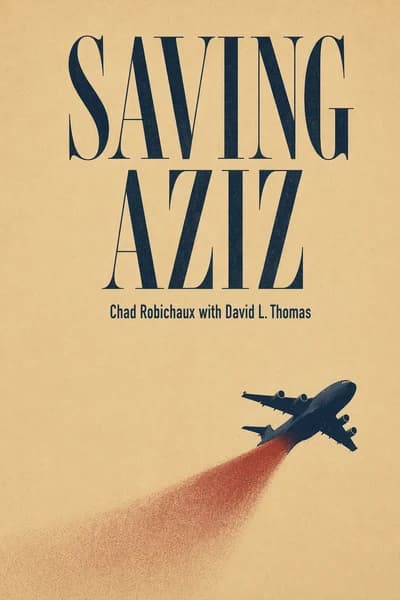
What would you do if your closest ally was trapped behind enemy lines? For Force Recon Marine Chad Robichaux, the answer was clear: risk everything. When Afghanistan fell to the Taliban in August 2021, Robichaux launched a desperate mission to rescue his interpreter Aziz, who had saved his life three times during eight deployments. What began as one man's quest to honor a battlefield bond transformed into an extraordinary humanitarian operation that rescued over 17,000 people abandoned by their government. The book has garnered praise from military leaders like Medal of Honor recipient Dakota Meyer and public figures including Glenn Beck, who called it "a modern-day Dunkirk." This gripping account reveals how ordinary citizens accomplished what governments wouldn't, demonstrating the power of loyalty, faith, and the warrior ethos when faced with impossible odds.
第 2 章
The Killing Pool: Witnessing Taliban Brutality
During his first deployment to Afghanistan, Chad's perspective on the war fundamentally changed when his interpreter Aziz showed him the horrific realities of Taliban rule. At a nondescript apartment building in Kabul's outskirts where Aziz had secretly taught English-a crime the Taliban considered worthy of execution-he revealed the dark history that haunted its walls. In hushed tones, Aziz explained how many young girls, including his twelve-year-old cousin Fatima, had chosen to jump from the building's upper floors rather than face the brutality of Taliban fighters who had discovered their forbidden education. These desperate acts spoke volumes about the depth of terror the regime had instilled in its own people.
The most chilling revelation came during their visit to Bibi Mahru Hill, overlooking Kabul's sprawling cityscape. There stood a Soviet-era relic: an Olympic-sized swimming pool built in the 1980s as a symbol of modernization. Under Taliban control, this once-recreational facility had been transformed into something far more sinister. The empty concrete basin, its blue paint long faded, had become notorious as the "Killing Pool." A crude steel cable noose hung ominously from the rusted ten-meter diving platform, while the pool's walls told an even grimmer story. Thousands of bullet holes, precisely positioned at the height of kneeling adults and children, pockmarked the concrete. Chad discovered bullet jacket fragments still lodged in these holes, some dated from as recently as a few months prior. He collected these metal shards as tangible evidence of the evil he was fighting, each one representing a life brutally ended.
This encounter at the Killing Pool profoundly transformed Chad's understanding of his mission in Afghanistan. What had begun as a deployment motivated by post-9/11 retribution and national security evolved into something more personal and humanitarian. He saw beyond the military objectives to the human cost of Taliban oppression: families torn apart, children denied education, women stripped of basic rights, and countless lives ended in acts of public brutality. Despite vast cultural differences, he recognized in the Afghan people the same fundamental human desire that Americans cherished - the right to live free from tyranny and fear.
The experience crystallized into a deeply personal commitment. Chad vowed that if his service could prevent even one child's execution at the Killing Pool, or spare one girl from feeling so trapped that suicide seemed her only escape, his time in Afghanistan would have meaning beyond military victory. This perspective would later drive his determination during America's withdrawal, motivating him to orchestrate the rescue of not just his interpreter Aziz, but thousands of vulnerable Afghans who faced certain death under renewed Taliban rule. The Killing Pool became both a symbol of the regime's brutality and a catalyst for Chad's mission to protect those who couldn't protect themselves.
第 3 章
A Brotherhood Forged in Combat
As a special operations team member targeting high-value Taliban leaders, Chad worked closely with Aziz, his 25-year-old interpreter. Unlike other interpreters who underwent months of training elsewhere, Aziz was fast-tracked due to his exceptional capabilities-fluent English, street smarts, and crucial cultural knowledge. Growing up in Kabul during the first Taliban regime had given Aziz unique insights into local dynamics and an unwavering determination to prevent their return to power. He quickly became their most trusted local national, accompanying Chad on over a hundred dangerous missions into hostile territories without military support, from night raids in Kandahar to intelligence gathering in remote mountain villages.
"In Afghanistan, just like in combat, we aren't meant to fight alone," Chad writes, reflecting on how Aziz embodied the Afghan cultural value of protecting guests-consistently risking his life to keep Chad safe. Their bond transcended professional roles, becoming a brotherhood forged in shared danger. Aziz taught Chad the nuances of Afghan customs, from the proper way to drink tea with tribal elders to understanding complex family allegiances that could mean the difference between mission success and failure.
This brotherhood was tested repeatedly in increasingly dangerous situations. When an anti-Western protest erupted following controversial Muhammad caricatures in a Danish newspaper, Aziz pulled Chad to safety before the crowd could identify him as American. He quickly wrapped Chad in a traditional shawl and guided him through back alleys, speaking loudly in Pashto to deflect attention. During a Taliban attack on their office, when an American contractor named Jerry was trapped and military command denied rescue support as "too risky," Chad decided to go himself. Without hesitation, Aziz insisted on joining, saying "Where you go, I go, brother." They drove their vehicle directly through crossfire between Taliban and International Security Assistance Force troops, with Aziz navigating through streets he knew from childhood, then providing cover while Chad retrieved Jerry from the burning building.
In another life-saving moment, Aziz's intuition warned him about a weapons purchase meeting with a tribal leader's nephew. Something about the meeting location and timing felt wrong to him, based on his understanding of local customs and recent intelligence reports. Following Aziz's advice to bring backup, they were prepared when four armed Taliban fighters arrived during the transaction. Aziz's quick thinking and local connections helped them coordinate an escape route through a sympathetic shopkeeper's back entrance. These experiences cemented their bond-not just as colleagues, but as brothers who would later risk everything for each other when Afghanistan fell to the Taliban in 2021. Their story became a testament to how trust, loyalty, and brotherhood could transcend cultural boundaries and survive the harshest circumstances of war.
第 4 章
From Battlefield Trauma to Healing Mission
Chad's intense special operations deployments-brief spurts with minimal recovery-eventually took their toll. During his final deployment, the Taliban captured and executed ten Afghan team members who had worked for him-men whose homes he'd visited and whose children he'd played with. Days later, Chad was abducted by Taliban sympathizers, interrogated for hours, then unexpectedly released. After discovering a teammate's betrayal, his home was destroyed by a vehicle-borne IED.
The psychological impact was devastating. Suffering severe panic attacks and PTSD symptoms, Chad realized his deteriorating mental condition endangered himself and others. Leaving Afghanistan was harrowing-paranoia consumed him, convinced police were searching for him, feeling time freeze as his flight was delayed. After returning home, he was diagnosed with severe chronic PTSD, lost his security clearance, and essentially his job.
Despite outward success running martial arts schools and competing professionally in MMA, his personal life collapsed. During a suicidal moment, his wife Kathy confronted him: "You're quitting on your family despite your professional discipline." This wake-up call led Chad to seek help through church, become a Christian, and eventually create the Mighty Oaks Foundation to help veterans suffering from PTSD.
Eight years later, after reconnecting with Aziz, Chad learned of his desire to move to America. They began navigating the Special Immigrant Visa (SIV) process-a program plagued by inefficiency where applicants waited 2-3 years despite a congressional nine-month mandate. For special operations interpreters like Aziz, obtaining required documentation proved nearly impossible since they worked on classified programs, trapping them in an endless application loop where the State Department demanded paperwork the Defense Department couldn't provide.
When President Biden announced a complete withdrawal from Afghanistan by September 11, 2021, Chad knew Aziz and thousands of other allies were in grave danger. What began as a personal mission to save one interpreter would soon expand into something far greater.
第 5 章
A Catastrophic Withdrawal
Chad viewed the Biden administration's withdrawal plan as strategically disastrous. Unlike Trump's conditional withdrawal with terms the Taliban had to meet, Biden's date-only approach surrendered America's negotiating power. "We should have prioritized evacuating citizens and allies before announcing any departure date," Chad writes, finding the symbolism of the 9/11 withdrawal date disrespectful to victims' families and veterans-essentially handing Afghanistan back to the terrorists during the country's peak fighting season.
The situation deteriorated rapidly when the US military quietly abandoned Bagram Air Base on July 2, 2021, leaving troops only at Kabul airport and the embassy. Chad considered this a critical strategic error, surrendering "the most strategic military location in the world" positioned between Iraq, Iran, Russia, and China. The hasty departure left American civilians throughout Afghanistan in shock and panic, with many hiding in fear.
As Afghan cities fell to the Taliban in rapid succession, Chad rejected the narrative that Afghans were unwilling to fight. He considered this an insult to their warrior culture, pointing to the 66,000 Afghan troops and 48,000 civilians killed since 2001 as evidence of their sacrifice. The Afghan National Army was now facing an emboldened Taliban without crucial US air support. When the Taliban publicly executed twenty-two captured Afghan Special Forces commandos with no US response, it sent a clear message that America had abandoned its allies.
On August 15, Kabul fell without resistance. President Ghani fled with millions, and the American flag was lowered at the embassy as personnel evacuated by helicopter-exactly like the Saigon evacuation officials had insisted wouldn't happen. For Chad, watching that flag come down was especially painful, as he treasured a flag that had flown over that embassy in his honor years earlier. The day marked multiple defeats: Afghans lost their country, and while American military hadn't been defeated, the US government had surrendered to the Taliban.
第 6 章
Answering the Call
As Afghanistan spiraled into chaos, Chad knew he couldn't wait for the government to act. He assembled a team of experienced special operations veterans with Afghanistan experience to rescue Aziz. When one team member mentioned 3,500 orphans needing rescue, they realized their mission could help many more. Though Mighty Oaks Foundation had always maintained a focused mission under Chad's leadership, this situation felt different-a divine calling.
With board approval, they expanded their efforts, partnering with Sarah Verardo, whose husband had been catastrophically wounded in Afghanistan and who now led The Independence Fund. Together, they created Save Our Allies, establishing a Joint Operations Center in DC, raising funds, fielding evacuation requests, and setting up as a nonprofit in record time.
Chad's son Hunter, a Marine and Afghanistan veteran, insisted on joining despite Chad's concerns. "I'm booking our tickets," Hunter declared, explaining he had an obligation to help the Afghans who had protected him during his deployment. The team named themselves Task Force 6:8, inspired by Isaiah 6:8 - "Here I am! Send me" - a verse several team members had independently felt drawn to.
Joe Robert, a tattooed Recon Marine with surprising global connections, leveraged his relationship with the UAE crown prince to secure extraordinary support: an operations command center in Abu Dhabi, two C-17 aircraft for evacuations (worth $800,000 per round trip), pilots, airstrip access, and a fully-equipped humanitarian center for refugees. Additional countries including Albania, Mexico, Ethiopia, Canada, Pakistan, Greece, Qatar, Russia, and Ukraine offered assistance.
Within a month, Save Our Allies raised $2 million-half from five major donors and half from about 5,000 individual contributions. Politics, nationalities and religious differences dissolved in the face of humanitarian need, exemplified by a Jewish organization donating $1.6 million through a Christian nonprofit to rescue Muslims. As they established operations, they received over 22,000 evacuation requests in just ten days, including many from congressional offices and government agencies unable to help their own allies.
第 7 章
Chaos at Kabul Airport
The team described Hamid Karzai International Airport (HKIA) as complete chaos-thousands desperate to enter, people fainting from heat, mothers passing babies over walls hoping soldiers would take them to safety, and Taliban fighters shooting civilians. Sean witnessed people shot dead inches from him. The world had already seen horrifying images of Afghans falling to their deaths after clinging to departing planes.
Despite the State Department issuing shelter-in-place warnings to Americans, Aziz kept Chad updated on his family's failed attempts to reach the airport. The Taliban had established checkpoints, beating people and confiscating documents despite promises of safe passage. Evacuees faced three security layers-Taliban, "Zero-Zeroes" (Unit 00 resistance fighters), and US Marines.
While British and German troops conducted helicopter rescues of their citizens, American forces could only watch in frustration because the White House had inexplicably placed the State Department-not the military-in charge of the noncombatant evacuation operation (NEO). Chad likened this to "taking an airline baggage handler and placing them in the pilot's seat of a Boeing 777."
The Taliban effectively controlled HKIA by owning the outer perimeter and access points, despite White House claims. Special operators inside the airport were furious they couldn't conduct rescue operations while watching other nations' militaries retrieve their citizens. Some offered to help Chad's team despite risking court-martial, believing saving lives outweighed following questionable orders.
The administration's shifting language about evacuating Americans "who want to leave" misrepresented reality-many couldn't reach the airport safely due to Taliban brutality, while others wouldn't abandon family members. Senator Jim Inhofe later accused Secretary Blinken of lying about the number of Americans left behind, claiming between 4,000-9,000 remained when the administration claimed just 100. Chad emphasized that even one American left behind was unacceptable: "One American's life is worth every bit of diplomatic leverage and the full force of US military power to bring that American home."
第 8 章
Against All Odds: The Rescue Operations
The team established rigorous verification protocols for rescues, using changing symbols, passwords, and document verification to ensure safety. Their first rescue was Narna, a 21-year-old who worked in President Ghani's office and was targeted by the Taliban. After receiving her urgent message, the team coordinated with special operations members who rescued her from Taliban captors just moments before she would have been raped and killed.
Aziz required significant convincing to make his eighth attempt to reach the airport after seven failed tries amid Taliban checkpoints and massive crowds. Using Google Maps coordinates, Aziz reached the north gate where Master Sergeant "HY" from a US Special Operations team helped him. Despite initial resistance from Marines and Zero-Zeroes, HY vouched for Aziz and helped bring his entire family inside HKIA.
After coordinating 150 rescues on the first day and 800 on the second, Chad set a daily goal of 1,000 evacuations. Despite suffering a serious injury during training when his adductor longus muscle completely detached from his pubic bone, Chad declined surgery to continue the mission. The team conducted most rescue operations under cover of darkness, though they occasionally moved larger groups by bus during daylight. Their vetting process was extremely rigorous, contrary to accusations that evacuations were haphazard. Every evacuee required proper documentation, and all flights went to "lily pad" third-party countries for additional State Department vetting.
One particularly harrowing rescue involved Tim evacuating a family with three young children while being pursued by Taliban fighters for twenty minutes, carrying a three-year-old girl the entire time. Tim also had several face-to-face encounters with the Taliban, including one tense standoff where he encountered three armed fighters while scouting checkpoints. Though Tim believed he could have eliminated the threat, he recognized that fighting wasn't their mission-saving people was.
Following the Abbey Gate bombing that killed 13 US service members, Chad's team faced difficult decisions. Despite warnings of additional attacks, they unanimously chose to continue operations. However, security tightened dramatically-more gates were welded shut and military leadership began withdrawing troops, forcing Chad's team to operate covertly. Despite these obstacles, they managed one final evacuation flight three days before the deadline, ultimately rescuing over twelve thousand people through approximately fifty recovery operations-second only to the Department of Defense.
第 9 章
Beyond the Evacuation: Building New Lives
After reuniting with Aziz at the UAE humanitarian center, Chad was surprised by his deep sorrow about leaving Afghanistan. Aziz had left behind his parents, two brothers, and sister, likely never to see them again. His father had insisted Aziz take his wife and children to safety, saying, "I've lived my life. Me and your mom are older. You need to go get your family safe and live your life."
Aziz quickly emerged as a leader in the humanitarian center, with Chad jokingly dubbing him "Humanitarian City President." He established an organizational structure where each building and floor had designated leaders reporting to him, ensuring everyone received food, water, diapers, and other necessities. In a full-circle moment, Aziz worked alongside Chad's son Hunter, who had joined the mission despite Chad's initial reluctance.
The humanitarian center revealed the full emotional spectrum of the evacuation-families joyfully reuniting, others grieving for those left behind, children playing freely despite their trauma, and lone evacuees facing uncertain futures. Chad and Aziz met a 13-year-old boy who had become separated from his family during the evacuation. The boy used Chad's phone to leave voicemails for his parents, but never received a response.
On August 29, Chad announced that Phase 1 of their mission-extraction-had ended, and Phase 2-resettlement for all evacuees-would begin under "Operation New Hope." Though they had evacuated nearly 12,000 people, the rescue work wasn't finished. Among those still needing help were Maryam and Zahra, daughters of a Christian pastor whose family was targeted by the Taliban, and Abdul Wasi Sharifi, an MMA promoter whose work made him a Taliban target. Abdul's young daughters had sent a heartbreaking plea: "Uncle Chad, please save us."
With Afghanistan's economic collapse leading to widespread starvation, families were selling young girls for as little as $500 to feed the rest of their families. Despite these urgent needs, Chad briefly returned home for an important family duty: walking his daughter Haili down the aisle at her wedding.
第 10 章
The Mission Continues
After General Frank McKenzie announced the completion of the US military mission in Afghanistan on August 31, safe houses became crucial to continuing evacuations. Chad's team collaborated with other NGOs, spending $60,000 daily to house about 4,000 people in northern Afghanistan's Mazar-e Sharif region. Though they managed to fly out hundreds via chartered planes, this fell far short of the tens of thousands needing rescue.
Chad, Seaspray, and Sean even planned a daring operation to parachute into northern Afghanistan and set up remote airstrips for evacuation flights. When this option disappeared, they shifted focus to creating land routes across Afghanistan's borders, ultimately identifying Tajikistan as their best option despite significant challenges. With Dave Eubank already in Tajikistan setting up humanitarian aid near the border, Chad and Dennis Price conducted a dangerous reconnaissance mission to identify viable crossing points.
In Tajikistan, they obtained special permits for the border region, evaluated about two dozen potential river crossing sites, and even swam across the freezing Panj River to collect detailed measurements and data. Despite encounters with Chinese military forces, Russian patrols, and Taliban fighters, they successfully identified six potential crossing locations and provided crucial data that would help future rescue operations.
Though they couldn't personally rescue every vulnerable Afghan, the routes they mapped and data they collected have successfully delivered people to freedom. For his heroism during the Afghan border reconnaissance operation, Dennis has been nominated for the Navy and Marine Corps Medal.
Save Our Allies continues exploring every option to rescue Americans and vulnerable Afghans. They've successfully evacuated the FIFA girls soccer team, Abdul Wasi Sharifi and his MMA fighters, and dozens of US citizens and permanent residents. They're working to rescue Maryam and Zahra-two preachers' daughters hiding in Pakistan-along with hundreds of targeted girls and family members of active-duty US service members.
Upon returning home, Chad experienced the joy of seeing Aziz and his family finally in America. After eight months of bureaucratic nightmares at the Abu Dhabi humanitarian center, they had completed processing and flown to Houston. Their emotional reunion included Aziz's daughter Kahtera embracing Chad with a hug, saying "Thank you, brother." Aziz reflected that perhaps God's timing had been perfect-his delayed SIV meant he was still in Afghanistan during the withdrawal, leading to the rescue of seventeen thousand others. What seemed like needless delays had served a greater purpose.
As Chad writes in his conclusion, "Life brings seasons of highs and lows, times when we need help and times when we must help others. When we alone have the ability to help someone in need, we must act-it's who we are by design." The Afghanistan crisis showed how people from different faiths and backgrounds united when governments wouldn't act. Because of this collective effort, Aziz, his family, and over seventeen thousand others can live free from persecution. And as long as one American or ally needs rescuing from Afghanistan, the mission continues.