第 1 章
Unveiling the Leader Within: A Journey to Authentic Influence
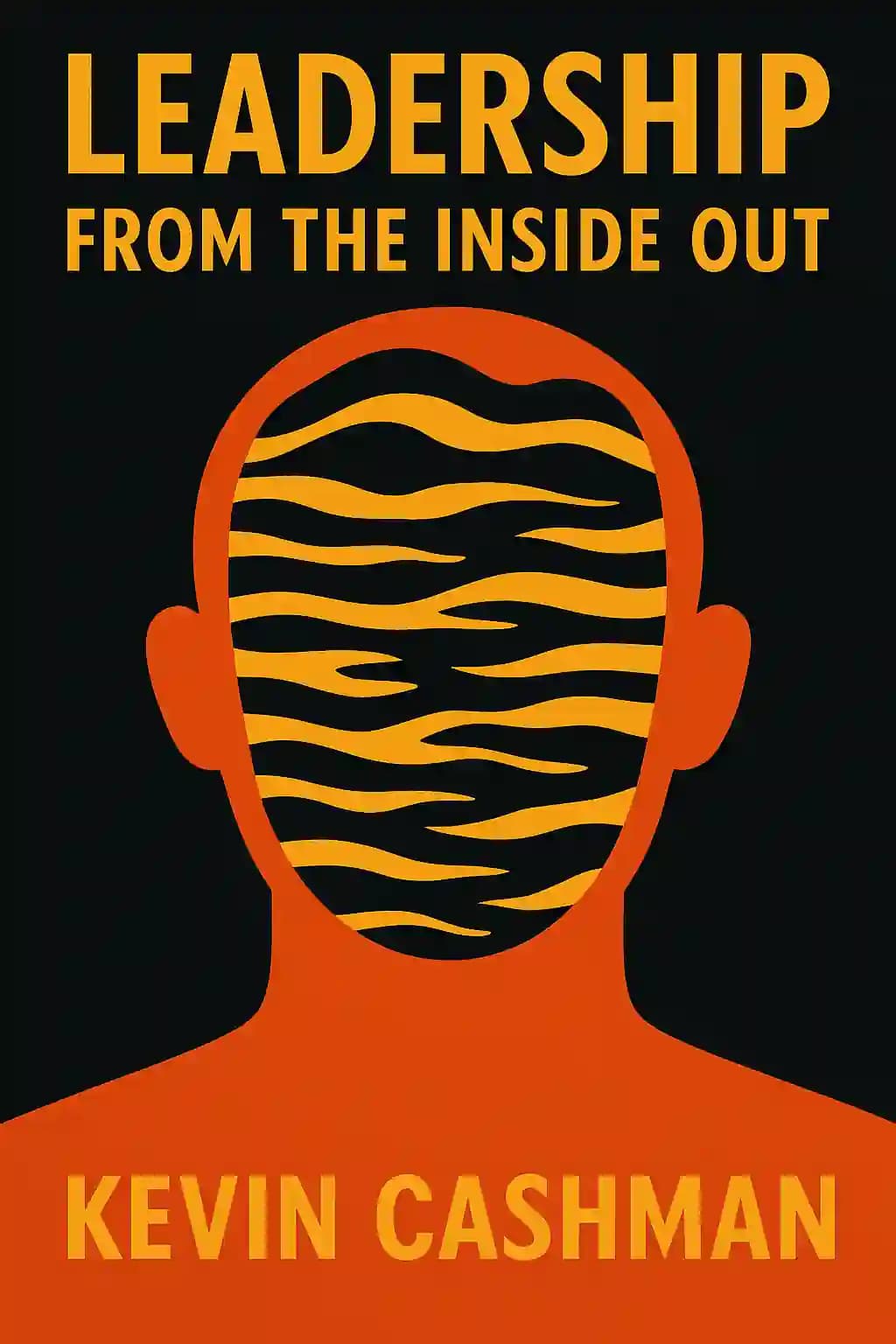
What if the most profound leadership transformation doesn't come from acquiring new skills, but from discovering who you truly are? This question lies at the heart of Kevin Cashman's groundbreaking work, which has guided thousands of executives at over 150 universities and major corporations worldwide. Unlike conventional leadership manuals that focus on external techniques, Cashman's approach centers on the revolutionary idea that effective leadership flows from the inside out-from authenticity, self-awareness, and purpose rather than position or power.
The book's enduring influence stems from its alignment with mounting research by leadership experts like Jim Collins, who identified the paradoxical blend of humility and determination in exceptional leaders. Oprah Winfrey has praised its transformative approach, while Fortune 500 CEOs consistently rank it among their most influential reads. What makes this work particularly relevant today is how it anticipated the shift toward authentic, purpose-driven leadership that has become essential in our complex, rapidly changing world.
第 2 章
The Foundation: Leading from Character, Not Coping
Leadership begins not with what we do, but with who we are. The most fundamental mistake in leadership development is focusing exclusively on external behaviors while neglecting the internal foundation from which those behaviors spring. True leadership emerges from our deeper reality-our values, traits, principles, and life experiences.
Consider Peter, an elementary school student who suffered burns over 90% of his body. After enduring a year of excruciating rehabilitation with his mouth propped open, fingers in splints, and eyes kept open to prevent permanent damage, Peter's first action upon walking again was to console other patients. When he began junior high at a new school where students initially avoided his disfigured appearance, Peter confidently told one brave student who approached him: "Once people get to know the real me inside, they'll become my friends." His prediction proved correct-his character was so powerful that people eventually looked beyond his scarred exterior.
This story illustrates that Personal Mastery isn't about comparing ourselves to others but about mastering our unique circumstances. Each leader is challenged to authentically connect their life experiences, values, and talents to their particular situations. Personal Mastery involves embracing wholeness rather than simply affirming strengths while ignoring weaknesses. It requires honestly facing all facets of self-both talents and shadow sides.
A groundbreaking study by Zes and Landis analyzed nearly 7,000 managers and found that organizations with more self-aware leaders (those with fewer blind spots) demonstrated stronger financial performance. This research directly correlates self-awareness with business results, challenging the notion that self-awareness is merely a "soft skill." Self-aware leaders build the authentic foundation needed for sustainable performance.
Authenticity is crucial for sustainable leadership yet often overlooked. We're always authentic to our current state of development but inauthentic to our potential state. As Shakespeare wrote, "We know what we are, but know not what we may be." Authenticity is the continuous process of building self-awareness of our whole person while being transparent with others about both strengths and limitations. This requires courage to penetrate the distractions of our lives and explore our depths.
Our belief systems fundamentally shape our reality-they are the lenses through which we interpret the world. Some beliefs expand possibilities while others limit them. George Foreman's transformation illustrates this power. After his loss to Jimmy Young and a subsequent spiritual experience, Foreman completely changed his personality from being tough and antisocial to becoming delightful and self-effacing. The key principle wasn't whether the experience was spiritual or medical, but that Foreman's belief in his transformation changed his life.
Courage and trust are foundational leadership characteristics that enable both competency and character development. Character-driven leaders transform circumstances with authenticity, courage, purpose, openness, and service, emphasizing service over self. In contrast, coping-driven leaders react to circumstances with defensiveness, fear, control, or withdrawal, emphasizing self over service.
第 3 章
The Power of Story: Connecting Authenticity to Influence
While spreadsheets are the language of management information, stories are the language of leadership inspiration. Stories activate our deepest selves and bridge authentic leadership depth to strategy, culture, values, and purpose. Despite their recognized power, we rarely examine stories beyond superficial "storytelling" skills.
Stories elevate us beyond current reality to new possibilities. Research by scientist Paul Zak shows that character-driven narratives produce oxytocin, enhancing empathy and cooperative behaviors. People are drawn to stories where individuals overcome challenges and discover new capabilities-the Hero's Journey. Organizations should share their founding stories to connect people to their "transcendent purpose," providing guidance for decision-making and motivation.
The contrast between two CEOs introducing organizational values illustrates this principle. The fact-oriented leader merely listed five values with PowerPoint precision, creating disconnection and cynicism among his 3,000 associates. The second CEO, while presenting similar values, shared authentic personal stories for each one-a health crisis with his teenage son, a career failure that kept him humble, a mentor who took a chance on him. This approach captivated the audience, awakening their own stories and creating collective inspiration.
The most inspiring stories emerge at the intersection of authenticity and relevance-where the deep, personal "I" meets the connected "We." When either personal authenticity or relevance for others is underdeveloped, stories fall flat. As former Revlon CEO Jack Stahl notes, "The best leaders are both deeply authentic and highly relevant in all situations."
Consider the story of Brian, who faced multiple crises in 1994: learning his wife was pregnant with twins, his brother needing a kidney transplant (which Brian provided), his mother-in-law's sudden death, and then his twins being born prematurely at 29 weeks while in another state. Through months of intensive care and round-the-clock feedings, Brian's perspective shifted from pursuing success to focusing on significance-being an authentic leader and father who lives his values consistently. This transformation enhanced his leadership by making him more candid, confident, and collaborative, eventually leading him to become CEO of a $10 billion global organization.
Stories shape our identity, values, beliefs, behaviors, and how we influence others. They are an intrinsic part of our makeup-research even suggests traumatic experiences can be passed through DNA to future generations. Story Mastery involves a five-step process: Know Your Story through self-awareness; Reframe Your Story by examining if your interpretation still serves you; Be Your Story by embodying authenticity; Express Your Story to inspire others; and Discover the Plot by surfacing meaningful life themes.
第 4 章
Purpose: The Engine of Sustainable Performance
Purpose powers performance, elevating leaders from short-term success to long-term significance. It engages workforces, customers, and stakeholders around something bigger than products and larger than profit. Purpose answers the essential question: Why is it so important that we exist?
Leaders must decide whether to view business solely as financial levers for capital accumulation or as universal levers serving a higher purpose. Unilever exemplifies purpose-driven leadership with core values of "integrity, responsibility, respect, and pioneering." Their purpose focuses on maintaining "the highest standards of corporate behavior" toward all stakeholders. CEO Paul Polman believes "the moment you realize it's not about yourself but about working for the common good, that's when you unlock the true leader in yourself."
A CEO of a global food company once identified performance as her purpose until challenged to dig deeper. She realized her company truly existed "to nourish the world, one person at a time." This realization transformed her leadership as she embedded this purpose into her work with senior teams. Core Purpose operates at the intersection where Core Talents and Core Values converge-when these elements are split, purpose and sustained performance are compromised.
Many CEOs struggle with employee engagement despite having clear strategies. They push what and how without addressing why-the purpose that drives motivation. Leaders must clarify three big realities: the Big What (Vision), the Big How (Strategy), and the Big Why (Purpose). Starting with purpose-why we exist-energizes vision and strategy. While managers focus on What and How, true leaders awaken the wonder of Why to envision a more compelling future.
Purpose-driven companies don't just have honorable intentions-they outperform their peers. Research shows organizations with inspiring missions do better in the marketplace, with purpose-driven consumer companies growing at 9.85% annually compared to 2.4% for the S&P 500 consumer sector. Companies like KIND Snacks, whose founder David Lubetzky was inspired by his Holocaust-survivor father's story of kindness, show that purpose can drive both profit and meaningful impact. Without clear purpose, metrics fill the vacuum, often with disastrous results.
Core Talents are skills that put us in a state of "flow" as Mihaly Csikszentmihalyi describes it-where we lose track of time, feel energized rather than drained, and would perform the activity even without compensation. Dr. Martin Seligman calls these "signature strengths" that increase happiness when used in our work. Ultimately, our life's measure will be less about accomplishments and more about how our gifts made an enduring difference in people's lives.
Warren Bennis contended that leadership's purpose is "reminding people what is important," but leaders must first know what's important to themselves. Identifying authentic values-beyond socially acceptable answers-requires deep self-examination. Authentic values aren't merely adopted from environment but forged through personal traumas and privileges.
Core Purpose emerges when we discover how our unique gifts serve others' needs. Purpose isn't created but discovered-it's our value-creating contribution waiting for recognition. As Paul Van Oyen notes, "Purpose only serves you when it guides you." A Somalian custodian demonstrated this wisdom perfectly: "I do not love to clean bathrooms. I love while I clean bathrooms!" Purpose isn't something external we pursue; it's the natural expression of our gifts in service to others.
第 5 章
The Synergy of Personal Power and Connection
Two leadership approaches compete in organizations: the hard-driving "I" leader who gets results through personal power but often drains employees, and the collaborative "We" leader who excels at connection but may not assert enough personal voice. World-class leadership requires developing both streams-power of voice and power of connection. Most leaders need to develop more of what they lack, whether that's authentic influence or genuine collaboration.
Relationships connect authenticity to influence and value creation. Leadership doesn't exist in isolation-it operates in context, through relationships. Many achievement-oriented leaders mistakenly believe they alone drive accomplishments, failing to recognize that nothing meaningful happens without engaging others. Research by the Saratoga Institute revealed that while 85% of bosses thought employees left for better compensation, 80% of departing employees cited poor relationships and coaching from their managers.
Leaders must learn to influence authentically while creating lasting value-not just getting results at any cost. Ethics, as John Dalla Costa simply defined it, is "others." This principle guided Toro's decision to install safety roll bars on all their lawnmowers, old and new, despite the immediate financial cost. Organizations that take a mechanistic approach prioritizing results over people create environments where employees feel devalued. By contrast, organic organizations see people as sources of creativity, where personal power supports synergy power, which then contributes value to multiple stakeholders.
Leaders often overestimate how clearly others receive their intended communication. We assume others fully understand our meaning, but this leap of faith rarely holds up. Since childhood, we've developed rich internal conversations and take for granted that others perceive exactly what we intend. As Emerson noted, "Men imagine that they communicate their virtue or vice only by overt actions, and do not see that virtue or vice emit a breath every moment." This gap between intention and perception creates significant leadership challenges.
While 360 feedback helps leaders address the intention-perception gap, it often reveals only a portion of the person rather than the complete picture. What organizations truly need is 720 Development, which begins with an Inside-Out 360 assessment of personality traits, motives, and competencies, followed by an Outside-In 360 that provides feedback from all directions. This comprehensive approach gives leaders a complete context to reconcile inner and outer realities.
The relationship between self-awareness and awareness of others forms the foundation for activating talent in an inclusive workforce. As Andres Tapia explains in The Inclusion Paradox, "Diversity is the mix; inclusion is making the mix work." Cultural agility requires deep awareness of self and others. Each person has an individual biography that defines why they think, believe, and act as they do. The paradox is that incorporating our differences makes us stronger as individuals, teams, and organizations.
第 6 章
Mastering Change: From Resistance to Resilience
Change mastery requires embracing life's constant flow rather than resisting it. Research shows that as leaders climb the executive ladder, they must become increasingly comfortable with uncertainty and develop "integrative ability" to weave together seemingly disjointed pieces. Learning Agility-the ability to learn something in one context and apply it in another-proves more predictive of long-term potential than raw intelligence, particularly in the dimensions of People Agility and Change Agility.
Positive change requires letting go of old patterns and taking fresh approaches. Like the story of the teacher overfilling the student's teacup, we must empty our cups of preconceptions to receive new insights. Change challenges our current reality by forcing a new one to emerge. Our resistance typically stems from fear of loss, yet change always brings both loss and gain. As Danaan Parry describes, change feels like swinging between trapeze bars-we must release our grip on the familiar to grasp the new, experiencing a moment of terrifying transition where real transformation occurs.
The only place we can truly handle change is in the present moment, yet most of us live mentally in the past or future. Until we learn to live in the flow of the present, we can't effectively perform during dynamic change. When our awareness is cluttered by static of past and future, we can't perform at our peak during dynamic change. We need to develop focused present-moment awareness, like professional athletes who maintain single-minded devotion during competition.
The most effective leaders can maintain both sharp, localized focus in the present moment while simultaneously holding a broad, visionary context. This paradoxical ability is crucial for leadership effectiveness during change. Like swimming in turbulent waters requires both focusing on each stroke while keeping the destination in mind, effective change leadership demands this dual awareness.
Our personal and professional effectiveness directly correlates with our ability to adapt to change. Even species evolution is measured by adaptability. As Buckminster Fuller warned against overspecialization: "Biological species become extinct because they overspecialize and fail to adapt." The most fatal obstacle to effectiveness is a fixed, unyielding perspective. Since life is growth and motion, inflexibility threatens effective leading and living.
While most view change as something happening "out there"-in the world, products, competition, or technology-all significant change begins within ourselves. As Peter Block writes, "If there is no transformation inside each of us, all the structural change in the world will have no impact on our institution." Research by Korn Ferry Institute found that among highly engaged executives across all industries, two competencies consistently stood out: "manages ambiguity" and "being resilient."
Research shows 50-75% of change initiatives fail. A.T. Kearney found 58% of mergers fail to reach goals and 77% add no value. Vantage Partners discovered 70% of strategic alliances fail, while Arthur D. Little found 67% of Fortune 500 quality initiatives yielded no significant improvements. Even personal changes like smoking cessation or weight loss programs show similar failure rates. David Rock and Jeffrey Schwartz explain this resistance is physiologically real-change amplifies stress, and external behavior models don't create lasting transformation.
Transformative leaders make seven crucial shifts to navigate change successfully: (1) from Problem Focus to Opportunity Focus-seeing possibilities within challenges; (2) from Short-Term to Long-Term Focus-maintaining vision despite immediate pressures; (3) from Circumstance to Purpose Focus-staying anchored to meaning above circumstances; (4) from Control to Agility Focus-embracing flexibility over rigid management; (5) from Self to Service Focus-transcending personal stress to serve team needs; (6) from Expertise to Listening Focus-remaining open to multiple solutions; and (7) from Doubt to Trust Focus-developing self-awareness that's stronger than the threats of change.
第 7 章
Building Resilience: From Time Management to Energy Leadership
While researching this book, interviews with over 100 CEOs revealed that 74% saw Personal Mastery as most relevant to leadership effectiveness and 67% identified Interpersonal Mastery as second most important. However, a striking 92% selected Resilience Mastery as their most personally challenging leadership domain. Most leaders struggle with work-life balance, but the issue isn't about time management-it's about energy leadership. Time is finite, but our resilience and energy can be expanded through conscious practices.
Today's successful executives are notably healthier than average Americans. Research from the Center for Creative Leadership found executives drink less alcohol, smoke less, and exercise more regularly, with fitness influencing perceptions of energy, self-discipline and competence. The "Martini Mad Men" era has ended, replaced by fitness-conscious leaders. Arianna Huffington learned this lesson after collapsing from exhaustion, which led to her advocacy for sleep, well-being and redefining success beyond money and power.
Each technological "convenience" simultaneously delivers some benefit while adding ten new tasks. High-performing individuals naturally want to achieve more, while organizations pile additional responsibilities on key people while operating leaner. Research by Schwartz and McCarthy shows that while time is finite, energy can be expanded through four wellsprings: body, emotions, mind and spirit. Their study found employees who focused on energy management outperformed control groups on financial metrics and reported improved customer relationships, work engagement, and personal satisfaction.
A five-year study of ninety-seven active centenarians revealed four common characteristics: optimism (positive view of past and future), engagement (active involvement in life), mobility (staying physically active through walking or gardening), and adaptability to loss (ability to stay balanced despite losing family and friends). These resilient individuals weren't passive observers-they were happy, involved, active people who had become "leaders of life."
Resilience isn't static but a centered fluidity allowing us to recover balance amid action. Rather than separating life into distinct pieces to balance, we must manage the entire dynamic. Charlotte's story demonstrates this-returning to executive work after burnout, she implemented a comprehensive resilience plan addressing physical (exercise, weight loss), mental, emotional and spiritual domains. Her lake cabin provided mental renewal even when she couldn't physically be there.
Nature provides the perfect resilience model through alternating cycles of rest and activity. While nature balances these phases automatically, humans must choose the quantity and quality of both. Jack Groppel and colleagues revolutionized corporate thinking by applying athletic principles of stress and recovery to business leaders-"Stress is the stimulus for growth; recovery is when growth occurs." Most imbalances stem from overdoing activity while underdoing recovery. The formula for resilience involves improving activity quality while reducing quantity, and enhancing both quality and quantity of rest.
第 8 章
Accessing Being: The Soul of Leadership
Being Mastery focuses on accessing our essence, our deepest presence, and the core of who we are. Being is described as a silent, calm ocean supporting the waves of achievement on the surface. Accessing Being fosters the deep presence needed to lead with authenticity, equanimity, mindfulness, and calm energy.
The author illustrates how accessing deeper levels of ourselves naturally helps resolve problems-like finding lost keys after giving up the frantic search and sitting quietly, or solving complex problems during a relaxed walk. He shares the story of Laura, a results-driven CEO resistant to incorporating reflection time, who experienced a breakthrough moment during an unplanned dog walk. When she stopped struggling with a chronic issue and simply enjoyed being outside, the solution suddenly appeared, demonstrating how stepping back from constant doing can access deeper wisdom.
The most challenging problems can't be solved at the same level they were created. When the mind settles into a more profound, relaxed state, it becomes more orderly and capable of handling complex challenges. Research shows that moments of insight come when we're not actively concentrating-like Archimedes' discovery while in his bathtub or Mozart's creative flow while walking. A consumer products president finds his daily swims create a "Zen-like experience" where complex issues naturally sort themselves out, demonstrating how non-doing paradoxically leads to greater productivity.
Our constantly connected, stimulation-oriented culture prevents genuine contact with our deeper selves. We've become "human doers" rather than "human beings," always seeking the next distraction to feel alive. While Descartes claimed "I think, therefore I am," Being Mastery reverses this to "I am, therefore I think"-recognizing that Being is the source of thought, not the other way around. As Thomas Merton wrote, we must find our real selves not in the "froth" of our actions but in our own being, which is the principle behind all acts.
Being is the foundation underlying all feeling, thinking, and action. While these three constantly change, Being remains the unchanging platform for a masterful life. Being represents a fourth state of consciousness beyond waking, dreaming and deep sleep-a state of "restful alertness" where the mind is fully awake while the body deeply rests. Meditation offers profound rest while maintaining awareness, allowing us to feel revitalized with clearer thinking and more effective action.
Beyond formal meditation, we can connect with Being through various pathways. Nature's grandeur can trigger moments of awe that transcend intellectual comprehension. Music's organized vibrations can directly open the gateway to one's soul. Present-moment awareness allows us to experience "infinity contained in the eternally present moment." Children at play demonstrate pure Being in action. Love serves as the transcendental connection to everything.
Many effective executives possess "unconscious competence" in Being Mastery, manifesting as "executive presence"-a solid, confident, calm demeanor not easily shaken. Though they may be uncomfortable discussing inner silence, it's their Being that fosters others' confidence. Moving from unconscious to conscious competence in Being Mastery is crucial for enhancing effectiveness and fulfillment simultaneously.
第 9 章
Coaching Mastery: The Art of Transformation
Throughout history, exceptional coaches-whether called advisors, sages, mentors, or teachers-have helped people see the world differently and reach their fullest potential. Despite "coaching and developing others" being rated among the top three leadership competencies globally, it's actually the least practiced, with leaders citing lack of time, methodology, or concerns about slowing immediate performance. For transformative coaching impact, three foundations must work together: Building Awareness, Building Commitment, and Building Practice. Without all three, results will dissipate over time.
Building Awareness is the first critical step in coaching development, requiring both inner discipline to examine our strengths and challenges, and outer discipline to observe ourselves through others' eyes. This involves creating an awareness inventory by reviewing leadership assessments, 360 feedback, and comments from colleagues and loved ones. As Daniel Goleman noted, self-aware people are better performers because they continuously improve. Building Awareness demands courage to honestly face both positive and negative aspects of ourselves-our impact as leaders expands in direct proportion to how bravely we examine our whole selves.
While awareness opens the door to higher performance, it's not enough without emotional commitment. Building Commitment requires not just intellectual understanding of our actions' consequences, but feeling them deeply. As Tichy and Bennis observed, "Courageous leaders often get their courage from their fear about what will happen if they don't step up." Meaningful transformation begins when we emotionally experience both the upside benefits and downside consequences of our behaviors. This creative tension between what we might gain and what we could lose provides the motivation to sustain change.
Building Practice is the consistent application of new behaviors that transform potential into reality. While awareness and commitment are necessary, they're insufficient without action. As Lao Tzu noted, "A Sage will practice the Tao. A fool will only admire it." Research shows organizations typically invest 85% of resources in learning events but only 5% in follow-up coaching, despite studies showing coaching after training yields 73% better results. Whether developing inner disciplines like examining limiting beliefs or outer disciplines like improving listening skills, consistent practice is essential. The key is finding behaviors that both challenge you and show tangible benefits, making them sustainable. Like Kobe Bryant shooting 2,000 jump shots daily for nine months to elevate his game, focused practice on just two or three well-selected behaviors can foster transformation. What you practice, you become.
Coaching others is perhaps the most important leadership skill because it sustains leadership and perpetuates value creation. It's "the art of drawing forth potential onto the canvas of high performance." Leadership is a sacred calling where leaders touch lives and hold destinies in their hands. Effective coaching serves a dual purpose: contributing to each individual's growth while maximizing the group's effectiveness. At Novartis, where coaching was prioritized, the percentage of externally hired senior talent dropped from 70% to 30% over six years, saving millions in recruiting costs. As Thomas Ebeling noted, "Coaching is one of the most critical leadership skills for optimizing and sustaining individual and team performance."
When coaching others to build awareness, stay open and bring clarity, using questions as your primary tool. Be courageous enough to discuss the undiscussable with compassion-directness without caring creates resistance, while directness with compassion creates openness. Help coachees explore the gap between their intentions and others' perceptions, using both outside-in 360 feedback and inside-out personality tools for a complete 720 perspective. Most importantly, build awareness by example-become the change you hope to see in others.
To build commitment in others, help them envision both positive and negative outcomes if they continue on their current path. When emotions deeply register both compelling reasons to change and damaging behaviors to leave behind, transformation begins. Guide people to grasp the consequences of their actions, allowing your own commitment to catalyze theirs. Look for openings when vulnerability is high-after tough feedback, career setbacks, or new challenges.
Without practice, there is no transformation. Practice breathes life into awareness and commitment. Beginning practice makes the possible probable; advanced practice makes the possible real. For practice to become habit, it needs consistent engagement for at least forty days. To build practice in others, co-create exercises that push boundaries while remaining suitable for the individual. Define frequency and duration, then hold them accountable through regular progress audits. Avoid intellectualizing-thinking about doing something isn't the same as doing it.
第 10 章
The Journey Continues: From Individual to Collective Transformation
Twenty years have passed since the first edition of this book was completed. Beyond providing growth resources for individual transformation, its deeper purpose is to contribute to creating a critical mass of authentic leaders who express their gifts through energetic, purpose-driven leadership. Imagine organizations, communities, or nations led by such transformative individuals. The purpose of your transformation is to radiate your gifts in service to others.
As powerful as one authentic leader can be, a critical mass of leaders growing from the inside out accelerates an organization's progress dramatically. When an executive team concerned about coaching a colleague was challenged instead with "What are each of you doing to grow as leaders?", they engaged coaching for the entire team. Soon, the whole organization began transforming, with a new culture of purpose-driven performance taking root.
The principles, stories, and practices in this book are meant to inspire you to continue this journey and share your blessings with others-your organization, customers, and loved ones. Together we can transform our world. As the Talmud beautifully expresses: "Every blade of grass in all of creation has an angel bent over it passionately whispering three words of encouragement: Grow... Grow... Grow." That's the ultimate wish for all leaders: Grow in courage and authenticity. Grow in influence. Grow in value creation. Become a leader for life.