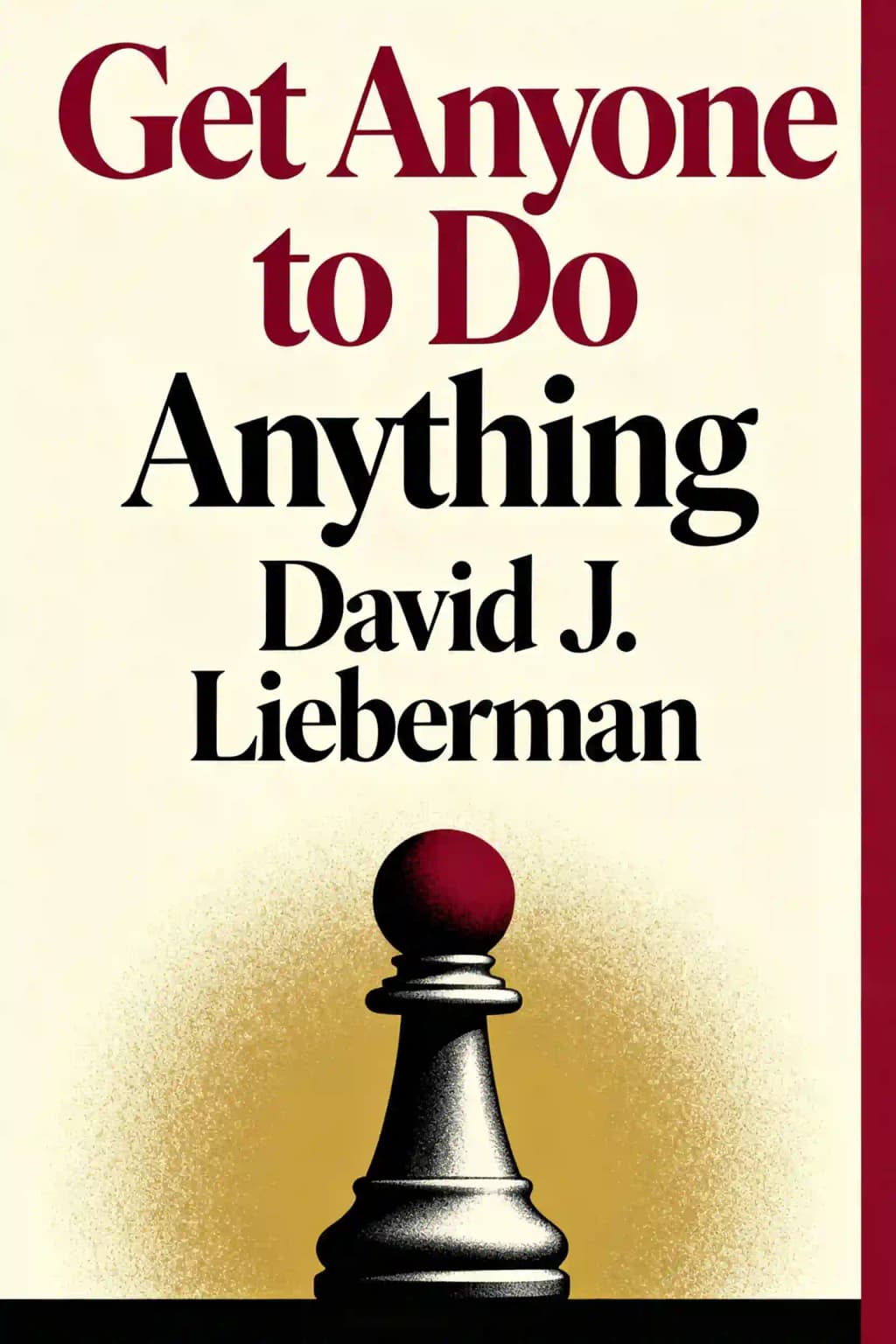
Master the psychology of influence with "Get Anyone to Do Anything" - the NYT bestseller taught to FBI, CIA, and military elites. What secret persuasion technique do government negotiators use that you don't know yet?
David J. Lieberman, Ph.D., author of Get Anyone to Do Anything: Never Feel Powerless Again, is an award-winning psychologist and bestselling authority on human behavior and interpersonal dynamics. A New York Times bestselling author, Lieberman blends clinical psychology with practical strategies for influence and conflict resolution, drawing from his Neuro-Dynamic Analysis framework.
His work has been featured on The Today Show, Fox News, and The View, and his techniques are utilized by the FBI, CIA, and Fortune 500 companies.
Lieberman’s other influential books, including Never Be Lied to Again and Mindreader, explore deception detection and communication psycholinguistics. His 11 titles, translated into 27 languages, have sold millions of copies worldwide.
A sought-after speaker, Lieberman’s methods are taught in MBA programs and applied by executives and law enforcement professionals. His 2022 release, Mindreader, adapted psychological principles for digital-era communication, reinforcing his reputation as a pioneer in behavioral analysis.
Get Anyone to Do Anything explores psychological strategies to influence behavior, leveraging principles like scarcity, authority, and social dynamics. Lieberman provides actionable tactics such as setting deadlines, using incremental requests to build compliance, and projecting confidence to steer interactions. The book aims to empower readers to navigate personal and professional relationships effectively through subconscious persuasion techniques.
This book suits professionals, negotiators, parents, or anyone seeking to improve interpersonal influence. It’s particularly valuable for those in leadership, sales, or conflict resolution roles, offering tools to ethically persuade others without manipulation. Readers interested in behavioral psychology or self-improvement will find its research-backed methods practical.
Yes, for its concise, actionable advice rooted in psychology. Lieberman distills complex concepts like social proof and inertia into usable strategies, making it a resource for real-world applications. Critics note its pragmatic approach but caution against misusing tactics unethically.
Key principles include:
Lieberman emphasizes ethical influence over manipulation, focusing on subconscious triggers rather than overt tactics. His strategies, like using deadlines and incremental requests, prioritize mutual benefit rather than coercion—contrasting with more aggressive frameworks in similar works.
Some argue the tactics could be misused for manipulation if applied unethically. Critics also note that over-reliance on these strategies might strain relationships if transparency is lacking. However, Lieberman frames techniques as tools for mutual benefit.
Use deadlines to accelerate team decisions, break projects into smaller tasks to foster momentum, and model confident communication to inspire follow-through. The book’s principles help resolve conflicts, negotiate salaries, and lead meetings effectively.
David J. Lieberman, Ph.D., is a behavioral psychologist and bestselling author of 13 books translated into 28 languages. He has trained U.S. military and intelligence agencies and frequently appears on media like The Today Show. His expertise blends academic rigor with practical insights.
While both explore persuasion, Cialdini’s Influence focuses on foundational principles (reciprocity, commitment), whereas Lieberman offers step-by-step tactics for specific scenarios (negotiations, deadlines). Lieberman’s approach is more actionable, while Cialdini’s is theoretical.
In an era of remote work and digital communication, understanding subconscious cues remains critical. The book’s strategies adapt to virtual negotiations, social media interactions, and AI-driven communication, ensuring continued applicability.
通过作者的声音感受这本书
将知识转化为引人入胜、富含实例的见解
快速捕捉核心观点,高效学习
以有趣互动的方式享受这本书
People do things for those they like.
Optimism is universally attractive.
First impressions aren't just important-they're defining.
Confidence attracts people like nothing else.
If you don't place value on yourself, someone else will determine your worth.
将《Get anyone to do anything and never feel powerless again》的核心观点拆解为易于理解的要点,了解创新团队如何创造、协作和成长。
将《Get anyone to do anything and never feel powerless again》提炼为快速记忆要点,突出坦诚、团队合作和创造力的关键原则。

通过生动的故事体验《Get anyone to do anything and never feel powerless again》,将创新经验转化为令人难忘且可应用的精彩时刻。
随心提问,选择声音,共同创造真正与你产生共鸣的见解。

"Instead of endless scrolling, I just hit play on BeFreed. It saves me so much time."
"I never knew where to start with nonfiction—BeFreed’s book lists turned into podcasts gave me a clear path."
"Perfect balance between learning and entertainment. Finished ‘Thinking, Fast and Slow’ on my commute this week."
"Crazy how much I learned while walking the dog. BeFreed = small habits → big gains."
"Reading used to feel like a chore. Now it’s just part of my lifestyle."
"Feels effortless compared to reading. I’ve finished 6 books this month already."
"BeFreed turned my guilty doomscrolling into something that feels productive and inspiring."
"BeFreed turned my commute into learning time. 20-min podcasts are perfect for finishing books I never had time for."
"BeFreed replaced my podcast queue. Imagine Spotify for books — that’s it. 🙌"
"It is great for me to learn something from the book without reading it."
"The themed book list podcasts help me connect ideas across authors—like a guided audio journey."
"Makes me feel smarter every time before going to work"

免费获取《Get anyone to do anything and never feel powerless again》摘要的 PDF 或 EPUB 版本。可打印或随时离线阅读。
Ever wonder why some people effortlessly influence others while you struggle to be heard? The answer isn't charisma or luck-it's psychological science. Dr. David Lieberman's groundbreaking work reveals that influence follows predictable patterns anyone can master. These techniques are so effective that intelligence agencies in over 35 countries have incorporated them into their training programs. Unlike vague self-help advice, these are concrete tactics backed by decades of research. The foundation is simple yet profound: human behavior follows predictable patterns, and once you understand these patterns, you can ethically influence almost anyone in any situation.