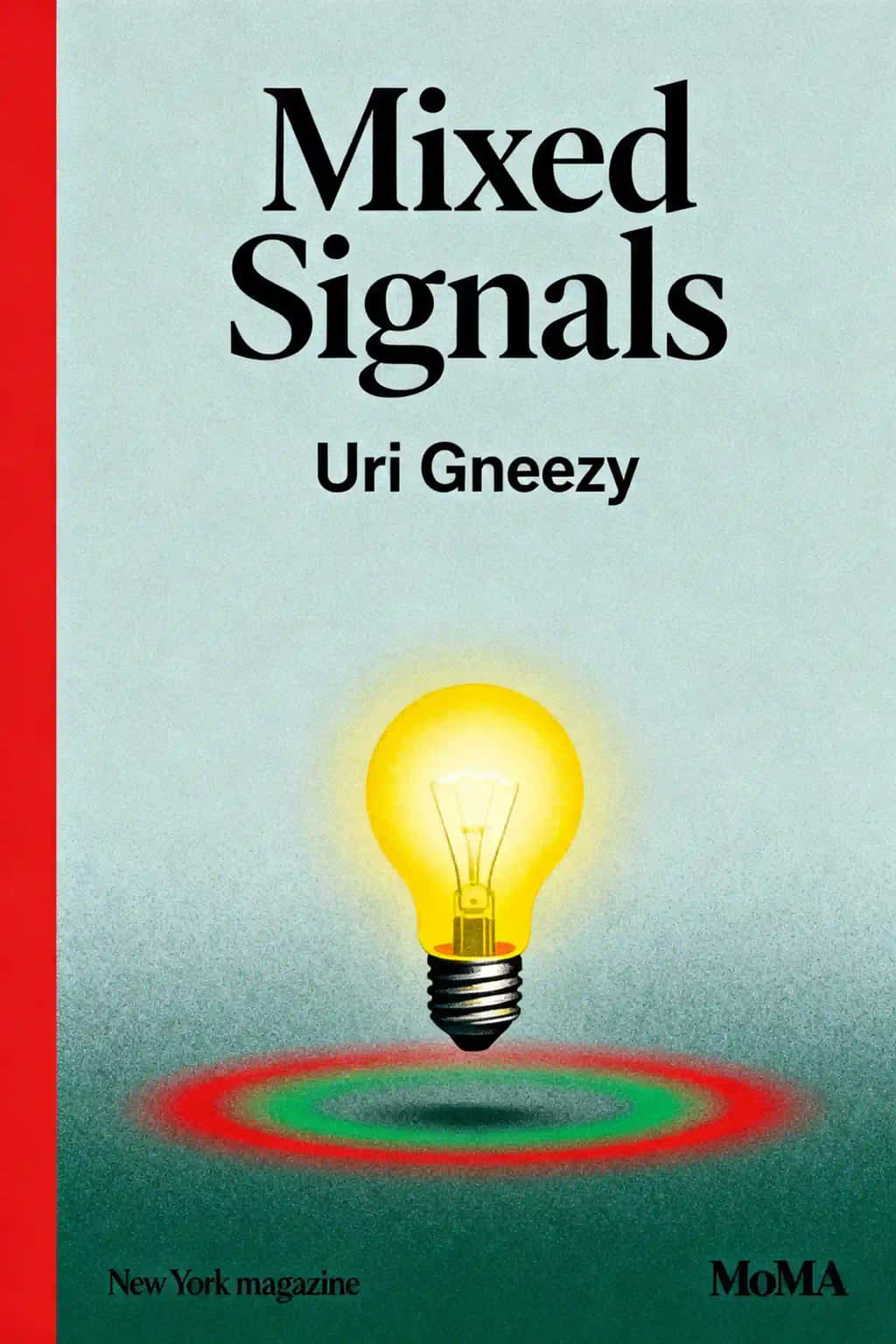
Mixed Signals
How Incentives Really Work
Overview of Mixed Signals
In "Mixed Signals," behavioral economist Uri Gneezy reveals why incentives often backfire. Adam Grant-endorsed and praised by Angela Duckworth, this playbook exposes how Wells Fargo's scandal stemmed from misaligned rewards. Want to motivate effectively? The secret isn't more incentives - it's better ones.

Key Themes in Mixed Signals
- incentive design
- behavioral signaling
- situational ethics
- costly signaling
- social identity
Quotes from Mixed Signals
Incentives are the invisible forces that shape our behavior.
Aligning what we say with the incentives we offer creates credible signals.
Signals serve as valuable tools for communicating private information.
Our choices and actions signal our values to others.
People follow the incentives, not the rhetoric.
Characters in Mixed Signals
- Uri GneezyAuthor and economist studying human behavior
- Ron GneezyThe author's son used as a case study on honesty
- Michael SpenceNobel Prize winner who studied education signals
About the Author
About the Author of Mixed Signals
Uri Gneezy, author of Mixed Signals: How Incentives Really Work, is a leading behavioral economist and the Epstein/Atkinson Endowed Chair in Behavioral Economics at UC San Diego’s Rady School of Management. Specializing in experimental economics, Gneezy pioneers field studies that uncover how incentives drive human behavior in real-world contexts, from workplace dynamics to consumer decision-making.
His research on topics like gender-based competition, habit formation, and unintended consequences of incentive design has shaped policy and business strategies globally.
Gneezy co-authored the influential book The Why Axis with John A. List, which uses field experiments to decode hidden economic motivations. A frequent contributor to Behavioral Scientist and speaker at institutions like the University of Chicago, he blends academic rigor with practical insights through Gneezy Consulting, advising organizations on incentive design.
Mixed Signals builds on his decades of research, demonstrating how misaligned incentives create costly misunderstandings and offering frameworks to resolve them. Translated into multiple languages, the book reflects Gneezy’s reputation for transforming complex behavioral concepts into actionable tools, cited by educators, executives, and policymakers alike.
Download Summary of Mixed Signals
Get the Mixed Signals summary as a free PDF or EPUB. Print it or read offline anytime.
FAQs About This Book
Mixed Signals explores how incentives shape behavior through psychological, cultural, and contextual lenses. Behavioral economist Uri Gneezy reveals how incentives send social and self-signals that influence decisions, using real-world examples like COVID vaccine adoption and pricing strategies. The book emphasizes aligning incentives with desired outcomes to avoid unintended consequences, offering frameworks for designing effective reward systems.
Managers, policymakers, marketers, and anyone designing reward systems will benefit from this book. It’s ideal for readers interested in behavioral economics, organizational psychology, or nudging behavior ethically. Gneezy’s relatable examples (e.g., Disney World strategies, “pay to quit” models) make complex concepts accessible to non-experts.
Yes—Gneezy blends academic rigor with engaging storytelling, using charts, graphs, and humor to simplify concepts like signaling theory. While some examples feel repetitive, the book’s actionable insights on incentive design make it valuable for professionals navigating workplace or policy challenges.
Key ideas include:
- Social vs. self-signaling: Incentives affect how others perceive us (social) and our self-image (self).
- Alignment: Effective incentives reinforce stories that match organizational goals (e.g., “pay what you want” models).
- Unintended consequences: Poorly designed rewards can backfire, like undermining altruistic motives.
Gneezy illustrates concepts with diverse cases:
- Coca-Cola’s pricing on hot days to balance profit and customer trust.
- COVID vaccine incentives and how monetary rewards altered public perception.
- Disney World’s FastPass system as a signal of value.
This tactic offers employees money to leave their jobs, filtering out uncommitted workers. It reinforces self-signaling (“I stay because I value my role”) and social signaling (“We retain dedicated teams”). Amazon and Zappos have successfully implemented this.
Gneezy warns that AI-driven incentives could exploit behavioral biases if not carefully monitored. He advocates for A/B testing and transparency to align algorithmic rewards with human values, citing generative AI’s potential to manipulate decisions.
Some readers find explanations overly lengthy, with redundant case studies. However, these examples reinforce core principles, making the book a practical (if occasionally verbose) guide.
Unlike theoretical texts, Gneezy focuses on actionable frameworks for incentive design. It complements Nudge by Thaler/Sunstein with more emphasis on organizational applications and real-time experimentation.
With remote work and AI reshaping incentives, the book’s lessons on signaling (e.g., hybrid work policies, gig economy rewards) help navigate modern challenges. Its ethics-focused approach aligns with growing demand for responsible AI.
- Use self-signaling: Design rewards that employees perceive as personal growth (e.g., training stipends).
- Avoid crowding out: Monetary bonuses shouldn’t replace intrinsic motivation (e.g., volunteer programs).
- Test iteratively: Run small-scale A/B tests before company-wide rollout.
- “The holy grail is making incentives’ signals align with self- and social-stories.”
- “Every incentive tells a story—make sure it’s yours.”