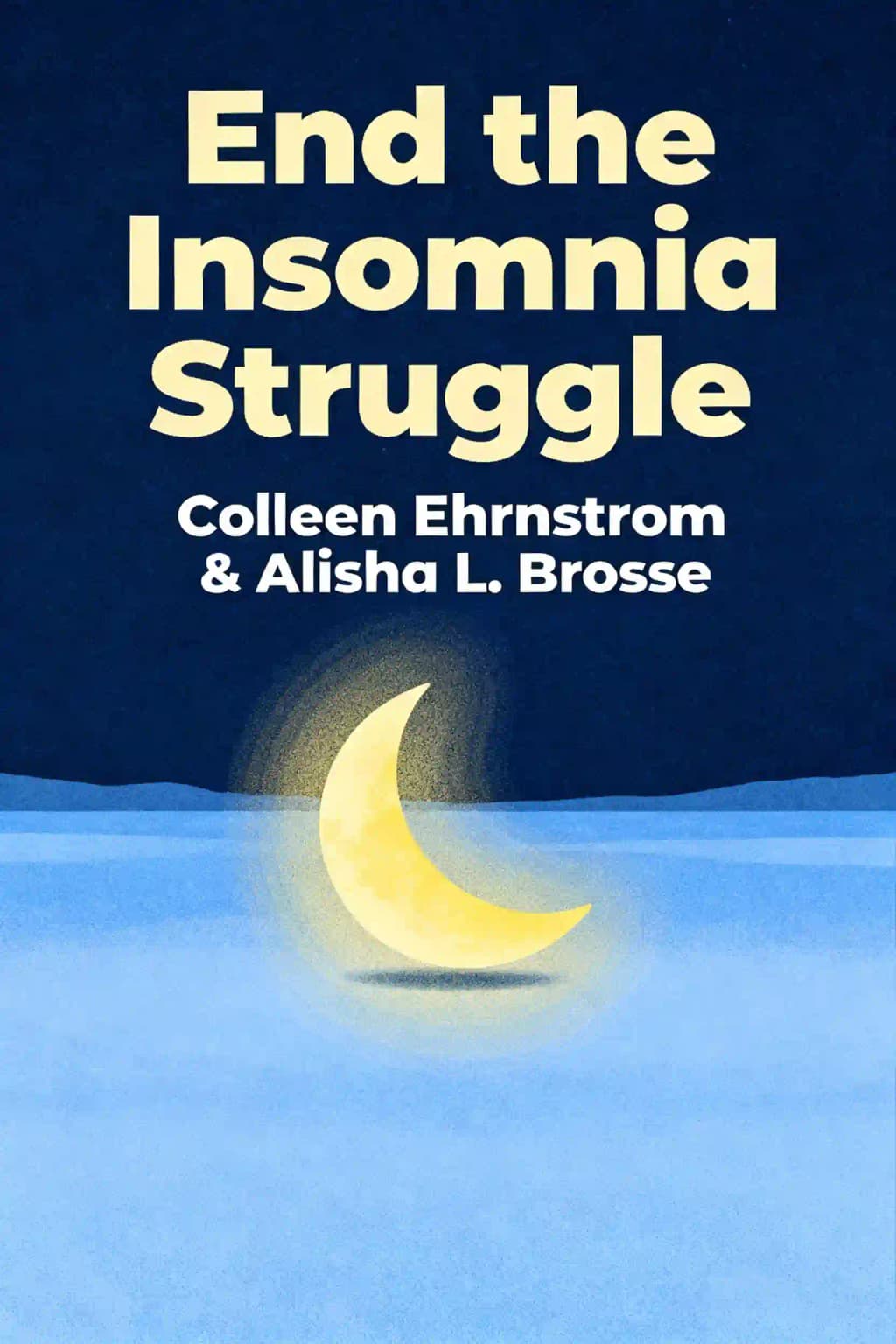
Struggling with sleepless nights? "End the Insomnia Struggle" delivers evidence-based CBT-I strategies that transformed sleep therapy. Unlike one-size-fits-all approaches, this personalized guide helps you decode your unique sleep patterns - what many readers call "the missing piece" to reclaiming restful nights.
Colleen Ehrnstrom, PhD, ABPP, and Alisha L. Brosse, PhD, are clinical psychologists and insomnia specialists who co-authored End the Insomnia Struggle: A Step-by-Step Guide to Help You Get to Sleep and Stay Asleep.
Their work blends cognitive behavioral therapy for insomnia (CBT-I) and acceptance and commitment therapy (ACT). Ehrnstrom is board-certified in CBT and a VA family program psychologist. Brosse is the director of a bipolar clinic and founder of a private practice. Both draw on decades of clinical experience to address sleep disorders.
Ehrnstrom and Brosse integrate sleep physiology with actionable strategies, reflecting their roles as innovators in behavioral sleep medicine. They have presented CBT-I frameworks at national conferences, including the Association of Behavioral and Cognitive Therapies (ABCT). Ehrnstrom’s embedded counseling model at CU Boulder bridges mental health and academic success.
Recognized in ABCT’s Self-Help Book Recommendations, End the Insomnia Struggle offers a science-backed, customizable program trusted by clinicians and readers seeking lasting relief from chronic sleeplessness.
End the Insomnia Struggle provides a customizable, medication-free program blending Cognitive Behavioral Therapy for Insomnia (CBT-I) and Acceptance and Commitment Therapy (ACT). It guides readers to address sleep challenges through behavioral adjustments, cognitive reframing, and tracking tools like sleep logs, tailored to individual physiology and lifestyle.
This book is ideal for chronic insomnia sufferers seeking science-backed, non-pharmaceutical solutions. It’s particularly useful for those open to structured self-guided strategies, such as sleep restriction and mindfulness, and individuals needing flexibility to adapt methods to their unique circumstances.
Yes—it’s a practical, evidence-based resource praised for combining CBT-I’s proven techniques with ACT’s psychological flexibility principles. The step-by-step approach, printable worksheets, and troubleshooting tips make it actionable for long-term sleep improvement.
The book integrates CBT-I’s focus on sleep-drive optimization and habit restructuring with ACT’s emphasis on reducing sleep-related anxiety through mindfulness and value-driven behavior. This dual approach targets both physiological patterns and psychological barriers to rest.
Sleep logs are critical for tracking bedtime, wake time, and sleep quality to identify patterns. This data informs personalized adjustments, such as modifying time in bed or addressing environmental triggers, ensuring strategies align with the reader’s specific needs.
Yes—its CBT-I/ACT framework is clinically validated for chronic cases. The book provides tools to break cycles of hyperarousal and rumination, with modules on sleep restriction, stimulus control, and cognitive defusion to address persistent sleeplessness.
Key strategies include:
It encourages using “effectiveness as a compass”—prioritizing strategies that yield results over rigid adherence to rules. Readers troubleshoot stalls by revisiting sleep logs, adjusting strategies, and integrating new techniques without abandoning progress.
Yes—it advises consulting a healthcare provider first if conditions like sleep apnea or bipolar disorder coexist with insomnia. Medical supervision ensures safety when combining self-guided methods with existing treatments.
Unlike one-size-fits-all guides, it emphasizes personalization through modular strategies. The ACT component also distinguishes it by addressing emotional resistance to sleep efforts, a gap in traditional CBT-I programs.
Yes—downloadable worksheets, audio exercises, and a bonus clinician chapter supplement the text. These resources help implement sleep restriction schedules, cognitive exercises, and mindfulness practices effectively.
This principle urges readers to judge strategies by their real-world results rather than theoretical ideals. For example, if waking earlier improves daytime alertness, it’s prioritized over achieving arbitrary sleep duration goals.
通过作者的声音感受这本书
将知识转化为引人入胜、富含实例的见解
快速捕捉核心观点,高效学习
以有趣互动的方式享受这本书
Morning sunlight exposure is particularly important for setting your clock.
Willingness isn't resignation or giving up.
The good news is that we can break this cycle by changing what we do.
The harder you pull, the more exhausted you become, yet you can't seem to win.
将《End the Insomnia Struggle》的核心观点拆解为易于理解的要点,了解创新团队如何创造、协作和成长。
将《End the Insomnia Struggle》提炼为快速记忆要点,突出坦诚、团队合作和创造力的关键原则。

通过生动的故事体验《End the Insomnia Struggle》,将创新经验转化为令人难忘且可应用的精彩时刻。
随心提问,选择声音,共同创造真正与你产生共鸣的见解。

"Instead of endless scrolling, I just hit play on BeFreed. It saves me so much time."
"I never knew where to start with nonfiction—BeFreed’s book lists turned into podcasts gave me a clear path."
"Perfect balance between learning and entertainment. Finished ‘Thinking, Fast and Slow’ on my commute this week."
"Crazy how much I learned while walking the dog. BeFreed = small habits → big gains."
"Reading used to feel like a chore. Now it’s just part of my lifestyle."
"Feels effortless compared to reading. I’ve finished 6 books this month already."
"BeFreed turned my guilty doomscrolling into something that feels productive and inspiring."
"BeFreed turned my commute into learning time. 20-min podcasts are perfect for finishing books I never had time for."
"BeFreed replaced my podcast queue. Imagine Spotify for books — that’s it. 🙌"
"It is great for me to learn something from the book without reading it."
"The themed book list podcasts help me connect ideas across authors—like a guided audio journey."
"Makes me feel smarter every time before going to work"

免费获取《End the Insomnia Struggle》摘要的 PDF 或 EPUB 版本。可打印或随时离线阅读。
You're lying in bed at 3 AM, wide awake. Again. Your mind races through tomorrow's to-do list while you mentally calculate the dwindling hours until your alarm goes off. Sound familiar? One in three people will face this battle at some point in their lives, and for 10% of adults, it becomes a nightly war. Here's the cruel irony: the harder you fight for sleep-sleeping in on weekends, chugging extra coffee, forcing yourself to stay in bed-the more elusive it becomes. This approach combines Cognitive Behavioral Therapy for Insomnia (CBT-I) with Acceptance and Commitment Therapy (ACT), creating what researchers call the "sweet spot"-strict enough to work, flexible enough to live with. It's about working with your body's natural rhythms rather than against them, transforming your relationship with sleep from an exhausting struggle into a sustainable partnership.