

Overview of The awakening of intelligence (A Discus book)
Krishnamurti's philosophical masterpiece, endorsed by the Dalai Lama as "one of the greatest philosophers of the 20th century," challenges conventional thinking. Once groomed as the "reincarnation of Jesus Christ," he dramatically rejected this role - sparking a revolutionary approach to intelligence that captivated Bruce Lee and modern seekers alike.
- True intelligence emerges when mind recognizes its fundamental limitations clearly.
- Krishnamurti reveals observer and observed are one unified reality.
- Freedom from conditioning requires awareness without resistance or judgment.
- Meditation is choiceless awareness, not a technique or system.
- Thought operates mechanically, while intelligence functions beyond time completely.
- The Awakening of Intelligence explains fear perpetuates itself through thought.
- Total attention without effort brings sensitivity and destroys mediocrity.
- Krishnamurti shows gurus and tradition condition rather than liberate mind.
- Psychological fragmentation dissolves when consciousness sees its artificial divisions.
- Truth is pathless, requiring direct observation, not external authority.
- Self-knowledge through relationship mirrors your conditioning and creates freedom.
- Living fully present eliminates fear rooted in psychological time.
About the Author of The awakening of intelligence (A Discus book)
Jiddu Krishnamurti (1895–1986) was the author of The Awakening of Intelligence and one of the most influential Indian philosophers and spiritual speakers of the twentieth century. Born in Madanapalle, South India, Krishnamurti devoted nearly sixty years to exploring consciousness, meditation, and human transformation through spontaneous talks delivered to audiences worldwide.
The Awakening of Intelligence represents one of his most comprehensive philosophical works, featuring profound dialogues with scientists, philosophers, and spiritual seekers—most notably physicist David Bohm—that bridge science and spirituality while examining the nature of thought, perception, and awareness.
Krishnamurti's other celebrated works include Freedom from the Known, The First and Last Freedom, and Think on These Things. He founded several schools in India, England, and the United States based on his revolutionary educational philosophy emphasizing critical thinking and self-awareness over traditional conditioning. Rejecting all organized religion and spiritual authority, he advocated for individual transformation through "choiceless awareness." His teachings have been translated into numerous languages and continue to inspire seekers, educators, and thinkers globally decades after his death in 1986.
FAQs About The awakening of intelligence (A Discus book)
What is The Awakening of Intelligence by J. Krishnamurti about?
The Awakening of Intelligence by J. Krishnamurti is a comprehensive collection of talks and discussions from the early 1970s exploring the nature of true intelligence beyond thought and intellectual reasoning. The book examines how the mind remains trapped by psychological conditioning, fear, and fragmentation, and presents meditation as choiceless awareness rather than a technique. Krishnamurti argues that intelligence awakens when the mind recognizes its own limitations and operates in harmony with the heart and body.
Who is J. Krishnamurti and why is he significant?
J. Krishnamurti (1895-1986) was an Indian philosopher and spiritual speaker regarded as one of the greatest philosophical figures of the twentieth century. Initially groomed by the Theosophical Society to be a World Teacher, Krishnamurti dissolved the Order of the Star in 1929 and spent sixty years traveling the world sharing his message of psychological freedom. He asserted that "truth is a pathless land" and rejected all gurus, doctrines, and authorities, emphasizing direct self-inquiry and observation instead.
Who should read The Awakening of Intelligence?
The Awakening of Intelligence is ideal for seekers interested in deep philosophical inquiry, self-transformation, and understanding the nature of consciousness beyond conventional spirituality. This book suits readers willing to question their conditioning, explore the relationship between thought and reality, and engage with challenging concepts without expecting ready-made answers. It appeals to those drawn to Eastern philosophy, mindfulness, and radical approaches to psychological freedom rather than quick fixes or motivational content.
Is The Awakening of Intelligence by J. Krishnamurti worth reading?
The Awakening of Intelligence is worth reading for those seeking profound transformation rather than superficial solutions. The book demands careful, reflective reading as it challenges fundamental assumptions about the self, thought, and reality through Krishnamurti's distinctive approach of posing questions without offering definitive answers. While it served as a powerful introduction to perceptual conditioning for many readers, its repetitive style and abstract concepts may frustrate those seeking practical, step-by-step guidance.
What is Krishnamurti's definition of intelligence in The Awakening of Intelligence?
In The Awakening of Intelligence, Krishnamurti defines intelligence as something beyond personal intellect or reasoning that emerges when the brain perceives its own limitations. This intelligence is "immeasurable" and "not of time," operating outside memory and conditioning when the mind, heart, and body function in complete harmony. Unlike thought, which is mechanical and time-bound, intelligence arises spontaneously in a quiet mind that has recognized that thought cannot discover what is truly new.
What does The Awakening of Intelligence teach about meditation?
The Awakening of Intelligence presents meditation not as a technique or system to control thought, but as a natural state of a completely quiet, unconditioned mind where true intelligence can function. Krishnamurti emphasizes that genuine meditation arises from living with order, virtue, and right relationship in daily life rather than through discipline or suppression. It represents freedom from the known—a release from accumulated knowledge and conditioning that opens the mind to the immeasurable reality beyond thought.
What is the relationship between observer and observed in The Awakening of Intelligence?
The Awakening of Intelligence reveals that the observer and the observed are fundamentally not separate—realizing this unity dissolves inner conflict and psychological struggle. When the observer sees itself as separate from what it observes, it creates resistance, fragmentation, and division within consciousness. True perception happens when the mind observes without the interference of past memories, images, or judgments, seeing reality directly as it is without the distorting filter of the self.
How does The Awakening of Intelligence address fear and psychological conditioning?
The Awakening of Intelligence explains that fear and pleasure are both sustained by thought, which projects memories of pain or pleasure into a psychological future. Krishnamurti identifies conditioning as patterns of thought operating through mental grooves created by clinging to experiences, which fragment reality and keep us bound to the past. Freedom from fear comes through living wholly in the present without psychological time, and through observing fear without resistance, which dissolves its hold on consciousness.
What is the difference between thought and intelligence in The Awakening of Intelligence?
In The Awakening of Intelligence, Krishnamurti distinguishes thought as mechanical, repetitive, and time-bound—based entirely on memory and past experience—while intelligence is timeless and emerges from silence. Thought operates through measurement and fragmentation, creating division and conflict, whereas intelligence perceives wholeness and acts without internal contradiction. While thought can point toward truth like a signpost, only intelligence can perceive reality completely and allow thought to function sanely without generating psychological problems.
What does The Awakening of Intelligence say about freedom and liberation?
The Awakening of Intelligence defines freedom not as mere reaction against something, but as total liberation from the mind's habit-forming machinery and conditioning. True freedom requires passion and energy, which are typically blocked by fear and psychological dullness, and involves cutting off the past including all images and conditioning that create the sense of "me". Krishnamurti emphasizes that only a free mind can observe reality without distortion, leading to genuine understanding and transformation rather than superficial change.
What is choiceless awareness in The Awakening of Intelligence by J. Krishnamurti?
Choiceless awareness in The Awakening of Intelligence refers to a state of complete attention—listening or looking without interference, effort, or the exercise of will. This total attention is not mechanical concentration but a vital, living quality that brings sensitivity, destroys mediocrity, and enables direct contact with reality as it is. Through choiceless awareness, one can perceive disorder naturally and bring about authentic order and virtue without the tyranny of one mental fragment trying to control others.
What are the key criticisms of The Awakening of Intelligence?
The Awakening of Intelligence faces criticism for its repetitive presentation of similar concepts across multiple talks and discussions, which can feel redundant to readers seeking varied insights. Some find Krishnamurti's approach frustratingly abstract and impractical, offering profound questions but few concrete methods or actionable steps for transformation. The transcribed seminar format also means the book lacks the polish and structure of traditional philosophical writing, making it challenging to extract systematic guidance despite its valuable insights on consciousness and freedom.
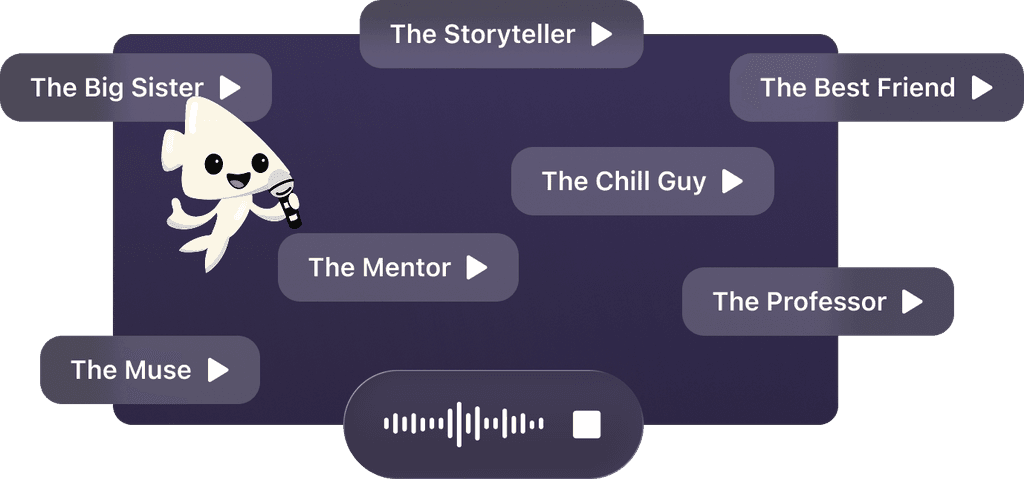
Feel the book through the author's voice
Turn knowledge into engaging, example-rich insights
Capture key ideas in a flash for fast learning
Enjoy the book in a fun and engaging way
Characters in The awakening of intelligence (A Discus book)
- Jiddu KrishnamurtiThe philosopher and author of the book
- David BohmPhysicist who engaged in dialogues with the author
- Ram DassSpiritual teacher influenced by the author
- Bruce LeeMartial artist who studied the author's work
Key Themes in The awakening of intelligence (A Discus book)
- psychological conditioning
- observer and observed
- fragmented consciousness
- limitations of thought
- direct perception
Quotes from The awakening of intelligence (A Discus book)
Truth is a pathless land, and you cannot approach it by any path whatsoever, by any religion, by any sect.
When you call yourself an Indian or a Muslim or a Christian or a European, or anything else, you are being violent.
I am the world, and the world is me.
I am jealousy rather than I have jealousy?
Explore Your Way of Learning
 Quick Summary Mode
Read or listen to The awakening of intelligence (A Discus book) Summary in 9 Minutes
Break down key ideas from The awakening of intelligence (A Discus book) into bite-sized takeaways to understand how innovative teams create, collaborate, and grow.

 Fun Mode
The awakening of intelligence (A Discus book) Lessons Told Through 23-Min Stories
Experience The awakening of intelligence (A Discus book) through vivid storytelling that turns innovation lessons into moments you'll remember and apply.
 Personalize Mode
Experience The awakening of intelligence (A Discus book) in your own learning style
Ask anything, choose your learning style, and co-create insights that truly resonate with you.
From Columbia University alumni built in San Francisco
"Instead of endless scrolling, I just hit play on BeFreed. It saves me so much time."


"I never knew where to start with nonfiction—BeFreed’s book lists turned into podcasts gave me a clear path."


"Perfect balance between learning and entertainment. Finished ‘Thinking, Fast and Slow’ on my commute this week."
"Crazy how much I learned while walking the dog. BeFreed = small habits → big gains."
"Reading used to feel like a chore. Now it’s just part of my lifestyle."

"Feels effortless compared to reading. I’ve finished 6 books this month already."
"BeFreed turned my guilty doomscrolling into something that feels productive and inspiring."

"BeFreed turned my commute into learning time. 20-min podcasts are perfect for finishing books I never had time for."
"BeFreed replaced my podcast queue. Imagine Spotify for books — that’s it. 🙌"

"It is great for me to learn something from the book without reading it."
"The themed book list podcasts help me connect ideas across authors—like a guided audio journey."
"Makes me feel smarter every time before going to work"
From Columbia University alumni built in San Francisco
"Instead of endless scrolling, I just hit play on BeFreed. It saves me so much time."
"I never knew where to start with nonfiction—BeFreed’s book lists turned into podcasts gave me a clear path."
"Perfect balance between learning and entertainment. Finished ‘Thinking, Fast and Slow’ on my commute this week."
"Crazy how much I learned while walking the dog. BeFreed = small habits → big gains."
"Reading used to feel like a chore. Now it’s just part of my lifestyle."
"Feels effortless compared to reading. I’ve finished 6 books this month already."
"BeFreed turned my guilty doomscrolling into something that feels productive and inspiring."
"BeFreed turned my commute into learning time. 20-min podcasts are perfect for finishing books I never had time for."
"BeFreed replaced my podcast queue. Imagine Spotify for books — that’s it. 🙌"
"It is great for me to learn something from the book without reading it."
"The themed book list podcasts help me connect ideas across authors—like a guided audio journey."
"Makes me feel smarter every time before going to work"
"Instead of endless scrolling, I just hit play on BeFreed. It saves me so much time."
"I never knew where to start with nonfiction—BeFreed’s book lists turned into podcasts gave me a clear path."
"Perfect balance between learning and entertainment. Finished ‘Thinking, Fast and Slow’ on my commute this week."
"Crazy how much I learned while walking the dog. BeFreed = small habits → big gains."
"Reading used to feel like a chore. Now it’s just part of my lifestyle."
"Feels effortless compared to reading. I’ve finished 6 books this month already."
"BeFreed turned my guilty doomscrolling into something that feels productive and inspiring."
"BeFreed turned my commute into learning time. 20-min podcasts are perfect for finishing books I never had time for."
"BeFreed replaced my podcast queue. Imagine Spotify for books — that’s it. 🙌"
"It is great for me to learn something from the book without reading it."
"The themed book list podcasts help me connect ideas across authors—like a guided audio journey."
"Makes me feel smarter every time before going to work"
"Instead of endless scrolling, I just hit play on BeFreed. It saves me so much time."
"I never knew where to start with nonfiction—BeFreed’s book lists turned into podcasts gave me a clear path."
"Perfect balance between learning and entertainment. Finished ‘Thinking, Fast and Slow’ on my commute this week."
"Crazy how much I learned while walking the dog. BeFreed = small habits → big gains."
"Reading used to feel like a chore. Now it’s just part of my lifestyle."
"Feels effortless compared to reading. I’ve finished 6 books this month already."
"BeFreed turned my guilty doomscrolling into something that feels productive and inspiring."
"BeFreed turned my commute into learning time. 20-min podcasts are perfect for finishing books I never had time for."
"BeFreed replaced my podcast queue. Imagine Spotify for books — that’s it. 🙌"
"It is great for me to learn something from the book without reading it."
"The themed book list podcasts help me connect ideas across authors—like a guided audio journey."
"Makes me feel smarter every time before going to work"

Download Summary of The awakening of intelligence (A Discus book)
Get the The awakening of intelligence (A Discus book) summary as a free PDF or EPUB. Print it or read offline anytime.


