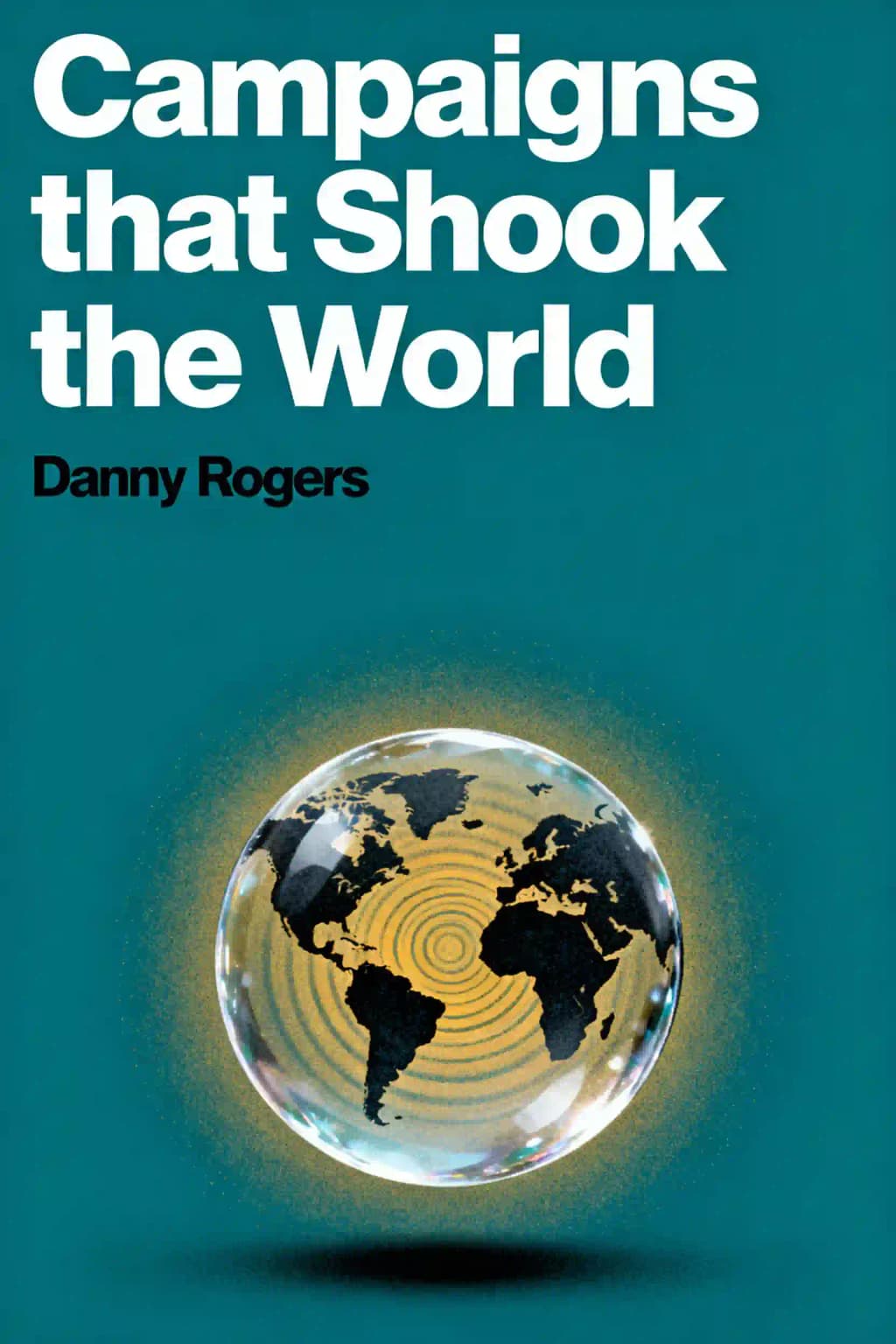
Dive into PR's transformative power with "Campaigns That Shook the World," featuring exclusive insights from Alastair Campbell and Matthew Freud. From Obama's groundbreaking 2008 campaign to Dove's body-positive revolution - how did these strategies forever change how we perceive brands and politics?
Danny Rogers, author of Campaigns That Shook the World, is a pre-eminent media and marketing journalist renowned for dissecting groundbreaking advertising and PR strategies. As editor of Campaign and PRWeek and group editor-in-chief of the Brand Republic Group, Rogers leverages decades of industry expertise to analyze iconic campaigns that redefine consumer engagement.
His work, rooted in commercial creativity and strategic communication, bridges academic marketing theory with real-world impact, informed by contributions to The Guardian, Financial Times, and international broadcast commentary.
Awarded ‘Editor of the Year’ by the British Society of Magazine Editors in 2008, Rogers combines incisive analysis with accessible storytelling, making complex marketing concepts actionable for professionals and enthusiasts alike. His insights are frequently cited in top-tier business programs and industry conferences, cementing his authority in global marketing discourse.
Campaigns That Shook the World has become a staple for marketing students and executives, praised for its blend of historical case studies and forward-thinking frameworks.
Campaigns That Shook the World analyzes groundbreaking marketing and PR campaigns that redefined industries, blending case studies with strategic insights. Danny Rogers, a leading UK media journalist, explores how brands like Nike, Dove, and Red Bull leveraged creativity, timing, and cultural shifts to achieve global impact. The book dissects campaign mechanics, leadership decisions, and societal contexts, offering a playbook for modern marketers.
Marketing professionals, PR specialists, and business leaders seeking to understand high-stakes campaign strategies will gain actionable insights. Students of advertising, communications, or business studies also benefit from its real-world examples. Rogers’ analysis caters to anyone interested in the intersection of branding, media, and cultural momentum.
Yes—the book remains relevant for its timeless principles on audience psychology and crisis management. Rogers updates examples to reflect digital-era challenges like viral misinformation and AI-driven targeting, making it essential for navigating today’s fragmented media landscape.
Rogers argues these elements distinguish memorable campaigns from transient promotions.
The book adapts traditional principles to digital contexts, emphasizing micro-influencer networks and real-time analytics. Case studies like Old Spice’s viral YouTube responses illustrate how agility and platform-specific creativity drive engagement in algorithmic ecosystems.
Rogers introduces the 3D Impact Model:
This model helps evaluate campaigns like Burger King’s Whopper Detour.
These lines underscore Rogers’ focus on audacity and human-centric strategy.
Rogers challenges overreliance on demographic data, advocating for psychographic segmentation. He critiques brands that prioritize short-term metrics over narrative legacy, using examples like Pepsi’s failed protest-themed ad as cautionary tales.
Some argue the book overlooks small-budget campaigns and overemphasizes Western案例. Rogers addresses this in later editions, adding global examples like Safaricom’s mobile payment system in Kenya, but critics note a lingering corporate bias.
While both explore viral marketing, Rogers focuses on large-scale campaigns with institutional backing, whereas Berger examines grassroots sharing. Campaigns prioritizes boardroom strategy; Contagious delves into psychological triggers for everyday shareability.
Rogers’ updated chapters discuss using AI for sentiment analysis and predictive trend modeling but warn against losing creative intuition. He cites Netflix’s AI-aided content campaigns as balanced examples of human-machine collaboration.
The “Apology Paradox” framework advises swift, authentic responsibility-taking (e.g., JetBlue’s 2007 Valentine’s Day crisis) over legalistic denials. Rogers shows how transparent crises can boost long-term trust if managed empathetically.
通过作者的声音感受这本书
将知识转化为引人入胜、富含实例的见解
快速捕捉核心观点,高效学习
以有趣互动的方式享受这本书
These campaigns transcended traditional boundaries.
The campaign communicated feelings rather than just rational arguments.
Campbell fundamentally changed British politics.
New Labour succeeded as a classic "challenger brand".
People began to question what the Monarchy was for.
将《Campaigns that shook the world》的核心观点拆解为易于理解的要点,了解创新团队如何创造、协作和成长。
将《Campaigns that shook the world》提炼为快速记忆要点,突出坦诚、团队合作和创造力的关键原则。

通过生动的故事体验《Campaigns that shook the world》,将创新经验转化为令人难忘且可应用的精彩时刻。
随心提问,选择声音,共同创造真正与你产生共鸣的见解。

"Instead of endless scrolling, I just hit play on BeFreed. It saves me so much time."
"I never knew where to start with nonfiction—BeFreed’s book lists turned into podcasts gave me a clear path."
"Perfect balance between learning and entertainment. Finished ‘Thinking, Fast and Slow’ on my commute this week."
"Crazy how much I learned while walking the dog. BeFreed = small habits → big gains."
"Reading used to feel like a chore. Now it’s just part of my lifestyle."
"Feels effortless compared to reading. I’ve finished 6 books this month already."
"BeFreed turned my guilty doomscrolling into something that feels productive and inspiring."
"BeFreed turned my commute into learning time. 20-min podcasts are perfect for finishing books I never had time for."
"BeFreed replaced my podcast queue. Imagine Spotify for books — that’s it. 🙌"
"It is great for me to learn something from the book without reading it."
"The themed book list podcasts help me connect ideas across authors—like a guided audio journey."
"Makes me feel smarter every time before going to work"

免费获取《Campaigns that shook the world》摘要的 PDF 或 EPUB 版本。可打印或随时离线阅读。
A red card that destroyed a career. A monarchy on the brink of irrelevance. A brand of soap that dared to challenge billion-dollar beauty standards. What transforms ordinary marketing into cultural earthquakes? Nine campaigns-spanning politics, royalty, rock concerts, and social movements-reveal a startling truth: the most powerful ideas don't just sell products or win elections. They rewire how millions of people see themselves and the world. These weren't campaigns that followed trends. They created them. From Margaret Thatcher's rise as Britain's first modern political communicator to Barack Obama's digital revolution, each story illuminates how strategic vision, authentic conviction, and bold execution can reshape reality itself. The difference between polishing apples and fundamentally changing how we perceive them lies in understanding one principle: great campaigns don't interrupt culture-they become it.
