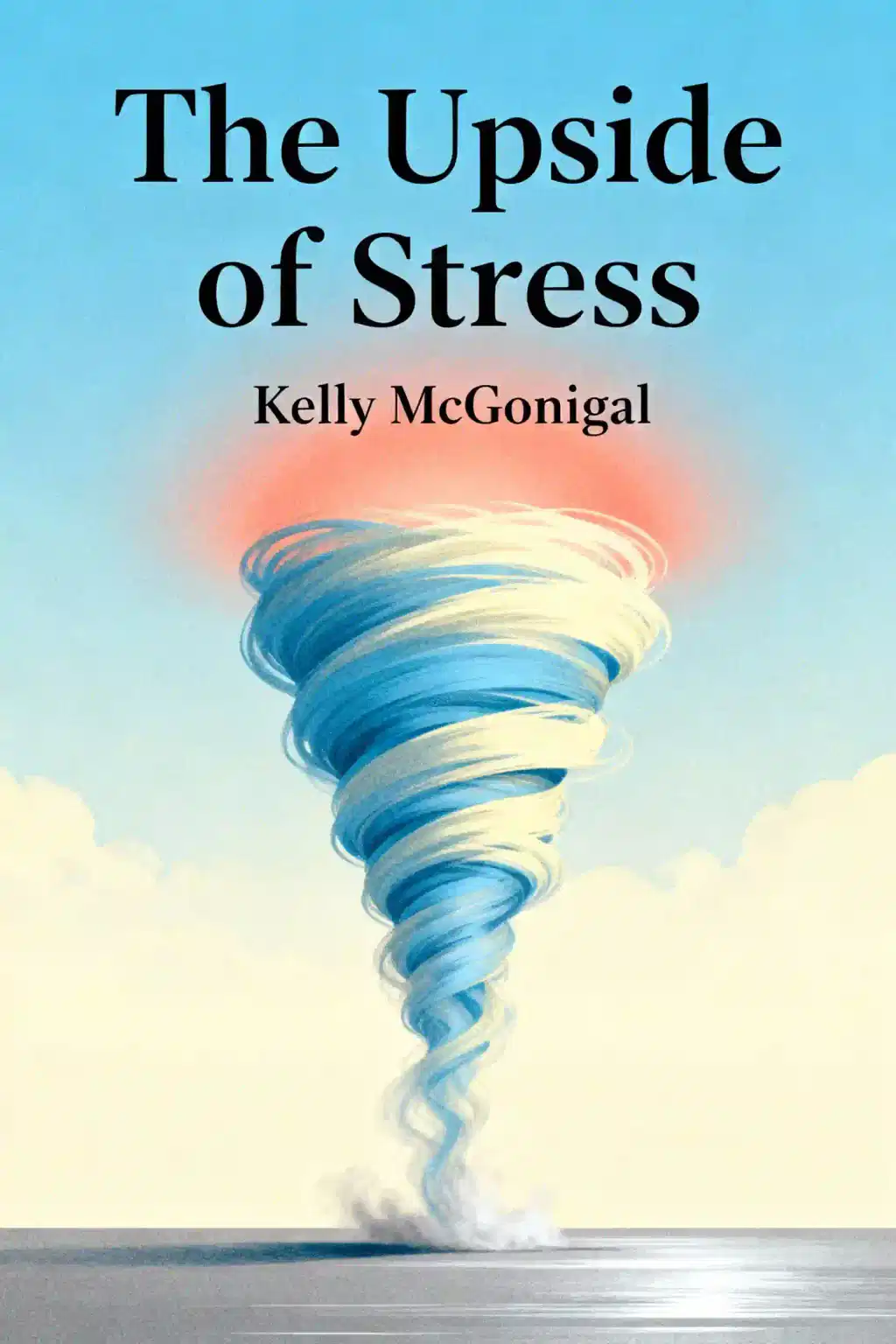
The Upside of Stress: Why Stress Is Good for You, and How to Get Good at It by Kelly McGonigal Summary

Overview of The Upside of Stress
What if stress isn't killing you, but your belief about it is? Stanford psychologist Kelly McGonigal reveals how embracing stress can enhance performance and longevity - backed by a shocking study of 30,000 Americans whose mindsets determined their survival.
- Stress becomes harmful only when you believe it’s damaging to your health.
- Caring creates stress – your body’s energy surge means something matters.
- Oxytocin transforms stress into social bonding through biological “tend-and-befriend” responses.
- Stress resilience grows through adversity exposure like muscle develops with exercise.
- “Challenge response” mindset converts anxiety into focused determination for peak performance.
- Post-stress recovery rituals (breathing, movement) reset your biological stress systems.
- Purposeful stress strengthens immunity and cardiovascular capacity through controlled activation.
- Shared suffering builds trust faster than comfort through collective stress responses.
- Stress inoculation teaches emotional regulation better than avoidance practices.
- Growth-focused stress rewires neural pathways for future resilience and mental flexibility.
- Stress-induced oxytocin repairs heart cells and strengthens cardiovascular function biologically.
- Embracing stress reduces mortality risk more effectively than stress reduction attempts.
About the Author of The Upside of Stress
Kelly McGonigal, Ph.D., is a health psychologist, Stanford University lecturer, and bestselling author of The Upside of Stress: Why Stress Is Good for You, and How to Get Good at It. A leading expert in mind-body science, she specializes in translating neuroscience and psychology research into strategies for resilience and well-being. Her work challenges conventional views on stress, reframing it as a catalyst for growth through mindset shifts—a theme central to her TED Talk “How to Make Stress Your Friend,” viewed over 20 million times.
McGonigal’s authority stems from her Stanford PhD, decades of teaching, and role as former editor-in-chief of the International Journal of Yoga Therapy. She has authored multiple acclaimed books, including The Willpower Instinct and The Joy of Movement, which explore self-control, exercise, and human connection. Her insights have been featured in The New York Times, Forbes, and CNN, and she’s been named an O! Magazine “Visionary” for bridging science and practical wisdom.
The Upside of Stress draws from her research and global speaking engagements, offering tools to transform anxiety into empowerment. The book has been adopted by corporations, healthcare providers, and educators as a blueprint for thriving under pressure.
FAQs About The Upside of Stress
What is The Upside of Stress by Kelly McGonigal about?
The Upside of Stress challenges the notion that stress is inherently harmful, arguing that embracing stress can enhance resilience, performance, and well-being. Stanford psychologist Kelly McGonigal combines neuroscience and psychology to show how shifting your mindset about stress transforms its biological effects, turning it into a catalyst for growth, connection, and meaning.
Who should read The Upside of Stress?
This book is ideal for anyone experiencing high-pressure environments—professionals, caregivers, students, or leaders. It’s particularly valuable for those seeking science-backed strategies to reframe stress as a resource rather than a threat. McGonigal’s insights also benefit healthcare providers, coaches, and educators aiming to help others thrive under adversity.
Is The Upside of Stress worth reading?
Yes, for its groundbreaking perspective on stress as a tool for empowerment. McGonigal’s TED Talk-tested ideas, supported by studies, offer actionable steps to harness stress for courage and resilience. The book’s blend of storytelling and research makes it a standout in self-help and psychology genres.
What are the main concepts in The Upside of Stress?
Key ideas include:
- Stress paradox: How stress can simultaneously challenge and strengthen you.
- Mindset shift: Viewing stress as enhancing rather than debilitating.
- Tend-and-befriend: Using stress to foster social connection.
- Meaning-driven resilience: Aligning stress with personal values to build perseverance.
How can I apply The Upside of Stress strategies in daily life?
Reframe stress by:
- Acknowledging stressors as alignment with what matters.
- Connecting with others during stressful moments.
- Channeling stress energy into purposeful action. For example, view public speaking nerves as excitement to engage an audience, not as a threat.
What does Kelly McGonigal say about stress and performance?
McGonigal links stress to heightened focus, stamina, and problem-solving under pressure. She explains how the “challenge response” (vs. “threat response”) releases adrenaline and dopamine, sharpening instincts and fostering post-stress growth.
Does The Upside of Stress discuss the biology of stress?
Yes, it details stress hormones like cortisol and adrenaline, contrasting the fight-or-flight response with the tend-and-befriend reaction. McGonigal shows how biological responses adapt when stress is perceived as beneficial, improving cardiovascular efficiency and social bonding.
How does The Upside of Stress compare to other stress management books?
Unlike books focused on stress reduction (e.g., Why Zebras Don’t Get Ulcers), McGonigal’s work emphasizes stress utilization. It complements mindset-focused titles like Carol Dweck’s Mindset but uniquely bridges neuroscience with actionable reframing techniques.
What are memorable quotes from The Upside of Stress?
- “The best way to manage stress isn’t to reduce it, but to rethink it.”
- “Stress is what arises when something you care about is at stake.” These lines underscore the book’s core message: stress is a mirror of your values and a catalyst for Meaning.
Are there criticisms of The Upside of Stress?
Some argue the “stress is good” message oversimplifies chronic stress risks. McGonigal counters by clarifying that mindset shifts work best when combined with supportive environments and self-compassion—not as a replacement for systemic change.
How does The Upside of Stress relate to McGonigal’s other works?
It expands on themes from The Willpower Instinct, exploring how mindset shapes biology. Her later book, The Joy of Movement, extends the idea of embracing challenges to physical activity, creating a cohesive philosophy of resilience.
Why is The Upside of Stress relevant in 2025?
Amid global shifts like AI-driven workplaces and climate uncertainty, McGonigal’s strategies help individuals adapt to rapid change. The book’s focus on stress-as-meaning aligns with 2025’s emphasis on mental agility and purpose-driven living.
Feel the book through the author's voice
Turn knowledge into engaging, example-rich insights
Capture key ideas in a flash for fast learning
Enjoy the book in a fun and engaging way
Key Themes in The Upside of Stress
Quotes from The Upside of Stress
When you choose to view stress in this way, you’re not just changing your mind. You’re also changing your body.
Caring creates resilience.
How you think about stress matters.
Trusting yourself to handle life’s challenges is itself a buffer against anxiety and depression.
Characters in The Upside of Stress
Quick Summary Mode - Read or listen to The Upside of Stress Summary in 8 Minutes

Break down key ideas from The Upside of Stress into bite-sized takeaways to understand how innovative teams create, collaborate, and grow.

Flash Card Mode - Top 8 Insights from The Upside of Stress in a Nutshell

Distill The Upside of Stress into rapid-fire memory cues that highlight key principles of candor, teamwork, and creative resilience.

Fun Mode - The Upside of Stress Lessons Told Through 20-Min Stories

Experience The Upside of Stress through vivid storytelling that turns innovation lessons into moments you'll remember and apply.
Personalize Mode - Read or listen to The Upside of Stress Summary in 0 Minutes

Ask anything, pick the voice, and co-create insights that truly resonate with you.

From Columbia University alumni built in San Francisco
"Instead of endless scrolling, I just hit play on BeFreed. It saves me so much time."


"I never knew where to start with nonfiction—BeFreed’s book lists turned into podcasts gave me a clear path."


"Perfect balance between learning and entertainment. Finished ‘Thinking, Fast and Slow’ on my commute this week."
"Crazy how much I learned while walking the dog. BeFreed = small habits → big gains."
"Reading used to feel like a chore. Now it’s just part of my lifestyle."

"Feels effortless compared to reading. I’ve finished 6 books this month already."
"BeFreed turned my guilty doomscrolling into something that feels productive and inspiring."

"BeFreed turned my commute into learning time. 20-min podcasts are perfect for finishing books I never had time for."
"BeFreed replaced my podcast queue. Imagine Spotify for books — that’s it. 🙌"

"It is great for me to learn something from the book without reading it."
"The themed book list podcasts help me connect ideas across authors—like a guided audio journey."
"Makes me feel smarter every time before going to work"
From Columbia University alumni built in San Francisco
"Instead of endless scrolling, I just hit play on BeFreed. It saves me so much time."
"I never knew where to start with nonfiction—BeFreed’s book lists turned into podcasts gave me a clear path."
"Perfect balance between learning and entertainment. Finished ‘Thinking, Fast and Slow’ on my commute this week."
"Crazy how much I learned while walking the dog. BeFreed = small habits → big gains."
"Reading used to feel like a chore. Now it’s just part of my lifestyle."
"Feels effortless compared to reading. I’ve finished 6 books this month already."
"BeFreed turned my guilty doomscrolling into something that feels productive and inspiring."
"BeFreed turned my commute into learning time. 20-min podcasts are perfect for finishing books I never had time for."
"BeFreed replaced my podcast queue. Imagine Spotify for books — that’s it. 🙌"
"It is great for me to learn something from the book without reading it."
"The themed book list podcasts help me connect ideas across authors—like a guided audio journey."
"Makes me feel smarter every time before going to work"
"Instead of endless scrolling, I just hit play on BeFreed. It saves me so much time."
"I never knew where to start with nonfiction—BeFreed’s book lists turned into podcasts gave me a clear path."
"Perfect balance between learning and entertainment. Finished ‘Thinking, Fast and Slow’ on my commute this week."
"Crazy how much I learned while walking the dog. BeFreed = small habits → big gains."
"Reading used to feel like a chore. Now it’s just part of my lifestyle."
"Feels effortless compared to reading. I’ve finished 6 books this month already."
"BeFreed turned my guilty doomscrolling into something that feels productive and inspiring."
"BeFreed turned my commute into learning time. 20-min podcasts are perfect for finishing books I never had time for."
"BeFreed replaced my podcast queue. Imagine Spotify for books — that’s it. 🙌"
"It is great for me to learn something from the book without reading it."
"The themed book list podcasts help me connect ideas across authors—like a guided audio journey."
"Makes me feel smarter every time before going to work"
"Instead of endless scrolling, I just hit play on BeFreed. It saves me so much time."
"I never knew where to start with nonfiction—BeFreed’s book lists turned into podcasts gave me a clear path."
"Perfect balance between learning and entertainment. Finished ‘Thinking, Fast and Slow’ on my commute this week."
"Crazy how much I learned while walking the dog. BeFreed = small habits → big gains."
"Reading used to feel like a chore. Now it’s just part of my lifestyle."
"Feels effortless compared to reading. I’ve finished 6 books this month already."
"BeFreed turned my guilty doomscrolling into something that feels productive and inspiring."
"BeFreed turned my commute into learning time. 20-min podcasts are perfect for finishing books I never had time for."
"BeFreed replaced my podcast queue. Imagine Spotify for books — that’s it. 🙌"
"It is great for me to learn something from the book without reading it."
"The themed book list podcasts help me connect ideas across authors—like a guided audio journey."
"Makes me feel smarter every time before going to work"

Get the The Upside of Stress summary as a free PDF or EPUB. Print it or read offline anytime.