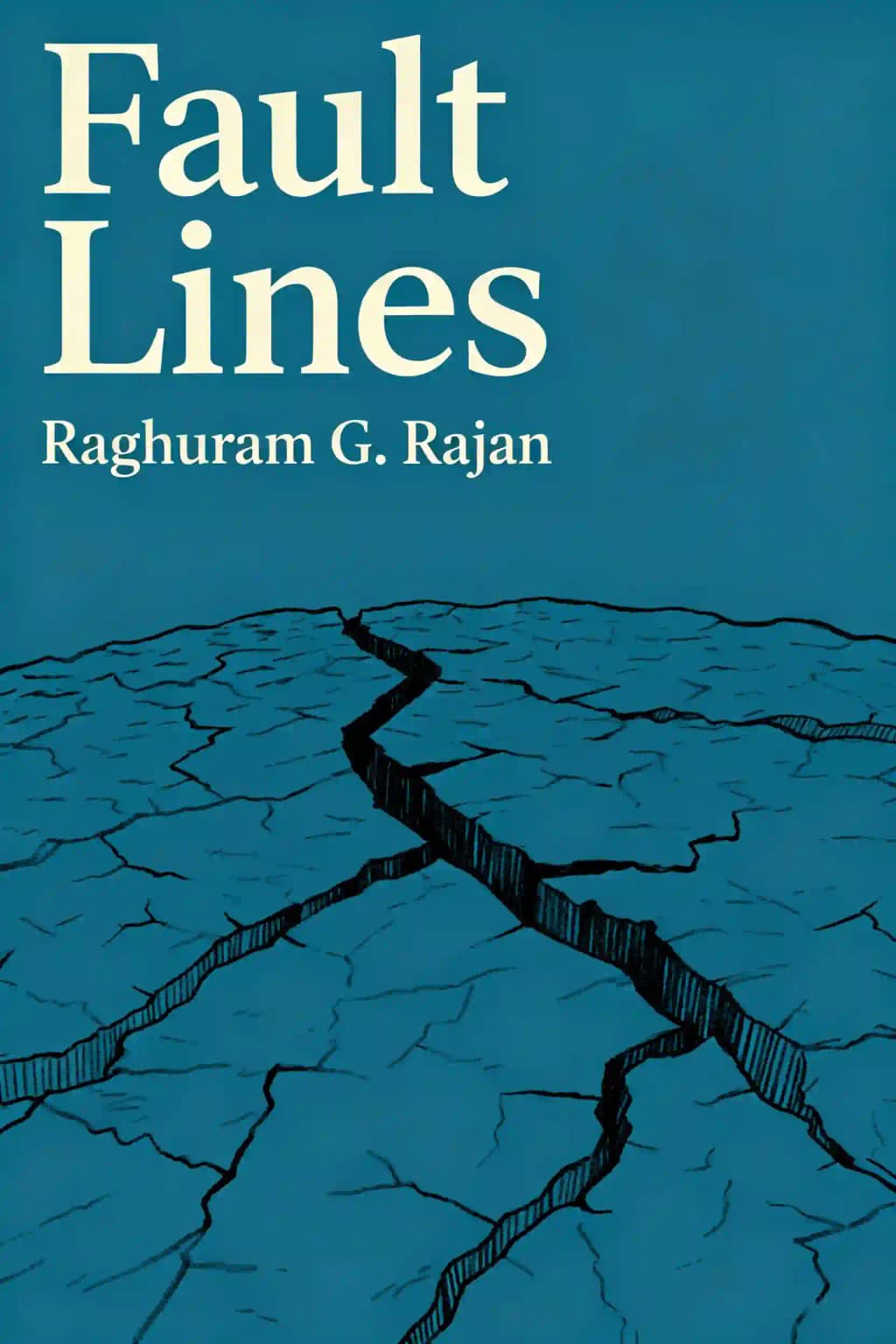
Fault Lines: How Hidden Fractures Still Threaten the World Economy book cover

Fault Lines

How Hidden Fractures Still Threaten the World Economy

Raghuram G. Rajan
4.11 (5086 Reviews)

Overview of Fault Lines

Raghuram Rajan's "Fault Lines" predicted the 2008 financial crisis years before it happened. This Financial Times award-winning masterpiece reveals the hidden economic fractures still threatening global stability today. What dangerous warning signs are we missing right now?

Key Themes in Fault Lines

  • income inequality
  • credit expansion
  • subprime mortgage crisis
  • educational attainment gap
  • global trade imbalances

Quotes from Fault Lines

  • The true causes lie in powerful fault lines.

  • Easy credit: benefits were immediate, costs in the future.

  • The U.S. boom was uniquely concentrated in the low-income segment.

  • Export orientation forced companies to create cost-competitive products.

  • Family circumstances matter enormously.

Characters in Fault Lines

  • Raghuram G. RajanAuthor, former IMF Chief Economist and RBI Governor
  • Larry SummersEconomic luminary who dismissed Rajan's warnings

About the Author

About the Author of Fault Lines

Raghuram G. Rajan, author of Fault Lines: How Hidden Fractures Still Threaten the World Economy, is a renowned economist, policymaker, and former central banker. A Distinguished Service Professor of Finance at the University of Chicago Booth School of Business, Rajan served as the 23rd Governor of the Reserve Bank of India (2013–2016) and Chief Economist of the International Monetary Fund (2003–2006).

His expertise in global financial systems and economic inequality underpins Fault Lines, which examines the structural vulnerabilities that precipitated the 2008 financial crisis. The book won the Financial Times–Goldman Sachs Business Book of the Year Award in 2010, cementing Rajan’s reputation as a sharp critic of unsustainable economic practices.

Rajan’s influential works include The Third Pillar: How Markets and the State Leave the Community Behind and Saving Capitalism from the Capitalists (co-authored with Luigi Zingales). A recipient of the Fischer Black Prize and named Euromoney’s Central Bank Governor of the Year, he frequently contributes to global economic policy debates. Fault Lines has been translated into multiple languages and remains a pivotal text for understanding macroeconomic instability and reform.

Download Summary of Fault Lines

Get the Fault Lines summary as a free PDF or EPUB. Print it or read offline anytime.

FAQs About This Book

Fault Lines analyzes systemic vulnerabilities that caused the 2008 financial crisis and warns of recurring risks. Raghuram Rajan identifies three core fractures: U.S. income inequality driving political pressure for easy credit, global trade imbalances from export-dependent economies, and reckless risk-taking in financial sectors due to skewed incentives. The book argues these unresolved flaws threaten global economic stability.

This book is essential for economists, policymakers, and readers interested in macroeconomic policy, financial crises, or income inequality. It’s also valuable for professionals in finance seeking to understand systemic risks and the structural roots of economic instability.

Yes. Rajan’s prescient analysis of pre-2008 economic flaws, combined with his expertise as a former IMF economist and central banker, offers a compelling framework for understanding global financial systems. The book remains relevant for its warnings about unaddressed risks and policy recommendations.

Rajan highlights three critical fractures:

  • Income inequality: U.S. wage disparities led to politically driven easy credit policies.
  • Global imbalances: Export-focused economies (e.g., China, Germany) over-relied on U.S. consumption.
  • Financial sector incentives: Misaligned rewards encouraged excessive risk-taking without accountability.

U.S. politicians, unable to address inequality through education or social reforms, promoted affordable housing via lax mortgage lending. This fueled subprime borrowing and artificially inflated housing prices, culminating in mass defaults when the bubble burst.

Key reforms include:

  • Strengthening social safety nets to reduce political pressure for easy credit.
  • Aligning financial sector incentives with long-term stability (e.g., deferred bonuses).
  • Rebalancing global trade to lessen dependence on U.S. consumption.

Countries like China and Germany prioritized export-driven growth, accumulating foreign reserves and investing heavily in U.S. debt. This flooded markets with cheap capital, encouraging reckless lending and speculative financial instruments in the U.S.

Banks and agencies like Fannie Mae incentivized high-risk mortgages through lax oversight and short-term profit motives. Complex securities masked underlying risks, creating a “house of cards” that collapsed when housing prices stagnated.

Unlike histories of past crises (e.g., This Time Is Different), Rajan focuses on structural flaws in modern economies, particularly the interplay of politics, inequality, and financial innovation. The book emphasizes systemic reform over cyclical patterns.

He argues reforms failed to address root causes: financial incentives still reward risk-taking, global imbalances persist, and inequality-driven political pressures remain unresolved. Without structural changes, another crisis is likely.

Rajan links U.S. education gaps to wage stagnation and rising inequality. A underskilled workforce increases reliance on credit-driven growth, exacerbating financial instability. Improved education could reduce political demands for unsustainable policies.

Some economists argue Rajan understates the role of financial deregulation and overemphasizes political responses to inequality. Critics also note his solutions require global coordination, which remains challenging.

Explore Your Way of Learning

Fault Lines isn't just a book — it's a masterclass in Economics. To help you absorb its lessons in the way that works best for you, we offer five unique learning modes. Whether you're a deep thinker, a fast learner, or a story lover, there's a mode designed to fit your style.

Quick Summary Mode

Read or listen to Fault Lines Summary in 11 Minutes

Break down key ideas from Fault Lines into bite-sized takeaways to understand how innovative teams create, collaborate, and grow.

play
00:00
00:00

Fun Mode

Fault Lines Lessons Told Through 25-Min Stories

Experience Fault Lines through vivid storytelling that turns innovation lessons into moments you'll remember and apply.

play
00:00
00:00

Personalize Mode

Experience Fault Lines in your own learning style

Ask anything, choose your learning style, and co-create insights that truly resonate with you.

Personalize Mode

From Columbia University alumni built in San Francisco

BeFreed Brings Together A Global Community Of 1,000,000 Curious Minds

"Instead of endless scrolling, I just hit play on BeFreed. It saves me so much time."

@Moemenn
platform
star
star
star
star
star

"I never knew where to start with nonfiction—BeFreed’s book lists turned into podcasts gave me a clear path."

@Chloe, Solo founder, LA
platform
comments
12
likes
117

"Perfect balance between learning and entertainment. Finished ‘Thinking, Fast and Slow’ on my commute this week."

@Raaaaaachelw
platform
star
star
star
star
star

"Crazy how much I learned while walking the dog. BeFreed = small habits → big gains."

@Matt, YC alum
platform
comments
12
likes
108

"Reading used to feel like a chore. Now it’s just part of my lifestyle."

@Erin, Investment Banking Associate , NYC
platform
comments
254
likes
17

"Feels effortless compared to reading. I’ve finished 6 books this month already."

@djmikemoore
platform
star
star
star
star
star

"BeFreed turned my guilty doomscrolling into something that feels productive and inspiring."

@Pitiful
platform
comments
96
likes
4.5K

"BeFreed turned my commute into learning time. 20-min podcasts are perfect for finishing books I never had time for."

@SofiaP
platform
star
star
star
star
star

"BeFreed replaced my podcast queue. Imagine Spotify for books — that’s it. 🙌"

@Jaded_Falcon
platform
comments
201
thumbsUp
16

"It is great for me to learn something from the book without reading it."

@OojasSalunke
platform
star
star
star
star
star

"The themed book list podcasts help me connect ideas across authors—like a guided audio journey."

@Leo, Law Student, UPenn
platform
comments
37
likes
483

"Makes me feel smarter every time before going to work"

@Cashflowbubu
platform
star
star
star
star
star

"Instead of endless scrolling, I just hit play on BeFreed. It saves me so much time."

@Moemenn
platform
star
star
star
star
star

"I never knew where to start with nonfiction—BeFreed’s book lists turned into podcasts gave me a clear path."

@Chloe, Solo founder, LA
platform
comments
12
likes
117

"Perfect balance between learning and entertainment. Finished ‘Thinking, Fast and Slow’ on my commute this week."

@Raaaaaachelw
platform
star
star
star
star
star

"Crazy how much I learned while walking the dog. BeFreed = small habits → big gains."

@Matt, YC alum
platform
comments
12
likes
108

"Reading used to feel like a chore. Now it’s just part of my lifestyle."

@Erin, Investment Banking Associate , NYC
platform
comments
254
likes
17

"Feels effortless compared to reading. I’ve finished 6 books this month already."

@djmikemoore
platform
star
star
star
star
star

"BeFreed turned my guilty doomscrolling into something that feels productive and inspiring."

@Pitiful
platform
comments
96
likes
4.5K

"BeFreed turned my commute into learning time. 20-min podcasts are perfect for finishing books I never had time for."

@SofiaP
platform
star
star
star
star
star

"BeFreed replaced my podcast queue. Imagine Spotify for books — that’s it. 🙌"

@Jaded_Falcon
platform
comments
201
thumbsUp
16

"It is great for me to learn something from the book without reading it."

@OojasSalunke
platform
star
star
star
star
star

"The themed book list podcasts help me connect ideas across authors—like a guided audio journey."

@Leo, Law Student, UPenn
platform
comments
37
likes
483

"Makes me feel smarter every time before going to work"

@Cashflowbubu
platform
star
star
star
star
star

"Instead of endless scrolling, I just hit play on BeFreed. It saves me so much time."

@Moemenn
platform
star
star
star
star
star

"I never knew where to start with nonfiction—BeFreed’s book lists turned into podcasts gave me a clear path."

@Chloe, Solo founder, LA
platform
comments
12
likes
117

"Perfect balance between learning and entertainment. Finished ‘Thinking, Fast and Slow’ on my commute this week."

@Raaaaaachelw
platform
star
star
star
star
star

"Crazy how much I learned while walking the dog. BeFreed = small habits → big gains."

@Matt, YC alum
platform
comments
12
likes
108

"Reading used to feel like a chore. Now it’s just part of my lifestyle."

@Erin, Investment Banking Associate , NYC
platform
comments
254
likes
17

"Feels effortless compared to reading. I’ve finished 6 books this month already."

@djmikemoore
platform
star
star
star
star
star

"BeFreed turned my guilty doomscrolling into something that feels productive and inspiring."

@Pitiful
platform
comments
96
likes
4.5K

"BeFreed turned my commute into learning time. 20-min podcasts are perfect for finishing books I never had time for."

@SofiaP
platform
star
star
star
star
star

"BeFreed replaced my podcast queue. Imagine Spotify for books — that’s it. 🙌"

@Jaded_Falcon
platform
comments
201
thumbsUp
16

"It is great for me to learn something from the book without reading it."

@OojasSalunke
platform
star
star
star
star
star

"The themed book list podcasts help me connect ideas across authors—like a guided audio journey."

@Leo, Law Student, UPenn
platform
comments
37
likes
483

"Makes me feel smarter every time before going to work"

@Cashflowbubu
platform
star
star
star
star
star

See More Stories?

How people are talking about BeFreed across the web
1.5K Ratings4.7
Start your learning journey, now