Overview of FREE TO FOCUS
In "Free to Focus," productivity expert Michael Hyatt dismantles the myth that doing more equals achieving more. This counterintuitive bestseller - featured in Wall Street Journal and embraced by business leaders - reveals why your attention, not your hours, is today's most valuable currency.
- Productivity isn’t about speed—it’s freedom to focus on what matters most.
- Eliminate nonessentials using the “Not-to-Do List” to prioritize high-leverage tasks.
- The Freedom Compass identifies Desire Zone tasks (passion + proficiency).
- Automate or delegate Drudgery Zone work to protect mental bandwidth.
- Design your Ideal Week to consolidate deep work and rejuvenation time.
- Stop chasing efficiency myths—create time margins for creativity and clarity.
- Cut distractions by batching low-value tasks and setting non-negotiable boundaries.
- Reformulate rest as a productivity accelerator, not a reward.
- Activate focus by managing interruptions, not eliminating them.
- Align daily tasks with long-term goals using the Stop-Cut-Act framework.
About the Author of FREE TO FOCUS
Michael Scott Hyatt is the New York Times bestselling author of Free to Focus and a renowned leadership and productivity expert. With a career spanning decades in publishing and executive leadership, Hyatt combines practical strategies for maximizing efficiency with insights from his tenure as CEO of Thomas Nelson Publishers, where he oversaw a $250M enterprise. His expertise in intentional living and goal achievement is further showcased in his other bestselling works, including Platform: Get Noticed in a Noisy World and Your Best Year Ever, which have cemented his reputation as a trusted voice in personal and professional development.
Hyatt’s actionable advice extends beyond his books through his widely followed blog, podcast Lead to Win, and leadership development company Full Focus, which has been named to the Inc. 5000 list of fastest-growing U.S. companies three times. A sought-after speaker, he has shared his frameworks at venues like Social Media Marketing World, Vanderbilt University, and USAA.
Free to Focus distills his proven methods for balancing high performance with personal priorities, reflecting his mission to help professionals “win at work and succeed at life.” His strategies have empowered thousands to reclaim their time and energy, contributing to the book’s status as a Wall Street Journal bestseller.
FAQs About FREE TO FOCUS
What is Free to Focus by Michael Hyatt about?
Free to Focus presents a productivity system designed to help professionals achieve more by doing less. Michael Hyatt challenges traditional "do more, faster" approaches, advocating instead for strategic focus on high-impact tasks. The book outlines a three-step framework—Stop, Cut, Act—to eliminate distractions, prioritize essentials, and optimize time and energy. Key strategies include pruning non-essential commitments, designing an ideal workweek, and fostering deep work. The ultimate goal is freedom: reclaiming time for health, relationships, and personal fulfillment.
Who should read Free to Focus?
This book is ideal for overwhelmed professionals, perfectionists, and anyone struggling with work-life balance. It’s particularly valuable for leaders, entrepreneurs, and remote workers seeking to reduce burnout while maintaining high output. Hyatt’s system also benefits chronic multitaskers, procrastinators, and those navigating information overload. If you feel trapped in endless tasks without meaningful progress, this book offers actionable solutions.
Is Free to Focus worth reading?
Yes, especially if traditional productivity methods haven’t worked. Hyatt’s approach combines counterintuitive insights (like doing less to achieve more) with practical tools, including worksheets and an online productivity assessment. The emphasis on creating “time margins” for creativity and rest makes it stand out. Over 25,000 professionals have used this system to streamline workflows and regain personal time, per Hyatt’s case studies.
How does Free to Focus redefine productivity?
Hyatt shifts the focus from efficiency to freedom—the ability to work deeply on priorities while protecting time for life beyond work. He argues that industrial-era productivity models are obsolete in today’s attention economy. Instead of glorifying busyness, the book teaches readers to ruthlessly eliminate low-value tasks (termed the “extraction economy”) and invest in activities that align with personal and professional goals.
What are the three steps in Hyatt’s productivity system?
- Stop: Audit current commitments to identify time-wasters.
- Cut: Eliminate or delegate non-essential tasks.
- Act: Optimize remaining work through focused time blocks and energy management.
This framework helps readers break the cycle of overwork and create sustainable productivity habits.
What is the “extraction economy” mentioned in Free to Focus?
Hyatt describes the extraction economy as a modern trap where constant demands (emails, meetings, deadlines) drain energy without delivering meaningful results. He contrasts this with a “freedom economy,” where individuals intentionally design workflows to maximize impact and minimize burnout. The book provides tools to escape extraction cycles, like setting boundaries and automating repetitive tasks.
How does Free to Focus suggest managing interruptions?
Key tactics include:
- Time blocking: Designate periods for deep work without meetings or emails.
- The “Not-To-Do” List: Identify habits or tasks that derail focus (e.g., checking social media).
- Delegation frameworks: Use Hyatt’s “Focus Canvas” to assign low-value tasks to others.
These methods reduce interruptions by up to 70%, according to the book.
What is the “ideal workweek” concept in Free to Focus?
Hyatt advocates designing a weekly schedule that aligns with peak energy levels and priorities. Steps include:
- Allocating time for strategic work first.
- Grouping similar tasks (e.g., meetings on Tuesdays).
- Preserving margins for rest and unexpected tasks.
This approach ensures sustained productivity without burnout.
How does Free to Focus differ from other productivity books?
Unlike systems focused on speed or volume, Hyatt prioritizes intentionality and freedom. While books like Atomic Habits target habit formation, Free to Focus emphasizes systemic change—redesigning workflows, not just personal habits. It also integrates mental health and life satisfaction as core metrics of success.
Can Free to Focus help with work-from-home productivity?
Absolutely. The book addresses remote work challenges like blurred boundaries and digital distractions. Strategies include creating a dedicated workspace, using time-blocking apps, and communicating availability to colleagues. Hyatt also stresses the importance of “shutdown rituals” to separate work and personal time.
What are memorable quotes from Free to Focus?
- “Productivity isn’t about doing more—it’s about doing more of what matters.”
- “Every ‘yes’ to one priority is a ‘no’ to another.”
- “Margin isn’t wasted time; it’s the space where creativity thrives.”
These lines encapsulate the book’s philosophy of purposeful work.
How does Michael Hyatt’s background influence Free to Focus?
As a former CEO and leadership coach, Hyatt draws on decades of experience managing teams and workflows. His system reflects lessons from scaling a publishing company while maintaining personal well-being. This blend of corporate expertise and self-development insights lends credibility to his strategies.
Feel the book through the author's voice
Turn knowledge into engaging, example-rich insights
Capture key ideas in a flash for fast learning
Enjoy the book in a fun and engaging way
Characters in FREE TO FOCUS
- Michael HyattAuthor and executive who experienced burnout
- Herbert SimonNobel Prize winner who studied attention
- Frederick Winslow TaylorEngineer who developed the efficiency model
- RoyLumber company account manager and coaching client
Key Themes in FREE TO FOCUS
- attention management
- burnout prevention
- workplace margin
- intentional productivity
- knowledge worker efficiency
Quotes from FREE TO FOCUS
Attention, not information, has become our scarcest resource.
True productivity isn't about getting more things done - it's about getting the right things done.
Most of us never clarify what success actually means, leaving us running a race with no finish line.
The true objective of productivity should be freedom - not efficiency or vague notions of success.
The secret to productivity is spending more time in your Desire Zone and less time everywhere else.
Explore Your Way of Learning
 Quick Summary Mode
Read or listen to FREE TO FOCUS Summary in 9 Minutes
Break down key ideas from FREE TO FOCUS into bite-sized takeaways to understand how innovative teams create, collaborate, and grow.

 Fun Mode
FREE TO FOCUS Lessons Told Through 25-Min Stories
Experience FREE TO FOCUS through vivid storytelling that turns innovation lessons into moments you'll remember and apply.
 Personalize Mode
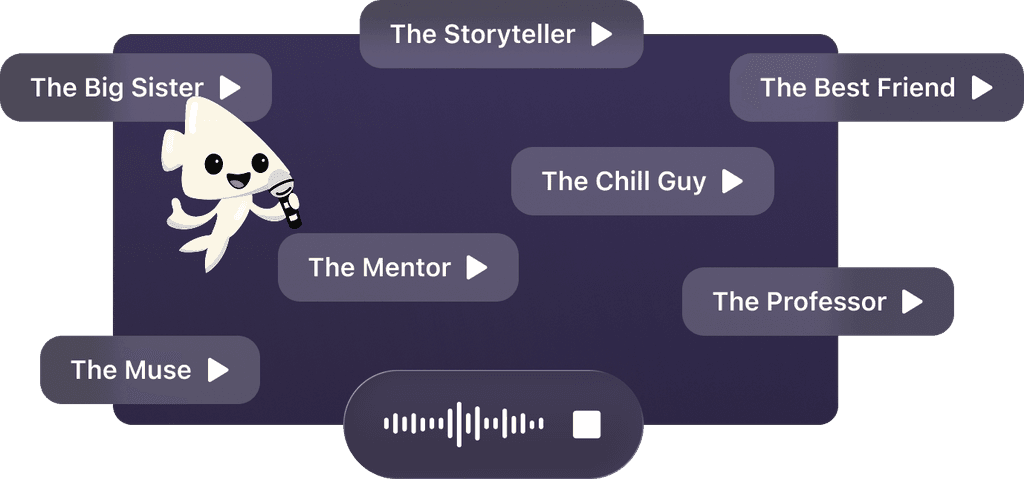
Experience FREE TO FOCUS in your own learning style
Ask anything, choose your learning style, and co-create insights that truly resonate with you.
From Columbia University alumni built in San Francisco
"Instead of endless scrolling, I just hit play on BeFreed. It saves me so much time."


"I never knew where to start with nonfiction—BeFreed’s book lists turned into podcasts gave me a clear path."


"Perfect balance between learning and entertainment. Finished ‘Thinking, Fast and Slow’ on my commute this week."
"Crazy how much I learned while walking the dog. BeFreed = small habits → big gains."
"Reading used to feel like a chore. Now it’s just part of my lifestyle."

"Feels effortless compared to reading. I’ve finished 6 books this month already."
"BeFreed turned my guilty doomscrolling into something that feels productive and inspiring."

"BeFreed turned my commute into learning time. 20-min podcasts are perfect for finishing books I never had time for."
"BeFreed replaced my podcast queue. Imagine Spotify for books — that’s it. 🙌"

"It is great for me to learn something from the book without reading it."
"The themed book list podcasts help me connect ideas across authors—like a guided audio journey."
"Makes me feel smarter every time before going to work"
From Columbia University alumni built in San Francisco
"Instead of endless scrolling, I just hit play on BeFreed. It saves me so much time."
"I never knew where to start with nonfiction—BeFreed’s book lists turned into podcasts gave me a clear path."
"Perfect balance between learning and entertainment. Finished ‘Thinking, Fast and Slow’ on my commute this week."
"Crazy how much I learned while walking the dog. BeFreed = small habits → big gains."
"Reading used to feel like a chore. Now it’s just part of my lifestyle."
"Feels effortless compared to reading. I’ve finished 6 books this month already."
"BeFreed turned my guilty doomscrolling into something that feels productive and inspiring."
"BeFreed turned my commute into learning time. 20-min podcasts are perfect for finishing books I never had time for."
"BeFreed replaced my podcast queue. Imagine Spotify for books — that’s it. 🙌"
"It is great for me to learn something from the book without reading it."
"The themed book list podcasts help me connect ideas across authors—like a guided audio journey."
"Makes me feel smarter every time before going to work"
"Instead of endless scrolling, I just hit play on BeFreed. It saves me so much time."
"I never knew where to start with nonfiction—BeFreed’s book lists turned into podcasts gave me a clear path."
"Perfect balance between learning and entertainment. Finished ‘Thinking, Fast and Slow’ on my commute this week."
"Crazy how much I learned while walking the dog. BeFreed = small habits → big gains."
"Reading used to feel like a chore. Now it’s just part of my lifestyle."
"Feels effortless compared to reading. I’ve finished 6 books this month already."
"BeFreed turned my guilty doomscrolling into something that feels productive and inspiring."
"BeFreed turned my commute into learning time. 20-min podcasts are perfect for finishing books I never had time for."
"BeFreed replaced my podcast queue. Imagine Spotify for books — that’s it. 🙌"
"It is great for me to learn something from the book without reading it."
"The themed book list podcasts help me connect ideas across authors—like a guided audio journey."
"Makes me feel smarter every time before going to work"
"Instead of endless scrolling, I just hit play on BeFreed. It saves me so much time."
"I never knew where to start with nonfiction—BeFreed’s book lists turned into podcasts gave me a clear path."
"Perfect balance between learning and entertainment. Finished ‘Thinking, Fast and Slow’ on my commute this week."
"Crazy how much I learned while walking the dog. BeFreed = small habits → big gains."
"Reading used to feel like a chore. Now it’s just part of my lifestyle."
"Feels effortless compared to reading. I’ve finished 6 books this month already."
"BeFreed turned my guilty doomscrolling into something that feels productive and inspiring."
"BeFreed turned my commute into learning time. 20-min podcasts are perfect for finishing books I never had time for."
"BeFreed replaced my podcast queue. Imagine Spotify for books — that’s it. 🙌"
"It is great for me to learn something from the book without reading it."
"The themed book list podcasts help me connect ideas across authors—like a guided audio journey."
"Makes me feel smarter every time before going to work"

Download Summary of FREE TO FOCUS
Get the FREE TO FOCUS summary as a free PDF or EPUB. Print it or read offline anytime.