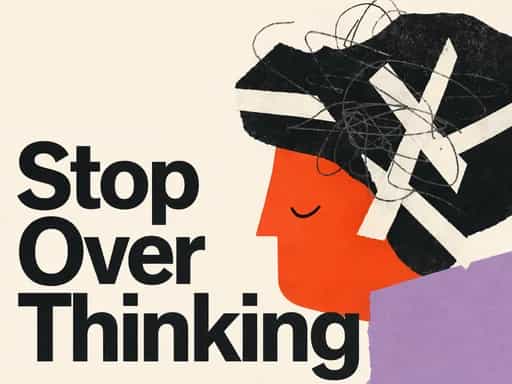
Stop Overthinking: 23 Techniques to Relieve Stress, Stop Negative Spirals, Declutter Your Mind, and Focus on the Present

Overview of Stop Overthinking
In a world of mental chaos, "Stop Overthinking" delivers 23 proven techniques to break anxiety's grip. Using mindfulness and the 4 A's stress management system, Trenton's guide has become the secret weapon for those seeking clarity in our distraction-filled culture. What's your mental hamster wheel costing you?
- Replace negative thought loops with evidence-based cognitive reframing techniques
- Break anxiety cycles by grounding actions in present-moment awareness
- Nick Trenton’s 4 A’s method (Avoid-Alter-Adapt-Accept) reduces chronic stress
- Identify overthinking triggers through daily stress journaling and pattern analysis
- Combat decision paralysis with structured “worry windows” and action-first priorities
- Shift from genetic/environmental anxiety drivers to intentional response frameworks
- Declutter mental noise using Trenton’s thought-stopping and replacement exercises
- Build resilience by tolerating imperfect outcomes through emotional regulation drills
- Transform self-talk from catastrophic predictions to neutral observational language
- Implement behavioral psychology strategies to rewire default overthinking pathways
- Strengthen focus by separating productive analysis from unproductive rumination
- Master stress detoxification via breathwork and sensory grounding protocols
About the Author of Stop Overthinking
Nick Trenton, author of Stop Overthinking: 23 Techniques to Relieve Stress, is a behavioral psychologist and bestselling self-help expert specializing in mental clarity and emotional resilience. With a master’s degree in behavioral psychology and a background in economics, Trenton combines academic rigor with practical strategies to address overthinking, anxiety, and stress management.
His work is rooted in helping readers declutter their minds, as seen in his other popular titles like Dopamine Detox, 80/20 Your Life, and The Art of Letting Go, which expand on themes of productivity, emotional freedom, and mindful living.
Based in Chicago, Trenton’s approach blends evidence-based techniques with accessible advice, reflecting his rural Illinois upbringing and academic training. His books have been featured on platforms like Blinkist and BookWatch, reaching global audiences through summaries and actionable insights.
Trenton’s Stop Overthinking has become a go-to resource for those seeking to break negative thought cycles, with its methods endorsed for their real-world applicability in behavioral therapy and personal growth. Over 30 books underline his authority in the self-help space, cementing his reputation as a trusted voice in mental wellness.
FAQs About Stop Overthinking
What is Stop Overthinking by Nick Trenton about?
Stop Overthinking by Nick Trenton provides 23 science-backed techniques to break free from anxiety, negative thought cycles, and stress. It combines behavioral psychology principles with actionable strategies like mindfulness exercises, cognitive restructuring, and decision-making frameworks to help readers declutter their minds, focus on the present, and improve mental resilience.
Who should read Stop Overthinking?
This book suits chronic overthinkers, individuals struggling with anxiety or decision paralysis, and anyone seeking stress-management tools. It’s particularly valuable for procrastinators, perfectionists, or those experiencing burnout, offering methods to reframe negative thoughts and regain emotional control.
Is Stop Overthinking worth reading?
Yes, Stop Overthinking is worth reading for its concise, research-driven approach to mental wellness. Trenton’s blend of academic insights (like the Eisenhower Matrix) and practical exercises—such as identifying anxiety triggers and practicing mindful relaxation—provides tangible tools for immediate application.
What are the main techniques in Stop Overthinking?
Key techniques include:
- Eisenhower’s urgency/importance matrix to prioritize tasks
- Allen’s input processing (postpone, process, or ignore distractions)
- Mindfulness exercises to anchor attention in the present
- Cognitive-behavioral strategies to disrupt negative thought spirals
How does Stop Overthinking help with anxiety?
The book teaches readers to recognize anxiety triggers and replace catastrophic thinking with grounded, solutions-oriented responses. Techniques like “thought diffusion” (observing worries without judgment) and structured relaxation practices help reduce physiological stress responses.
How does Stop Overthinking compare to Atomic Habits?
While Atomic Habits focuses on behavior change through incremental routines, Stop Overthinking targets the mental barriers enabling those habits. Trenton’s work complements Clear’s by addressing the cognitive roots of procrastination and indecision, making them ideal paired reads.
What is the Eisenhower Method in Stop Overthinking?
Trenton adapts Dwight D. Eisenhower’s task-management framework, categorizing activities into four quadrants based on urgency and importance. This helps readers identify time-wasting tasks, delegate effectively, and focus on high-impact actions.
Can Stop Overthinking help with workplace stress?
Yes, the book’s strategies—like setting mental boundaries, using the “2-minute rule” for quick decisions, and applying the 80/20 principle to prioritize critical tasks—are directly applicable to reducing overwhelm in professional settings.
What are criticisms of Stop Overthinking?
Some readers may find the techniques oversimplified for severe anxiety disorders, as the book emphasizes self-guided exercises over clinical interventions. Additionally, its concise format leaves less room for in-depth case studies compared to longer psychology texts.
How does Nick Trenton’s background influence Stop Overthinking?
Trenton’s MA in Behavioral Psychology and experience in counseling inform the book’s evidence-based approach. His focus on practicality over theory reflects his goal to make psychological tools accessible to non-experts.
Why is Stop Overthinking relevant in 2025?
As digital distractions and workplace demands intensify, the book’s emphasis on mental decluttering, focused action, and stress resilience remains critical. Its timeless strategies adapt well to modern challenges like information overload and remote work dynamics.
What is Allen’s input processing technique in Stop Overthinking?
Adapted from productivity expert David Allen, this method involves triaging distractions into three actions: postpone (schedule for later), process (address immediately if <2 minutes), or ignore (eliminate non-essential tasks). This reduces cognitive load and decision fatigue.
Feel the book through the author's voice
Turn knowledge into engaging, example-rich insights
Capture key ideas in a flash for fast learning
Enjoy the book in a fun and engaging way
Characters in Stop Overthinking
- Nick TrentonAuthor and expert on overthinking and anxiety
Key Themes in Stop Overthinking
- rumination cycles
- anxiety management
- stress response
- mental habit breaking
- cognitive behavioral patterns
Quotes from Stop Overthinking
Overthinking isn't productive problem-solving but rather a form of mental quicksand.
These thoughts are merely symptoms of underlying anxiety, not causes.
Modern understanding shows mental health conditions arise largely from living in an increasingly stressful world.
Overthinking isn't inevitable-it's a destructive habit we can actively choose to break.
Many overthinkers feel morally obligated to endure stressful situations they could simply avoid, mistaking endurance for virtue.
Explore Your Way of Learning
 Quick Summary Mode
Read or listen to Stop Overthinking Summary in 9 Minutes
Break down key ideas from Stop Overthinking into bite-sized takeaways to understand how innovative teams create, collaborate, and grow.

 Fun Mode
Stop Overthinking Lessons Told Through 21-Min Stories
Experience Stop Overthinking through vivid storytelling that turns innovation lessons into moments you'll remember and apply.
 Personalize Mode
Experience Stop Overthinking in your own learning style
Ask anything, choose your learning style, and co-create insights that truly resonate with you.

From Columbia University alumni built in San Francisco
"Instead of endless scrolling, I just hit play on BeFreed. It saves me so much time."


"I never knew where to start with nonfiction—BeFreed’s book lists turned into podcasts gave me a clear path."


"Perfect balance between learning and entertainment. Finished ‘Thinking, Fast and Slow’ on my commute this week."
"Crazy how much I learned while walking the dog. BeFreed = small habits → big gains."
"Reading used to feel like a chore. Now it’s just part of my lifestyle."

"Feels effortless compared to reading. I’ve finished 6 books this month already."
"BeFreed turned my guilty doomscrolling into something that feels productive and inspiring."

"BeFreed turned my commute into learning time. 20-min podcasts are perfect for finishing books I never had time for."
"BeFreed replaced my podcast queue. Imagine Spotify for books — that’s it. 🙌"

"It is great for me to learn something from the book without reading it."
"The themed book list podcasts help me connect ideas across authors—like a guided audio journey."
"Makes me feel smarter every time before going to work"
From Columbia University alumni built in San Francisco
"Instead of endless scrolling, I just hit play on BeFreed. It saves me so much time."
"I never knew where to start with nonfiction—BeFreed’s book lists turned into podcasts gave me a clear path."
"Perfect balance between learning and entertainment. Finished ‘Thinking, Fast and Slow’ on my commute this week."
"Crazy how much I learned while walking the dog. BeFreed = small habits → big gains."
"Reading used to feel like a chore. Now it’s just part of my lifestyle."
"Feels effortless compared to reading. I’ve finished 6 books this month already."
"BeFreed turned my guilty doomscrolling into something that feels productive and inspiring."
"BeFreed turned my commute into learning time. 20-min podcasts are perfect for finishing books I never had time for."
"BeFreed replaced my podcast queue. Imagine Spotify for books — that’s it. 🙌"
"It is great for me to learn something from the book without reading it."
"The themed book list podcasts help me connect ideas across authors—like a guided audio journey."
"Makes me feel smarter every time before going to work"
"Instead of endless scrolling, I just hit play on BeFreed. It saves me so much time."
"I never knew where to start with nonfiction—BeFreed’s book lists turned into podcasts gave me a clear path."
"Perfect balance between learning and entertainment. Finished ‘Thinking, Fast and Slow’ on my commute this week."
"Crazy how much I learned while walking the dog. BeFreed = small habits → big gains."
"Reading used to feel like a chore. Now it’s just part of my lifestyle."
"Feels effortless compared to reading. I’ve finished 6 books this month already."
"BeFreed turned my guilty doomscrolling into something that feels productive and inspiring."
"BeFreed turned my commute into learning time. 20-min podcasts are perfect for finishing books I never had time for."
"BeFreed replaced my podcast queue. Imagine Spotify for books — that’s it. 🙌"
"It is great for me to learn something from the book without reading it."
"The themed book list podcasts help me connect ideas across authors—like a guided audio journey."
"Makes me feel smarter every time before going to work"
"Instead of endless scrolling, I just hit play on BeFreed. It saves me so much time."
"I never knew where to start with nonfiction—BeFreed’s book lists turned into podcasts gave me a clear path."
"Perfect balance between learning and entertainment. Finished ‘Thinking, Fast and Slow’ on my commute this week."
"Crazy how much I learned while walking the dog. BeFreed = small habits → big gains."
"Reading used to feel like a chore. Now it’s just part of my lifestyle."
"Feels effortless compared to reading. I’ve finished 6 books this month already."
"BeFreed turned my guilty doomscrolling into something that feels productive and inspiring."
"BeFreed turned my commute into learning time. 20-min podcasts are perfect for finishing books I never had time for."
"BeFreed replaced my podcast queue. Imagine Spotify for books — that’s it. 🙌"
"It is great for me to learn something from the book without reading it."
"The themed book list podcasts help me connect ideas across authors—like a guided audio journey."
"Makes me feel smarter every time before going to work"

Download Summary of Stop Overthinking
Get the Stop Overthinking summary as a free PDF or EPUB. Print it or read offline anytime.