BeFreed
    Categories>History & Society>San Francisco: The City of Reinvention and Its Ancient Origins

    San Francisco: The City of Reinvention and Its Ancient Origins

    19 min
    |
    |
    28 июн. 2026 г.
    History & SocietyInspiration

    Explore the history of San Francisco, from its ancient Ohlone origins and the land of Ahwaste to Spanish exploration and the discovery of the San Francisco Bay.

    San Francisco: The City of Reinvention and Its Ancient Origins
    Выберите способ подачи

    Один эпизод. Множество способов его услышать.

    Те же идеи из San Francisco: The City of Reinvention and Its Ancient Origins. Выберите подходящие вам голос, глубину и темп. Меняйте в любой момент.

    Расшифровка и главы

    Глава 1

    The Edge of the Continent as a Gateway to Transformation

    Imagine standing on a windswept peninsula around 3000 BC, looking out over a massive, fog-shrouded harbor that the rest of the world hasn't even realized exists yet. You are standing in what will one day be San Francisco, but for now, it is a land of oak groves and marshlands, inhabited by people who have already figured out the secret to this place—it is a hub for gathering and exchange . These early inhabitants, the Ohlone, didn't just survive here; they built a sophisticated network of trade that stretched all the way to the Mojave Desert and Yosemite . They saw the bay not as a barrier, but as a resource—a "place at the bay" known in their language as Ahwaste . It is fascinating to think that the very first theme of this city wasn't gold or technology, but this fundamental idea of resource gathering and connectivity that dates back to 3000 BC . You might find it surprising that for centuries, European explorers actually sailed right past the Golden Gate, missing the entrance entirely because of the thick, characteristic fog . It wasn't until 1769—less than ten years before the American Revolution—that a Spanish party led by Gaspar de Portolá finally stumbled upon the bay from the land side . This moment changed everything, transforming a secluded indigenous landscape into a strategic prize for global empires. The Spanish immediately recognized the harbor's significance, leading to the establishment of the Presidio for military control and Mission San Francisco de Asís for cultural and religious conversion . But the city you know today didn't start as a grand metropolis; it began as a tiny, humble settlement called Yerba Buena, named after a sweet-smelling herb that grew wild in the sand dunes . This transition from a quiet "good herb" village to a global center of gravity is the story of how a specific geography—isolated and difficult—forced the people living there to become masters of reinvention . As we look closer, you'll see how this pattern of discovery, exploitation, and radical change becomes the very DNA of the city.

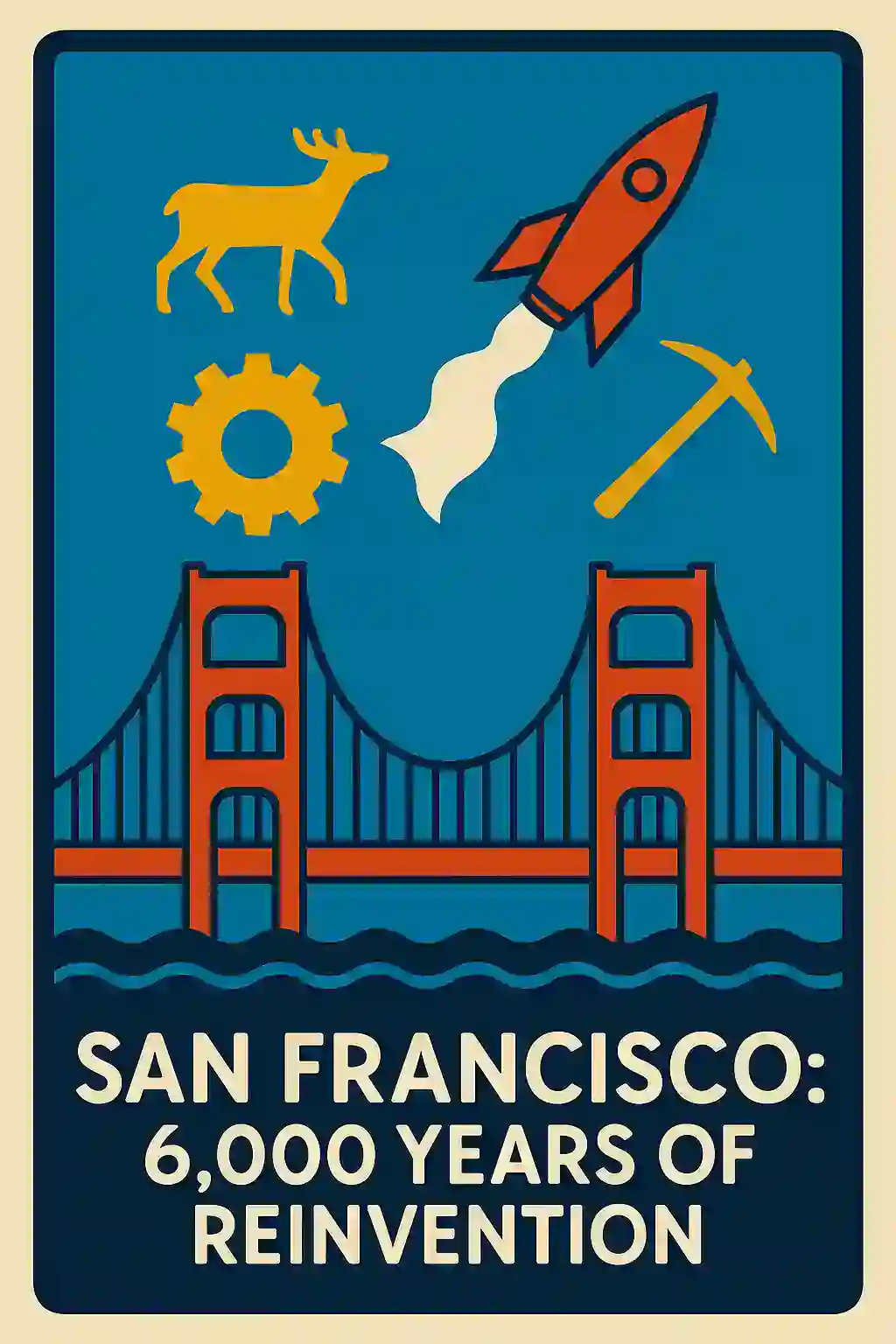
    Глава 2

    From Yerba Buena to the American Prize

    If you had visited the peninsula in 1835, you would have found a place that felt more like a remote outpost than a future financial capital. After Mexico won its independence from Spain in 1821, the mission system began to decline, and the area transitioned into a Mexican pueblo . The first person to really plant a flag for permanent civilian life outside the mission was an Englishman named William Richardson, who set up a homestead near the anchorage in 1835 . Think about the isolation he must have felt, living on a peninsula that lacked basic necessities like easy access to firewood or fresh water . Yet, the strategic value of the harbor was so high that even the British Empire toyed with the idea of buying the bay from Mexico in 1841, believing it would secure their maritime dominance in the Pacific . They missed their chance, and instead, the city became a central piece of the American westward expansion. You can almost feel the tension of the 1840s as American settlers began agitating for independence from Mexico. On July 9, 1846, during the Mexican—American War, Captain John Berrien Montgomery arrived on the USS Portsmouth and raised the American flag over the town plaza—the site we now call Portsmouth Square . Just a few months later, in early 1847, the town’s name was officially changed from Yerba Buena to San Francisco . It was a symbolic rebranding that prepared the settlement for an influx of people no one could have predicted. Imagine the shock to the system when a ship called the Brooklyn arrived in 1846 carrying 240 Mormon pioneers, instantly doubling the population . Among them was Sam Brannan, a man who would soon become the first publicist of the Gold Rush and the city's first millionaire . This era set the foundation for a city built on "filled land"—literally expanding the real estate by filling in marshlands and coves to accommodate growth . It was a bold, perhaps reckless, start for a city that was about to experience the most explosive population boom in human history.

    Глава 3

    The Fever of Forty-Nine and the Birth of a Metropolis

    Everything changed on January 24, 1848, when a few flakes of gold were found at Sutter’s Fort in the California foothills . The news didn't just travel; it ignited a global frenzy. You can see the sheer scale of the chaos in the numbers: between January 1848 and December 1849, the population of San Francisco skyrocketed from a mere 1,000 people to over 25,000 . The harbor became so congested with ships that crews would simply desert their vessels to head for the gold fields, leaving a "forest of masts" rotting in the bay . Some of these abandoned ships were actually used as raw materials for buildings or were simply scuttled and built over as the city expanded its shoreline . This wasn't just a local event; it was a cosmopolitan invasion. You had 1,500 Chileans arriving in late 1848, followed by thousands of Chinese workers who came to work the mines and eventually the railroads . This influx created one of the largest Chinatown districts in the country, a legacy that remains today with nearly one—fifth of the city’s population being of Chinese descent . But this rapid growth came with a dark side. The city was a lawless frontier where the social climate was frequently described as "chaotic" . The red—light district, famously known as the Barbary Coast, became a den of gambling, prostitution, and the notorious practice of "shanghaiing"—kidnapping men to serve as sailors . Because the government couldn't keep up, citizens formed "Committees of Vigilance" in 1851 and 1856, taking the law into their own hands to arrest and even execute those they deemed criminals or corrupt officials . You also see the early roots of San Francisco's famous brands during this time—Levi Strauss began making durable clothing for miners, Ghirardelli started selling chocolate, and Wells Fargo established its banking presence . Even the city’s geography was a result of this era’s haste; the legacy of narrow streets you navigate today is a direct result of that initial, unplanned boom . By the time the Comstock Lode silver discovery hit in 1859, San Francisco had moved from a dusty outpost to the financial and commercial heart of the American West .

    Глава 4

    Gender Imbalance and the Regulation of Identity

    One aspect of the Gold Rush era that you might not often hear about is the extreme gender imbalance it created. Because the initial wave of migrants was almost entirely young and male, women were incredibly scarce . This led to some fascinating cultural shifts. In social settings like dances or masquerade balls, men would often take on "feminine" roles, dressing in women's clothing to act as lady partners . For a time, there was a certain fluidity to self—expression born out of necessity. However, as the city tried to "civilize" itself and mirror the social structures of the East Coast, this openness began to disappear. In 1863, San Francisco passed a cross—dressing law, making it illegal to appear in public in clothing not associated with one's legal sex . This was part of a broader national trend of policing bodies, but in San Francisco, it was used to target gender impersonators, clothing reformers, and people whose physical anatomy didn't match their legal identification . Over the next several decades, the city arrested more than a hundred individuals under this law, including women like Jeanne Bonnet and Milton B. Matson, who were often just trying to access the privileges and freedoms afforded to men . This era marks the beginning of a long tension in the city's history—a place that attracts people looking for freedom and radical self—expression, yet frequently reacts with restrictive laws to maintain "good morals" . While this was happening, the city was also physically transforming into what people called the "Paris of the West" . During the 1860s through the 1880s, the city expanded into new neighborhoods like the Haight—Ashbury and the Mission District . To conquer the city's punishingly steep hills, Andrew Smith Hallidie invented the cable car, a unique piece of infrastructure that allowed the residential grid to climb heights that horses simply couldn't manage . Cultural giants like Mark Twain and Oscar Wilde spent time in the city during this period, cementing its reputation as a place of intellectual and artistic ferment . By the late 19th century, San Francisco wasn't just a mining hub anymore; it was a sophisticated, if still slightly rowdy, metropolitan center.

    Глава 5

    The Great Rupture and the Will to Rebuild

    The most defining moment in the city’s history occurred at 5:12 AM on April 18, 1906. The San Andreas Fault ruptured over a span of 270 miles, triggering an earthquake with an estimated magnitude of 7.8 . If you were there, you wouldn't just have felt the ground move; you would have seen the very lifeblood of the city's defense fail as the water mains ruptured . Without water, the fires that followed burned out of control for four days, destroying 80% of the city . The destruction was near total—25,000 buildings were gone, and 250,000 people were left homeless . While the official death toll at the time was listed as 478 to keep morale and investment high, modern estimates put the number at over 3,000 . This was the greatest natural disaster in California's history, but what happened next is even more remarkable. Almost immediately, plans for reconstruction began. Some, like urban planner Daniel Burnham, wanted to turn the city into a neo—classical dream with wide boulevards radiating from a massive civic center . While his full "Haussmann style" vision was considered too expensive by property owners, you can still see his influence today in the grand Civic Center complex and the preference for arterial thoroughfares like Market Street . The city rebuilt with staggering speed. Just nine years later, in 1915, San Francisco hosted the Panama—Pacific International Exposition to show the world it had returned from the ashes . The only major structure from that fair that still stands today is the Palace of Fine Arts, a hauntingly beautiful reminder of the city's resilience . This period also saw a major "cleaning up" of city politics. Before the quake, political boss Abe Ruef had run the city as a "front" for the Union Labor Party, using his influence over thousands of saloon keepers and bartenders to control the vote . The subsequent graft trials eventually sent Ruef to San Quentin, marking a shift toward a more professional, if still colorful, municipal government . The earthquake didn't just break the city; it provided a blank slate for a new kind of San Francisco—one that was more modern, more planned, and ready for the challenges of the 20th century.

    Глава 6

    A Portal to the Pacific and the Arsenal of Democracy

    As the 20th century progressed, San Francisco's identity as a maritime and military powerhouse took center stage. The 1930s were a decade of massive infrastructure projects that you likely recognize as the city's modern icons. The San Francisco—Oakland Bay Bridge opened in 1936, followed by the Golden Gate Bridge in 1937 . These weren't just transit links; they were engineering marvels that connected the isolated peninsula to the rest of the region. During this time, the island of Alcatraz transitioned from a military stockade to a federal maximum—security prison, housing notorious figures like Al Capone . But the real transformation came with World War II. San Francisco became the primary port of embarkation for the war in the Pacific, a massive logistics hub that brought hundreds of thousands of people through the Golden Gate . This era brought a painful and dramatic demographic shift. Following Executive Order 9066 in 1942, the city’s entire Japanese population—the largest and oldest outside of Japan—was forced into internment camps . Their vacant homes in neighborhoods like the Fillmore and Japantown were quickly filled by African Americans arriving from the South as part of the Great Migration to work in wartime industries . This created a vibrant new cultural landscape, but it was also a time of high stakes. The dry docks at Hunters Point were used to load the components of the first atomic bomb onto the USS Indianapolis in 1945 . When the war ended, San Francisco played a lead role in the new world order. In 1945, delegates from around the globe met at the War Memorial Opera House for the 1945 conference that formed the United Nations, with the UN Charter signed nearby in the Herbst Theatre on June 26 . Six years later, the Treaty of San Francisco was signed there, officially ending the war with Japan . The city had evolved from a frontier town to a diplomatic center for the entire planet. This period also saw the "Freeway Revolt" in 1959, where residents successfully blocked the construction of massive double—decker freeways that would have bulldozed through dense neighborhoods . This decision preserved the city's unique, walkable character and set a precedent for urban activism that continues to this day.

    Глава 7

    The Summer of Love and the Rise of the Gay Mecca

    If the first half of the 20th century was about building the "Paris of the West," the second half was about building the capital of the counterculture. After World War II, many soldiers who had passed through the city on their way to the Pacific decided to settle there, drawn by its tolerant atmosphere . In the 1950s, the North Beach neighborhood became the center of the Beat Generation, with City Lights Bookstore serving as a hub for radical literature . But the real explosion happened in the 1960s. In 1967, the "Summer of Love" brought thousands of young people to the Haight—Ashbury district, drawn by the "San Francisco Sound" of bands like the Grateful Dead and Jefferson Airplane . This wasn't just about music; it was a total reimagining of social norms, drugs, and community living. Simultaneously, San Francisco was becoming a sanctuary for the LGBT community. During the war, the military had actively discharged homosexual servicemen and women in San Francisco, and many chose to stay rather than return home to less tolerant places . By the late 1960s, a new, more radical wave of gay and lesbian residents began moving into the Castro District, which had previously been a quiet Irish—American neighborhood . You can see the political power of this movement in the rise of Harvey Milk, who in 1977 became the city's first openly gay elected official . His assassination in 1978 by former supervisor Dan White, along with the murder of Mayor George Moscone, was a traumatic turning point that sparked both candlelight vigils and riots . Despite the devastation of the AIDS epidemic in the 1980s, which created havoc in the community, San Francisco remained the city with the highest LGBT population in any major American metropolitan area . This theme of "radical inclusion" became the city's new brand, attracting people who felt they didn't fit in anywhere else. Whether it was the hippies in the Haight or the activists in the Castro, the city became a laboratory for social change, proving that a specific geography of tolerance could foster movements that would eventually change the world.

    Глава 8

    The Silicon Gold Rush and the Modern Struggle

    As we move into the final chapters of the city's story, you'll notice a familiar pattern: a new kind of "gold" causing a new kind of boom. In the 1980s, under Mayor Dianne Feinstein, the city underwent "Manhattanization," with massive skyscrapers rising in the Financial District . But the truly seismic shift came with the dot—com boom of the late 1990s. Thousands of entrepreneurs and software professionals flooded the city, driving up rents and transforming working—class neighborhoods like the Mission District and South of Market . This created a profound tension that you still see today—a city that was once a haven for the poor and the radical becoming one of the most expensive places on earth . When the dot—com bubble burst in 2001, the population actually shrank by 30,000 as people fled the crashing markets . But the recovery was swift, fueled by the Web 2.0 boom and the resurgent international tourist industry and the Web 2.0 boom . By 2015, San Francisco had the highest rents in the nation . This wealth brought incredible infrastructure—like the redevelopment of Mission Bay into a biotechnology hub and the construction of the Chase Center—but it also exacerbated the crisis of homelessness . You've likely heard about the "Care Not Cash" program or the various attempts by mayors from Art Agnos to Gavin Newsom to address a problem that remains one of the city's most visible challenges . Even nature continues to test the city’s resolve; the 1989 Loma Prieta earthquake collapsed freeways and damaged the Marina District, leading to the controversial but ultimately popular decision to tear down the Embarcadero Freeway and restore the waterfront . Today, as we sit in the mid—2020s, the city is at yet another crossroads. The COVID—19 pandemic shifted the workforce to remote habits, leaving the Mid—Market area with a staggering 46% office vacancy rate by 2024 . Yet, the cycle of reinvention continues with the AI boom, as companies like OpenAI and Anthropic make San Francisco the global headquarters for artificial intelligence . It is a city of "perpetual reinvention," always on the verge of either collapse or a brilliant new beginning .

    Глава 9

    Your Takeaway from the City of Constant Change

    So, what can you take away from this long, winding history of a peninsula at the edge of the world? Perhaps the most important lesson is that San Francisco’s greatest asset isn't its gold, its silver, or its software—it is its capacity for resilience. Every time this city has been leveled—whether by fire in 1906, by economic collapse in 2001, or by a global pandemic in 2020—it has found a way to reimagine itself . Think about the Ohlone trading networks from five thousand years ago and compare them to the AI networks being built in the city today; both are fundamentally about the same thing—resource gathering and connectivity in a unique geography . You can see this spirit in the way the city handled the "Freeway Revolt," choosing people over pavement, or in the way it became a "Gay Mecca" when the rest of the country was turning its back . As you think about your own life and the challenges you face, consider the "San Francisco model." It’s the idea that disaster doesn't have to be the end; it can be the prerequisite for a more ambitious reconstruction. The city’s history teaches you that tension is often the engine of growth—the friction between the "robber barons" of Nob Hill and the "hippies" of the Haight is exactly what creates the culture that the rest of the world wants to emulate . Whether it’s passing a law requiring all new buildings below 10 stories to have rooftop solar panels, making it the first major US city to do so or facing a projected $800 million deficit in its next two-year budget, the city remains a laboratory for what is possible . It is a place that has always lived on the edge—literally and figuratively—and that proximity to the edge is what forces it to stay sharp. I want to thank you for spending this time with me, walking through the fog and the fire of this remarkable city. I hope that the next time you hear about San Francisco, you don't just think about the headlines of the day, but about the roughly five thousand years of reinvention that made it what it is. Take a moment to reflect on what "gold" you are chasing in your own life and how you might rebuild your own "filled land" when the ground beneath you shifts. It’s been a pleasure sharing this story with you.

    Лучшая цитата из San Francisco: The City of Reinvention and Its Ancient Origins

    “

    San Francisco is a city of perpetual reinvention, always on the verge of either collapse or a brilliant new beginning. Its history teaches that disaster doesn't have to be the end; it can be the prerequisite for a more ambitious reconstruction.

    ”
    C

    Generated by Chris

    Вопрос для ввода

    History of San Francisco focusing each major theme associated with the city

    Голоса ведущих
    Lenaplay
    Источники знаний
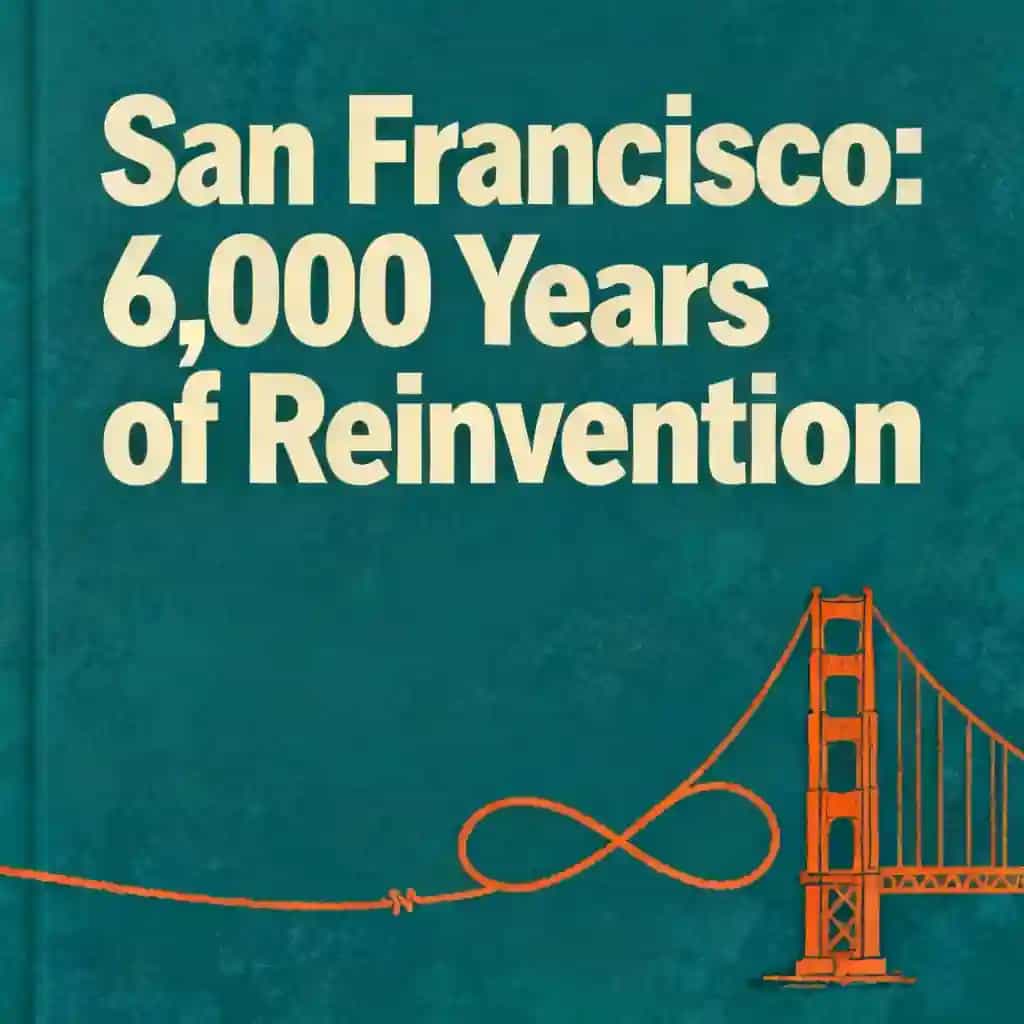
    San Francisco: 6,000 Years of Reinvention
    San Francisco: City of Perpetual Reinvention
    History of San Francisco
    link
    https://en.wikipedia.org/wiki/History_of_San_Francisco
    San Francisco | HISTORY
    link
    https://www.history.com/articles/san-francisco
    Content
    link
    https://ecommons.cornell.edu/server/api/core/bitstreams/ff161736-de22-4b44-b901-f6cb07354145/content
    link
    https://openresearch-repository.anu.edu.au/bitstreams/f7f5e0bf-62be-4f92-a16f-3887f9f84057/download

    Часто задаваемые вопросы

    The original inhabitants of the area were the Ohlone people, who lived in the region as early as 3000 BC. They referred to the area as Ahwaste, meaning a 'place at the bay.' Far from being isolated, the Ohlone established a sophisticated network of trade and exchange that connected the coastal peninsula to distant regions like the Mojave Desert and Yosemite, utilizing the bay as a vital resource for gathering and connectivity.
    Despite its massive size, European explorers famously sailed past the Golden Gate for centuries because the entrance was hidden by thick, characteristic fog. It wasn't until 1769 that a Spanish expedition led by Gaspar de Portolá finally encountered the bay. Interestingly, they did not find it from the sea, but instead stumbled upon the harbor from the land side, forever changing the landscape from an indigenous hub into a strategic global prize.

    Long before the themes of gold or technology defined the city, San Francisco served as a fundamental hub for resource gathering and connectivity. The early Ohlone inhabitants viewed the harbor and its surrounding oak groves and marshlands as a central point for trade. When the Spanish arrived in the late 18th century, they immediately recognized the harbor's strategic significance, marking the beginning of the city's long history of reinvention and global importance.

    Создано выпускниками Колумбийского университета | в Сан-Франциско

    BeFreed объединяет глобальное сообщество любознательных людей

    4.7

    средняя оценка

    Более 7,84 тыс. оценок приложения

    Сообщество BeFreed

    Честно говоря, я ещё даже не изучила приложение полностью, но за последние несколько дней оно меня по-настоящему впечатлило… BeFreed — совсем другой уровень по сравнению с любыми учебными приложениями, которыми я пользовалась. Оно невероятно увлекает и действительно улучшает концентрацию — то, что нужно всем, кто бесконечно листает ленту!

    @ladyInfinity

    Я купил BeFreed ровно 23 дня назад и с тех пор пользуюсь им каждый день. Оно полностью встроилось в мой рабочий процесс и привычку учиться.

    @jayallen

    Честно говоря, приложение превзошло все мои ожидания. Я могу попросить его сгенерировать аудио на любую тему, какой бы она ни была, и результат впечатляет. Моя профессиональная область — специализация в психотерапии, она мультидисциплинарная, но ответы очень точные.

    @Raguipa

    Больше всего я ценю то, насколько меньше я стал листать ленту: меньше времени уходит на поиск и больше — на усвоение информации. Сочетание полных аудиокниг, подкастов и планов обучения — блестящее.

    @colonyofcreatorsNGO

    Я уже 24 года работаю инструктором ускоренного обучения PhotoReading… книги, чтение и обучение — моя стихия, и BeFreed отлично справился, предложив инновационный подход к подаче информации в лёгкой для восприятия форме.

    @BeFreed user

    Это не просто приложение с кратким содержанием книг: я попробовал режим «весёлого чтения», и это гораздо лучший пересказ и способ схватывать идеи, чем традиционный. Уже ради одного этого оно того стоит.

    @austinakon

    Обожаю это приложение. Пользуюсь несколько дней и не могу перестать слушать. Отличный способ начать.

    @jcrules328

    Мне очень нравится это приложение; я тестирую его уже около месяца и считаю настоящей находкой. Оно отлично работает, потому что в BeFreed можно создавать собственные темы, а голос замечательный — с безграничным выбором озвучек.

    @DanielCZ

    Честно говоря, я ещё даже не изучила приложение полностью, но за последние несколько дней оно меня по-настоящему впечатлило… BeFreed — совсем другой уровень по сравнению с любыми учебными приложениями, которыми я пользовалась. Оно невероятно увлекает и действительно улучшает концентрацию — то, что нужно всем, кто бесконечно листает ленту!

    @ladyInfinity

    Я купил BeFreed ровно 23 дня назад и с тех пор пользуюсь им каждый день. Оно полностью встроилось в мой рабочий процесс и привычку учиться.

    @jayallen

    Честно говоря, приложение превзошло все мои ожидания. Я могу попросить его сгенерировать аудио на любую тему, какой бы она ни была, и результат впечатляет. Моя профессиональная область — специализация в психотерапии, она мультидисциплинарная, но ответы очень точные.

    @Raguipa

    Больше всего я ценю то, насколько меньше я стал листать ленту: меньше времени уходит на поиск и больше — на усвоение информации. Сочетание полных аудиокниг, подкастов и планов обучения — блестящее.

    @colonyofcreatorsNGO

    Я уже 24 года работаю инструктором ускоренного обучения PhotoReading… книги, чтение и обучение — моя стихия, и BeFreed отлично справился, предложив инновационный подход к подаче информации в лёгкой для восприятия форме.

    @BeFreed user

    Это не просто приложение с кратким содержанием книг: я попробовал режим «весёлого чтения», и это гораздо лучший пересказ и способ схватывать идеи, чем традиционный. Уже ради одного этого оно того стоит.

    @austinakon

    Обожаю это приложение. Пользуюсь несколько дней и не могу перестать слушать. Отличный способ начать.

    @jcrules328

    Мне очень нравится это приложение; я тестирую его уже около месяца и считаю настоящей находкой. Оно отлично работает, потому что в BeFreed можно создавать собственные темы, а голос замечательный — с безграничным выбором озвучек.

    @DanielCZ

    Мне очень нравится, что полезную, сжатую информацию и идеи можно получить в виде аудио в стиле подкаста на 8–15 минут. Я не большой фанат подкастов из-за «воды», но здесь её нет совсем.

    @BeFreed user

    Я заканчиваю докторскую и вынужден читать много незнакомого материала… В BeFreed достаточно ввести запрос — приложение само находит источники и создаёт аудиоподкаст. Мне процесс в BeFreed кажется удобнее, чем в NotebookLM.

    @Brad

    Я часто ищу на YouTube, что послушать за завтраком, на прогулке или по дороге на работу, и BeFreed предлагает ещё более точный подход — без рекламы и без «воды»!

    @BeFreed user

    Самое лучшее в этой платформе — её универсальность. Нет буквально ни одной темы, которая была бы ей не по зубам. Она справляется со всем, что ей даёшь… Редко встретишь учебный инструмент без ограничений, который действительно выполняет обещания.

    @jayallen

    BeFreed — потрясающее приложение. Благодаря удобному дизайну я трачу меньше времени на навигацию и больше — на учёбу. Сочетание аудиокниг, подкастов и планов обучения — гениальная комбинация, которая полностью изменила мой распорядок дня.

    @BeFreed user

    Сначала мне понадобилось время, чтобы разобраться, как создавать подкасты на итальянском, а потом — бум! Это же великолепно! Можно попросить объяснить любую тему, и он делает это отлично и очень умно!

    @matteo77

    BeFreed стал моим ежедневным приложением для аудиокниг… Больше всего мне нравится, что ты вставляешь свой текст — и получаешь аудио, которое можно слушать на ходу.

    @kotanzu1

    Мне очень нравится, что полезную, сжатую информацию и идеи можно получить в виде аудио в стиле подкаста на 8–15 минут. Я не большой фанат подкастов из-за «воды», но здесь её нет совсем.

    @BeFreed user

    Я заканчиваю докторскую и вынужден читать много незнакомого материала… В BeFreed достаточно ввести запрос — приложение само находит источники и создаёт аудиоподкаст. Мне процесс в BeFreed кажется удобнее, чем в NotebookLM.

    @Brad

    Я часто ищу на YouTube, что послушать за завтраком, на прогулке или по дороге на работу, и BeFreed предлагает ещё более точный подход — без рекламы и без «воды»!

    @BeFreed user

    Самое лучшее в этой платформе — её универсальность. Нет буквально ни одной темы, которая была бы ей не по зубам. Она справляется со всем, что ей даёшь… Редко встретишь учебный инструмент без ограничений, который действительно выполняет обещания.

    @jayallen

    BeFreed — потрясающее приложение. Благодаря удобному дизайну я трачу меньше времени на навигацию и больше — на учёбу. Сочетание аудиокниг, подкастов и планов обучения — гениальная комбинация, которая полностью изменила мой распорядок дня.

    @BeFreed user

    Сначала мне понадобилось время, чтобы разобраться, как создавать подкасты на итальянском, а потом — бум! Это же великолепно! Можно попросить объяснить любую тему, и он делает это отлично и очень умно!

    @matteo77

    BeFreed стал моим ежедневным приложением для аудиокниг… Больше всего мне нравится, что ты вставляешь свой текст — и получаешь аудио, которое можно слушать на ходу.

    @kotanzu1

    Узнайте больше о том, как обсуждают BeFreed в интернете
    Начните своё обучение прямо сейчас
    Приложение BeFreed
    BeFreed

    Учите что угодно персонализированно

    DiscordLinkedIn
    Избранные книги
    Crucial ConversationsThe Perfect MarriageInto the WildNever Split the DifferenceAttachedGood to GreatSay Nothing
    Популярные категории
    Self HelpCommunication SkillRelationshipMindfulnessPhilosophyInspirationProductivity
    Списки чтения знаменитостей
    Elon MuskCharlie KirkBill GatesSteve JobsAndrew HubermanJoe RoganJordan Peterson
    Коллекция наград
    Pulitzer PrizeNational Book AwardGoodreads Choice AwardsNobel Prize in LiteratureNew York TimesCaldecott MedalNebula Award
    Избранные темы
    ManagementAmerican HistoryWarTradingStoicismAnxietySex
    Лучшие книги по годам
    2025 Best Non Fiction Books2024 Best Non Fiction Books2023 Best Non Fiction Books
    Избранные авторы
    Chimamanda Ngozi AdichieGeorge OrwellO. J. SimpsonBarbara O'NeillWinston ChurchillCharlie Kirk
    BeFreed vs другие приложения
    BeFreed vs. Other Book Summary AppsBeFreed vs. ElevenReaderBeFreed vs. ReadwiseBeFreed vs. Anki
    Инструменты обучения
    Knowledge VisualizerAI Podcast Generator
    Информация
    О насarrow
    Ценыarrow
    Частые вопросыarrow
    Блогarrow
    Карьераarrow
    Партнёрствоarrow
    Программа амбассадоровarrow
    Каталогarrow
    BeFreed
    Try now
    © 2026 BeFreed
    Условия использованияПолитика конфиденциальности
    BeFreed

    Учите что угодно персонализированно

    DiscordLinkedIn
    Избранные книги
    Crucial ConversationsThe Perfect MarriageInto the WildNever Split the DifferenceAttachedGood to GreatSay Nothing
    Популярные категории
    Self HelpCommunication SkillRelationshipMindfulnessPhilosophyInspirationProductivity
    Списки чтения знаменитостей
    Elon MuskCharlie KirkBill GatesSteve JobsAndrew HubermanJoe RoganJordan Peterson
    Коллекция наград
    Pulitzer PrizeNational Book AwardGoodreads Choice AwardsNobel Prize in LiteratureNew York TimesCaldecott MedalNebula Award
    Избранные темы
    ManagementAmerican HistoryWarTradingStoicismAnxietySex
    Лучшие книги по годам
    2025 Best Non Fiction Books2024 Best Non Fiction Books2023 Best Non Fiction Books
    Инструменты обучения
    Knowledge VisualizerAI Podcast Generator
    Избранные авторы
    Chimamanda Ngozi AdichieGeorge OrwellO. J. SimpsonBarbara O'NeillWinston ChurchillCharlie Kirk
    BeFreed vs другие приложения
    BeFreed vs. Other Book Summary AppsBeFreed vs. ElevenReaderBeFreed vs. ReadwiseBeFreed vs. Anki
    Информация
    О насarrow
    Ценыarrow
    Частые вопросыarrow
    Блогarrow
    Карьераarrow
    Партнёрствоarrow
    Программа амбассадоровarrow
    Каталогarrow
    BeFreed
    Try now
    © 2026 BeFreed
    Условия использованияПолитика конфиденциальности

    Похожий контент

    Обложка книги San Francisco: City of Perpetual Reinvention
    A Short History of Nearly EverythingExhalationRingworld
    17 sources
    San Francisco: City of Perpetual Reinvention
    Discover how San Francisco evolved from an 800-person settlement to a global tech hub through multiple transformations—from the Gold Rush to counterculture movements to tech innovation—all while maintaining its spirit of reinvention.
    22 min
    Обложка книги San Francisco: 6,000 Years of Reinvention
    History of San Francisco - WikipediaA Brief History of San Francisco: Everything You Need to KnowTimeline of San FranciscoGold Rush Transforms San Francisco (U.S. National Park Service)
    6 sources
    San Francisco: 6,000 Years of Reinvention
    From Ohlone trading networks to Gold Rush chaos to tech revolution - explore how San Francisco became America's capital of transformation through disaster, diversity, and the courage to constantly reimagine what's possible.
    8 min
    Обложка книги San Francisco: From Gold Rush to Tech Revolution
    History of San Francisco - WikipediaSan Francisco - Urbanization, Gold Rush, Tech Hub | BritannicaSan Francisco History: 10 Ways to Experience It - Visit CaliforniaSan Francisco's Role in the 1906 Earthquake Recovery
    6 sources
    San Francisco: From Gold Rush to Tech Revolution
    Journey through San Francisco's incredible transformation from a Spanish outpost to global tech capital. Discover how earthquakes, cultural revolutions, and waves of dreamers shaped the city that keeps reinventing the future.
    12 min
    Обложка книги San Francisco: From Gold Rush to Silicon Valley
    History of San Francisco - WikipediaA Brief History of San Francisco: Everything You Need to KnowTimeline of San FranciscoSan Francisco | History, Population, Climate, Map, & Facts
    6 sources
    San Francisco: From Gold Rush to Silicon Valley
    Explore how a tiny Spanish settlement transformed into America's reinvention capital through gold rush chaos, counterculture revolution, and tech innovation. A fascinating journey of resilience and endless transformation.
    12 min
    Обложка книги San Francisco: From Gold Rush to Tech Revolution
    A Brief History of San Francisco: Everything You Need to KnowHistory of San Francisco - WikipediaTimeline of San FranciscoSan Francisco - History.com
    6 sources
    San Francisco: From Gold Rush to Tech Revolution
    Journey through the incredible transformation of San Francisco from a tiny Spanish mission to a global powerhouse. Discover how earthquakes, gold rushes, counterculture movements, and tech booms shaped the City by the Bay.
    11 min
    Обложка книги San Francisco: From Gold Rush to Tech Revolution
    A Brief History of San Francisco: Everything You Need to KnowHistory of San Francisco - WikipediaSan Francisco | History, Population, Climate, Map, & FactsTimeline of San Francisco
    6 sources
    San Francisco: From Gold Rush to Tech Revolution
    Explore how San Francisco transformed from Native American settlements to Spanish missions, through the wild Gold Rush boom, devastating 1906 earthquake, counterculture revolution, and finally into the tech capital of the world.
    11 min
    Обложка книги From Gold Rush to Tech Rush: San Francisco's Story
    History of San Franciscosource 2source 3San Francisco History - Timeline of Important Dates
    6 sources
    From Gold Rush to Tech Rush: San Francisco's Story
    Explore how a tiny settlement exploded into one of the world's most influential cities. From 1849's Gold Rush boom to Silicon Valley's tech revolution, discover the rebellious spirit that keeps reinventing San Francisco.
    9 min
    Обложка книги From Yerba Buena to Silicon Valley
    History of San FranciscoWHY SAN FRANCISCO??? CITY ORIGINS: 1835-1849Timeline of San FranciscoHow San Francisco Became a Global Tech Hub - Mindspace
    6 sources
    From Yerba Buena to Silicon Valley
    Discover how San Francisco transformed from a tiny 1848 settlement into the world's tech capital. An epic journey through Gold Rush boom, innovation culture, and the rise of Silicon Valley.
    13 min