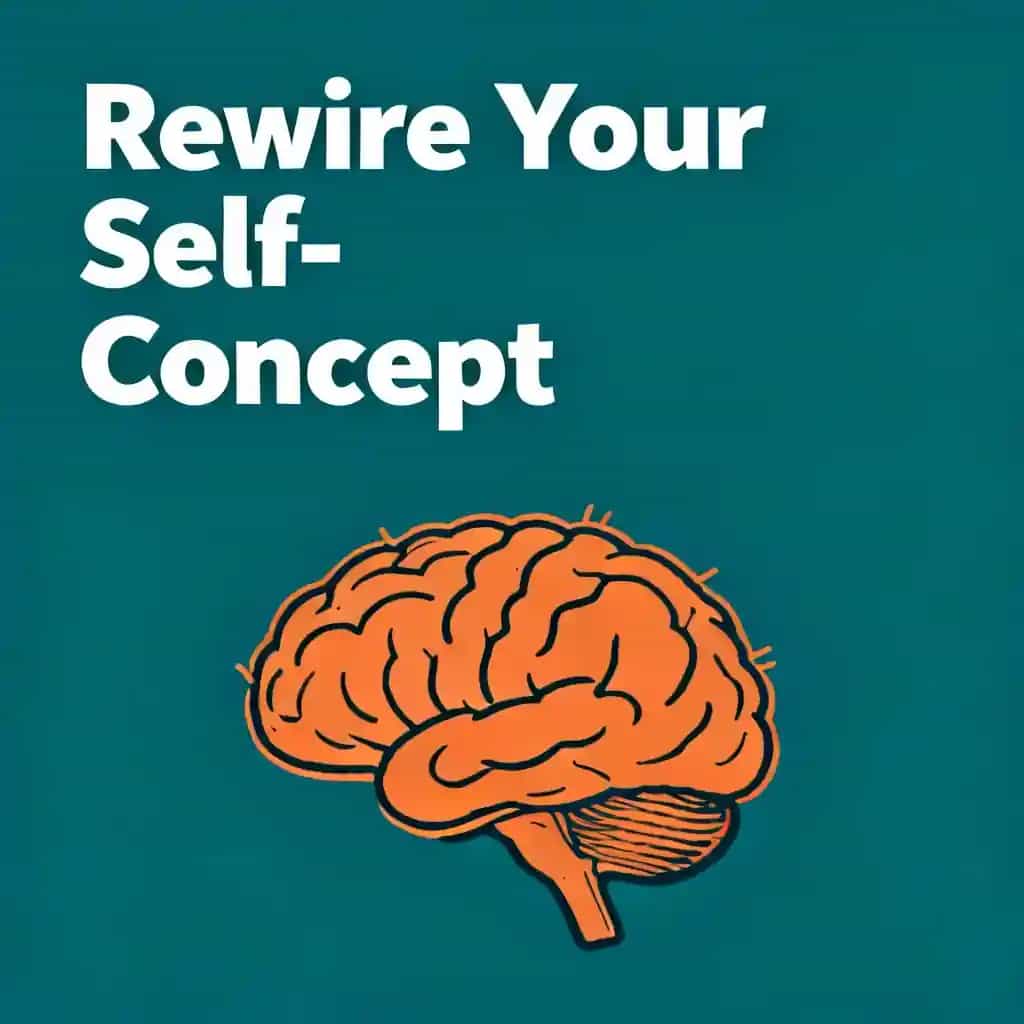
Rewire Your Brain: The Science of Mindset Mastery
Move beyond superficial positivity and learn to physically restructure your brain using neuroplasticity and the OCAT method to break free from limiting beliefs.

Лучшая цитата из Rewire Your Brain: The Science of Mindset Mastery
When you recognize a limiting belief, you’re moving the thought from the autopilot of the basal ganglia to the prefrontal cortex, where you can actually look at it. It’s like turning on the lights in a room where you’ve been tripping over furniture.
Generated by Andrea
Change my mindset


Часто задаваемые вопросы
The "yet" intervention is a simple linguistic shift where you add the word "yet" to the end of limiting statements, such as changing "I can't do this" to "I can't do this yet." This technique acts as "neuroplastic priming" by shifting the brain from a threat response to a challenge response. It reduces cortisol levels and activates dopamine motivation circuits, signaling the brain to stay curious and open to learning rather than shutting down.
Neuroplasticity is the brain's ability to physically rewire itself by forming new neural connections. When you identify a limiting belief and move it from the "autopilot" of the basal ganglia to the prefrontal cortex for analysis, you activate the brain's meta-cognitive networks. Through a process called long-term potentiation (LTP) and myelination—the thickening of the insulation around neural pathways—consistent practice and reflection make new, positive ways of thinking physically stronger and more efficient over time.
The OCAT method is a practical framework designed to make mindset change measurable through four steps: Observe, Challenge, Act, and Track. It begins with cultivating self-awareness by treating thoughts as data points, challenging cognitive distortions, taking intentional actions through micro-commitments, and finally tracking progress through proxy metrics like habit logs or emotional intensity scales to reinforce the new neural pathways.
Contrary to the belief that self-criticism drives motivation, neuroscience shows that being hard on yourself triggers a threat response that can shut down the learning centers of the brain. Self-compassion activates the insular and prefrontal regions associated with emotional regulation, keeping the brain's "learning centers" open. By approaching mistakes with curiosity instead of shame, you trigger an "Error Positivity Response" that enhances future performance and allows for more effective neural software upgrades.
A plateau occurs due to "habituation," where the brain becomes so efficient at a routine that it stops paying attention and reduces the release of growth-stimulating chemicals like BDNF (Brain-Derived Neurotrophic Factor). To overcome this, you must introduce novelty or "skill interleaving," which involves changing your environment, increasing the difficulty, or alternating between different types of problems. This "neural friction" forces the brain to re-load information, which strengthens flexible neural connections and promotes the growth of new dendritic spines.
Создано выпускниками Колумбийского университета в Сан-Франциско
"Instead of endless scrolling, I just hit play on BeFreed. It saves me so much time."


"I never knew where to start with nonfiction—BeFreed’s book lists turned into podcasts gave me a clear path."


"Perfect balance between learning and entertainment. Finished ‘Thinking, Fast and Slow’ on my commute this week."
"Crazy how much I learned while walking the dog. BeFreed = small habits → big gains."
"Reading used to feel like a chore. Now it’s just part of my lifestyle."

"Feels effortless compared to reading. I’ve finished 6 books this month already."
"BeFreed turned my guilty doomscrolling into something that feels productive and inspiring."

"BeFreed turned my commute into learning time. 20-min podcasts are perfect for finishing books I never had time for."
"BeFreed replaced my podcast queue. Imagine Spotify for books — that’s it. 🙌"

"It is great for me to learn something from the book without reading it."
"The themed book list podcasts help me connect ideas across authors—like a guided audio journey."
"Makes me feel smarter every time before going to work"
Создано выпускниками Колумбийского университета в Сан-Франциско
"Instead of endless scrolling, I just hit play on BeFreed. It saves me so much time."
"I never knew where to start with nonfiction—BeFreed’s book lists turned into podcasts gave me a clear path."
"Perfect balance between learning and entertainment. Finished ‘Thinking, Fast and Slow’ on my commute this week."
"Crazy how much I learned while walking the dog. BeFreed = small habits → big gains."
"Reading used to feel like a chore. Now it’s just part of my lifestyle."
"Feels effortless compared to reading. I’ve finished 6 books this month already."
"BeFreed turned my guilty doomscrolling into something that feels productive and inspiring."
"BeFreed turned my commute into learning time. 20-min podcasts are perfect for finishing books I never had time for."
"BeFreed replaced my podcast queue. Imagine Spotify for books — that’s it. 🙌"
"It is great for me to learn something from the book without reading it."
"The themed book list podcasts help me connect ideas across authors—like a guided audio journey."
"Makes me feel smarter every time before going to work"
"Instead of endless scrolling, I just hit play on BeFreed. It saves me so much time."
"I never knew where to start with nonfiction—BeFreed’s book lists turned into podcasts gave me a clear path."
"Perfect balance between learning and entertainment. Finished ‘Thinking, Fast and Slow’ on my commute this week."
"Crazy how much I learned while walking the dog. BeFreed = small habits → big gains."
"Reading used to feel like a chore. Now it’s just part of my lifestyle."
"Feels effortless compared to reading. I’ve finished 6 books this month already."
"BeFreed turned my guilty doomscrolling into something that feels productive and inspiring."
"BeFreed turned my commute into learning time. 20-min podcasts are perfect for finishing books I never had time for."
"BeFreed replaced my podcast queue. Imagine Spotify for books — that’s it. 🙌"
"It is great for me to learn something from the book without reading it."
"The themed book list podcasts help me connect ideas across authors—like a guided audio journey."
"Makes me feel smarter every time before going to work"
"Instead of endless scrolling, I just hit play on BeFreed. It saves me so much time."
"I never knew where to start with nonfiction—BeFreed’s book lists turned into podcasts gave me a clear path."
"Perfect balance between learning and entertainment. Finished ‘Thinking, Fast and Slow’ on my commute this week."
"Crazy how much I learned while walking the dog. BeFreed = small habits → big gains."
"Reading used to feel like a chore. Now it’s just part of my lifestyle."
"Feels effortless compared to reading. I’ve finished 6 books this month already."
"BeFreed turned my guilty doomscrolling into something that feels productive and inspiring."
"BeFreed turned my commute into learning time. 20-min podcasts are perfect for finishing books I never had time for."
"BeFreed replaced my podcast queue. Imagine Spotify for books — that’s it. 🙌"
"It is great for me to learn something from the book without reading it."
"The themed book list podcasts help me connect ideas across authors—like a guided audio journey."
"Makes me feel smarter every time before going to work"