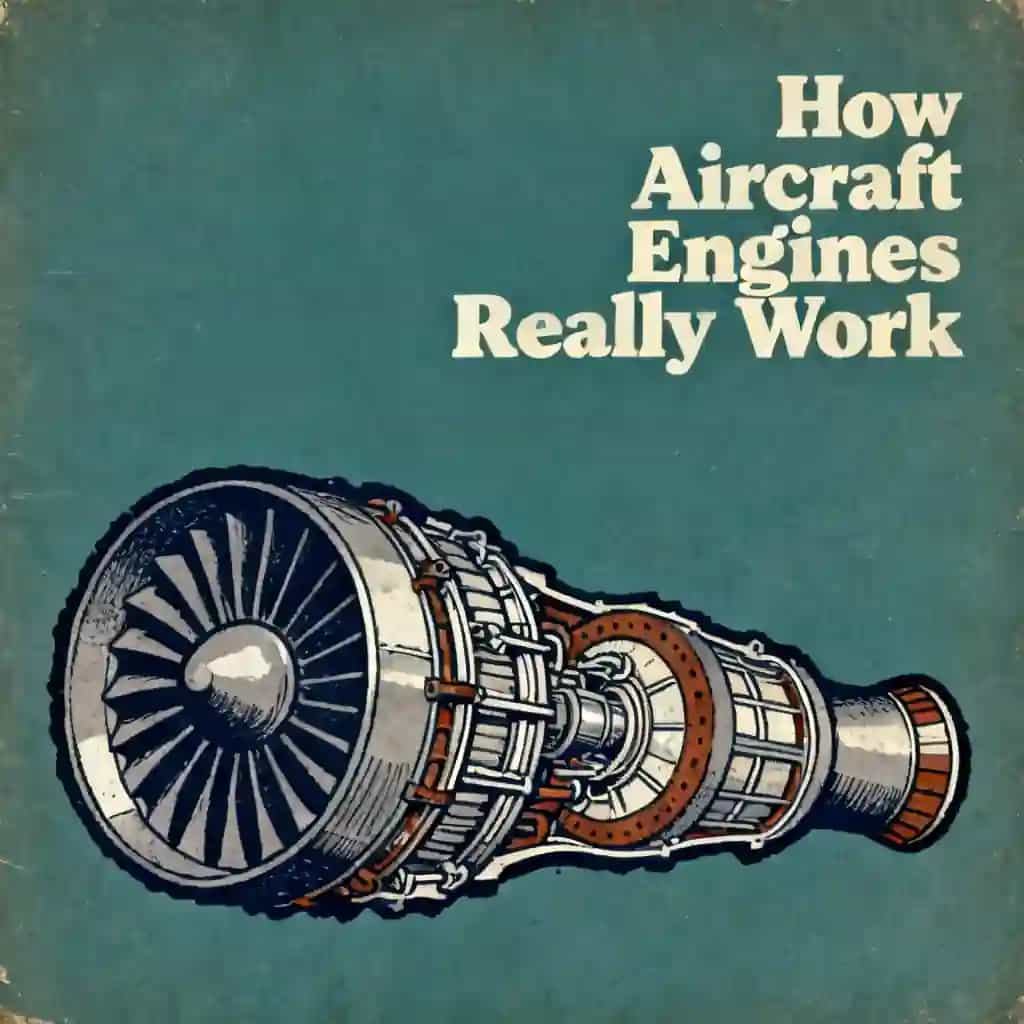
Jet Engines and Wing Design: The Evolution of Flight
From ancient steam toys to supersonic jets, discover how the battle between engine power and aerodynamics redefined the limits of the sky.
Лучшая цитата из Jet Engines and Wing Design: The Evolution of Flight
The history of aviation isn't just about 'getting faster'—it's about the constant, messy, brilliant struggle to make the air work for us instead of against us.
Generated by Jinkyu
The evolution and engineering breakthroughs of airplanes, focusing on the progression of all engine types (prop, turboprop, jet, turbofan, ramjet, etc, and even future engines) and all wing configurations (biplane, delta, swept, swing-wing, etc, and even future wing configurations) through the lens of history and wartime innovation.






Часто задаваемые вопросы
Engineers in the 1930s realized that as a plane’s speed increased, the tips of the propeller blades would approach the speed of sound. At these transonic speeds, the propeller's efficiency drops significantly due to physical design limits. This "literal wall" meant that simply building more powerful piston engines would not result in faster aircraft, necessitating a shift toward the reaction principle used in jet engines.
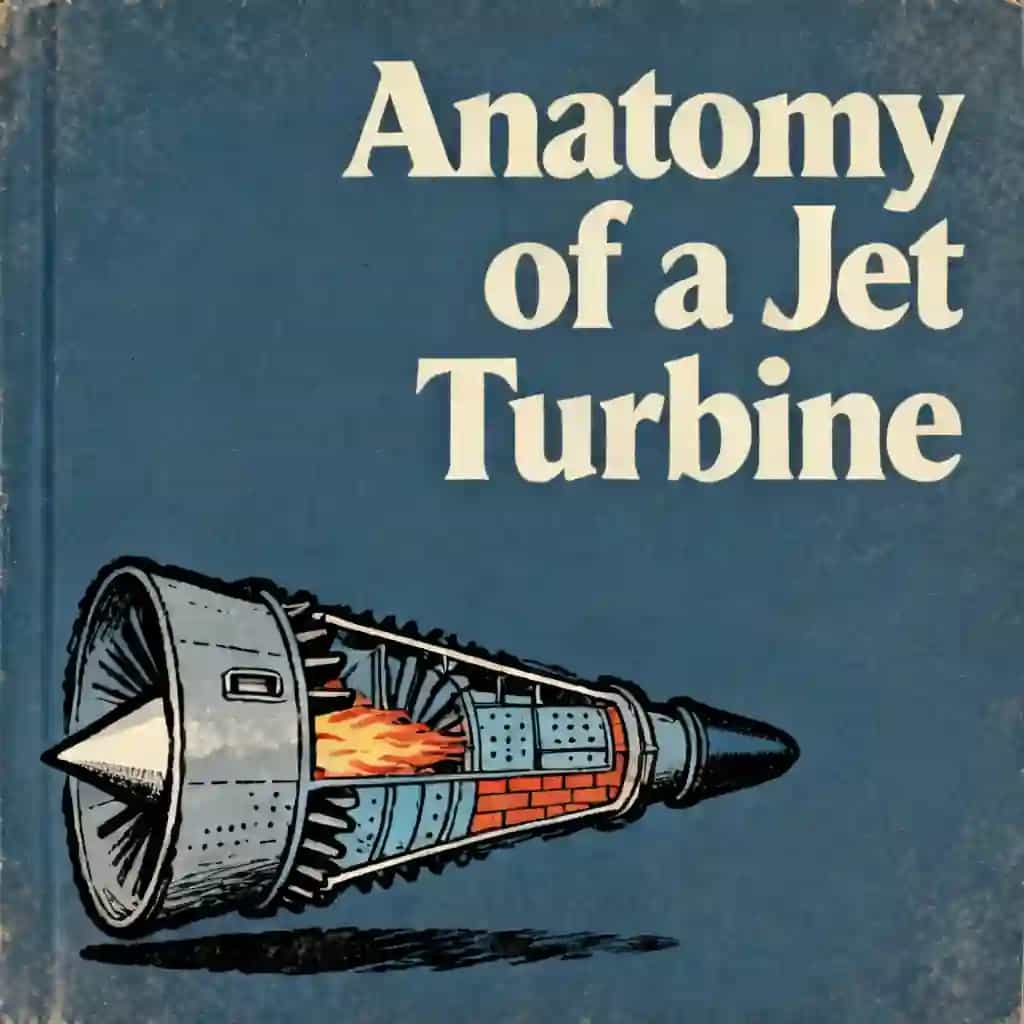
A centrifugal-flow engine, like the one designed by Frank Whittle, compresses air by flinging it outward like a "salad spinner." While robust and simple, these engines are wide, creating significant drag. In contrast, an axial-flow engine, such as the German Jumo 004, uses a series of fans to compress air as it moves straight back. This allows for a much skinnier, more aerodynamic engine, though it is significantly more complex to manufacture.
Variable-sweep wings were designed to solve the compromise between high-speed efficiency and low-speed stability. A straight wing is ideal for short takeoffs and landings, while a swept-back wing reduces drag at supersonic speeds. By allowing the wings to move in flight, aircraft like the F-14 could optimize their shape for both carrier deck landings and high-speed combat maneuvers.
A Blended Wing Body integrates the fuselage and wings into one continuous surface, which can provide up to 43% of the aircraft's lift compared to just 12% in a traditional "tube and wing" design. This leads to massive fuel savings and noise reduction. However, challenges include the difficulty of pressurizing a non-cylindrical cabin, the lack of windows for passengers, and the extreme physical sensations passengers on the outer edges would feel when the plane banks.
Modern "Open Fan" or "unducted fan" designs, such as those in the CFM RISE program, remove the outer casing (nacelle) found on traditional jet engines. This reduces weight and allows the engine to move a much larger volume of air, significantly increasing fuel efficiency. While early versions in the 1980s were rejected due to extreme noise levels, new engineering efforts aim to master the acoustics to make these high-efficiency engines viable for commercial flight.
Создано выпускниками Колумбийского университета в Сан-Франциско
BeFreed объединяет глобальное сообщество любознательных людей


"Instead of endless scrolling, I just hit play on BeFreed. It saves me so much time."


"I never knew where to start with nonfiction—BeFreed’s book lists turned into podcasts gave me a clear path."


"Perfect balance between learning and entertainment. Finished ‘Thinking, Fast and Slow’ on my commute this week."
"Crazy how much I learned while walking the dog. BeFreed = small habits → big gains."
"Reading used to feel like a chore. Now it’s just part of my lifestyle."

"Feels effortless compared to reading. I’ve finished 6 books this month already."
"BeFreed turned my guilty doomscrolling into something that feels productive and inspiring."

"BeFreed turned my commute into learning time. 20-min podcasts are perfect for finishing books I never had time for."
"BeFreed replaced my podcast queue. Imagine Spotify for books — that’s it. 🙌"

"It is great for me to learn something from the book without reading it."
"The themed book list podcasts help me connect ideas across authors—like a guided audio journey."
"Makes me feel smarter every time before going to work"
Создано выпускниками Колумбийского университета в Сан-Франциско
BeFreed объединяет глобальное сообщество любознательных людей
"Instead of endless scrolling, I just hit play on BeFreed. It saves me so much time."
"I never knew where to start with nonfiction—BeFreed’s book lists turned into podcasts gave me a clear path."
"Perfect balance between learning and entertainment. Finished ‘Thinking, Fast and Slow’ on my commute this week."
"Crazy how much I learned while walking the dog. BeFreed = small habits → big gains."
"Reading used to feel like a chore. Now it’s just part of my lifestyle."
"Feels effortless compared to reading. I’ve finished 6 books this month already."
"BeFreed turned my guilty doomscrolling into something that feels productive and inspiring."
"BeFreed turned my commute into learning time. 20-min podcasts are perfect for finishing books I never had time for."
"BeFreed replaced my podcast queue. Imagine Spotify for books — that’s it. 🙌"
"It is great for me to learn something from the book without reading it."
"The themed book list podcasts help me connect ideas across authors—like a guided audio journey."
"Makes me feel smarter every time before going to work"
"Instead of endless scrolling, I just hit play on BeFreed. It saves me so much time."
"I never knew where to start with nonfiction—BeFreed’s book lists turned into podcasts gave me a clear path."
"Perfect balance between learning and entertainment. Finished ‘Thinking, Fast and Slow’ on my commute this week."
"Crazy how much I learned while walking the dog. BeFreed = small habits → big gains."
"Reading used to feel like a chore. Now it’s just part of my lifestyle."
"Feels effortless compared to reading. I’ve finished 6 books this month already."
"BeFreed turned my guilty doomscrolling into something that feels productive and inspiring."
"BeFreed turned my commute into learning time. 20-min podcasts are perfect for finishing books I never had time for."
"BeFreed replaced my podcast queue. Imagine Spotify for books — that’s it. 🙌"
"It is great for me to learn something from the book without reading it."
"The themed book list podcasts help me connect ideas across authors—like a guided audio journey."
"Makes me feel smarter every time before going to work"
"Instead of endless scrolling, I just hit play on BeFreed. It saves me so much time."
"I never knew where to start with nonfiction—BeFreed’s book lists turned into podcasts gave me a clear path."
"Perfect balance between learning and entertainment. Finished ‘Thinking, Fast and Slow’ on my commute this week."
"Crazy how much I learned while walking the dog. BeFreed = small habits → big gains."
"Reading used to feel like a chore. Now it’s just part of my lifestyle."
"Feels effortless compared to reading. I’ve finished 6 books this month already."
"BeFreed turned my guilty doomscrolling into something that feels productive and inspiring."
"BeFreed turned my commute into learning time. 20-min podcasts are perfect for finishing books I never had time for."
"BeFreed replaced my podcast queue. Imagine Spotify for books — that’s it. 🙌"
"It is great for me to learn something from the book without reading it."
"The themed book list podcasts help me connect ideas across authors—like a guided audio journey."
"Makes me feel smarter every time before going to work"