Advanced HSA Strategies: How to Use Your HSA Like a Roth IRA
Learn advanced HSA strategies to maximize tax benefits. Discover how to use your Health Savings Account like a Roth IRA through strategic growth and withdrawals.

Лучшая цитата из Advanced HSA Strategies: How to Use Your HSA Like a Roth IRA
The HSA is the unicorn that does both: you get a tax deduction when you put money in, it grows tax-free, and you pay zero taxes when you take it out for medical stuff. It’s a triple tax advantage that even a 401(k) or a Roth IRA can't fully match.

Этот аудиоурок был создан участником сообщества BeFreed
what are advanced strategies to make the most of the tax benefits of an HSA? what do i need to know to use it like a Roth account? tell me about the ways I need to document my spending, and how and when the money is withdrawn for maximum benefit.

Часто задаваемые вопросы
To use an HSA like a Roth IRA, you should treat it as a long-term investment vehicle rather than a short-term spending account. By paying for current medical expenses out-of-pocket and keeping your contributions invested, you allow the funds to benefit from the triple tax advantage. This HSA Roth strategy enables your investments to grow tax-free over decades, providing a significant source of wealth that can be accessed tax-free for healthcare costs during retirement.
The Health Savings Account offers a unique triple tax advantage that is unmatched by other retirement accounts. First, your contributions are tax-deductible or made pre-tax, which lowers your taxable income. Second, any earnings or interest on your HSA investment strategies grow entirely tax-deferred. Finally, withdrawals remain tax-free as long as they are used for qualified medical expenses, making it one of the most efficient ways to save for future healthcare needs.
Maximizing HSA withdrawals requires diligent record-keeping of all qualified medical expenses paid out-of-pocket. Since there is no IRS deadline for when you must reimburse yourself, you can save receipts for years while your account grows. Proper HSA reimbursement documentation should include digital or physical copies of itemized bills and proof of payment. This allows you to withdraw funds tax-free at any point in the future, effectively turning your HSA into a flexible emergency fund.
For maximum benefit, the best time to withdraw money from an HSA is often years or even decades after the expense was incurred. By delaying reimbursement, you allow the power of compounding to work on your invested balance. Once you are ready to withdraw, you can use your accumulated receipts to pull out large sums tax-free. Additionally, after age 65, you can withdraw funds for non-medical reasons at your ordinary income tax rate, similar to a traditional IRA.
Узнать больше

Retirement goals 
This plan is essential for anyone looking to transition from active saving to long-term financial independence. It provides a comprehensive roadmap for professionals and pre-retirees to secure their future through smart investing and tax-efficient strategies.

De ahorrador a inversor imparable
Este plan es esencial para quienes desean pasar del ahorro pasivo a la inversión estratégica sin poner en riesgo su estabilidad. Es ideal para principiantes que buscan un método paso a paso para organizar sus cuentas y dominar la psicología del mercado.
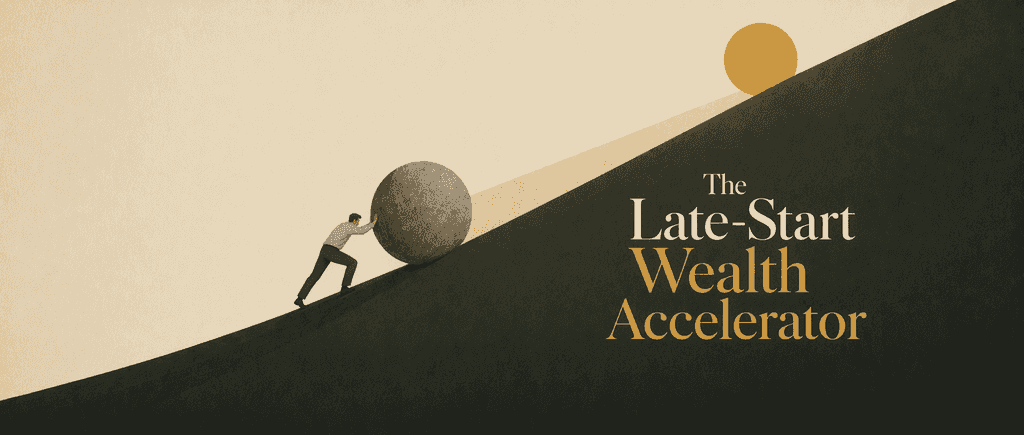
The Late-Start Wealth Accelerator
This plan is essential for professionals in their 40s or 50s who feel behind on retirement savings. It provides a high-impact roadmap to maximize contributions and optimize expenses for rapid wealth accumulation.

Save 100,000 by 2028
This plan is designed for ambitious individuals who want to move beyond basic budgeting and achieve significant capital accumulation in a short timeframe. It combines psychological shifts with practical income-generation and investment strategies to build a comprehensive wealth machine.

Income + protection for profitable stocks
Investors holding profitable stock positions face a critical challenge: how to maintain gains while continuing to generate returns in sideways or declining markets. This learning plan addresses that challenge by teaching practical options strategies that create regular income through premium collection while providing insurance against adverse price movements, making it essential for intermediate to advanced investors seeking to optimize their equity portfolios.

The Boring Path to Wealth
This plan is designed for individuals seeking a sustainable, low-stress strategy to achieve financial independence without day-trading or complex schemes. It benefits anyone looking to move from chaotic spending to a structured, automated investment approach that prioritizes long-term stability over short-term excitement.

Understand us stock market
The US stock market has historically been one of the most reliable paths to building long-term wealth, yet many people miss out due to lack of knowledge and strategy. This learning plan is ideal for beginners who want to invest confidently, as well as intermediate investors looking to refine their approach with proven frameworks for analysis, risk management, and sustainable wealth creation.

Healthy Retirement
Retirement represents one of life's most significant transitions, yet many people focus solely on finances while neglecting health and purpose—the other pillars of a fulfilling later life. This integrated learning plan is essential for pre-retirees and recent retirees who want to thrive, not just survive, in their post-career years. By addressing financial security, physical longevity, and personal fulfillment together, you'll be equipped to design a retirement that's both sustainable and deeply rewarding.
Создано выпускниками Колумбийского университета в Сан-Франциско
"Instead of endless scrolling, I just hit play on BeFreed. It saves me so much time."


"I never knew where to start with nonfiction—BeFreed’s book lists turned into podcasts gave me a clear path."


"Perfect balance between learning and entertainment. Finished ‘Thinking, Fast and Slow’ on my commute this week."
"Crazy how much I learned while walking the dog. BeFreed = small habits → big gains."
"Reading used to feel like a chore. Now it’s just part of my lifestyle."

"Feels effortless compared to reading. I’ve finished 6 books this month already."
"BeFreed turned my guilty doomscrolling into something that feels productive and inspiring."

"BeFreed turned my commute into learning time. 20-min podcasts are perfect for finishing books I never had time for."
"BeFreed replaced my podcast queue. Imagine Spotify for books — that’s it. 🙌"

"It is great for me to learn something from the book without reading it."
"The themed book list podcasts help me connect ideas across authors—like a guided audio journey."
"Makes me feel smarter every time before going to work"
Создано выпускниками Колумбийского университета в Сан-Франциско
"Instead of endless scrolling, I just hit play on BeFreed. It saves me so much time."
"I never knew where to start with nonfiction—BeFreed’s book lists turned into podcasts gave me a clear path."
"Perfect balance between learning and entertainment. Finished ‘Thinking, Fast and Slow’ on my commute this week."
"Crazy how much I learned while walking the dog. BeFreed = small habits → big gains."
"Reading used to feel like a chore. Now it’s just part of my lifestyle."
"Feels effortless compared to reading. I’ve finished 6 books this month already."
"BeFreed turned my guilty doomscrolling into something that feels productive and inspiring."
"BeFreed turned my commute into learning time. 20-min podcasts are perfect for finishing books I never had time for."
"BeFreed replaced my podcast queue. Imagine Spotify for books — that’s it. 🙌"
"It is great for me to learn something from the book without reading it."
"The themed book list podcasts help me connect ideas across authors—like a guided audio journey."
"Makes me feel smarter every time before going to work"
"Instead of endless scrolling, I just hit play on BeFreed. It saves me so much time."
"I never knew where to start with nonfiction—BeFreed’s book lists turned into podcasts gave me a clear path."
"Perfect balance between learning and entertainment. Finished ‘Thinking, Fast and Slow’ on my commute this week."
"Crazy how much I learned while walking the dog. BeFreed = small habits → big gains."
"Reading used to feel like a chore. Now it’s just part of my lifestyle."
"Feels effortless compared to reading. I’ve finished 6 books this month already."
"BeFreed turned my guilty doomscrolling into something that feels productive and inspiring."
"BeFreed turned my commute into learning time. 20-min podcasts are perfect for finishing books I never had time for."
"BeFreed replaced my podcast queue. Imagine Spotify for books — that’s it. 🙌"
"It is great for me to learn something from the book without reading it."
"The themed book list podcasts help me connect ideas across authors—like a guided audio journey."
"Makes me feel smarter every time before going to work"
"Instead of endless scrolling, I just hit play on BeFreed. It saves me so much time."
"I never knew where to start with nonfiction—BeFreed’s book lists turned into podcasts gave me a clear path."
"Perfect balance between learning and entertainment. Finished ‘Thinking, Fast and Slow’ on my commute this week."
"Crazy how much I learned while walking the dog. BeFreed = small habits → big gains."
"Reading used to feel like a chore. Now it’s just part of my lifestyle."
"Feels effortless compared to reading. I’ve finished 6 books this month already."
"BeFreed turned my guilty doomscrolling into something that feels productive and inspiring."
"BeFreed turned my commute into learning time. 20-min podcasts are perfect for finishing books I never had time for."
"BeFreed replaced my podcast queue. Imagine Spotify for books — that’s it. 🙌"
"It is great for me to learn something from the book without reading it."
"The themed book list podcasts help me connect ideas across authors—like a guided audio journey."
"Makes me feel smarter every time before going to work"