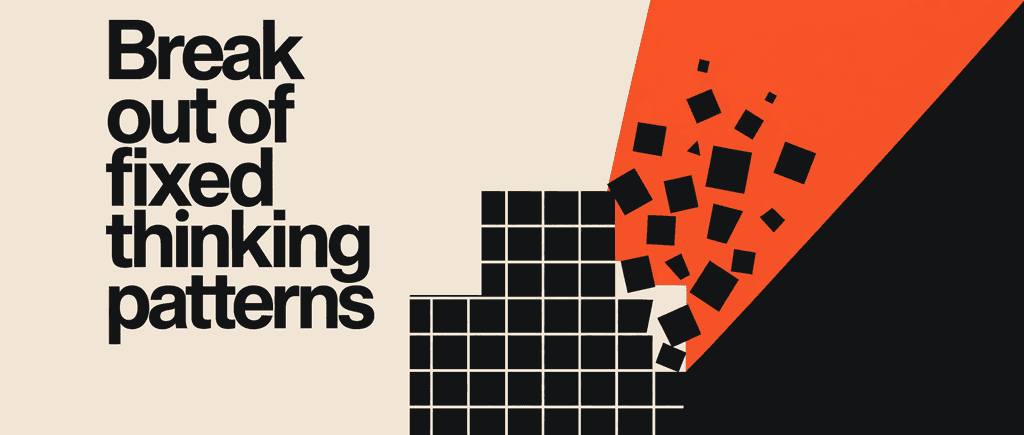
First principles thinking and why analogies fail
Stop copying what worked before and inheriting blind spots. Learn to boil problems down to fundamental truths to build truly original solutions.

Лучшая цитата из First principles thinking and why analogies fail
First principles thinking is the practice of moving from being a follower of recipes to an inventor of them by stripping away the 'way it’s always been' to reveal the physical, economic, and behavioral constants that cannot be broken down any further.
Generated by Freedee_2BFCF5FD
Tell me the first principle

Часто задаваемые вопросы
Reasoning by analogy is the process of making decisions based on existing assumptions, best practices, or what has worked in the past. It is essentially "copying" a recipe and inheriting the blind spots of others. In contrast, first principles thinking—or the "chef" mindset—requires deconstructing a problem down to its fundamental, irreducible truths (the raw ingredients) and building a solution from the bedrock up. While analogy is safer and easier, first principles thinking is the only way to achieve non-linear, original results.
Socratic interrogation is a disciplined dialogue used to peel back layers of habit and convention. It involves asking a series of targeted questions to probe the structure of a problem, starting with clarification (what do we actually mean?), moving to assumptions (why do we believe this part is necessary?), and ending with evidence (what data proves this is true?). The goal is to reach a point where no further deduction is possible and the only answer left is a physical, economic, or behavioral constant.
Best practices are often just a reflection of what the "herd" is doing and are designed for stable, mature environments. Following them means adopting your competitor's ceiling and assuming the past is an accurate predictor of the future. In a world of rapid change, relying on these conventions can lead to "theoretical commitment," where deep expertise actually prevents you from seeing obvious flaws or innovative shortcuts that an outsider might easily spot.
The material floor is a concept used during the reconstruction phase to determine the absolute minimum cost or physical requirements of a project. For example, while a rocket might cost sixty-five million dollars to buy, the raw materials (the material floor) only cost about two percent of that price. By identifying the gap between the raw material costs and the industry's "standard" price, you can reveal inefficiencies and "soft" costs—like outdated supply chains or unnecessary margins—that can be disrupted.
First principles thinking is "computationally expensive," meaning it requires significant time and mental energy. Because of this, it should be reserved for high-stakes, strategic decisions rather than everyday tasks. You do not need to rebuild the concept of "lunch" from first principles every day; for low-stakes situations, reasoning by analogy—like simply buying a sandwich because it worked yesterday—is a more efficient use of your energy.
Создано выпускниками Колумбийского университета в Сан-Франциско
"Instead of endless scrolling, I just hit play on BeFreed. It saves me so much time."


"I never knew where to start with nonfiction—BeFreed’s book lists turned into podcasts gave me a clear path."


"Perfect balance between learning and entertainment. Finished ‘Thinking, Fast and Slow’ on my commute this week."
"Crazy how much I learned while walking the dog. BeFreed = small habits → big gains."
"Reading used to feel like a chore. Now it’s just part of my lifestyle."

"Feels effortless compared to reading. I’ve finished 6 books this month already."
"BeFreed turned my guilty doomscrolling into something that feels productive and inspiring."

"BeFreed turned my commute into learning time. 20-min podcasts are perfect for finishing books I never had time for."
"BeFreed replaced my podcast queue. Imagine Spotify for books — that’s it. 🙌"

"It is great for me to learn something from the book without reading it."
"The themed book list podcasts help me connect ideas across authors—like a guided audio journey."
"Makes me feel smarter every time before going to work"
Создано выпускниками Колумбийского университета в Сан-Франциско
"Instead of endless scrolling, I just hit play on BeFreed. It saves me so much time."
"I never knew where to start with nonfiction—BeFreed’s book lists turned into podcasts gave me a clear path."
"Perfect balance between learning and entertainment. Finished ‘Thinking, Fast and Slow’ on my commute this week."
"Crazy how much I learned while walking the dog. BeFreed = small habits → big gains."
"Reading used to feel like a chore. Now it’s just part of my lifestyle."
"Feels effortless compared to reading. I’ve finished 6 books this month already."
"BeFreed turned my guilty doomscrolling into something that feels productive and inspiring."
"BeFreed turned my commute into learning time. 20-min podcasts are perfect for finishing books I never had time for."
"BeFreed replaced my podcast queue. Imagine Spotify for books — that’s it. 🙌"
"It is great for me to learn something from the book without reading it."
"The themed book list podcasts help me connect ideas across authors—like a guided audio journey."
"Makes me feel smarter every time before going to work"
"Instead of endless scrolling, I just hit play on BeFreed. It saves me so much time."
"I never knew where to start with nonfiction—BeFreed’s book lists turned into podcasts gave me a clear path."
"Perfect balance between learning and entertainment. Finished ‘Thinking, Fast and Slow’ on my commute this week."
"Crazy how much I learned while walking the dog. BeFreed = small habits → big gains."
"Reading used to feel like a chore. Now it’s just part of my lifestyle."
"Feels effortless compared to reading. I’ve finished 6 books this month already."
"BeFreed turned my guilty doomscrolling into something that feels productive and inspiring."
"BeFreed turned my commute into learning time. 20-min podcasts are perfect for finishing books I never had time for."
"BeFreed replaced my podcast queue. Imagine Spotify for books — that’s it. 🙌"
"It is great for me to learn something from the book without reading it."
"The themed book list podcasts help me connect ideas across authors—like a guided audio journey."
"Makes me feel smarter every time before going to work"
"Instead of endless scrolling, I just hit play on BeFreed. It saves me so much time."
"I never knew where to start with nonfiction—BeFreed’s book lists turned into podcasts gave me a clear path."
"Perfect balance between learning and entertainment. Finished ‘Thinking, Fast and Slow’ on my commute this week."
"Crazy how much I learned while walking the dog. BeFreed = small habits → big gains."
"Reading used to feel like a chore. Now it’s just part of my lifestyle."
"Feels effortless compared to reading. I’ve finished 6 books this month already."
"BeFreed turned my guilty doomscrolling into something that feels productive and inspiring."
"BeFreed turned my commute into learning time. 20-min podcasts are perfect for finishing books I never had time for."
"BeFreed replaced my podcast queue. Imagine Spotify for books — that’s it. 🙌"
"It is great for me to learn something from the book without reading it."
"The themed book list podcasts help me connect ideas across authors—like a guided audio journey."
"Makes me feel smarter every time before going to work"