Глава 1
The Magic Behind the Pages: A Journey into the Dictionary
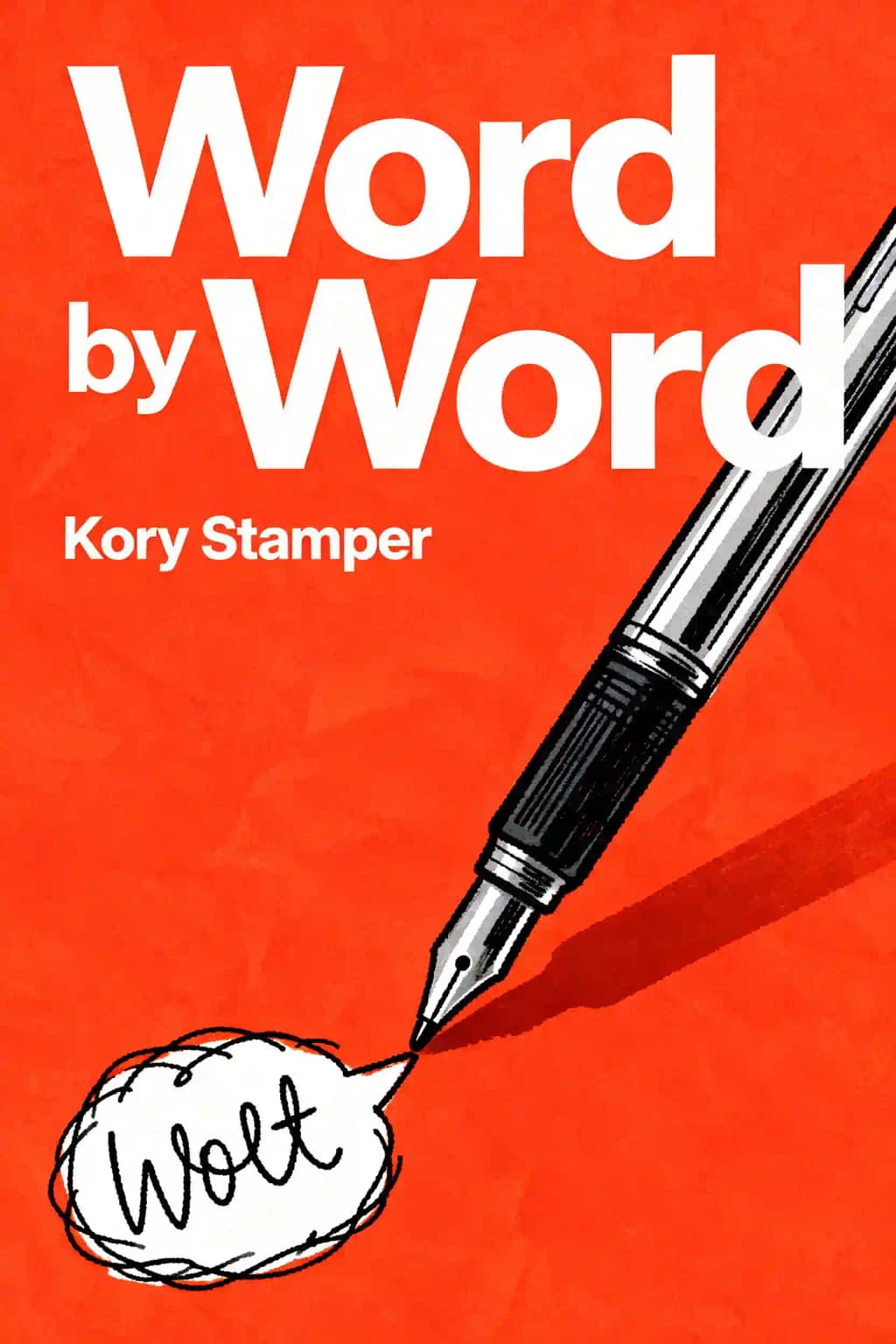
Have you ever wondered who decides what words mean? Behind the authoritative pages of your dictionary lies a world few have glimpsed-one populated by quirky, obsessive word lovers who spend their days in near-silence, wrestling with the messy, beautiful chaos of the English language. Kory Stamper's "Word by Word" pulls back the curtain on this mysterious profession, revealing that dictionaries aren't created by all-knowing language gods but by actual humans with coffee-stained desks and strong opinions about the Oxford comma. Since its 2017 publication, this insider account has become required reading in linguistics departments nationwide and earned praise from language luminaries like Anne Curzan and John McWhorter. What makes this book so captivating is how it transforms something we take for granted-the dictionary-into a thrilling battleground where tradition clashes with evolution, prescriptivism faces descriptivism, and the humble lexicographer stands at the crossroads of culture wars they never asked to join.
Глава 2
The Secret Society of Word Lovers
In a nondescript brick building in Springfield, Massachusetts, behind bullet-holed safety glass and locked doors, lies the headquarters of America's oldest dictionary company, Merriam-Webster. Inside, you won't find marble columns or oak-paneled libraries, but a warren of taupe cubicles where lexicographers-dictionary writers-work in near-monastic silence. The editorial floor remains eerily quiet compared to the bustle downstairs, where marketing and sales teams conduct their daily business. Behind heavy fire doors, people sift through language, categorize it, describe it, and slowly go blind doing so, their computer screens filled with endless citations and usage examples.
The formal requirements to become a lexicographer at Merriam-Webster are surprisingly minimal: a four-year degree in any field and being a native English speaker. The staff includes English majors, economists, scientists, and medievalists-this diversity helps create better definitions across all subject areas. Some editors specialize in scientific terminology, others in slang or regional dialects, while still others focus on etymology or pronunciation. But beyond these basic qualifications lies an unmeasurable quality called "sprachgefuhl"-a feeling for language that possesses you like a Teutonic imp, making you obsess over distinctions like "planting lettuce" versus "planting misinformation." This linguistic instinct manifests in everyday life: lexicographers find themselves analyzing cereal box text at breakfast or debating the subtle differences between "shimmer," "glimmer," and "glisten" over lunch.
Lexicographers must be temperamentally suited to sitting in near silence for eight hours daily, working entirely alone. The editorial floor once had a formal Rule of Silence, and even today communication happens primarily through email rather than conversation. When editors do speak, it's often in hushed tones about matters like the evolving usage of "literally" or whether "irregardless" deserves dictionary entry status. At holiday parties, editors cluster quietly along the walls while marketing folks celebrate boisterously in the center, discussing Oxford commas and etymology with the same passion others might reserve for sports or politics. "We're not antisocial," one editor explains. "We're just social in our own way."
This peculiar temperament suits the monastic dedication required for dictionary work: the ability to set aside linguistic prejudices, give equal treatment to every word, and patiently perform the same tasks on the same book for years or decades. Dictionary timelines stretch into geological epochs-a Collegiate Dictionary takes 3-5 years, while Webster's Third took 12 years with nearly 100 editors working simultaneously. Each definition requires extensive research, multiple rounds of peer review, and careful consideration of historical usage patterns. The work never ends; a dictionary is outdated the moment it's published, as language continues to evolve with new terms emerging from technology, popular culture, and social change. As Samuel Johnson, lexicography's patron saint, wrote, it's the fate of dictionary writers "to be rather driven by the fear of evil, than attracted by the prospect of good." Yet lexicographers persist in this anonymous, modestly paid labor of love, plunging elbow-deep into the roiling mess of English to wrestle with words day after day, finding satisfaction in capturing the precise meaning of everything from "aardvark" to "zyzzyva."
Глава 3
The Grammar Myth: What We Think We Know
At swanky parties where my musician husband mingles with cool people, I'm inevitably asked what I do. When I mention writing dictionaries, people often exclaim, "You must be great at grammar!" I respond noncommittally, knowing a harsh truth: as a lexicographer, you quickly realize you only think you're good at grammar, and what you know is largely useless.
People who become lexicographers naturally love language's mechanics, but this specialized knowledge can make you myopic. My first training as a lexicographer-Style and Defining classes with veteran editor E. Ward Gilman-shattered my grammatical confidence. "Some of you," Gil warned, "are not going to like what I am about to tell you."
The lexicographer's job isn't deciding what part of speech a word is-the public does that through usage. We merely discern and report. This should be comforting but isn't, because English grammar isn't nearly as tidy as we're taught. Parts of speech aren't discrete boxes but jumbled fishing nets with words caught between them. Nouns act like adjectives, adjectives like nouns, and verbs shape-shift constantly. Even categorizing a simple sentence like "The young editors were bent to Webster's will" becomes an exercise in linguistic uncertainty, leaving you scrawling test sentences and questioning everything you thought you knew.
This grammatical mayhem exists partly because our parts of speech aren't inherent to English but borrowed from Latin and Greek. First hinted at by Plato, expanded by Aristotle, and formalized in the second century B.C., our eight parts of speech were designed for languages structurally different from English. Latin has no articles while Greek has only definite articles-yet English is "lousy with articles."
The small ubiquitous words-"but," "like," "as"-are the real nightmares that have lexicographers hunched over reference books at 6:00 p.m. on Fridays. Two equally trained lexicographers can analyze the same sentence and place words in different parts of speech categories. Despite claiming objectivity, all lexicographers harbor pet peeves. But our universal complaint is how non-specialists use the word "grammar." To us, grammar means systematic rules governing word interaction in sentences. To the public, "grammar" encompasses stylistic choices, common misspellings, half-remembered school rules, and personal dislikes-the stuff of internet memes about "your" versus "you're."
Глава 4
When Rules Aren't Really Rules: The History of "Proper" English
The battle over "good grammar" is relatively recent. Before the mid-fifteenth century, English wasn't considered a language of permanence-official documents were recorded in Latin or French. When Henry V began using English in official correspondence in 1417, English quickly replaced French and Latin in bureaucracy.
The challenge was standardization. While Latin and French had established written forms, English was phonetically spelled with wild variation-"right" alone had seventy-seven recorded spellings in Middle English. Chancery English (used by law clerks) became the foundation for standardization, further helped by the arrival of the printing press.
As English grew explosively in the sixteenth century, borrowing vocabulary from Romance languages, concerns about its unruliness prompted the first English grammar (William Bullokar's "Bref Grammar for English" in 1586) and dictionary (Robert Cawdrey's in 1604). Some, like Daniel Defoe, called for an English academy to "polish and refine the English tongue" and "establish purity and propriety of style."
By the eighteenth century, "good grammar" became a social divider between the educated and uneducated, as middle-class merchants entered polite society. Grammar books functioned as linguistic etiquette guides, with Robert Lowth writing that anyone with "liberal education" should "express himself with propriety and accuracy."
Many grammar "rules" are merely personal preferences of influential writers. The prohibition against sentence-ending prepositions originated with John Dryden, who, enamored with Latin grammar, revised his own works to remove terminal prepositions. But English isn't Latin-terminal prepositions have been standard in English for over 700 years before Dryden objected.
Even self-proclaimed grammar sticklers violate their own rules. David Foster Wallace, a self-described "snoot," used "literally" figuratively. Jonathan Swift condemned contractions but used them freely in personal correspondence. E.B. White criticized overuse of "certainly" but employed it himself. Lynne Truss's book on punctuation contains numerous punctuation errors.
For lexicographers, this realization that cherished grammar rules are often baseless is a necessary betrayal. The written record shows Shakespeare used double negatives and Jane Austen used "ain't." Standard English as presented by pedants is largely based on "a mostly fictional, static, and Platonic ideal of usage" rather than actual historical practice.
Глава 5
The Irregardless Revolution: How "Wrong" Words Become Right
As a dictionary editor tasked with answering correspondence, I faced the daily wrath of language purists outraged by Merriam-Webster's inclusion of "irregardless." Their letters arrived filled with indignation, often questioning our professional standards and editorial judgment. I initially shared their disdain, shocked to discover this supposed "nonword" in our own dictionary. For years, I reluctantly defended its inclusion while personally considering it sloppy usage, a stance that made me uncomfortable in my role as a lexicographer. The common objections were predictable and numerous: it's a double negative (ir- plus -less), redundant (saying the same thing twice), illogically constructed, and unmistakably marks uneducated speech.
My perspective underwent a dramatic shift when a correspondent from Mississippi claimed "irregardless" functioned as a "superlative form" among educated speakers in their region, used deliberately for emphasis beyond "regardless." Though initially skeptical, I headed to our citation files to investigate this claim. Almost immediately, I found compelling evidence suggesting "irregardless" might serve a distinct linguistic purpose-a fascinating citation where it appeared italicized and introduced as "as the old people said," functioning almost like a dismissive "anyhoo" or conversation-ender. Further research revealed this peculiar usage pattern dating back to the 1860s, appearing in both formal and informal writing. Most tellingly, I discovered numerous instances where writers used both "regardless" and "irregardless" in close proximity within the same text, suggesting a deliberate stylistic distinction rather than ignorance.
The word's history proved more fascinating than I'd imagined-early uses from the late 18th to mid-19th century appeared completely unremarkable in print, with no special marking or commentary about their correctness. By the late 19th century, however, it was suddenly treated with unprecedented contempt in usage guides and editorial columns, despite similar illogically constructed words like "unboundless" existing since the 15th century without criticism. The hatred seemed inextricably connected to its dialectal nature and association with regional American speech patterns, which triggered my personal reflection on how dialects become politicized and how language prejudices often mask social prejudices.
Through continued research and examination of thousands of citations, I gradually transformed from critic to America's foremost "irregardless" apologist, appreciating its remarkable tenacity, rich historical legacy, and possible emphatic function in certain dialects. All words are made-up inventions, after all - even our most cherished terms were once new and potentially controversial. Modern dictionaries serve as mirrors reflecting language as it's actually used in the real world, not as prescriptive authorities dictating how some believe it should be used. We document all words with widespread, sustained use in written English, regardless (or should I say irregardless?) of their perceived quality or the controversy they might generate. This democratic approach to lexicography better serves the reality of how language actually lives and evolves.
Глава 6
The Dictionary Detective: How Words Get Collected
When people ask what lexicographers do all day, I tell them I spend most of my time reading-a revelation that either disappoints or delights. Many imagine us creating words in smoky rooms, barking out additions between scotch swigs, but dictionary work is far more mundane. Dictionaries must be based on something outside the lexicographer's head: a representative sample of printed English prose collected through extensive reading. This methodical process requires patience, attention to detail, and an almost archaeological approach to language.
Samuel Johnson developed a system of reading widely, underlining interesting words, and having assistants copy passages onto slips of paper filed alphabetically. This method became the foundation for nearly every dictionary since 1755, including Noah Webster's 1828 American Dictionary and the Oxford English Dictionary. Johnson's assistants would spend countless hours copying context-rich quotations, creating what we now call "citations" - the documentary evidence of how words are actually used in the wild. The OED took this approach to new heights, employing thousands of volunteer readers who submitted millions of quotation slips over decades.
Modern lexicographers still collect "citations" from a wide variety of sources, but the process isn't as simple as it seems. No dictionary records all words in a language, and lexicographers can't rely solely on their native knowledge. The challenge is finding the right balance-neither skimming the surface nor dredging the depths. New coinages like "mansplain," "doomscrolling," or "cryptocurrency" might seem ubiquitous, while subtle shifts like "bored of" replacing "bored by" or "different than" versus "different from" might go unnoticed despite being more linguistically significant.
Deciding on a balanced source list is subjective and increasingly complex. Academic journals, popular magazines, literary novels, and even "dreck" like Twilight must be considered. The internet presents additional challenges-content that's unedited, constantly changing, or disappears entirely. Modern dictionary companies have turned to corpora-curated collections of searchable full-text sources-to help solve the problem of limited reading capacity. These databases contain hundreds of millions of words from various sources, including newspapers, academic writing, news broadcasts, and even soap opera scripts. The Corpus of Contemporary American English (COCA), for example, contains more than one billion words from eight genres, allowing lexicographers to track usage patterns with unprecedented precision.
Despite technological advances, speech remains the primary way language evolves. Words are typically spoken for some time before being written down, creating a blind spot for lexicographers. Not all writing becomes public, and personal communications often contain linguistic innovations that never reach dictionary makers. Even with the internet's democratization of publishing, lexicographers can't possibly read everything-as demonstrated by sixteen-year-old Peaches Monroee's coinage "on fleek," which went from a six-second video to representing 10% of all Google searches within five months. Similar phenomena occurred with terms like "yeet," "sus," and "cheugy," which emerged from social media and youth culture before entering mainstream usage. This gap between spoken innovation and dictionary documentation remains one of the field's greatest challenges, even in our digital age.
Глава 7
The Art and Science of Definition Writing
Back in the editorial conference room, Gil explains that lexicographers don't do "real defining" (the philosophical attempt to describe the essential nature of things) but rather "lexical defining"-describing how words are used in context. Dictionary creation involves specialized jargon and follows three criteria for word inclusion: widespread print use, longevity, and meaningful usage.
Creating an analytical definition requires first identifying the "genus"-the smallest category that can contain the word being defined-followed by "differentiae" that distinguish it from other members of that category. For "surfboard," the genus is "board" and the differentiae include "long," "narrow," "buoyant," and "used for the sport of surfing."
The commercial reality of dictionary-making means production schedules rule "with an iron fist." A new dictionary edition takes two to three years, with most work involving reviewing and revising existing entries rather than just adding new words. Each entry undergoes multiple editing passes-from the initial definer to copy editors, cross-reference editors, etymologists, dating editors, pronunciation editors, and finally proofreaders. This complex process happens simultaneously across different letters of the dictionary, with editors staggered throughout the alphabet.
Curiously, dictionary publishers never start revisions with the letter A, instead beginning in the middle of the alphabet with shorter letters like H or K. This practice gives editors time to settle into the style guide before tackling larger sections. Letters vary dramatically in size-A through D comprise about a quarter of most dictionaries, while S is notoriously the longest single letter (about 11% of the entire dictionary) and considered "the worst" by lexicographers.
The challenge of writing good definitions includes balancing specificity with flexibility for future changes. Lexicographers use techniques like parenthetical adjuncts to provide examples without being restrictive-writing "a long, narrow, buoyant board (as of wood, fiberglass, or foam) used in the sport of surfing" rather than committing to specific materials that might become outdated. Other hedges include words like "especially" or "broadly" that join related senses of a word. Despite all efforts, definitions remain "imperfect things"-artificial attempts to capture meaning that approach but never quite reach the asymptote of perfect accuracy.
Глава 8
The Hidden Politics of Language
When working with words professionally, lexicographers develop a clinical detachment similar to doctors examining patients. All words receive equal, objective treatment regardless of their social status or taboo nature. Yet occasionally, certain entries still give pause-like when I discovered "bitch" wasn't labeled as taboo in our Collegiate Dictionary.
Dating to the first millennium as a term for female dogs, "bitch" acquired its extended meaning of "lewd woman" around 1400. The Old Bailey court records from 1674-1913 reveal the term's rich usage history, including its application to gay men as early as 1726 when a man was called a "treacherous, blowing-up Mollying Bitch." The derogatory use for men dates back to 1475 ("Be God, he ys a schrewd byche"), appearing in works by Henry Fielding, Robert Burns, and even Cambridge student slang where the tea-serving student was called "a bitch"-all uses feminizing men as lesser.
Lexicographers face profound challenges when defining charged words like "bitch." While discussing the word's dictionary treatment with a colleague, I discovered the male-directed slur lacked proper labeling. We pondered whether usage notes could cover both female-directed ("malicious, spiteful woman") and male-directed ("weak, ineffectual") meanings, or address reclaimed feminist uses like "bitches get shit done." This complexity reveals the fundamental challenge of lexicography: how can one person, with their own cultural positioning and biases, adequately capture a word's full social meaning?
Linguistic reclamation-where marginalized groups repurpose slurs as identity markers of pride-complicates dictionary work. Jo Freeman's 1968 "The BITCH Manifesto" declared "Bitch is Beautiful," attempting to transform the word into a feminist badge of honor. But reclamation is never straightforward, as it assumes unified communities rather than diverse individuals who share characteristics. Even "queer," often cited as a reclamation success story, remains offensive to many older gay people.
Modern lexicographers strive for objectivity, but language remains deeply personal. The nursery rhyme "sticks and stones may break my bones, but names will never hurt me" is a lie every child knows. Words have physical presence-they're written with hands, spoken with mouths, and leave bodily scars: my mother's twisted mouth when discussing workplace sexism, the spittle flying from a man's mouth as he calls his ex-wife a "bitch," the heat rash of embarrassment on my cheeks when the word hangs in the air, the fist clenching in my chest as male laughter trails behind a passing car.
Глава 9
When Dictionaries Become Cultural Battlegrounds
In March 2009, I opened my email to find hundreds of outraged messages about our "marriage" definition. Conservative news site WorldNetDaily had published "Webster's Dictionary Redefines 'Marriage'" with an ominous video suggesting we'd changed the definition because we disagreed with traditional marriage. The article falsely claimed we'd refused comment, though they accurately quoted my earlier response explaining we were simply documenting current usage. The first angry email declared our inclusion of "same-sex perversion" a "disgrace." As hundreds more emails flooded in, I realized my defining work would be delayed by weeks while I addressed this misguided campaign.
People who start write-in campaigns fundamentally misunderstand what dictionaries do. They believe changing the dictionary changes language itself, and by extension, culture. When we updated the definition of "marriage" to include same-sex unions, the vitriol was immediate-not about language change but about cultural values. People sent hateful emails, some containing white nationalist tropes and threatening violence. I coped through humor, forwarding absurd messages to colleagues or my husband with sarcastic comments.
Many correspondents claimed that by updating our definition, we were influencing the legality of same-sex marriage, believing Supreme Court justices rely heavily on dictionaries. While justices do consult dictionaries, studies show they use them inconsistently and selectively to support predetermined opinions rather than to determine meaning. In the four major Supreme Court cases on same-sex marriage, dictionary definitions were cited only twice, both in Chief Justice Roberts's dissent in Obergefell v. Hodges.
Stephen Colbert eventually skewered the whole campaign, joking that since we'd made the change in 2003, he might have been "gay-married and not known it." Though we still receive complaints about our definition of "marriage," the substance has changed-now we get as many complaints that the two subsenses aren't combined into one gender-neutral sense as we do that gay marriage is ruining America. Language always lags behind life, but we lexicographers have moved on.
Lexicography appears scientific with its algorithms and technical language, but it's equally a creative craft requiring dedication and judgment. Unlike art that happens in a flash of inspiration, craft demands time and patience to develop expertise. Experienced lexicographers can produce definitions with practiced ease that seems effortless to outsiders.
Unfortunately, the Internet has transformed dictionaries from revered static books into malleable online resources, creating both opportunities and challenges. While digital formats offer unlimited space and flexibility, they've created expectations for comprehensive, free, up-to-date information that strains resources. In today's click economy, being at the top of search results often matters more than crafting perfect definitions. Meanwhile, dictionary publishing faces commercial pressures, with recent layoffs at Merriam-Webster reflecting the industry's contraction despite language's continued evolution. Despite these challenges, lexicographers remain devoted to their craft, finding meaning in their meticulous attention to language-their "own little contribution to the world."