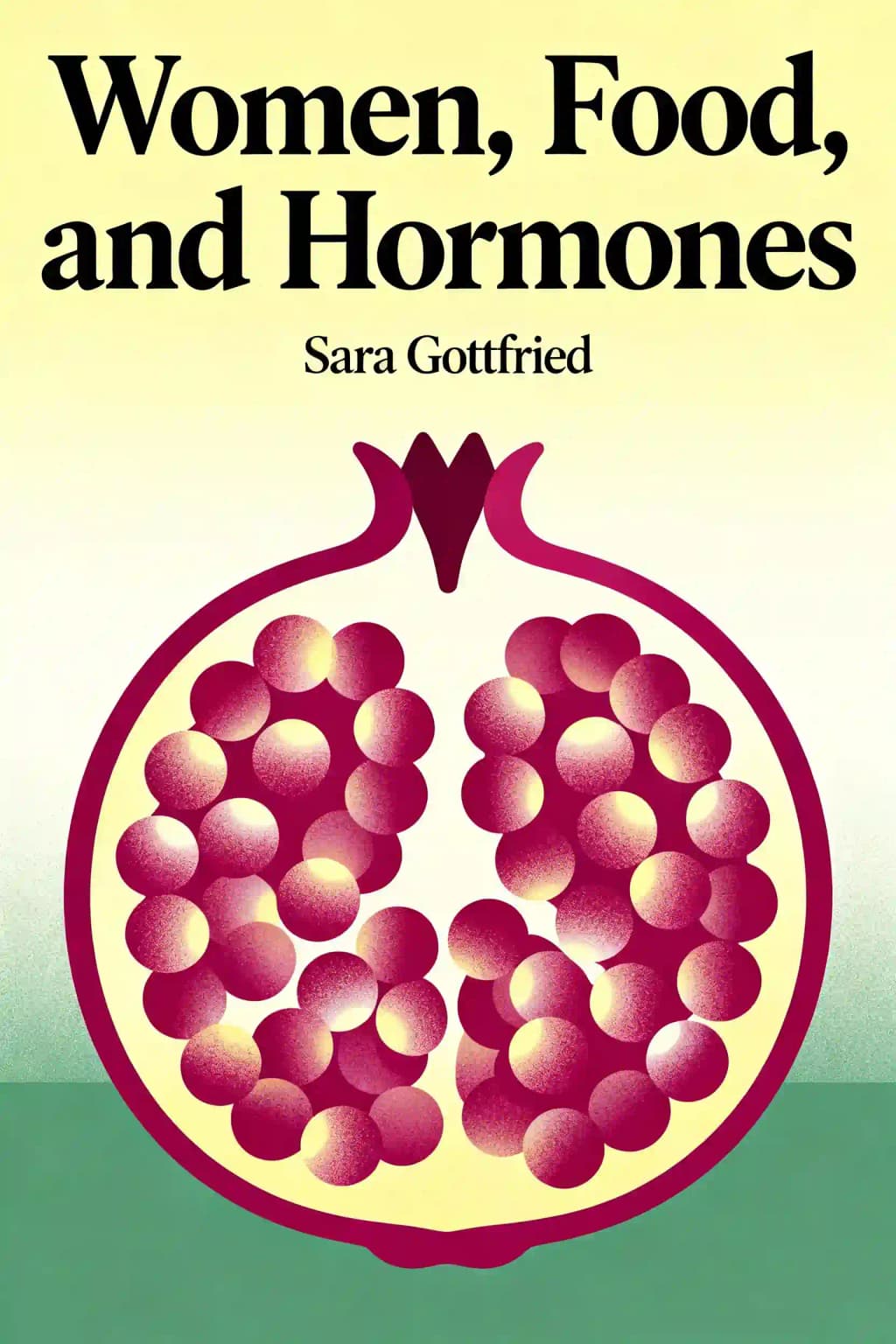
Dr. Gottfried's bestseller revolutionizes women's health by challenging male-centric diet research. This groundbreaking protocol combines female-friendly keto with intermittent fasting, offering what conventional plans miss: a solution tailored for women's unique hormonal needs. Over 50 recipes included.
Sara Gottfried, MD, is the New York Times bestselling author of Women, Food, and Hormones and a Harvard-trained physician specializing in integrative women’s health and hormonal balance.
A pioneer in functional and precision medicine, Gottfried combines her expertise in obstetrics, gynecology, and personalized metabolic therapies to address the root causes of hormone-related weight gain and chronic health issues. Her work bridges evidence-based science with practical lifestyle interventions, reflected in her acclaimed books The Hormone Cure, The Hormone Reset Diet, and Younger, all New York Times bestsellers.
A clinical assistant professor at Thomas Jefferson University and director of precision medicine at the Marcus Institute of Integrative Health, Gottfried has been featured on The Dr. Oz Show, The Oprah Winfrey Show, and top podcasts like Huberman Lab.
With over 25,000 patients treated and a global keynote speaking career, her research-driven approach has redefined modern women’s healthcare. Her books have collectively sold millions of copies and are translated into multiple languages.
Women, Food, and Hormones explores how hormonal imbalances affect women’s health, weight, and metabolism, particularly after age 35. Dr. Sara Gottfried presents a four-week Gottfried Protocol combining personalized nutrition, intermittent fasting, and a modified ketogenic diet to reset hormones, reduce cravings, and promote sustainable weight loss. The book includes 50+ recipes, meal plans, and science-backed strategies to address insulin resistance, cortisol dysregulation, and estrogen dominance.
This book is ideal for women over 35 struggling with unexplained weight gain, fatigue, or hormonal issues like PCOS or menopause symptoms. It’s also valuable for those frustrated by generic diets, as it offers a female-specific approach to metabolic health. Healthcare practitioners seeking evidence-based strategies for hormonal balance will find its clinical insights useful.
Yes—it’s praised for bridging hormonal science with actionable plans, offering a personalized alternative to male-centric diets. Readers gain tools to improve energy, reduce inflammation, and achieve weight loss through hormone optimization. Endorsed by experts like Dr. David Perlmutter, it’s cited as a “well-marked roadmap” for women’s health.
The Gottfried Protocol is a 28-day plan emphasizing hormonal detoxification, cyclical ketosis, and time-restricted eating. It reduces refined carbs, prioritizes healthy fats (e.g., avocado, MCT oil), and incorporates liver-supportive foods to balance insulin, leptin, and cortisol. Unlike standard keto, it allows moderate carb cycling to prevent thyroid or adrenal strain in women.
Dr. Gottfried’s approach adapts keto for female physiology by:
This prevents common pitfalls like hormone disruption or metabolic slowdown seen in women on rigid keto plans.
The book focuses on insulin (blood sugar regulation), leptin (satiety signaling), cortisol (stress response), and estrogen dominance. It explains how imbalances in these hormones drive cravings, fat storage, and metabolic dysfunction, offering targeted fixes like magnesium supplementation for cortisol and cruciferous vegetables for estrogen detox.
Yes—it provides 50+ recipes like hormone-balancing salads, keto-friendly soups, and collagen-rich snacks. Meal plans emphasize low-glycemic vegetables, pasture-raised proteins, and anti-inflammatory spices. A sample day includes avocado-spinach omelets, salmon bowls, and dark chocolate–almond butter fat bombs.
Detoxification supports liver function to process excess hormones like estrogen. The protocol includes milk thistle, NAC, and turmeric to enhance glutathione production, plus fiber-rich foods (chia seeds, broccoli) to aid toxin excretion. This reduces hormonal “noise” contributing to weight plateaus.
Dr. Gottfried links emotional eating to leptin resistance and ghrelin dysregulation, offering strategies like stress-reducing adaptogens (ashwagandha), mindful eating practices, and protein-focused breakfasts to stabilize hunger hormones. Case studies show reduced anxiety-driven snacking in participants.
While praised for its female-centric approach, some note the protocol’s strict elimination phase may challenge those with dietary restrictions. However, supporters argue its customizable framework (e.g., plant-based keto options) and troubleshooting tips make it adaptable.
Unlike The Hormone Cure (general hormone education) or Younger (aging focus), this book delves deeper into nutritional biochemistry and metabolic phenotyping. It introduces advanced concepts like continuous glucose monitoring and N-of-1 self-experimentation for personalized results.
Yes—the plan addresses estrogen decline and cortisol surges common in menopause by optimizing progesterone support (vitamin B6, zinc), reducing visceral fat through targeted fasting, and improving insulin sensitivity via strength-training recommendations.
Key supplements include:
Dosages and brand recommendations are provided based on hormonal needs.
Почувствуйте книгу через голос автора
Превратите знания в увлекательные, богатые примерами идеи
Захватите ключевые идеи мгновенно для быстрого обучения
Наслаждайтесь книгой в весёлой и увлекательной форме
The solution isn't counting calories or endless cardio-it's learning to communicate with your hormonal system.
Eat for your hormones.
This disparity isn't about willpower-it's biology.
Women face greater societal pressure regarding weight.
Разбейте ключевые идеи Women, Food, and Hormones на понятные тезисы, чтобы понять, как инновационные команды создают, сотрудничают и растут.
Выделите из Women, Food, and Hormones быстрые подсказки для запоминания, подчёркивающие ключевые принципы открытости, командной работы и творческой устойчивости.

Погрузитесь в Women, Food, and Hormones через яркие истории, превращающие уроки инноваций в запоминающиеся и применимые моменты.
Задавайте любые вопросы, выбирайте голос и совместно создавайте идеи, которые действительно находят у вас отклик.

Создано выпускниками Колумбийского университета в Сан-Франциско
"Instead of endless scrolling, I just hit play on BeFreed. It saves me so much time."
"I never knew where to start with nonfiction—BeFreed’s book lists turned into podcasts gave me a clear path."
"Perfect balance between learning and entertainment. Finished ‘Thinking, Fast and Slow’ on my commute this week."
"Crazy how much I learned while walking the dog. BeFreed = small habits → big gains."
"Reading used to feel like a chore. Now it’s just part of my lifestyle."
"Feels effortless compared to reading. I’ve finished 6 books this month already."
"BeFreed turned my guilty doomscrolling into something that feels productive and inspiring."
"BeFreed turned my commute into learning time. 20-min podcasts are perfect for finishing books I never had time for."
"BeFreed replaced my podcast queue. Imagine Spotify for books — that’s it. 🙌"
"It is great for me to learn something from the book without reading it."
"The themed book list podcasts help me connect ideas across authors—like a guided audio journey."
"Makes me feel smarter every time before going to work"
Создано выпускниками Колумбийского университета в Сан-Франциско

Получите резюме книги «Women, Food, and Hormones» в формате PDF или EPUB бесплатно. Распечатайте или читайте офлайн в любое время.
Why do some women religiously count calories, log every workout, and still watch the scale refuse to budge - while their male partners effortlessly drop pounds eating the same meals? The answer lies in a conversation happening inside your body that you've never been taught to hear. Your hormones are constantly sending signals, interpreting every bite of food as instructions: store this as fat, burn that for energy, feel hungry now, feel satisfied later. For women over thirty-five, this conversation becomes increasingly garbled. Insulin whispers the wrong messages. Cortisol shouts over everyone else. Estrogen and progesterone fade to murmurs. The result? Weight that clings stubbornly to your midsection, energy that evaporates by afternoon, and a metabolism that feels like it's given up entirely. Picture your endocrine system as a symphony orchestra where every hormone is an instrument that must play in perfect harmony. When insulin spikes too high, it's like a tuba blasting over the violins. When cortisol stays elevated from chronic stress, it drowns out the delicate notes of growth hormone and testosterone. This cacophony becomes harder to conduct after age thirty-five, when metabolism naturally downshifts and hormonal production begins its gradual decline. Here's what most people miss: conventional diet advice treats everyone like identical machines - calories in, calories out. But women's bodies operate with fundamentally different software than men's. Research reveals men lose twice as much weight on identical diets and are 40% more likely to maintain that loss long-term. This isn't about dedication or discipline. It's about biology that's been ignored by a medical establishment that designed its protocols around male bodies. What if the problem isn't your willpower but your fluency in your body's native tongue?