Глава 1
Inside the Mueller Investigation: When Law Meets Politics
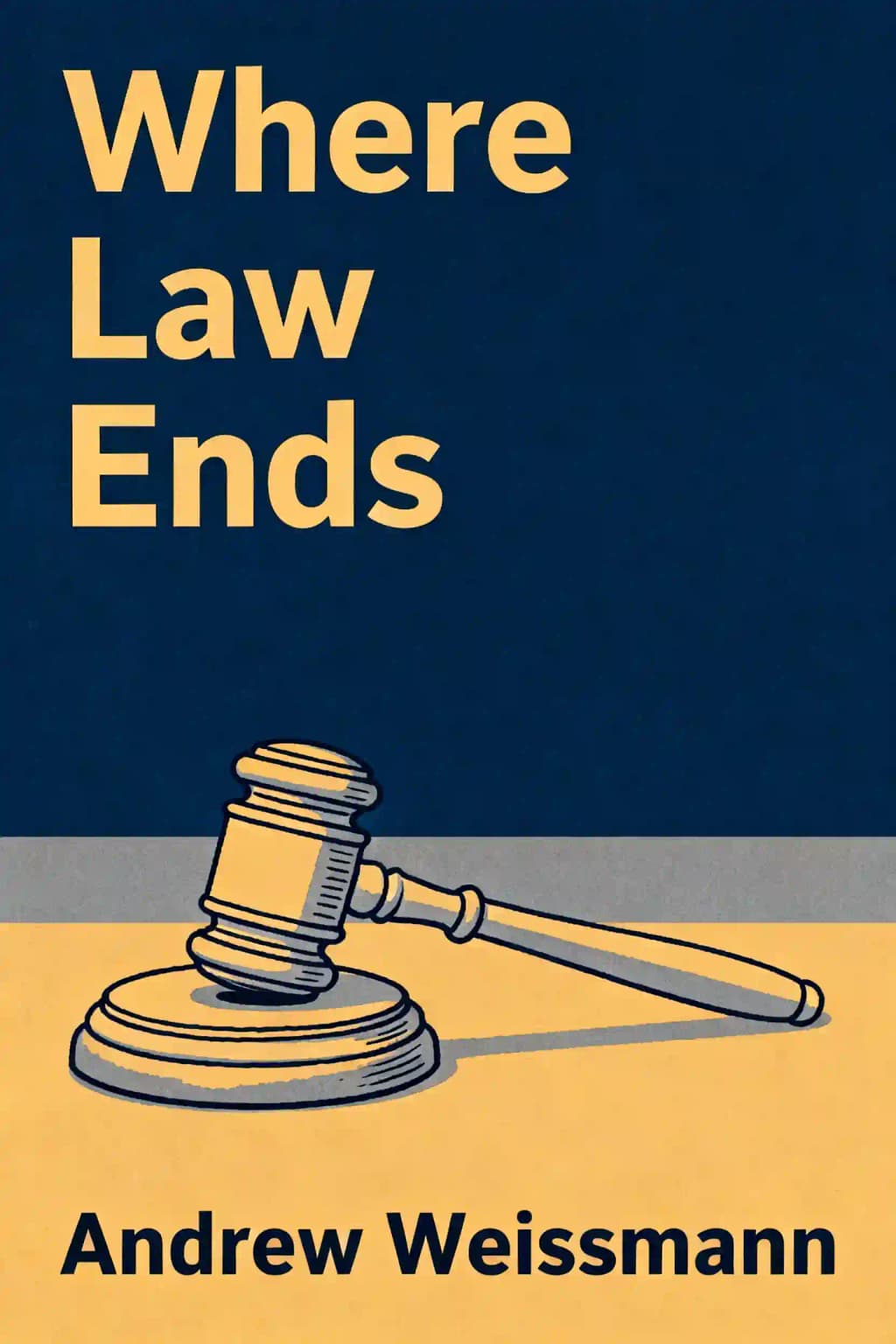
When Robert Mueller was appointed Special Counsel in May 2017, America held its breath. The former FBI Director, respected across political lines for his integrity and commitment to justice, would investigate Russian interference in the 2016 election and possible coordination with the Trump campaign. Behind closed doors, a team of elite prosecutors and FBI agents embarked on what would become one of the most scrutinized investigations in American history. Andrew Weissmann, who led the prosecution of Trump campaign chairman Paul Manafort, takes us inside this extraordinary chapter in American democracy. The investigation would ultimately produce 34 indictments, including against Russian intelligence officers and top Trump campaign officials, while revealing a president who repeatedly attempted to obstruct justice. Yet despite uncovering extensive evidence of both Russian interference and obstruction, the investigation's impact was blunted by political maneuvering, legal constraints, and internal caution. "Where Law Ends" has been praised by legal scholars as an essential window into how institutions respond when democracy itself is under threat, with The New York Times calling it "the essential inside story" of the Mueller investigation.
Глава 2
A Basement Office and the Birth of an Investigation
In June 2017, I arrived at the Special Counsel's Office to find our quarters in the Justice Department's basement - ironically, space recently vacated by the Civil Rights Division that the Trump administration was gutting. Mueller had established three teams: Team R investigating Russian interference, Team M focusing on Manafort, and Team 600 examining obstruction of justice. As the newly appointed head of Team M, my first task was to review the existing investigations into Trump's former campaign chairman.
Manafort emerged from the files as a complicated figure - intelligent and politically savvy, yet morally compromised. Unlike his respectable colleague Charlie Black, Manafort had followed the path of Roger Stone and Lee Atwater, specializing in dirty tricks and conspiracy theories. His expensive tastes - multiple luxury properties, exotic cars, and $100,000 annual gardening bills - were funded by corrupt foreign dictators, primarily Russian oligarch Oleg Deripaska and Ukrainian politician Viktor Yanukovych, both with Kremlin ties.
When I met with the team already investigating Manafort's suspicious offshore accounts, I was shocked by their glacial pace. Despite years of investigation into accounts in Cyprus and other tax havens, they hadn't obtained his tax returns or foreign bank records. Whether through bureaucratic incompetence or political interference, it was clear Team M needed to take over this promising but stalled investigation immediately.
Mueller's expectations were clear from day one when he greeted me with "When are you going to indict?" We needed to sprint, not walk. The strategy was obvious - leverage existing investigations to potentially charge Manafort and flip him as a witness who might reveal any coordination between the Trump campaign and Russia.
My path to this moment had been long. At Princeton, Professor Carl Schorske advised us to "live an idea." After joining the Eastern District of New York as a federal prosecutor in 1991, I worked organized crime cases during a pivotal moment when law enforcement was turning the tide against the mob. I learned the structure of New York's five crime families and prosecuted figures like Vincent "The Chin" Gigante, who feigned mental illness by walking Greenwich Village in pajamas. My colleague George Stamboulidis and I built cases against the Colombo family during their bloody internal war, starting with traffic violations and working our way up through cooperating witnesses - so many that one defense lawyer joked the family was being called "the House of Pancakes."
This approach would serve me well in the Manafort investigation, where we would need to flip lower-level figures to reach those at the top - a strategy I'd refined during my work on the Enron Task Force investigating what was then the largest corporate bankruptcy and fraud in American history.
Глава 3
The Trump Tower Meeting: Russia Reaches Out
In early July 2017, before our teams were fully operational, The New York Times published an explosive story revealing that Donald Trump Jr. had met with a Russian operative at Trump Tower on June 9, 2016, with Jared Kushner and Paul Manafort also attending. This was completely new information to everyone at the Special Counsel's Office.
Don Jr.'s initial statement describing the meeting as "primarily" about "adoption of Russian children" raised immediate red flags. His use of "primarily" was a classic tell masking a fuller story. We quickly understood that Russian adoptions were simply code for sanctions - specifically the Magnitsky Act that had imposed sanctions on Russia for human rights abuses, which Putin had retaliated against by canceling American adoptions of Russian babies.
When Don Jr. released some of the meeting emails himself, they contained a bombshell - Rob Goldstone, an events promoter connected to a Russian real estate baron with Putin ties, had explicitly written that this meeting was to provide "very high level and sensitive information" to "incriminate Hillary" as "part of Russia and its government's support for Mr. Trump." Don Jr.'s eager reply: "If it's what you say, I love it especially later in the summer."
This was actually the second instance we'd found of Russia approaching the Trump campaign with dirt on Clinton. The first involved George Papadopoulos, an inexperienced 28-year-old foreign policy adviser who'd been approached by Joseph Mifsud about Russian possession of Clinton emails. After being arrested at Dulles Airport in mid-July, Papadopoulos proved to be an unreliable witness, remaining particularly evasive about what he'd shared with the Trump campaign regarding Russian contacts.
As summer progressed, Jeannie Rhee (heading Team R) and I took stock of what we knew about the Trump Tower meeting. First, the highest levels of Russian government were clearly trying to help Trump and damage Clinton. Second, the campaign was extremely receptive to this help - Don Jr.'s "I love it" response showed no qualms about accepting assistance that was illegal under campaign finance law. Even Manafort, an attorney with presidential campaign experience, attended despite surely knowing better.
We collected accounts from as many Trump Tower meeting attendees as possible. Kushner appeared for his interview accompanied by experienced white-collar defense counsel, answering questions in what Jeannie later described as an extremely rehearsed manner. His description of the Trump Tower meeting wasn't whitewashed - he genuinely found it underwhelming, corroborated by contemporaneous texts he sent during the meeting calling it a "waste of time."
Our interviewees agreed that Veselnitskaya spoke first, offering "dirt" on Clinton that involved alleged tax evasion by the Ziff brothers. However, she couldn't establish any connection between these funds and the Clinton campaign. When the conversation shifted to the Magnitsky Act sanctions, Don Jr. merely said they could revisit the issue if Trump won.
Most shocking was that no one expressed concern about providing or accepting foreign assistance to a U.S. presidential campaign. This episode established that the Trump campaign was receptive to Russian assistance but needed more substantial material than what Veselnitskaya provided. The will existed on both sides, but the dirt was lacking.
Глава 4
Russia's Active Measures: A Digital Watergate
In June 1972, a security guard discovered tape over a door lock at the Watergate building, leading to the arrest of five burglars attempting to steal Democratic campaign plans - a scandal that eventually forced Nixon's resignation. Forty-four years later, our democratic process was undermined by another DNC break-in, this time a sophisticated cyber attack attributed to Russian actors.
Team R, led by Jeannie Rhee, uncovered a systematic Russian campaign specifically undertaken to support Trump. The Internet Research Agency (IRA), operating from St. Petersburg, employed hundreds of people and spent over a million dollars monthly to interfere in the American election, describing their work internally as "information warfare against the United States."
The IRA operated like a typical American business from an unremarkable office building in St. Petersburg. With departments for management, data analysis, graphics, IT, and finance, it employed hundreds and spent over a million dollars monthly. The IRA masked its Russian origins by procuring U.S.-based servers and infrastructure, while cloaking finances through shell companies and numerous bank accounts. Our forensic accountants traced this funding to Russian oligarch Yevgeny Prigozhin.
Approximately eighty "specialists" at the IRA, divided into day and night teams, maintained 24-hour information warfare on social media. Each specialist created numerous American personas on platforms like Facebook and Twitter, along with fake email and PayPal accounts, often using illegally obtained social security numbers and personal information from real Americans.
Their messages clearly revealed their motives: suppressing Democratic-leaning voters with posts like "We cannot resort to the lesser of two devils. Then we'd surely be better off without voting AT ALL" and "Choose peace and vote for Jill Stein. Trust me, it's not a wasted vote." Internal emails instructed operatives to "use any opportunity to criticize Hillary and the rest (except Sanders and Trump-we support them)."
The IRA's influence campaign was so successful that when Trump won the election, Russian operatives celebrated their victory. "We uncorked a tiny bottle of champagne, took one gulp each and looked into each other's eyes....We uttered almost in unison: 'We made America great,'" one worker reported.
Meanwhile, the Russian military's GRU units executed a sophisticated "hack and dump" operation targeting the 2016 election. Using spear-phishing emails disguised as security alerts, they tricked DNC and Clinton campaign staff into clicking links that installed malware. This allowed the Russians to monitor keystrokes, take screenshots, and extract vast quantities of emails and documents.
They weaponized this stolen material through fake online personas-DCLeaks and Guccifer 2.0-publishing damaging information at strategic moments, including releasing Podesta's emails just an hour after the Access Hollywood tape emerged. The Russians also targeted election infrastructure across multiple states, probing voter registration systems and county government networks.
Despite unanimous intelligence assessments of Russian responsibility, Trump suggested alternative theories without evidence, famously suggesting on national TV that the hacks could have been perpetrated by "a slovenly adolescent in a bedroom somewhere." Trump's denial of Russian interference made him a counterintelligence threat - both soliciting foreign assistance and denying it worked.
Глава 5
Obstruction and the Prospect of a "Mueller Massacre"
Jim Quarles and Team 600 had been meticulously investigating whether Trump's firing of Comey and request to go easy on Flynn constituted obstruction of justice. Their narrow focus widened dramatically as evidence emerged that Trump was continuing to seek to fire his perceived enemies - now including Mueller himself.
In spring 2018, Team 600 gained crucial insight into administration attempts to fire Mueller through interviews with White House counsel Don McGahn and his chief of staff Annie Donaldson. McGahn calmly detailed Trump's concrete efforts to fire Mueller beginning in June 2017, just a month after Mueller's appointment. When that failed, Trump persistently tried to curtail the investigation to focus only on future election interference, not Russia's role in his election.
Events accelerated after June 14, 2017, when The Washington Post first reported the Special Counsel was investigating Trump for obstruction. Three days after the Post story, Trump called McGahn at home and ordered him to tell Rosenstein that Mueller's conflicts disqualified him. Trump was explicit: "Mueller has to go. Call me back when you do it."
McGahn, recognizing he was being asked to trigger another Saturday Night Massacre, decided to resign rather than comply with an order he considered improper. He packed his office and informed associates of his resignation, only agreeing to stay after Steve Bannon and Reince Priebus implored him to reconsider.
When McGahn refused to order Mueller's firing, Trump developed increasingly desperate alternatives. Trump turned to Corey Lewandowski, his former campaign manager and now a private citizen, for help implementing these schemes - an outlandish move having a civilian order the Attorney General to do anything. Trump instructed Lewandowski to tell Sessions to "un-recuse" himself from the Russia investigation and dramatically narrow its scope.
Following a January 2018 New York Times story exposing Trump's order to fire Mueller, Trump repeatedly pressured McGahn to deny the story publicly. When McGahn refused because the story was true, Trump escalated to threatening his job if McGahn wouldn't write a memo denying Trump had ordered Mueller's firing.
In a disturbing Oval Office confrontation, Trump angrily demanded to know why McGahn had told investigators the truth and criticized his note-taking. The evidence made it impossible to see the president's conduct as anything but obstructive - abusing power, obstructing the investigation, and corroding the rule of law.
Глава 6
Flipping Gates and Pursuing Manafort
In the final months of 2017, Team M prepared to indict Manafort and Gates a second time on bank fraud charges in Virginia, while uncovering new FARA evidence to strengthen our Washington case. Our strategy shifted when Mueller informed me that Tom Green, a lion of the Washington criminal defense bar and Mueller's friend, had taken over Gates's representation - a sign our reverse proffer strategy was working.
After methodically presenting our overwhelming evidence against Gates, we arranged our first meeting with him at a vacant FBI office downtown to avoid media detection. During this meeting, Gates revealed not only his complicity in Manafort's crimes but also that he had personally skimmed money from Ukrainian clients. Most significantly, Gates disclosed that at Manafort's direction, he had repeatedly sent internal Trump campaign polling data to Konstantin Kilimnik, focusing on battleground states Michigan, Wisconsin, Pennsylvania, and Minnesota.
This bombshell revelation about sharing sensitive campaign information with a Russian intelligence-linked figure represented a potential breakthrough in our investigation. Gates admitted Manafort provided specific tactical information not publicly available, including that Wisconsin and Minnesota were battleground states - information that could potentially help Russia target its disinformation efforts.
The team debated Manafort's motivations - was he simply trying to monetize his campaign position with Ukrainian oligarchs, or knowingly aiding Russia's efforts to elect Trump? Most likely both, as the goals were symbiotic. While this didn't prove criminal conspiracy beyond reasonable doubt, it was outlandish behavior that brought us closer to understanding potential coordination.
On July 31, 2018, two weeks after Jeannie's Russian hacking indictment, Team M began trying our first case against Paul Manafort in federal court in Virginia. Our strategy had been to work up the ladder of cooperating witnesses - from Gates to Manafort and beyond - to uncover the truth about any potential coordination between Russia and the Trump campaign. However, unlike Gates who had flipped, Manafort refused to cooperate and pleaded not guilty to both sets of charges, opting for two separate trials.
Manafort's decision to face two separate trials rather than plead guilty seemed irrational until I recognized it as a calculated strategy aimed at securing a presidential pardon. If Manafort could achieve even a hung jury in the first trial, it would feed the "witch hunt" narrative and give Trump political cover to pardon him.
Trump's public statements, including comparing Manafort favorably to Michael Cohen and lamenting "what they've done to Paul Manafort" while the jury deliberated, were transparent attempts to influence the outcome. While the prosecution team would have faced contempt charges for making similar statements due to the court's gag order, Trump felt no such compunction.
Глава 7
A Pivotal Moment: Verdicts and Missed Opportunities
On August 21, 2018, as the Manafort jury deliberated, I received news they had reached a verdict and rushed to inform Mueller. My office quickly filled with anxious attorneys as we awaited the outcome. Adding to the drama, CNN simultaneously reported that Michael Cohen was pleading guilty to multiple felonies in Manhattan, a case we had referred to the U.S. attorney's office.
The final tally showed Manafort guilty on all eight counts they'd reached a verdict on, with the jury noting they'd voted 11-1 for conviction on the remaining fourteen counts. Meanwhile, Cohen implicated "Individual 1" - quickly identified as President Trump - in campaign finance violations. It was a remarkable moment: both the president's campaign chairman and personal lawyer guilty of serious felonies.
This momentum presented a crucial opportunity to subpoena the president. For months, Team 600 and Aaron Zebley had engaged in protracted negotiations with the president's lawyers, the deputy attorney general, and his staff. We kept offering accommodations and limitations, when we could have simply insisted on Trump's appearance before a grand jury under oath, without his attorneys present.
After the Manafort and Cohen victories, Jeannie, Omer and I agreed we needed to subpoena the president. Our mandate required hearing from Trump himself, particularly about his intent regarding obstruction. Why had he wanted Comey to go easy on Flynn? Why had he fired Comey? Why had he doctored the press statement on the Trump Tower meeting?
Instead of subpoenaing Trump, we agreed to accept written answers about Russian links to the campaign but not obstruction. This proved futile - his responses were equivocating and raised more questions than they answered, with convenient memory lapses about significant events like WikiLeaks discussions.
At our supervisors' meeting, I made my final plea: "If we do not subpoena the president in this investigation, how can others justify the need to do so? Without his testimony, our report is like Hamlet without Hamlet." Mueller listened patiently but offered no reaction - a bad sign. The decision had been made.
I still don't understand Mueller's decision against subpoenaing Trump. Our report claimed the president's testimony was unnecessary given our substantial information from other sources. This reasoning only makes sense if we had concluded whether the evidence was sufficient to charge the president - which we hadn't. Unlike congressional subpoenas, a grand jury subpoena had legal precedent against a president from the Nixon Watergate case.
Глава 8
The Report and Barr's Betrayal
In early March 2019, Michael Dreeben sought my input on a critical section of the report - the explanation for why the special counsel wasn't making a finding on obstruction of justice. This was the first I'd heard of Mueller's decision to decline judgment on whether the president's actions constituted obstruction, despite our report presenting substantial evidence suggesting it did.
Mueller made a nuanced decision about how to handle potential presidential wrongdoing in the report. Where facts didn't support criminal charges beyond reasonable doubt, as in volume one regarding conspiracy with Russia, he would say so, effectively exonerating the president. But where proof did support charges, as with obstruction of justice in volume two, Mueller determined the report would not explicitly state this conclusion.
This approach stemmed from Department policy that prosecutors shouldn't publicly accuse someone of crimes without charging them - the same principle behind criticisms of Comey's actions regarding Hillary Clinton before the 2016 election. Mueller believed it would be unjust to report the president had committed obstruction since, unlike other defendants, he couldn't have his day in court until leaving office.
I found Mueller's approach problematic for two key reasons. First, the special counsel regulations explicitly required us to make a recommendation about potential charges - the text specifies the special counsel "shall" give a recommendation. Second, our report would be submitted privately to the attorney general, who would decide whether to make it public.
Most troubling was that Mueller had run this entire approach by Attorney General Barr and Deputy AG Rosenstein in advance, naively trusting them. When Barr later stepped in to make his own determination that the president's conduct wasn't criminal obstruction - weeks before releasing our report - it became clear why he hadn't objected to our approach. He was planning to fill the void we'd created.
Barr's four-page letter on March 24, 2019 - just two days after Mueller submitted our report - signaled the end of the rule of law's interregnum. Barr's letter, a complete whitewash of our findings, gave Trump the green light to resume operating beyond legal constraints.
Barr's letter and subsequent statements contained numerous falsehoods and misleading claims. His sleight of hand focused the public on one crime the campaign hadn't clearly committed - the hacking - to distract from another crime - the violation of campaign finance laws - which it had. Regarding obstruction, Barr made it sound like a toss-up when the evidence was overwhelmingly damaging: Trump dangling pardons, attempting to fire investigators, and demanding his counsel create fake documentation to cover up these efforts.
Глава 9
When Law Ends: Lessons for Democracy
America now faces a lawless White House that treats rules as optional, reinforced by institutions that have failed to prove the president isn't above the law. The attorney general and White House counsel function as defense attorneys representing the president's personal interests rather than public officials serving the presidency and the people.
Barr's conduct proves why special counsels are necessary while exposing how the current mechanism is insufficient. Our system relies too heavily on norms rather than laws to maintain the balance between democracy and autocracy. The Department of Justice has an inherent conflict when investigating a president who appoints its leaders.
The regulations should clearly state that special counsel reports will be made public and require explicit findings about presidential criminality, even if indictment must wait until after office. Additionally, appointment power should extend beyond just the attorney general - the director of national intelligence should be able to appoint a special counsel for national security matters.
Congress should also be able to appoint special counsels (without indictment power) who could refer matters to federal or state authorities, creating a safety valve when the executive branch refuses to act. To curtail pardon abuse, pardons that protect the president personally or their associates should be scrutinized as potentially invalid exercises of constitutional power.
On January 21, 2017, the day after Trump's inauguration, while Washington filled with protesters in pink "pussy" hats, I visited the National Museum of African American History and Culture. The museum's gut-wrenching documentation of slavery and inhumanity reminded me of the Holocaust Memorial Museum nearby, which FBI Director Louis Freeh had made mandatory training for new agents to witness what happens when rule of law is twisted beyond recognition.
The Department of Justice headquarters bears a similar warning inscribed in limestone: "Where law ends, tyranny begins." John Locke's words have never felt more relevant. The question remains whether our institutions are strong enough to withstand the assault on truth and accountability that continues to this day.