Глава 1
The Journalist Who Uncovered a Monster
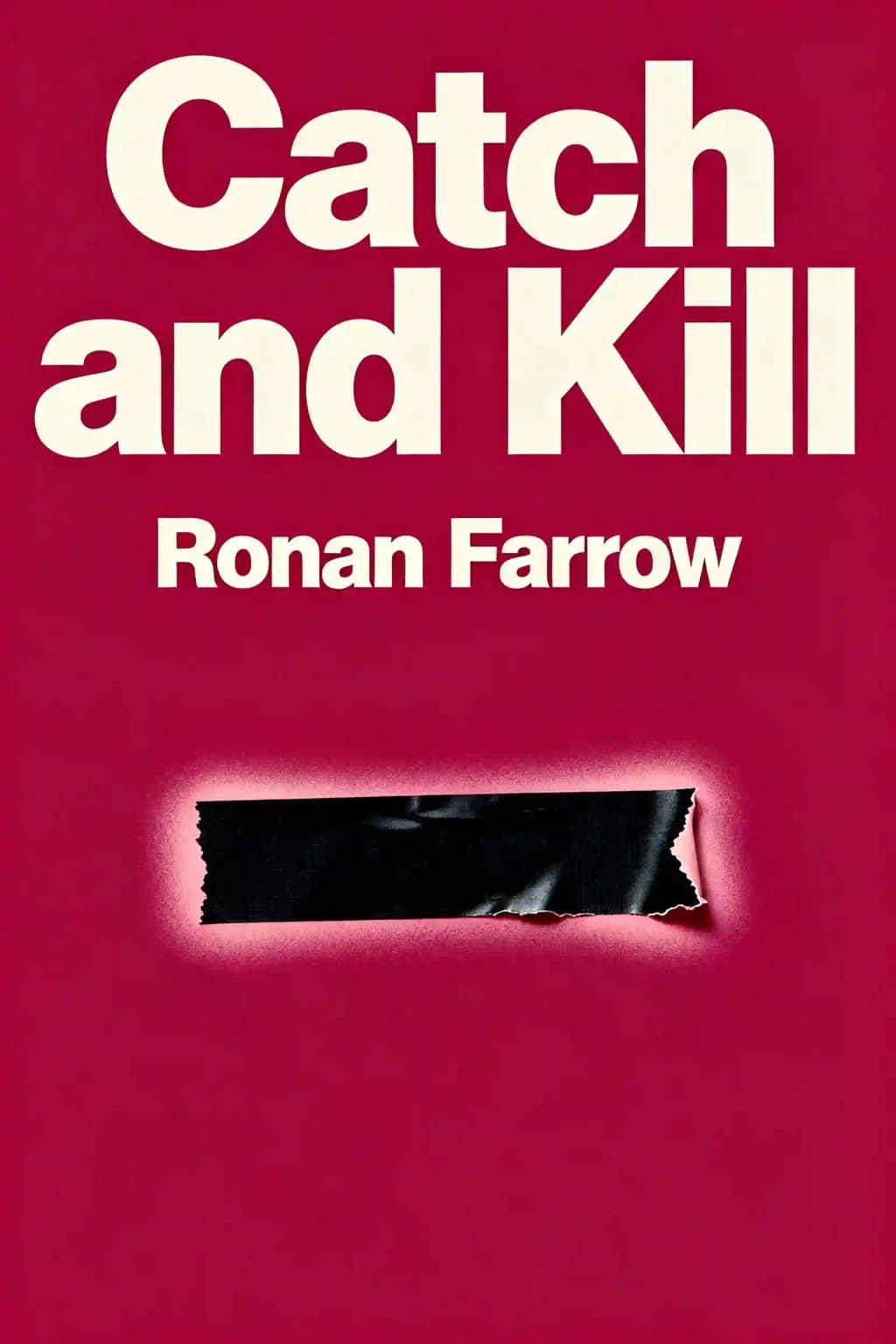
Hollywood's most powerful man was untouchable until he wasn't. Ronan Farrow's "Catch and Kill" chronicles his two-year investigation that helped spark the #MeToo movement and brought down Harvey Weinstein, one of the most influential figures in entertainment. Published in 2019, this explosive bestseller spent months on the New York Times bestseller list and won the National Book Critics Circle Award for autobiography. Celebrities from Reese Witherspoon to John Oliver praised its unflinching courage, with The Guardian calling it "an instant classic of investigative journalism." Beyond exposing Weinstein's predatory behavior, the book reveals a disturbing network of powerful institutions-from NBC to tabloid empires-that systematically silenced victims through intimidation, payoffs, and sophisticated intelligence operations. What began as one reporter's investigation into Hollywood misconduct evolved into an expose of institutional corruption that forever changed how we view power, privilege, and accountability.
Глава 2
Predators in Plain Sight: Hollywood's Open Secret
For decades, Harvey Weinstein operated as both Hollywood kingmaker and predator. Co-founder of Miramax and The Weinstein Company, he transformed independent film with hits like "Pulp Fiction" and "Shakespeare in Love," earning over 300 Oscar nominations. Meryl Streep once jokingly called him "God." Behind this public persona of brash business genius lurked something far more sinister-a pattern of sexual harassment, assault, and rape allegations spanning decades.
Raised in Queens by a diamond cutter father, Weinstein was physically imposing and notoriously temperamental. His bullying business style was legendary-throwing ashtrays, screaming nose-to-nose at employees. But this public behavior masked even darker private actions. As a college student, he had co-written a newspaper column featuring a character called "Denny the Hustler" who menaced women-perhaps an early window into his mindset.
Despite persistent rumors about violence against women, Weinstein maintained elite status. During the 2016 election, he served as a key Clinton fundraiser and advisor. Meanwhile, he was secretly hiring Black Cube, an Israeli intelligence firm staffed by former Mossad agents, through his attorney David Boies. Their mission: target those who might expose him, including journalists investigating the rumors.
The pattern was consistent-Weinstein would arrange "business meetings" with aspiring actresses or female employees that would suddenly move to hotel rooms. There, he would appear in a bathrobe, demand massages, expose himself, or force himself on women. Afterward, victims were silenced through settlements with strict non-disclosure agreements, threats about career destruction, and sophisticated surveillance operations.
"There was money available in the event that there was an indiscretion that needed to be taken care of," explained Dennis Rice, Weinstein's former president of marketing at Miramax. This covered not just bullying and physical abuse, but sexual harassment. Rice admitted witnessing Weinstein "inappropriately touching" young women who were then "paid off" and "encouraged to not make this a big deal, otherwise their career may end."
Another producer, Elizabeth Nickerson, confirmed this pattern, calling Weinstein "a predator" and revealing the company even employed someone whose job effectively involved procuring women for him. "This was ongoing predatorial behavior towards women-whether they consented or not," she said, adding, "Everybody knew."
Глава 3
The Tabloid Empire: American Media Inc.'s Catch and Kill Machine
While Weinstein had his own methods of silencing accusers, he also benefited from a larger system of suppressing damaging stories about powerful men. At the heart of this system was American Media Inc. (AMI), parent company of the National Enquirer, led by CEO David Pecker and editor Dylan Howard.
AMI operated at the edge of legality-obtaining medical records through hospital moles, blackmailing celebrities by withholding damaging information, and employing subcontractors using intrusive tactics. Pecker, a mustached former accountant from the Bronx, had cultivated a decades-long alliance with Donald Trump. Former editor Jerry George estimated Pecker killed at least ten fully reported Trump stories during his twenty-eight years at the Enquirer.
During Trump's campaign, the Enquirer endorsed him while publishing vicious attacks on Hillary Clinton. But Trump wasn't AMI's only powerful ally. In 2015, they struck a production deal with Harvey Weinstein that went beyond business. When allegations against Weinstein surfaced, Howard suppressed stories and actively gathered dirt on accusers like Ashley Judd and Rose McGowan.
The practice became known as "catch and kill"-purchasing exclusive rights to damaging stories about powerful allies, then burying them. In one email to Weinstein about damaging information on McGowan, Howard assured: "They are not [your fingerprints]. And the conversation-between you and I-is RECORDED."
This system extended beyond Weinstein to protect other powerful figures. Karen McDougal, a former Playboy Playmate, had signed away rights to her story about an affair with Donald Trump. According to McDougal's notes, she and Trump began a nine-month affair in 2006 after meeting at the Beverly Hills Hotel. Throughout their relationship, Trump carefully avoided paper trails, having McDougal book her own travel which he later reimbursed.
In 2016, McDougal was convinced by friends to sell her story. After several intermediaries became involved, she signed a $150,000 contract with AMI, receiving only $82,500 after fees. The contract effectively silenced her about any relationship with a "then-married man." When journalists later approached her, AMI actively managed her responses, with Howard sending pre-written statements and Pecker personally thanking her for loyalty.
By 2018, federal investigators were closing in on AMI. FBI agents raided Michael Cohen's office looking for records related to the McDougal payment and correspondence between Cohen, Pecker, and Howard. Facing potential prosecution, Pecker and Howard cut a deal and admitted everything-they had offered to "help deal with negative stories" about Trump's relationships with women by purchasing stories to prevent publication.
Глава 4
The Army of Spies: Weinstein's Private Intelligence Operations
As journalists began investigating Weinstein's behavior, he deployed a sophisticated network of private intelligence firms to surveil, intimidate, and gather information on potential accusers and reporters. The most notorious was Black Cube, an Israeli firm staffed by former intelligence operatives.
In late 2016, Roman Khaykin, a pale Russian with suspicious eyes, recruited Ukrainian immigrant Igor Ostrovskiy for work with a mysterious new client, boasting about "dark stuff" including illegal phone tracking methods. Though skeptical, Ostrovskiy needed the work. Soon, he found himself conducting surveillance in Manhattan hotel lobbies, following mysterious operatives with military bearing who were meeting various contacts.
Black Cube represented the elite end of private investigation-founded in 2010 by Israeli intelligence veterans Dan Zorella and Avi Yanus. With former Mossad director Meir Dagan on its advisory board until his death in 2016, the firm employed over a hundred operatives speaking thirty languages. Their Tel Aviv headquarters featured unmarked black doors, fingerprint readers, and desks with multiple phones tied to different fictional personas. Everyone, even janitors, underwent routine polygraph tests to prevent leaks.
The most disturbing aspect of Black Cube's operation was the deployment of undercover operatives using false identities to target Weinstein's accusers. One agent, Stella Penn Pechanac (operating under aliases including "Diana Filip" and "Anna"), posed as a women's rights advocate to gain Rose McGowan's trust. Over months, she built a close friendship with McGowan, extracting information about her forthcoming memoir and plans to speak out against Weinstein.
"Diana Filip" persistently pursued McGowan, eventually asking for an introduction to Farrow himself, calling him "an interesting and valuable addition to our project" as a "pro-female male." When McGowan later learned the truth, she was devastated: "It was like the movie Gaslight. Everyone lied to me all the time. I've lived inside a mirrored fun house."
The contracts between Weinstein's attorneys and Black Cube revealed shocking details: Black Cube promised "a dedicated team of expert intelligence officers," including "Avatar Operators" creating fake identities, and "operations experts with extensive experience in social engineering." They committed to hiring an investigative journalist for $40,000 to conduct interviews and report findings to Weinstein. Most damning was their promise of "a full time agent by the name of 'Anna'" who would be "available full time to assist the Client."
Beyond Black Cube, Weinstein employed multiple other firms. Kroll and its chairman Dan Karson had compiled dossiers on journalists, searching for damaging information. PSOPS, founded by Jack Palladino and Sandra Sutherland, had categorized information about McGowan under headings like "Lies/Exaggerations/Contradictions" and "Past Lovers," while also profiling reporters. K2 Intelligence had hired Italian investigators to dig up sexual rumors about accusers during legal cases.
This network extended to seemingly legitimate media operations. Dylan Howard of the National Enquirer secretly recorded an off-the-record conversation with Elizabeth Avellan about Rose McGowan, while former Miramax producers Denise Doyle Chambers and Pam Lubell contacted former employees under the guise of writing a book, while actually gathering intelligence for Black Cube operatives.
Глава 5
The Brave Women Who Spoke Out: Survivors' Stories
Despite the intimidation tactics, numerous women eventually found the courage to speak on the record about Weinstein's predatory behavior. Their stories revealed a consistent pattern spanning decades.
Rose McGowan described how in 1997 at Sundance, Harvey Weinstein assaulted her in a hotel suite after what began as a business meeting. "All of a sudden, you have no clothes on," she recalled. She confirmed it was both sexual assault and rape. McGowan hired a criminal attorney but was discouraged from pressing charges, instead accepting a $100,000 settlement. She described being "blacklisted" afterward and the trauma of having to smile for cameras with Weinstein at industry events.
Ambra Battilana Gutierrez, who'd grown up protecting her Filipina mother from her abusive Italian father, encountered Weinstein at a Radio City event in March 2015. After staring at her across the room, he arranged a "business meeting" where he groped her breasts and tried to put his hand up her skirt. Gutierrez immediately reported the assault to police. When Weinstein called her later, investigators were listening and devised a plan: she would wear a wire to extract a confession.
During their recorded meeting at the Tribeca Grand Hotel, Weinstein repeatedly tried to get her to his room while she resisted. On tape, he admitted to groping her the previous day-a full confession. Though police believed they had a solid case, Manhattan DA Cyrus Vance Jr.'s office declined to press charges. Two weeks after reporting Weinstein, Gutierrez signed a million-dollar NDA requiring destruction of all evidence.
Asia Argento revealed that in 1997, Weinstein had sexually assaulted her in a hotel room at the Hotel du Cap-Eden-Roc after being led there under the pretense of attending a Miramax party. Weinstein appeared in a bathrobe, forced her to give him a massage, then performed oral sex on her despite her repeated refusals. What complicated her story was that she later had occasional sexual encounters with him over the following years, feeling obligated to comply to protect her career. "After the rape," she said, "he won."
Annabella Sciorra described how Weinstein forced his way into her apartment, shoved her onto the bed, pinned her arms above her head, and raped her. When finished, he ejaculated on her leg and nightgown-a family heirloom from Italy-saying "I have impeccable timing" and "This is for you." In the aftermath, Sciorra told no one. "I was so ashamed," she explained. She grew depressed, lost weight, and believed Weinstein had retaliated professionally. "From 1992, I didn't work again until 1995," she said.
Lucia Evans, while a college senior hoping to break into acting, met Weinstein at a Manhattan club. After declining his late-night invitations, she agreed to a daytime meeting with a casting executive. Upon arrival, she found Weinstein alone in an office. He simultaneously flattered and demeaned her, suggesting she'd be great for Project Runway if she lost weight. Then he sexually assaulted her, forcing her to perform oral sex despite her repeated objections. "I just sort of gave up. That's the most horrible part of it, and that's why he's been able to do this for so long to so many women: people give up, and then they feel like it's their fault," Evans explained.
Глава 6
NBC's Buried Investigation: Corporate Complicity
As Farrow pursued the Weinstein story at NBC News, he encountered increasing resistance from network executives. Despite gathering substantial evidence-including the Gutierrez recording, multiple on-camera interviews with accusers, and corroborating testimony from former Weinstein employees-NBC ultimately refused to air the investigation.
When Farrow presented his evidence to NBC News president Noah Oppenheim, the executive seemed taken aback by the scope of the reporting. Despite Farrow's explanation of the multiple sources and hard evidence they'd gathered, including the police recording, Oppenheim responded with surprising hesitation, questioning whether Weinstein was famous enough to warrant coverage and whether his admitted behavior constituted a crime. "We're going to have to decide if it's newsworthy," Oppenheim said.
After hearing the Gutierrez tape where Weinstein admitted to groping her, Oppenheim responded with apathy, saying "I don't know what that proves" and dismissing Weinstein's admission with "people say a lot of things when they're trying to get rid of a girl like that." Despite the reporters explaining their multiple-sourced accounts of misconduct, Oppenheim questioned whether Weinstein was even known to the Today show audience.
As pressure mounted, Farrow and producer Rich McHugh were ordered to "pause all reporting" on the story. The investigation was now "under review by NBCUniversal"-not just NBC News but the corporate parent company. When Farrow pushed back, Oppenheim claimed he had a "conflict of interest" because Weinstein had distributed Woody Allen's films, and Farrow had written about sexual assault in Hollywood after his sister's allegations. "Harvey says you've got a huge conflict of interest," he told Farrow.
Meanwhile, Weinstein was calling NBC executives directly. He reached Andy Lack, nervously mentioning "your boy Ronan" was doing a story about him, dismissing allegations as behavior from "the nineties" when "we all did that." Lack responded only with "Harvey, say no more. We'll look into it." After one call with Phil Griffin, Weinstein triumphantly told his legal advisors that NBC executives assured him "they're not doing the story."
What Farrow didn't know at the time was that NBC had its own history of settlements with women who had experienced harassment, particularly involving Today show host Matt Lauer. One on-air personality who signed an NDA in 2012 had shown colleagues messages she considered propositions from both Lauer and a senior executive. "I was like a hanging piece of meat," she said. After declining their advances, she felt her career suffered.
Another settlement involved a woman who had reported a serious allegation about Lauer in 2013. Ann Curry revealed that complaints about Lauer verbally harassing women were well known, and in 2010, a colleague had broken down after Lauer allegedly exposed himself and propositioned her. Though Curry alerted two senior executives about Lauer's "problem with women," nothing happened.
The pattern of NDAs and secrecy at NBC had made the network vulnerable to Weinstein's intimidation tactics while they simultaneously accepted his argument that his own similar agreements couldn't be reported on. As one NBC correspondent later texted Farrow, working for NBC felt like "working for a media cabal akin to the Vatican, willing to cover up sex crimes."
Глава 7
Truth Will Out: The New Yorker Investigation
After NBC refused to air his investigation, Farrow took his reporting to The New Yorker magazine. Unlike NBC, editor David Remnick and his team recognized the significance of the story and committed to publishing it despite Weinstein's threats.
"We're not going to race to beat anyone," Remnick told Farrow, emphasizing accuracy over speed. "We're an ocean liner, not a speedboat." The magazine's fact-checkers began their grueling work calling source after source, verifying every detail of the story. When Weinstein's attorney Charles Harder sent The New Yorker a letter claiming Farrow's reporting was "defamatory," Remnick stood firmly behind the reporting, telling Farrow, "We will defend you legally, no matter how far Harvey Weinstein goes."
On October 5, 2017, The New York Times published their initial Weinstein story, revealing Ashley Judd's allegations and workplace misconduct claims, but containing no assault allegations. Weinstein initially expressed relief that it appeared on a Thursday rather than Sunday, which he considered the Times' prime real estate. He believed his public statement pledging to fight the NRA and get therapy would resolve matters.
Five days later, The New Yorker published Farrow's more extensive investigation, revealing multiple rape allegations against Weinstein. The story included testimony from thirteen women who said Weinstein had sexually harassed or assaulted them, with three alleging rape. It also included the damning audio recording of Weinstein admitting to groping Gutierrez.
The impact was immediate and far-reaching. Within hours of publication, NBC executives who had killed the story were suddenly eager to have Farrow appear on their programs. When Rachel Maddow pressed him about why he published with The New Yorker instead of NBC, Farrow carefully noted that "many news organizations have circled this story and faced a great deal of pressure." When Maddow pointed out NBC's claim that his story "wasn't publishable," she skeptically noted it was "obviously ready to go" by the time it reached The New Yorker.
The combined impact of the Times and New Yorker investigations sparked what became known as the #MeToo movement, with thousands of women coming forward with their own stories of sexual harassment and assault across industries. For Weinstein, the consequences were swift-he was fired from his company, expelled from the Academy of Motion Picture Arts and Sciences, and eventually arrested and charged with rape and sexual assault.
Глава 8
The Aftermath: Justice and Reckoning
The publication of Farrow's investigation triggered a cascade of consequences both for Weinstein and the institutions that had protected him. Dozens more women came forward with accusations against Weinstein. Law enforcement in multiple cities began investigations, with NYPD detective Keri Thompson tracking down Lucia Evans, who eventually agreed to file a complaint.
In May 2018, Weinstein surrendered to police, styled as a mild-mannered professor with books about Hollywood under his arm. Despite the symbolic perp walk, he posted $1 million bail and returned home with an ankle monitor while his legal team continued their offensive against accusers and investigators.
At NBC, the aftermath of the Weinstein story revealed the network's own problems with sexual misconduct. Shortly after the first New Yorker story broke, the network fired Mark Halperin after five women reported harassment and assault. Days later, Matt Zimmerman, SVP of booking at Today and Lauer's confidant, was fired for inappropriate relationships with subordinates.
In November 2017, Matt Lauer himself was fired after NBC employee Brooke Nevils reported that he had sexually assaulted her during the 2014 Sochi Olympics. Though NBC characterized the incident as an "affair," Nevils described it as assault, saying Lauer had anally raped her in his hotel room after she had consumed six shots of vodka. She described the ongoing sexual encounters with Lauer after Sochi as "completely transactional" rather than a relationship, feeling trapped by his position of authority over her career.
AMI faced its own reckoning. Federal investigators raided Michael Cohen's office looking for records related to the McDougal payment and correspondence between Cohen, Pecker, and Howard. AMI promised to "commit no crimes whatsoever" for three years as part of their non-prosecution agreement, but soon faced questions about breaching this clause when Howard aggressively pursued compromising photos of Jeff Bezos. With mounting debt and legal troubles, the National Enquirer and sister publications were sold in early 2019.
As for Igor Ostrovskiy, the Ukrainian private investigator who had been unwittingly working for Black Cube, he eventually became a whistleblower. Troubled by the tactics used against Farrow and others, he revealed that Black Cube was still following people and shared that their agents were meeting with technology and cybercrime experts, including specialists in aggressive cell phone hacking software. With Farrow's help, Ostrovskiy retained a whistleblower attorney and began the process of becoming a witness for federal prosecutors investigating Black Cube's activities.
Глава 9
Breaking the Silence: The Power of Truth
The Weinstein investigation revealed something far larger than one man's crimes-it exposed an entire system designed to protect powerful predators. This system included lawyers drafting restrictive NDAs, private intelligence firms conducting surveillance, tabloids burying incriminating stories, and major media companies like NBC refusing to publish credible allegations against influential figures.
What ultimately broke this system was the courage of individual women who decided to speak despite enormous personal and professional risks. As McGowan put it when deciding to participate in Farrow's investigation: "I've been silenced for twenty years. I've been slut-shamed. I've been harassed. I've been maligned. And you know what? I'm just like you. What happened to me behind the scenes happens to all of us in this society."
The impact extended far beyond Hollywood. Within months, powerful men across industries-from media to politics to business-faced consequences for sexual misconduct that had previously been tolerated or covered up. The phrase "Me Too," originally coined by activist Tarana Burke years earlier, became a global movement as millions of women shared their experiences of harassment and assault.
For Farrow, the investigation was also personally transformative. Having previously failed to support his sister Dylan when she accused Woody Allen of sexual abuse, he found redemption in helping other survivors be heard. As Dylan told him, "This is the worst part. The considering. The waiting for the story. But once you put your voice out there, it gets a lot easier... If you get this, don't let it go, okay?"
The lesson of "Catch and Kill" is ultimately about the power of truth in the face of overwhelming opposition. As Brooke Nevils put it when deciding to speak again despite NBC's attempts to silence her, she was determined that her silence not enable harm to other women. In her words, "stories-the big ones, the true ones-can be caught but never killed."