Глава 1
The Bible You Never Knew: A Journey Through Ancient Wisdom
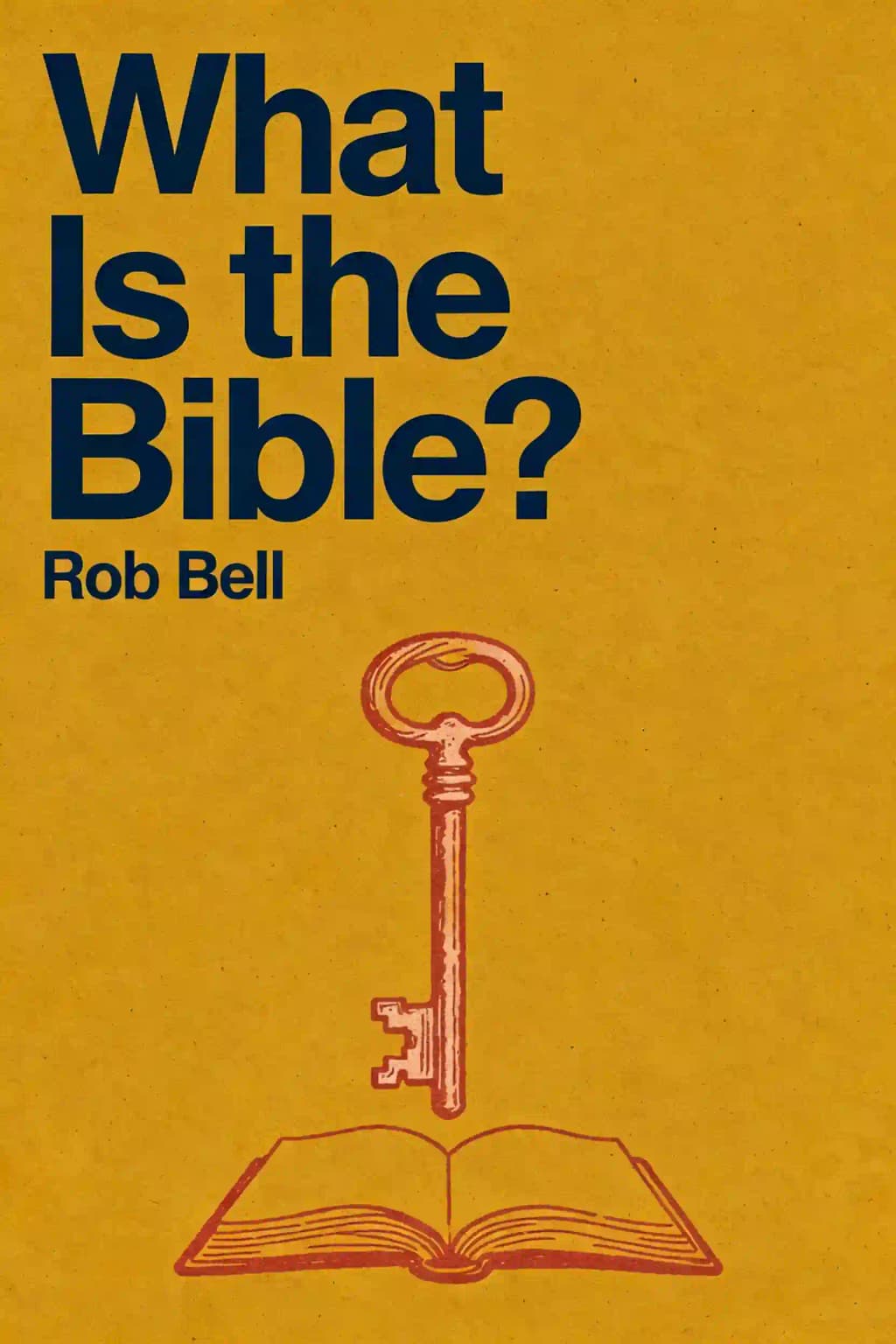
Have you ever felt that moment of clarity when something you've known all your life suddenly reveals itself to be entirely different than you thought? Imagine picking up what might be the world's most famous book-one that's shaped Western civilization for centuries-and discovering you've completely misunderstood it. This is precisely what happened to Rob Bell, who after twenty-five years of studying the Bible, realized he'd been missing its most profound dimensions. Bell's "What Is the Bible?" has become something of a phenomenon, praised by spiritual seekers across the spectrum from devout believers to skeptics. Even celebrities like Elizabeth Gilbert have championed its fresh approach. Unlike traditional religious texts that tell you what to believe, Bell's work has sparked a movement of people rediscovering these ancient writings as profoundly human documents that still speak to our deepest questions about meaning, justice, and how to live well in a complex world.
Глава 2
The Human Fingerprints on Divine Texts
The Bible didn't drop from heaven as a finished product. It was written by real people-about forty authors across fifteen hundred years on three continents. These writers were shaped by their times, places, personal histories, economies, politics, and available technologies. They wrote in different languages - Hebrew, Aramaic, and Greek - each bringing their cultural nuances and linguistic patterns. They frequently reference other sources we no longer have, like "the book of the annals of Solomon," "the book of Jashar," or John's admission that "Jesus did many other things" not recorded.
Biblical stories often began as oral traditions passed down for generations before being written, sometimes hundreds of years later. Consider the Genesis narratives - these stories were likely shared around campfires and taught to children for centuries before Moses allegedly compiled them. The writers had countless stories to choose from and made deliberate editorial decisions about what to include or exclude. For instance, the Gospel writers each chose different miracles and teachings to highlight, based on their intended audiences and theological emphases.
The process of canonization itself reveals human involvement. The Old Testament canon evolved over centuries, with different Jewish communities accepting slightly different collections. The New Testament canon wasn't officially settled until several church councils in the 3rd and 4th centuries CE. These meetings involved intense debate about criteria like apostolic authorship, widespread church usage, and theological consistency.
Understanding this human origin doesn't diminish the Bible; it enhances it. These writers addressed timeless human struggles that transcend their historical context. The Psalms capture raw human emotions from exultant joy to crushing depression. The prophets tackled social justice, economic inequality, and political corruption. Paul's letters deal with church conflicts, sexual ethics, and theological disputes that still resonate today.
Take the resurrection accounts as a revealing example. The four Gospels present notably different details about who visited the tomb, what they saw, and how events unfolded. Mark's ending is abrupt and mysterious; Matthew adds guards and earthquakes; Luke includes two men in dazzling clothes; John focuses on Mary Magdalene's personal encounter. These inconsistencies prompt two common responses: some ignore them, insisting on unquestioning faith, while others see them as proof the Bible is merely myth. But if this were propaganda, it's terrible propaganda-why include women as first witnesses when their testimony held little weight in that culture? Why would Matthew admit some disciples doubted? Why would Mark end his Gospel with the women fleeing in fear? These human elements don't undermine the story's power; they authenticate it by showing real people struggling to comprehend and communicate an extraordinary event.
The Bible's human fingerprints - its diverse literary styles, its cultural assumptions, its editorial decisions - remind us that divine truth often comes wrapped in human packaging. This doesn't make it less divine; it makes it more accessible and relatable to human readers across time and culture.
Глава 3
Reading with Altitude: Seeing the Bigger Picture
When approaching the Bible, altitude matters-you can examine individual words up close or take a ten-thousand-foot view of entire books. Different perspectives reveal different insights.
Consider the book of Acts. From a high altitude, we see a deliberate trajectory: it begins with Jesus instructing his Jewish followers to spread his message from Jerusalem to "the ends of the earth," and concludes with Paul in Rome (literally the ends of the earth for a first-century Jew), preaching freely. This narrative arc shows how the kingdom-of-God message cannot be contained by ethnicity, geography, or religion-it expands from the particular to the universal.
Ruth's seemingly simple story reveals profound meaning at higher altitude: it's actually about healing the ancient rift between Abraham and Lot's tribes. When Ruth (a Moabite descended from Lot) returns to Israel and marries Boaz, it represents the reunification of Abraham and Lot's divided tribes. The Hebrew text uses the same word for Lot's separation and Ruth's non-separation, deliberately connecting these stories across generations.
The book of Exodus, viewed from altitude, moves from slavery to freedom, from God's absence to presence. It begins with the Hebrews enslaved in Egypt with God nowhere to be seen and concludes with these same people freed, with a tabernacle in their midst where God visibly dwells "in the sight of all the Israelites during all their travels."
Paul's letter to the Ephesians follows a deliberate structure: three chapters establishing identity before any instructions appear. The gospel begins with identity, not instructions. If you start with commands, people might think God's love depends on their behavior. But Paul insists: you're a child of God not because of your goodness but because "God has all kinds of kids and you're one of them."
Глава 4
The Bible's Revolutionary Theological Breakthroughs
The Bible documents humanity's evolving understanding of God, often presenting revolutionary theological concepts that broke from prevailing ancient beliefs. These breakthroughs represented radical departures from the religious thinking of the time and established new paradigms for understanding the divine-human relationship.
The Noah story exemplifies this evolutionary process. While flood stories existed across many ancient cultures, from Mesopotamia's Epic of Gilgamesh to similar tales in Greek, Hindu, and Native American traditions, these typically framed floods as divine judgment where angry gods capriciously wiped out humanity. The Noah story, however, does something dramatically different. It ends with a divine promise this will never happen again, symbolized by the rainbow covenant. God makes a binding agreement with Noah, committing to preserve life and maintain natural order. This represents the first documented instance of a deity making a universal covenant with all humanity, not just a chosen group.
This theological breakthrough represents a major leap in human consciousness-a revolutionary shift in how people conceived of the divine. While the story begins like other flood narratives with divine judgment, it evolves toward a less violent, more relational understanding of God. Though primitive in its worldview by modern standards, it introduced concepts of divine mercy and universal care that were remarkably progressive for its time.
The covenant ceremony between God and Abraham in Genesis 15 presents another revolutionary concept. In ancient Near Eastern cultures, covenant ceremonies followed a strict protocol: animals would be slaughtered and split in half, with both parties walking between the pieces while essentially saying, "May I become like these animals if I fail to uphold my end." This practice, known as "cutting a covenant," appears in Hittite, Assyrian, and other ancient texts. However, the Biblical account radically departs from this tradition. Only God (appearing as a smoking firepot and flaming torch) passes between the animal halves, while Abraham remains in a deep sleep. This unprecedented gesture shows God taking responsibility for both sides of the agreement, promising faithfulness regardless of human failure. This represents a fundamental shift from transactional religion to one based on divine grace and initiative.
The story of Abraham being asked to sacrifice Isaac (the Akedah) similarly subverts ancient expectations. In a world where child sacrifice was practiced by various cultures, including the Canaanites and Phoenicians, the story begins like familiar tales of divine demands for the ultimate offering. However, it takes a revolutionary turn when God stops the sacrifice, providing a ram instead. This reveals a deity fundamentally different from other ancient gods - one who ultimately rejects human sacrifice and provides alternative means of worship. This was a revolutionary concept that transformed religious practice and theological understanding - establishing a God who gives rather than takes, who values human life over ritual sacrifice, and who tests faith not to destroy but to build trust.
These theological breakthroughs laid the groundwork for increasingly sophisticated understanding of divine-human relationships, marking crucial steps in religious and ethical development that would influence Judaism, Christianity, Islam, and Western thought more broadly.
Глава 5
Jesus: Subverting Power and Expanding Boundaries
Jesus consistently challenged the tribal boundaries and power structures of his day through both his teachings and actions. His ministry repeatedly demonstrated that divine love transcends cultural, ethnic, and religious barriers. Consider his revolutionary interaction with the Sidonians, descendants of Canaan who were considered cursed throughout biblical history. For centuries, Jewish religious texts and oral traditions had reinforced their status as outcasts. By Jesus's time, generations of animosity had created such deep-seated hatred toward Sidonians that most Jews would take lengthy detours to avoid their territory. Yet Jesus deliberately went to Sidon, praised their faith publicly, healed their sick, and even declared they would fare better on judgment day than his own religious tribe. In doing so, Jesus completely dismissed the ancestral curse, showing that God cares more about openness to the Spirit's work in the present moment than about tribal histories or religious pedigrees.
The Good Samaritan story represents perhaps Jesus's most pointed challenge to tribal hatred. It isn't simply about roadside assistance or general kindness-it's about loving those we hate most deeply. The setup is masterful: Jesus tells this story to a Jewish lawyer who wants to justify limiting his circle of compassion. By making a Samaritan the hero, Jesus deliberately provokes his audience, as Samaritans were considered religious heretics and cultural traitors. When Jesus asks who was the neighbor, the lawyer can't even bring himself to say "Samaritan," responding only with "the one who had mercy." This reluctance reveals the depth of the tribal hatred. Jesus brilliantly reveals that our neighbor is precisely the person whose name we can't bear to speak, the one we hate most. That's where eternal life is found-in showing kindness to those we wish didn't exist.
Peter's trance vision of a sheet filled with "unclean" animals becomes a powerful metaphor for spiritual disruption and the painful process of growth beyond tribal boundaries. When commanded to "kill and eat" these forbidden creatures, Peter initially protests based on his lifelong religious convictions and dietary laws that formed a core part of his Jewish identity. But God responds with a profound challenge: "Do not call anything impure that God has made clean." This vision strategically prepares Peter to enter the home of Roman Gentiles-something his Jewish upbringing strictly forbade as it would make him ritually unclean. The disruption of Peter's worldview illustrates how genuine spiritual growth often requires us to question our deepest assumptions and move beyond comfortable boundaries. The vision suggests that authentic faith brings greater freedom, inclusion, and complexity rather than rigid exclusion. This episode became a pivotal moment in early Christianity's expansion beyond ethnic and cultural boundaries.
Глава 6
The Bible's Hidden Political Dimensions
The Bible was written by Jewish people who lived as an oppressed minority under successive military superpowers. They write with particular vehemence toward those who abuse power and exploit the vulnerable. A recurring biblical theme asks: What will you do with your power and wealth? Will you build a bigger empire through manipulation, or help the widow, orphan, and refugee?
The story of Solomon illustrates this-blessed with wealth to maintain justice, he instead used slave labor, built military bases, and became an arms dealer. He lost the plot and became the new Pharaoh. The Bible writers relentlessly critique empire propaganda and the endless hunger for more-more land, wealth, power.
Jesus's ministry was financially supported by women, including Joanna, wife of Chuza who managed Herod Antipas's household. This detail is explosive-Joanna was elite society, married to the equivalent of a presidential chief of staff, yet chose to share rooms with former demoniacs and fishermen rather than enjoy her luxurious lifestyle. Meanwhile, Herod Antipas wanted Jesus dead because Jesus proclaimed an alternative kingdom built on compassion rather than oppression. The irony is delicious: Herod's wealth, through Chuza's salary to Joanna, was indirectly funding the very resistance movement he was trying to eliminate.
The book of Revelation isn't primarily about future end times-it's a letter from pastor John to his congregation living under Roman oppression. John brilliantly subverts empire propaganda throughout his letter. When Caesar began Olympic games by addressing provincial leaders about their performance, John depicts Jesus addressing church leaders. When Caesar's choir sang "You are worthy, our Lord and God, to receive glory and honor and power," John places those exact words in the mouths of angels singing to God. This is sharp, dangerous political satire reminding believers that Caesar isn't truly in charge.
Глава 7
Beyond Literalism: Reading the Bible Literately
The Bible isn't something to be read literally, but literately-according to the kind of literature it contains. Like a gem with seventy faces in the rabbinic tradition, scripture must be turned repeatedly to reveal new perspectives and deeper meanings. We read poems as poems, letters as letters, and stories as stories, recognizing when writers use metaphor, hyperbole, and other literary devices to convey larger truths. The Psalms, for instance, use rich poetic imagery of mountains clapping their hands and seas roaring - not as geological facts, but as powerful expressions of worship and wonder.
Understanding context fundamentally transforms how we experience any narrative scene. When we witness two people embracing at an airport baggage claim, it might seem like an ordinary moment. But knowing their story-whether they're siblings reuniting before saying goodbye to a dying father, spouses celebrating artistic dreams fulfilled through mutual sacrifice, or friends whose year of letter-writing has blossomed into love-changes everything about how we perceive that moment. Similarly, biblical narratives gain profound depth when we understand their historical, cultural, and literary contexts. The parables of Jesus, for example, take on richer meaning when we understand first-century Palestinian farming practices or the social dynamics between Samaritans and Jews.
The story of Ehud, a left-handed assassin who cleverly smuggles a sword past King Eglon's guards, demonstrates the Bible's unflinching portrayal of violence and political intrigue. After assassinating the obese king-in graphic detail where "the fat closed in over the sword"-Ehud leads Israel to slaughter ten thousand Moabites and gain peace for eighty years. But the writer seems weary of this cycle of violence and temporary victory, as the next chapter immediately begins with "Again the Israelites did evil" and they're soon oppressed by another king. The point isn't glorifying violence but showing its futility-nothing ever really improves despite God's patient rescues. This pattern appears throughout Judges, where each judge's story becomes progressively darker, suggesting that human solutions to human problems ultimately fail.
Reading literately also means recognizing genre conventions. The apocalyptic visions in Daniel and Revelation use symbolic numbers and fantastic imagery typical of ancient apocalyptic literature. The creation accounts in Genesis employ the literary conventions of ancient Near Eastern origin stories while subverting their polytheistic worldview. Even genealogies serve specific literary purposes beyond mere record-keeping, often establishing important theological and historical connections. This sophisticated approach to reading scripture honors both its divine inspiration and its human composition, allowing us to engage with its message more deeply and authentically.
Глава 8
Rethinking Biblical Authority and Inspiration
When discussing the Bible's authority, we must understand what "authority" actually means. The Greek word Paul uses is "exousia," which translates as weight, power, and influence-an active concept referring to the power to act for particular purposes. This understanding moves beyond simple rule-following to encompass a dynamic relationship between text and reader, where authority emerges through engagement and application.
Two critical points about biblical authority deserve deeper examination: First, the Bible must be interpreted. When someone claims they're "just doing what the Bible says," they're actually following a particular interpretation shaped by their cultural context, personal experience, and theological tradition. For instance, verses about women's roles in church leadership or dietary restrictions are interpreted differently across denominations and cultures. Second, authority is a relational reality. Following the Bible requires interpretation, which requires actual people doing the interpreting within their communities and contexts. This interpretative process involves careful study of historical context, original languages, and the broader narrative arc of scripture.
In 2 Timothy 3:16, Scripture is described as "theopneustos"-God-breathed. This rare Greek word combines "theos" (God) and "pneo" (breathing). In many languages, including Greek and Hebrew, the words for "breath" and "spirit" are the same (ruach in Hebrew, pneuma in Greek), reflecting how breath is intimately connected to life itself. This linguistic connection reveals a profound theological truth: just as God's breath brought life in Genesis, divine inspiration brings spiritual life through scripture.
When Paul writes that Scripture is God-breathed, he's saying these texts are more than just books-they're useful for teaching, rebuking, correcting, and training in righteousness. They help us do good in the world through consistently affirming two truths: first, that life is a precious, sacred gift; second, that how we respond to this gift matters deeply. This usefulness manifests in practical ways: teaching provides wisdom for daily living, rebuking helps identify harmful patterns, correction guides us back to wholeness, and training develops spiritual maturity.
The Bible is inspired in the same way humans are inspired-breathed into by the divine. We're humble, stumbling bags of bones and skin, yet the divine, infinite, eternal creative force has breathed into us. Just as Genesis describes God breathing life into Adam, this divine inspiration continues through scripture's living words. The Bible shows us what redemption looks like through countless stories of transformation: from Jacob the deceiver becoming Israel, to Peter the denier becoming the rock of the church. These narratives give hope that people like us can actually heal, repair, and restore this world, participating in God's ongoing work of redemption.
This understanding of inspiration acknowledges both the Bible's divine origin and its human elements, creating space for serious engagement with the text while maintaining its spiritual authority. It invites readers into an active relationship with scripture rather than passive acceptance, encouraging thoughtful application in contemporary contexts.
Глава 9
Asking Better Questions of Ancient Texts
The most important question to ask when reading the Bible is: "Why did people find this important to write down?" This question helps us understand the human context behind the text.
For example, Genesis 1 was compiled when Israelites were exiled in Babylon. The Babylonians had their creation story where the god Marduk violently defeated the goddess Tiamat and used her torn body to create the world. The Israelites, trying to maintain their identity in a foreign land, responded with their own creation poem celebrating beauty, diversity, and divine joy rather than violence.
Similarly, the Exodus story would have resonated deeply with exiled people longing to return home. The Gospel stories addressed the shame of Roman occupation by showing Jesus casting out a demon named "Legion"-a clear reference to Roman military units.
The worst question to ask begins with "Why did God...?"-questions like "Why did God tell those people to kill others?" These questions contain built-in assumptions about God and the Bible that prevent satisfying answers. When we read statements like "God told them to kill everyone in the village," we must recognize that someone wrote that-it's how a human being understood that event from their perspective in their time and place.
After asking why people wrote these texts, the next best question is: "Why did this passage endure?" Why are these writings still around thousands of years later? The Psalms exemplify this enduring power. They contain expressions of anger, hurt, isolation, vengeance, and rage alongside declarations of God's goodness. Prayers like "How long, LORD? Will you forget me forever?" have survived because they speak authentically to universal human experiences.
Глава 10
The Bible's Continuing Relevance in Today's World
The Tower of Babel story isn't just an ancient tale-it's about technology, power, and human ambition. The story specifically mentions the people using bricks instead of stones, and tar for mortar-revolutionary technology that enabled unprecedented construction. This ancient story warns us about how we're using our technology, energy, and resources today. Are we poisoning water sources, belching smoke into the air, threatening the future with fossil fuels and nuclear weapons?
Many people think the Bible's main point is that the world will end catastrophically. But there are different kinds of apocalypses. The first is sudden and unexpected-either natural or divine judgment. In religious versions, one group escapes to a good place while others go to a bad place. The second kind is one we bring on ourselves through environmental destruction-melting icebergs, contaminated water, decimated wildlife, leveled rainforests. Ironically, many people obsess over the apocalypse we can't control while ignoring the one we can. A third kind of apocalypse means "unveiling"-revealing things as they truly are. This apocalypse isn't something to fear but to celebrate and participate in now, as we work toward making things right in the world.
The Bible's narrative arc reveals itself when viewed from altitude. It begins in Genesis with people at peace in a garden with rivers and a tree, and concludes in Revelation with people at peace in a city with rivers and a tree "for the healing of the nations." This symmetry is deliberate-the Bible opens and closes with similar scenes involving trees. We live "between the trees," and this framing reveals the Bible isn't about escaping earth for heaven. Rather, it's a library documenting God's work of "healing and restoring and reconciling and renewing of this world"-the only home we've ever had.