Глава 1
When Biblical Values Collide with Modern Morality
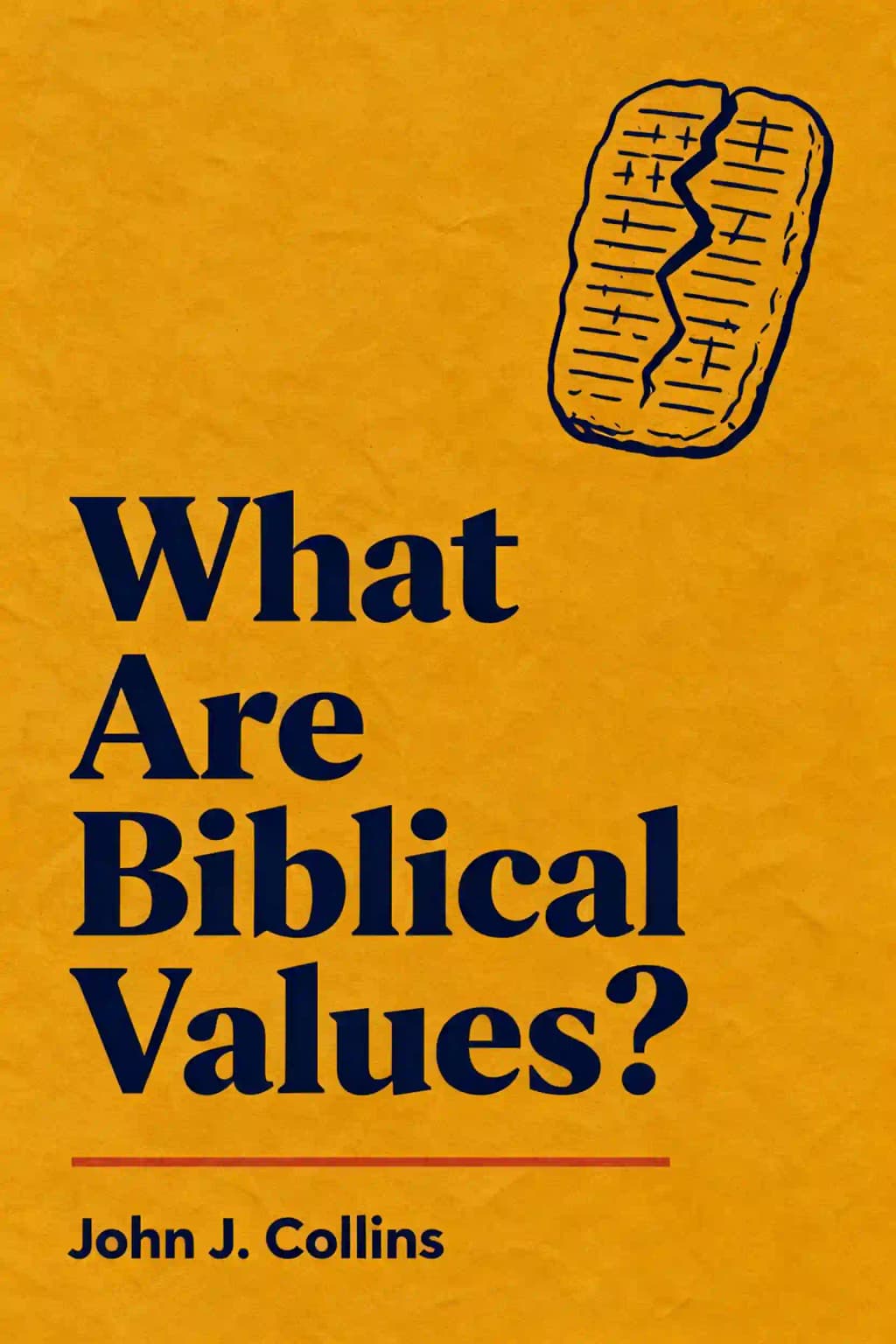
What does the Bible actually say about the hot-button issues that dominate today's political discourse? When politicians and religious leaders invoke "biblical values," they often reduce complex scriptural traditions to simplistic positions on contentious topics like homosexuality and abortion. In his meticulously researched work, John J. Collins, a distinguished Yale professor of Old Testament criticism and interpretation, challenges these reductive readings by examining what the Bible truly affirms across a range of crucial ethical issues. The book has garnered acclaim from religious scholars across denominational lines for its intellectual honesty and nuanced approach. Collins doesn't merely catalog biblical positions-he invites readers into the centuries-long conversation that constitutes biblical ethics, showing how these ancient texts continue to shape modern moral discourse even as they sometimes contradict our contemporary values.
Глава 2
The Challenge of Biblical Interpretation
The very notion of determining "what the Bible says" presents fundamental challenges. Texts don't speak for themselves but require interpreters to convey meaning. Our presuppositions inevitably influence interpretation, yet meaning isn't purely subjective either. The Bible's original languages and historical contexts impose linguistic and grammatical limits on valid interpretations. Meaning emerges through negotiation between author and reader-new perspectives are inevitable across generations, but valid interpretations must account for the words on the page without violating their grammar or ancient context.
Those who appeal to what the Bible "says" often mask their interpretive responsibility behind claims of textual authority: "It's not I who say this, but the Bible." This "textual foundationalism" treats Scripture as a firm foundation for knowledge while obscuring the interpreter's role. Critics rightly note that historical interpretation of the Bible has supported unethical positions, as in nineteenth-century slavery debates where defenders correctly observed that neither Moses nor Jesus outlawed slavery.
We must distinguish between determinate meaning and biblical authority. On issues like slavery, genocide, and patriarchy, biblical texts are clear but problematic from modern perspectives. Intellectual honesty requires acknowledging these contradictions rather than distorting texts to align with contemporary values. For meaningful interfaith dialogue, we must view biblical texts beyond our own traditions, examining what they meant in their original contexts. This historical focus provides distance through criteria not derived from modern faith commitments.
The Bible isn't a coherent treatise but a collection of writings developed over a millennium, containing diverse and sometimes contradictory theologies. Deuteronomy differs from Leviticus, Job questions both, while Matthew and James diverge from Paul. We cannot extract a single coherent set of values from Scripture. As Shakespeare noted, "The devil can cite Scripture for his purpose." Biblical support alone doesn't establish a value's validity when other passages may undercut it.
Глава 3
Creation, Covenant, and Apocalypse: Biblical Frameworks
Before examining specific ethical issues, we must understand three conceptual frameworks that shape biblical ethics: creation, covenant, and eschatology. Each contains presuppositions about the world and human condition that differ significantly from modern perspectives.
Creation provides the basic framework for biblical ethics, establishing humanity's nature and our relationship with the world. Biblical creation accounts aren't factual records but imaginative stories using ancient Near Eastern idioms. Genesis 1-2 offers two different accounts; poetic passages present creation as combat between God and chaos monsters; Proverbs portrays creation through divine wisdom. These diverse models warn against literal interpretation. Neither creationism nor attempts to harmonize Genesis with modern science are appropriate approaches.
Genesis 1 presents an orderly world with humanity created in God's image, suggesting humans must be treated with dignity. Genesis 2-3 offers a different perspective where humans were created for agricultural work, never immortal but with a missed opportunity for immortality. The story explains human suffering through disobedience-the curses describing childbirth pain, subjection of women to husbands, and difficult agricultural labor reflect the ancient understanding of the human condition. Both creation accounts share the foundational principle that humans are created beings subject to a higher power-a view contrary to modern secular humanism.
Most Old Testament laws appear within the specific context of the covenant between God and Israel, modeled on ancient Near Eastern vassal treaties. The covenant includes historical context (primarily the Exodus), stipulations for behavior, and consequences. Remarkably, like ancient treaties requiring vassals to "love" their overlord, Deuteronomy commands Israelites to "love the Lord your God"-not as emotion but as loyalty and obedience.
The biblical worldview underwent radical transformation from its original this-worldly orientation to an apocalyptic perspective. Early biblical thought assumed earth's permanence, with human destiny fulfilled on earth and no afterlife judgment. This changed dramatically with apocalyptic literature emerging around the second century BCE. Daniel introduces resurrection and afterlife judgment, while later works speak of the world's end. The New Testament fully embraces apocalypticism, with Paul declaring "if for this life only we have hoped... we are of all men most to be pitied." This shift fundamentally changes biblical values-from seeking long life and descendants to pursuing eternal salvation.
Глава 4
Life and Death: A Biblical Perspective
The Bible fundamentally conflicts with modern ethical frameworks by not using rights-based language. While modern discourse centers on human rights as inherent, universal, and equal, biblical discourse is theocentric, concerned with God's will rather than human entitlements. This contrast becomes especially evident when examining whether the Bible supports a "right to life."
The Bible's ambivalence toward a "right to life" is shockingly revealed in Exodus 22:29-30, which commands firstborn sons be given to God, just like firstborn livestock. While this command was later modified to allow redemption, its existence demonstrates God's ultimate prerogative over life. The famous story of Abraham's willingness to sacrifice Isaac shows no suggestion that Isaac had any right to life. Other biblical accounts, like Jephthah sacrificing his daughter after a vow, further undermine any notion of an inherent right to life.
Genesis 9:5-6 affirms the sanctity of human life by referencing creation in God's image, yet paradoxically prescribes death for those who shed blood. The Hebrew Bible mandates capital punishment with alarming frequency-not just for murder, but for striking or cursing parents, being rebellious, adultery, working on the Sabbath, consulting mediums, and pagan worship. Though Jewish apologists like Philo boasted of this severity, evidence suggests these penalties weren't always applied.
Remarkably, the Bible never directly addresses abortion, though evidence shows the practice existed in ancient Egypt and Mesopotamia. The closest reference is Exodus 21:22-25, which concerns accidental miscarriage during a fight, not intentional abortion. Jewish tradition in the Mishnah permitted abortion when the mother's life was endangered, considering the fetus a person only after birth began. Early Christian writings like the Didache and Epistle of Barnabas (2nd century CE) explicitly condemned abortion, with Tertullian declaring "to forbid birth is only quicker murder." Despite these later traditions, neither Testament explicitly prohibits or sanctions abortion, making it impossible to claim abortion as a central biblical concern.
Глава 5
Gender, Sexuality, and Biblical Authority
Genesis 1:27 presents humanity created in God's image as both male and female-a remarkably progressive concept establishing that both sexes share equally in the divine image. However, the ambiguous use of the Hebrew term "adam" has contributed to androcentrism. While Genesis 1 establishes binary gender, it doesn't specify distinct social roles for men and women. The text doesn't define marriage exclusively as between one man and one woman, as later biblical narratives show many protagonists with multiple wives.
The modern concept of homosexuality as an orientation or identity didn't exist in biblical times. The term "homosexuality" emerged only in the late 19th century, when same-sex attraction began to be viewed as an identity rather than merely acts. While Plato's Symposium offered early theories about different sexual orientations, such theorizing was entirely absent from biblical texts.
The Hebrew Bible contains few references to same-sex relations. The story of Sodom involves attempted male rape of visitors rather than consensual relations, focusing primarily on violations of hospitality. Ezekiel 16:49 identifies Sodom's sin as pride and neglect of the poor, not sexual behavior. Sexual acts between males are explicitly condemned in only two verses: Leviticus 18:22 and 20:13, both found in the Holiness Code. Scholars debate the precise meaning of the prohibition-whether it refers specifically to anal intercourse or encompasses multiple sexual activities. Notably, there is no corresponding prohibition against relations between women.
The New Testament contains minimal discussion of same-sex relations. Jesus never addresses the subject in any Gospel. Paul provides the only explicit references, most notably in Romans 1:26-27, where he describes same-sex relations as "degrading passions" and "unnatural." His argument draws on Greco-Roman philosophical concepts of what is "natural" rather than Hebrew Bible precedents. The terms malakoi (literally "soft people") and arsenokoitai appear in 1 Corinthians 6:9-10 as categories of people who "will not inherit the kingdom of God." These few explicit condemnations reflect Hellenistic Jewish cultural assumptions rather than a central biblical concern.
Глава 6
Marriage, Family, and Gender Roles
The Genesis story of Adam and Eve has profoundly shaped perceptions of gender relations despite receiving little attention in the Hebrew Bible itself. Several elements establish male precedence: Adam's creation before Eve, her formation from his rib, and her creation as his "helpmate." The clearest subordination appears in Genesis 3:16, where God tells Eve "he shall rule over you" as part of humanity's punishment. This descriptive statement about human suffering became prescriptive in later tradition. Although Genesis portrays both Adam and Eve as responsible for disobedience, later texts like Ben Sira and 1 Timothy shifted blame primarily to Eve.
The Hebrew Bible presents a spectrum of material regarding women's status. Women could not inherit unless there were no sons, and their religious vows could be nullified by fathers or husbands. Polygamy was accepted though increasingly rare after the exile. Adultery was defined as relations with another man's wife, with both parties liable to death.
Divorce in the Hebrew Bible was a man's unquestioned right, with grounds described vaguely as "something objectionable." Women couldn't initiate divorce in biblical law, though evidence shows Jewish women could divorce in some communities. Only the prophet Malachi raised his voice against divorce, possibly based on Genesis 2:24's "one flesh" concept.
Though the Hebrew Bible isn't consistently patriarchal in a technical sense, it maintains an androcentric worldview throughout. Women like Deborah appear as exceptional leaders, and Proverbs 31 praises the "capable wife," but women's roles remained tightly circumscribed by men. Ben Sira reveals this perspective clearly, describing daughters as "secret anxiety" and praising the "silent wife" as "a gift from the Lord."
The New Testament presents a radical shift from the Hebrew Bible's family focus. With belief in the world's imminent end, Jesus rarely preaches about families, and when he does, his statements can be shocking: "Whoever comes to me and does not hate father and mother, wife and children... cannot be my disciple" (Luke 14:26). Jesus prioritizes discipleship over family obligations. He himself remained unmarried and acknowledged some might "make themselves eunuchs for the kingdom of God."
While Jesus chose not to marry, he didn't reject marriage for others. His views on divorce appear in all three Synoptic Gospels and in Paul's writings. In Mark and Luke, Jesus takes a radical stance against divorce, citing Genesis to argue that "what God has joined together, let no one separate." Matthew allows an exception for unchastity, and Paul permits separation when an unbeliever wants to end the marriage.
Глава 7
Humanity and the Natural World
The Bible's role in shaping attitudes toward nature became central to debate after Lynn White Jr.'s 1967 article. White traced human exploitation of nature to Genesis 1:26-30, which grants humanity "dominion" over all creatures. Yet this mandate was given at creation's dawn when earth was uninhabited-intended for clearing wilderness to allow human flourishing, not exploitation through modern technology. Genesis places limits on human dominion: initially plants but not animals were given for food, and blood consumption was later restricted. The creation account ends with Sabbath rest, suggesting boundaries to human activity.
The clearest indication of Israelite attitudes toward nature appears in land-use laws. Exodus 23:10-11 mandates letting fields lie fallow every seventh year so the poor and wild animals may eat-an extrapolation of the Sabbath rest. Leviticus 25 extends this concept, declaring the land belongs to the Lord, with people merely managing it on God's behalf. Deuteronomy adds further restraints: prohibiting destruction of fruit trees during sieges, requiring assistance for fallen animals, and protecting mother birds.
Biblical authors never envision humanity subduing the entire earth. Wilderness and desert always exist on civilization's fringes, with reduction to wilderness seen as punishment for a land. Yet even destroyed lands provide habitat for creatures, as Isaiah 34 notes of Edom becoming home to jackals and owls. Prophetic visions imagine wilderness transformed-deserts blooming, predators living peacefully with prey-but this represents harmony rather than human dominion.
Unlike the Hebrew Bible, the New Testament is written with the conviction that this world is passing away. Jesus doesn't directly address environmental treatment, but his teachings have implications. In the Sermon on the Mount, he notes God's care for birds and flowers, suggesting their intrinsic worth. His parables draw heavily from nature and agriculture, and his lifestyle modeled living in harmony with creation. Though some miracles demonstrate dominion over nature, Jesus primarily promotes a non-acquisitive lifestyle that counters the exploitative ethos of modern society.
Глава 8
Slavery, Liberation, and Human Dignity
The story of Israel's liberation from Egyptian slavery offers a powerful paradigm that has inspired oppressed peoples throughout history. The Exodus narrative establishes empathy for the marginalized as a core biblical value. The Israelites are repeatedly urged to remember their experience in Egypt: "You shall not wrong or oppress a resident alien, for you were aliens in the land of Egypt." This memory should cultivate compassion toward aliens, treating them "as the citizen among you."
Despite advocating empathy, the Bible never condemns slavery as an institution. Biblical law regulates rather than abolishes it. The Book of the Covenant begins with slave regulations modeled on Hammurabi's Code, though with longer servitude periods (six years rather than three). These laws favor slave owners-enslaved men who wish to remain with wives given during servitude must become permanent slaves. While Deuteronomy revises these laws to apply equally to male and female slaves and exhorts owners to provide for freed slaves, it still accepts the institution. Leviticus edges closer to prohibiting enslavement of fellow Israelites but explicitly permits enslaving foreigners permanently.
Jesus frequently references slavery in parables without questioning its morality. He speaks of faithful and wicked slaves receiving appropriate rewards or punishments, and depicts slaves serving their masters as the natural order. While some parables might implicitly critique debt slavery's harshness, Jesus generally appeals for humane implementation rather than abolition of the system.
Paul's baptismal formula in Galatians 3:28 declares "no longer slave or free," yet Paul doesn't abolish these distinctions in daily life. In 1 Corinthians 7, he tells slaves "do not be concerned" about their status, as they are spiritually free in Christ. When discussing Onesimus in Philemon, Paul subtly asks his owner to receive him as "more than a slave, a beloved brother" without explicitly demanding manumission.
The later Pauline epistles prioritize social conformity over slave liberation. Colossians instructs slaves to "obey your earthly masters in everything" as service to Christ himself, while masters should treat slaves justly. These household codes reflect concern that Christianity not develop a reputation for encouraging social insubordination.
Глава 9
Violence, Zeal, and Religious Identity
The biblical legitimation of violence directly contradicts Jesus's teaching in the Sermon on the Mount. While Jesus advocates turning the other cheek, the Hebrew Bible portrays Yahweh as "a man of war" who treads nations like grapes in a winepress. This contradiction between Jesus's nonviolent teachings and the Old Testament's acceptance of justified violence creates a tension that most Christians throughout history have not resolved.
The conquest of Canaan represents the most troubling paradigm of biblical violence. Deuteronomy commands total slaughter of Canaan's inhabitants: "utterly destroy them... show them no mercy." Though scholarly consensus holds this conquest largely fictional, the moral problem remains-not that it happened, but that it was believed divinely commanded. This paradigm has justified colonial violence throughout history, from American settlers calling natives "this Amalek annoying Israel" to South African Boers and modern Israeli occupation of Palestinian territories.
While violence itself isn't a biblical value, it connects to the celebrated virtue of zeal. The paradigmatic zealot is Phinehas, who speared an Israelite man and his Midianite wife for their relationship, earning divine reward with "a covenant of eternal priesthood." This absolute devotion brooks no compromise-the same Hebrew word describes Yahweh as a "jealous God."
Though Judeans typically lacked power to take vengeance on enemies, their prophetic and apocalyptic writings overflow with violent fantasies. Ezekiel conjures a fantastic enemy called Gog who will be defeated and devoured by birds of prey. The New Testament's Book of Revelation continues this tradition with even more relentless violence, depicting Rome as fallen Babylon and Christ as a rider with a sword, summoning birds to feast on the flesh of kings and captains.
Despite occasional attempts to portray Jesus as a revolutionary, the evidence overwhelmingly shows his message was predominantly nonviolent. His refusal to defend himself when arrested speaks volumes, whether from principle or recognition of futility. The temple cleansing stands as an exceptional violent act, showing his respect for sacred space while demonstrating his violence aversion wasn't absolute when God's honor was at stake.
Глава 10
Justice: The Bible's Central Value
Throughout the ancient Near East, kings were expected to uphold justice by protecting the vulnerable from oppression. The Hebrew Bible similarly portrays the ideal king as one who defends the poor, delivers the needy, and judges with righteousness-upholding the divine cosmic order where "righteousness and justice are the foundation of [God's] throne."
The prophets-especially eighth-century figures like Isaiah, Amos, and Micah-delivered powerful critiques against social injustice that remain relevant today. Amos condemned dishonest business practices often hypocritically coupled with religious observance, where merchants "make the ephah small and the shekel great" while "trampling on the needy." The prophets weren't advocating equal wealth distribution but objecting to the poor being deprived of life necessities and degraded to subhuman conditions.
For the Hebrew Bible, no value is more fundamental than social justice. The prophets repeatedly diminished the importance of ritual worship in comparison to justice. Micah famously asked what God requires, dismissing elaborate offerings in favor of "doing justice, loving kindness, and walking humbly with God." Similarly, Amos proclaimed God's rejection of festivals and offerings, demanding instead that "justice roll down like waters."
The Hebrew Bible stands out in the ancient Near East for its extraordinary emphasis on justice. Unlike other ancient texts primarily concerned with landowners, biblical literature uniquely critiques monarchy itself. It also distinctively adds "the alien" to the traditional concern for widows and orphans. Commands like "love the alien as yourself" are grounded in Israel's own experience: "you were aliens in Egypt."
In the late Second Temple period, the concept of justice evolved. The Hebrew word tsedaqah-previously paired with mishpat to denote "justice and righteousness"-came to mean simply "almsgiving." Books like Daniel, Ben Sira and Tobit emphasize individual charity as expressions of righteousness, with the belief that almsgiving would be rewarded by God.
Глава 11
The Tension Between This World and the Next
The New Testament introduces a tension between social justice and apocalyptic expectations. The apocalyptic perspective that pervades the New Testament seems to diminish the importance of earthly life, as Paul writes that "the present form of this world is passing away." This eschatological outlook has produced two traditions: postmillennialism, which encourages social reform to help bring about the millennium, and premillennialism, which sees little value in improving a world destined for destruction.
Despite theological traditions dismissing social reform as useless before the apocalypse, Revelation actually echoes the prophets' outrage about social abuses. While not advancing social programs, it harshly criticizes Rome's economic dominance. The beast forces everyone to bear its mark "so that no one can buy or sell" without it-likely referring to the emperor's image on Roman coins. Rome appears as "the whore of Babylon," clothed in luxury while "the merchants of the earth have grown rich from the power of her luxury."
For Christians, Jesus's teachings establish fundamental values, though debate continues about how much his message was shaped by eschatological expectations. Luke gives prominence to social concerns, beginning with Mary's Magnificat which celebrates how God "has brought down the powerful from their thrones, and lifted up the lowly." Jesus announces his mission using Isaiah's prophecy about bringing "good news to the poor" and proclaiming "the year of the Lord's favor." The Beatitudes in Luke directly bless the materially poor and hungry, while Matthew's version spiritualizes these conditions.
The "good news" Jesus preached wasn't that God hates the rich-Jesus loved even the rich young man who couldn't part with his wealth. Rather, Jesus taught an ethic of radical detachment from material possessions. He warned against greed, telling the parable of the rich man whose life ended just as he finished building larger barns. Jesus urged his followers not to worry about food or clothing, pointing to ravens and lilies as examples of God's providence.
Jesus's teaching on renunciation addresses injustice more profoundly than the Hebrew prophets by targeting its root cause: greed. If people weren't intent on accumulating wealth and rising above others, injustice wouldn't exist. This approach is idealistic-human nature makes overcoming injustice through renouncing greed virtually impossible. The judgment scene in Matthew 25 makes salvation dependent on feeding the hungry, clothing the naked, and visiting the imprisoned-actions that embody biblical values through practical care for the vulnerable.
Глава 12
The Bible's Contested Legacy
The Bible requires interpretation-it doesn't "say" anything until interpreted. While interpretations are always contestable, objective understanding is possible, as there's little dispute about most passages' basic meanings. The real challenge comes from the Bible's internal diversity of positions. Jesus contradicts Mosaic law on retaliation and loving enemies, while Revelation's vengeful fantasy seems at odds with the Sermon on the Mount.
We need criteria to assess biblical values rather than cherry-picking isolated verses. For Christians, Jesus provides this hierarchy: love of God and neighbor are the greatest commandments. The Hebrew Bible similarly prioritizes care for the vulnerable-widows, orphans, aliens-regardless of their work ethic or legal status.
The most troubling aspect remains the Bible's endorsement of positions now considered reprehensible: slavery, genocidal conquest, and subordination of women. These contradict the Bible's own ideals of justice and neighbor-love. The Bible is "good in spots"-containing both exceptional ethical ideals and morally problematic passages. Its authority rests not on blanket acceptance but on principles that remain compelling on broader humanistic grounds.
The Bible represents the deepest layer of Jewish and Christian tradition, shaping these faiths profoundly. While those within these traditions need not affirm everything in their scriptures, the Bible provides a context for thought and argument that shapes which questions we consider important. Far from being a systematic treatise, the Bible has the character of a running argument, juxtaposing different and often conflicting viewpoints. Criticism of received tradition is itself a biblical value, as is criticism of one's own society. The prophets provided blistering critiques of Israelite and Judean society, seeing devastation as divine punishment for injustice. The Bible remains a relevant resource on political and social issues if used judiciously, but interpreters remain responsible for what they take from it.